

Postpartum Recovery: What to Expect and How to Cope
Nobody tells you how much the body goes through after birth. The focus understandably is almost entirely on the baby. But the mother’s body has just done something enormous. And then, within hours, it is expected to feed a newborn, function on broken sleep, and somehow hold everything together.
Postpartum recovery is real, it takes time, and it looks different for every woman. Understanding what is normal physically and emotionally is the first step toward actually getting through it.
Your Postpartum Journey Starts Now
The postpartum recovery timeline officially covers the first six weeks after childbirth. But postpartum body recovery often takes longer and postpartum mental health can continue to shift for months after delivery.
This article covers what to expect from postpartum body changes, how to manage postpartum emotional health, safe postpartum exercises for new moms, postpartum nutrition, and when symptoms need a doctor’s attention.
What Happens During Postpartum Recovery?
The postpartum period begins the moment the baby is born. The body which spent nine months building an entirely new person now has to heal, reset, and adapt. Postpartum hormonal changes shift dramatically in the first days after delivery. Everything from bleeding and breast changes to mood and energy levels is affected.
Postpartum care for mothers in these first weeks is not optional it is necessary. The better supported and informed a woman is, the smoother postpartum physical recovery tends to be.
Physical Changes to Expect
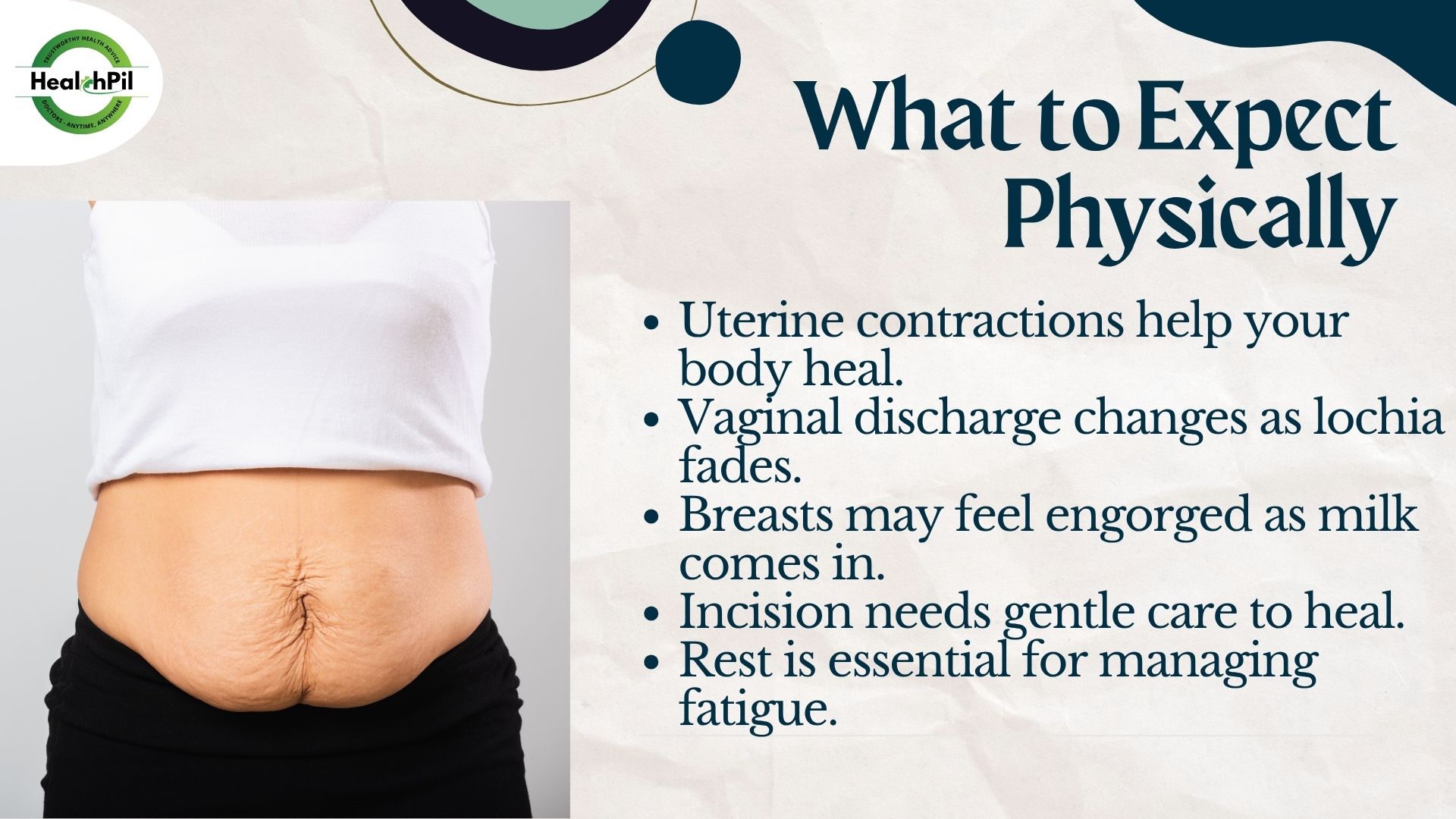
Uterine Contractions
After delivery, the uterus begins contracting back toward its pre-pregnancy size. This causes cramping sometimes described as afterpains that can feel similar to menstrual cramps. Postpartum recovery after normal delivery typically involves these contractions for several days. Breastfeeding can intensify them temporarily because it triggers oxytocin, the same hormone that causes uterine contractions.
The uterus does a lot of work in a short time. It grows during pregnancy from around 60-70 grams to nearly a kilogram to hold the baby, placenta, and fluid. After delivery, it starts shrinking daily — by around day 15, it moves back down into the pelvis, and by six weeks, it’s usually back to its pre-pregnancy size.
The cervix goes through its own recovery too. It dilates to about 10 cm for delivery, then begins closing almost immediately usually within one to two weeks.
Vaginal Discharge
Lochia the postpartum discharge of blood, mucus, and uterine tissue is normal and expected after all deliveries. It starts heavier and red, gradually lightens over days and weeks, and usually resolves within four to six weeks. Postpartum recovery tips for managing lochia are simple use maternity pads, change them regularly, and contact a doctor if the bleeding becomes very heavy, develops a foul smell, or is accompanied by fever. Lochia usually moves through three visible stages. The first few days are bright red and heavier. By day four or five, it lightens to a pinkish discharge. From around day eight to ten onward, it turns yellowish or creamy-white and can continue in small amounts for up to twenty days before stopping completely.
Breast Changes
Breast engorgement when the breasts become firm, full, and sometimes painful as milk comes in is one of the more uncomfortable parts of early postpartum breastfeeding recovery. Regular feeding or pumping helps relieve this. Warm compresses before feeding and cool compresses after can reduce discomfort. Blocked ducts and mastitis are also postpartum care concerns to watch for.
Incision Healing
Postpartum recovery after C-section is different from recovery after vaginal delivery. The incision site needs time and careful attention keep it clean and dry, avoid any activity that strains the area, and follow the doctor’s wound care instructions. Postpartum rehabilitation after a caesarean typically involves a longer timeline before exercise and heavier activity can resume.
Follow-Up Doctor Visits After Delivery
Regular check-ins make recovery smoother and catch problems early.
- 1 week postpartum — stitches and initial healing are checked
- 2 weeks postpartum — physical and emotional recovery are both assessed
- 6 weeks postpartum — a fuller recovery review, and clearance to resume normal activity or exercise
Keeping these appointments matters even when everything feels fine.
Fatigue
Postpartum fatigue is one of the most underestimated parts of the postpartum recovery journey. Broken sleep, hormonal shifts, physical healing, and constant newborn care combine into a level of tiredness that feels different from any normal tiredness. Rest whenever the opportunity exists. Postpartum self care starts here sleep matters more than a tidy house.
Emotional Changes You Can Expect
Baby Blues
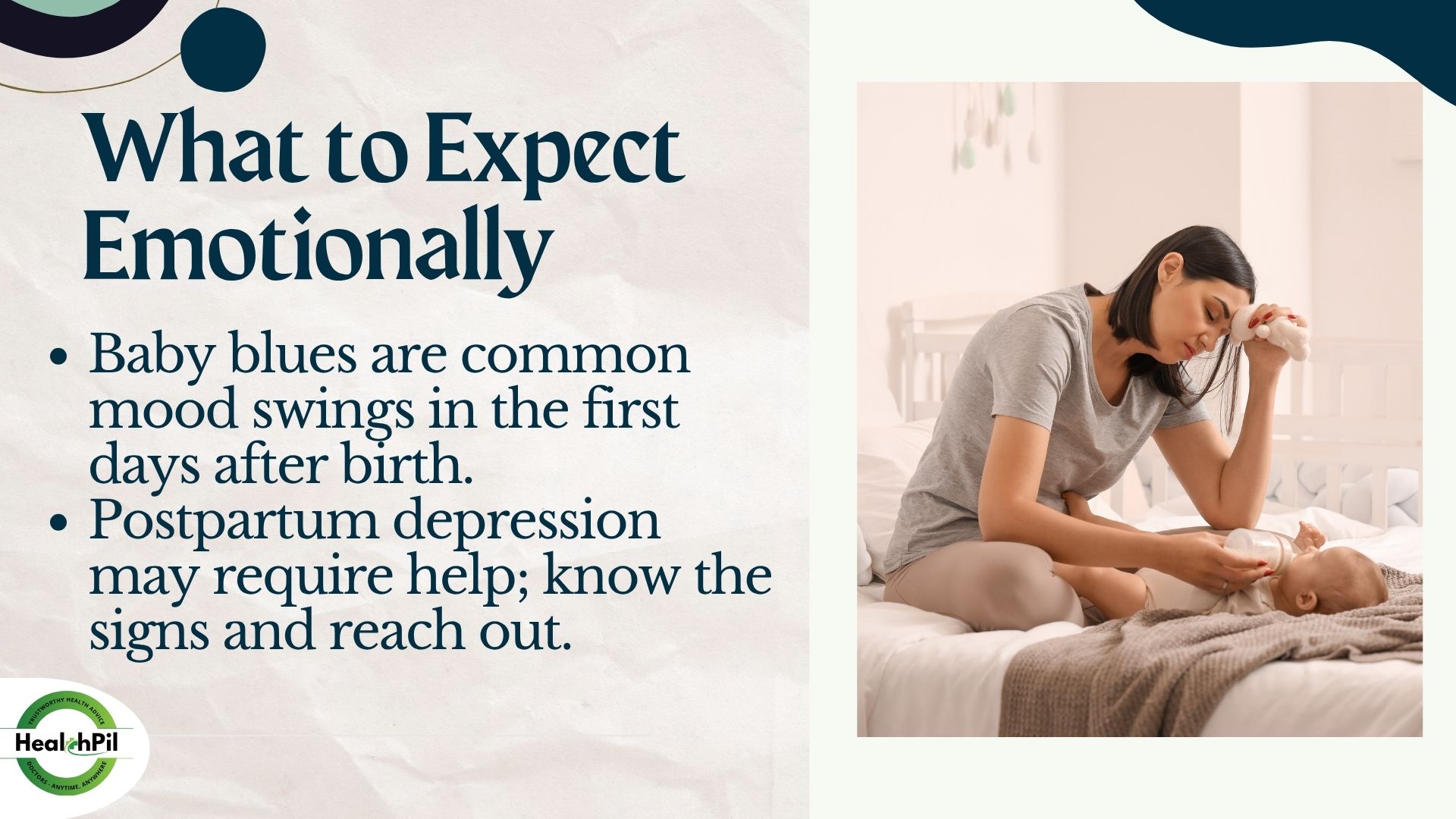
Most women experience baby blues in the first week after delivery mood swings, unexpected crying, anxiety, and emotional fragility that seem to come and go without warning. Postpartum hormonal changes drop dramatically after birth, and the emotional response to this is very real.
Baby blues usually settle within two weeks on their own. They are different from postpartum depression though they can feel similar in the moment.
Postpartum Depression (PPD)
Postpartum depression is not the same as baby blues. It is more intense, lasts longer, and does not resolve on its own without support. Signs of postpartum depression include persistent sadness, feeling disconnected from the baby, difficulty functioning, overwhelming anxiety, and feelings of inadequacy or hopelessness.
Postpartum anxiety is also common and equally worth taking seriously. Postpartum mental health does not get the attention it deserves, and many women suffer in silence because they feel they should be happy.
Postpartum mental health support online is available including online doctor consultations for new mothers who find getting to a clinic difficult. If something feels persistently wrong emotionally, that is a reason to speak to a professional. Not a reason to push through alone.
Safe Postpartum Exercises for Recovery
Postpartum fitness starts slowly and builds gradually. Before beginning any postpartum exercise after childbirth, get clearance from the doctor typically at the six-week check-up for normal delivery and later for C-section recovery.
The goal of early postpartum exercises for new moms is not weight loss. It is rebuilding strength, improving circulation, supporting pelvic floor healing, and gently reactivating muscles that have been under significant strain.
Simple Postpartum Exercises Include:
- Deep belly breathing — Sit or lie down comfortably. Breathe in through the nose, letting the belly rise. Breathe out slowly, gently drawing the belly button toward the spine.
- Pelvic tilts — Lie on your back with knees bent. Tighten the abdominal muscles gently, tilt the pelvis slightly upward, hold briefly, then release.
- Heel slides — Lie on your back, knees bent. Slide one heel away from the body, then slide it back. Repeat on the other side.
- Glute bridges — Lie on your back, knees bent. Lift the hips slowly, squeeze the glutes, then lower back down with control.
- Bird dog — On hands and knees, extend one arm and the opposite leg together, slowly. Return and switch sides.
- Modified dead bug — Lie on your back with legs in a tabletop position. Lower one heel at a time slowly, keeping the core steady.
- Walking — Start with short, gentle walks. Increase distance gradually as strength returns.
A Simple Recovery Timeline
Postpartum fitness usually builds in stages, not all at once.
- Weeks 6-12 — gentle rebuilding: pelvic floor work, bridges, light yoga, modified planks
- Months 3-6 — building strength: bodyweight squats, light resistance bands, stationary cycling
- After 6 months — active rejuvenation: low-impact cardio, Pilates, light jogging or swimming, once cleared by a doctor
Progress at a pace that feels sustainable, not rushed.
How do you deal with it?
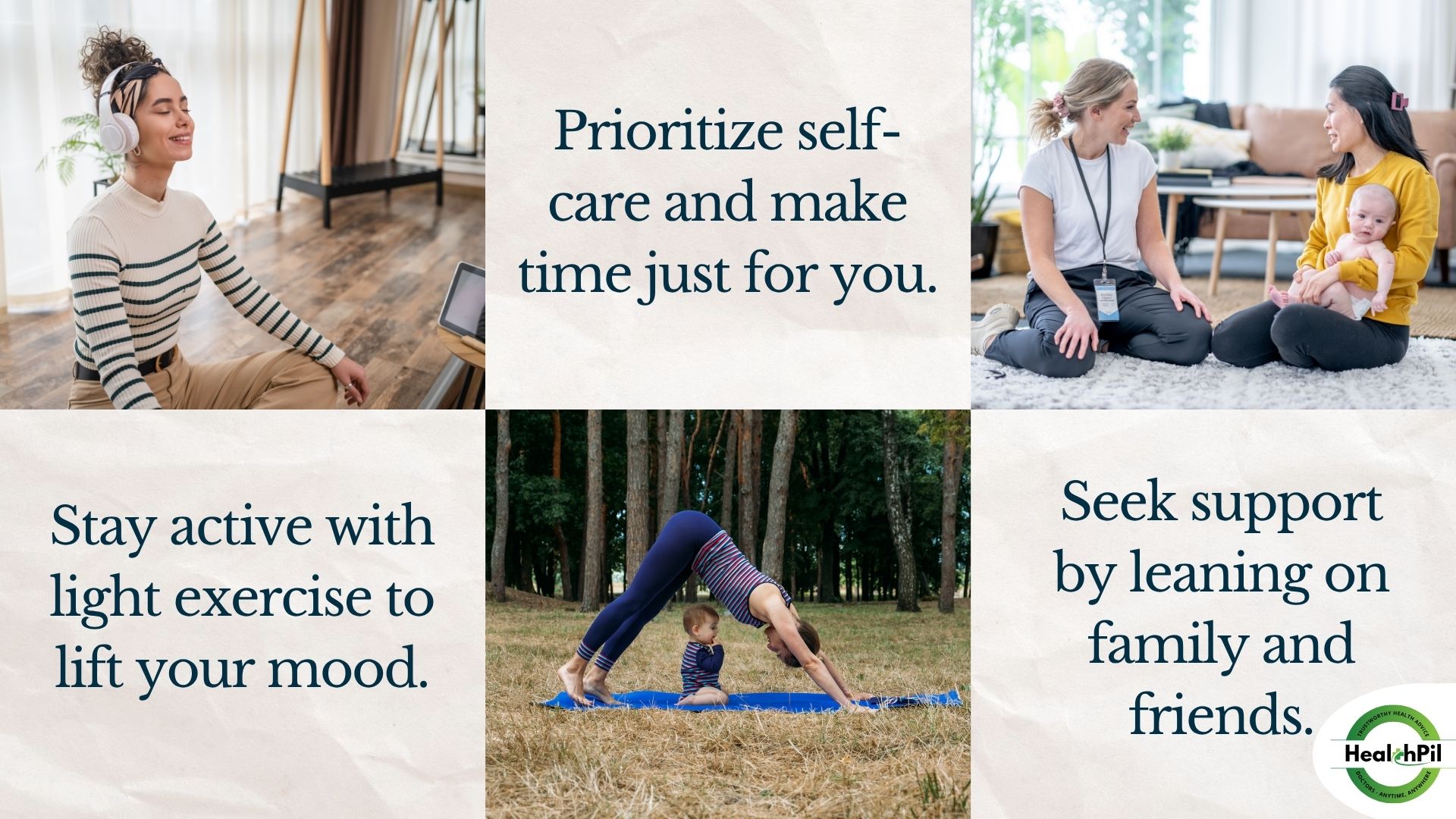
Prioritize Self-Care
Postpartum self care is not indulgent. It is necessary. A warm shower without rushing, ten minutes outside, a meal eaten while sitting down these things matter. Postpartum wellness does not come from doing everything perfectly. It comes from small, consistent acts of looking after yourself alongside everything else.
Seek Support
Postpartum support from family, friends, or a partner is one of the strongest predictors of how well a woman recovers. Asking for help is not weakness. It is the most practical thing a new mother can do. Postpartum care for mothers includes having people around who can take the baby for an hour, bring food, or simply sit with you without expecting you to be okay.
Stay Active
Once cleared, regular postpartum mobility exercises and gentle postpartum stretching exercises help with both physical recovery and mood. Postpartum lifestyle changes do not need to be dramatic. Short daily walks are a genuinely effective postpartum healthy lifestyle habit they improve circulation, reduce anxiety, and create a small window of fresh air in days that can otherwise feel very enclosed.
Join a Support Group
Postpartum recovery support whether in person or online connects mothers going through the same experience. Hearing that someone else is also exhausted, also uncertain, also struggling some days makes a real difference. Postpartum wellness consultation online and virtual postpartum consultation options make this accessible even when leaving the house is not easy.
Lifestyle Habits That Support Postpartum Recovery
Postpartum nutrition is a big part of healing. The body is recovering from major physical effort and in many cases, feeding a baby at the same time. Eating balanced, nutrient-rich meals supports energy, mood, and tissue repair. Staying hydrated matters just as much, especially while breastfeeding, when fluid needs go up.
What to eat, and why:
- Protein and tissue repair — eggs, fish, lentils
- Iron and calcium — leafy greens, dairy, lean meats
- Hydration and milk supply — water through the day, not just when thirsty
Daily habits that make the biggest difference:
- Rest whenever the chance comes, even in short bursts
- Manage stress where possible — it affects healing too
- Avoid heavy lifting too early
- Take short daily walks
- Accept help when it’s offered, without guilt
None of this is complicated. It just needs permission to actually follow it.
If weight loss is a goal:
- Go gradual — around 0.5 to 1 kg a week
- Don’t start before the first couple of months
- Rushing it can affect energy and milk supply
Common Postpartum Exercise Mistakes to Avoid
- Skipping the doctor’s clearance before starting
- Ignoring pelvic pain or unexpected bleeding during activity
- Jumping into high-impact workouts (running, jumping, heavy lifting) too soon
- Doing traditional crunches or sit-ups before the core has properly healed
- Comparing recovery timelines with other mothers every recovery is different
Exercises to Avoid During Early Postpartum Recovery
Postpartum fitness that progresses too fast does more harm than good. During the first weeks of postpartum physical recovery and longer for postpartum recovery after C-section certain exercises place too much pressure on healing muscle and tissue.
Avoid heavy weight lifting, high-impact jumping or running too soon after delivery, intense abdominal workouts, and traditional crunches and sit-ups. These place direct strain on the healing core and pelvic floor and can worsen postpartum diastasis recti the separation of abdominal muscles that occurs in many pregnancies.
Women with pelvic floor issues or diastasis recti should consult a healthcare professional or women’s physiotherapist before progressing to any postpartum strengthening exercises beyond the basics.
How HealthPil can help?
HealthPil connects new mothers with experienced gynecologists, postpartum care specialists, and women’s health experts for comprehensive postpartum wellness consultation online.
Whether you need guidance on postpartum physical recovery, postpartum fitness consultation online, postpartum mental health support, or simply have questions about what is normal book an online maternity consultation today and get the support your postpartum recovery journey deserves.
When to See a Doctor
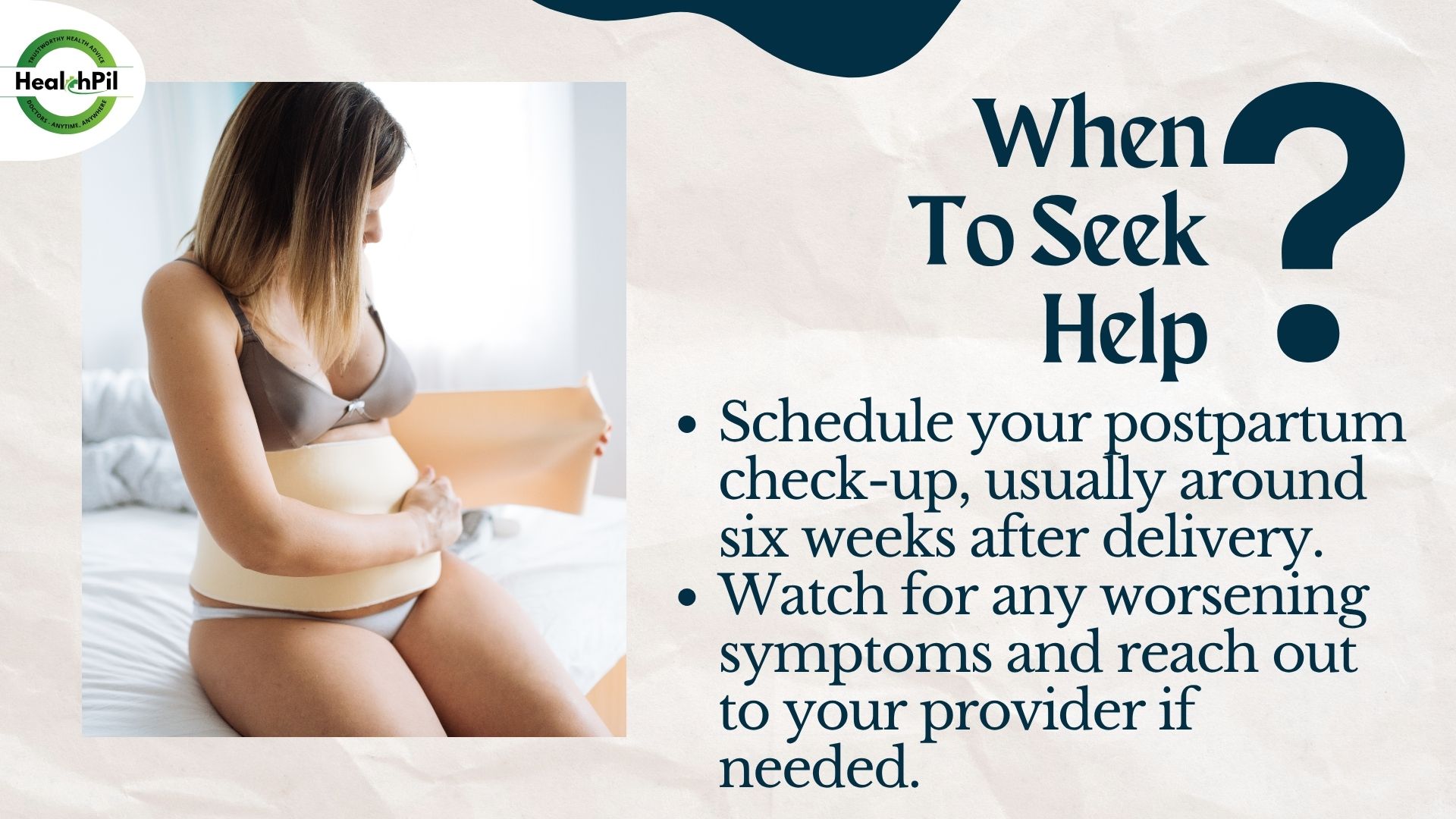
Some postpartum symptoms are serious and need immediate medical attention. Go to a doctor without waiting if you experience heavy bleeding or large blood clots, severe abdominal pain, fever or chills, redness or discharge from stitches or the C-section incision, difficulty breathing or chest pain, severe sadness or anxiety that is not lifting, persistent pelvic pain or urinary leakage, or dizziness or fainting.
If getting to a clinic is not immediately possible, an online gynecologist consultation or postpartum doctor consultation online is a practical starting point. Postpartum care online has made it significantly easier for new mothers to access support without the logistics of travelling with a newborn. Describe your symptoms clearly, and a doctor will advise whether you need to be seen urgently or whether remote guidance is appropriate for now.
Summary
Postpartum recovery is not something to push through quickly. It takes time more time than most women are told to expect. Postpartum body recovery, postpartum mental health, postpartum pelvic floor rehabilitation, and postpartum emotional health all unfold on their own timeline.
The most important postpartum recovery tips come down to this rest when you can, eat and drink well, move gently, ask for help, and take emotional symptoms as seriously as physical ones.
Postpartum wellness is not about bouncing back. It is about healing forward at a pace that is honest and sustainable.
Frequently Asked Questions
1. How long does postpartum recovery usually take?
Most women recover physically within 6 weeks after childbirth, but complete recovery may take several months depending on the type of delivery and overall health.
2. When can I start exercising after delivery?
Light activities like walking and gentle stretching can usually begin after a few weeks, but always consult your doctor before starting postpartum exercises, especially after a C-section.
3. Is postpartum bleeding normal?
Yes, postpartum bleeding (lochia) is normal for several weeks after delivery. However, very heavy bleeding, large clots, or a foul smell should be checked by a doctor.
4. What are the signs of postpartum depression?
Persistent sadness, mood swings, anxiety, loss of interest, difficulty bonding with the baby, and feeling overwhelmed may be signs of postpartum depression and require medical support.
5. Can I get online consultation for postpartum recovery?
Yes, online postpartum consultations can help new mothers receive medical guidance for recovery, breastfeeding, nutrition, emotional health, and postpartum fitness from home.
References
- Lopez-Gonzalez DM, Mikes BA. Postpartum Care of the New Mother. StatPearls Publishing. Available at:
NCBI Bookshelf - Feitosa MFS, et al. Postpartum Recovery: Current Concepts, Maternal Health, and Evidence-Based Care. Available at:
PubMed
Disclaimer
The information provided in this article is for awareness purposes only and should not replace professional medical advice. Always consult your healthcare provider for personalized medical guidance.

Read our editorial policy