



Role of Fathers in Child Development & Parenting
Think back to the moments that shaped who you are. Chances are, a father present or absent, engaged or distant features somewhere in that story.
Fatherhood is not a supporting role in a child’s life. Research consistently shows that involved fathers shape child growth and development in ways that are distinct, measurable, and lasting. Not just by being present, but by being engaged in the daily routines, the difficult conversations, the play, the patience, and the partnership with a co-parent that creates a healthy family environment.
This article is for fathers who want to understand why their involvement matters so deeply, what it looks like in practice, and how to show up more fully even when the demands of modern life make that genuinely hard.
Why Father Involvement Matters for Child Development
The evidence on parental involvement and child development is extensive, and the role of fathers in that research is clear: children with actively engaged fathers consistently show better outcomes across every major dimension of development.
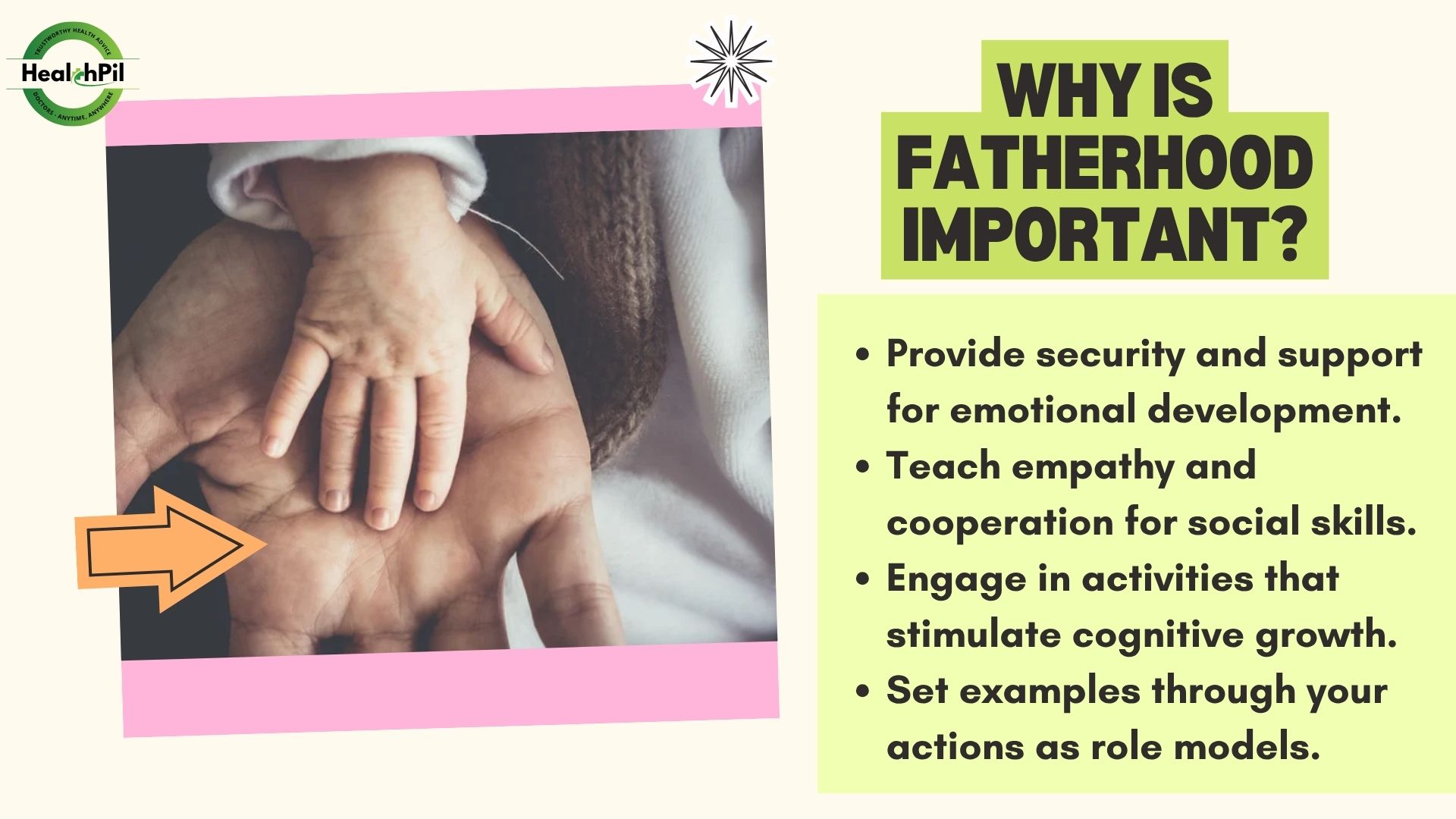
- Emotional development in children is shaped significantly by the quality of the father-child relationship. When a father responds consistently to his child’s emotional needs with warmth, patience, and attentiveness the child develops a secure attachment that becomes the foundation for emotional regulation throughout life. Child emotional well-being is not built in grand gestures. It is built in hundreds of small daily interactions.
- Social skills development empathy, cooperation, conflict resolution, reading social cues are all areas where father involvement shows measurable impact. Children who have strong relationships with their fathers tend to demonstrate stronger social competence with peers and adults alike.
- Child self-esteem and child confidence are closely linked to paternal involvement. A father’s consistent presence, interest, and affirmation communicate something to a child at a very deep level: you are worth showing up for. That message shapes child personality development in ways that persist into adulthood.
- Academic success and school performance research shows that children with engaged fathers tend to perform better academically, demonstrate stronger problem-solving skills, and develop greater intellectual curiosity. The parenting and academic performance connection is particularly strong when fathers are involved in reading, play, and learning activities from early childhood.
- Child resilience and child coping skills children who experience consistent, responsive parenting from fathers show greater ability to manage stress, recover from setbacks, and navigate adversity. Parenting and emotional resilience are built, in part, through the everyday experience of having a father who is present and responsive.
Fathers also tend to introduce children to new challenges and a bit of healthy risk-taking climbing a little higher, trying something new, pushing past hesitation. This kind of encouragement, alongside a mother’s nurturing care, helps build a child’s courage and decision-making ability over time.
Fathers Matter, Regardless of Family Structure
A father’s positive impact doesn’t depend on living under the same roof as his child. Research shows that children who have regular, positive contact with their father — even after divorce or separation tend to regulate their emotions better and do better socially and academically than children with little or no contact.
What matters most isn’t the exact family structure. It’s having caregivers who consistently meet a child’s emotional, physical, and social needs. A father showing up regularly, even from a distance, still counts and counts a great deal.
Understanding Parenting Styles and Their Impact on Children
To understand effective parenting, it helps to understand the framework that decades of child psychology research has produced. Psychologist Diana Baumrind identified three original parenting styles later expanded to four that describe different approaches to raising children and their effects on child development.
- Authoritative parenting widely regarded as the best parenting style in terms of child outcomes. Authoritative parents combine warmth and responsiveness with clear, consistent expectations and appropriate boundaries. They explain reasoning, invite discussion, and balance support with accountability. Children raised with authoritative parenting tend to show strong emotional intelligence in children, healthy child independence, better academic performance, and more positive social development. Responsive parenting and supportive parenting are hallmarks of this approach.
- Authoritarian parenting high on control, low on warmth. Rules are strict and non-negotiable, with punishment used to enforce compliance and little explanation offered. Parenting and emotional support is limited. Children in authoritarian households may be well-behaved outwardly but often struggle with child self-esteem, decision-making skills, and emotional regulation when parental oversight is removed.
- Permissive parenting high on warmth, low on structure. Permissive parents are nurturing and emotionally available but set few boundaries or consistent expectations. Children may feel loved but often struggle with parenting rules and structure when they encounter them outside the home. Challenges around parenting discipline and child responsibility are common in this style.
- Neglectful parenting also called uninvolved parenting. Low warmth, low expectations, and low engagement. This is the parenting style most consistently associated with negative outcomes across all areas of child wellbeing emotional, social, academic, and psychological. The parenting influence on children in neglectful environments is significant and long-lasting.
Positive Parenting: What It Actually Looks Like
Positive parenting sometimes called nurturing parenting is not about being permissive or avoiding all conflict. It is about creating a parent-child relationship built on connection, respect, and consistent guidance.
- Positive discipline sits at the heart of this approach. Rather than punishment-focused responses to behaviour, positive discipline uses natural consequences, calm redirection, and explanation to help children understand why behaviour matters not just what the rules are. This approach supports child behaviour management in a way that builds internal motivation rather than reliance on fear of consequence.
- Parenting communication is foundational. Children who grow up in families where open, honest communication is modelled develop stronger emotional intelligence, better conflict resolution skills, and greater capacity for trust in relationships. Listening to your child genuinely, without distraction communicates more than almost any other parenting behaviour.
- Parenting consistency matters enormously. Children thrive when they can predict how their caregivers will respond. Consistent parenting methods responding similarly across situations, following through on what you say, maintaining parenting boundaries with warmth rather than harshness build the security that underpins healthy child development.
- Parenting flexibility matters too. Effective parenting is not rigid. The parenting approach that works for a toddler is not the same as what works for a ten-year-old. Good parents adapt staying attuned to their child’s developmental stage, temperament, and individual needs while maintaining their core values and expectations.
How Fathers Can Build a Strong Bond With Their Child
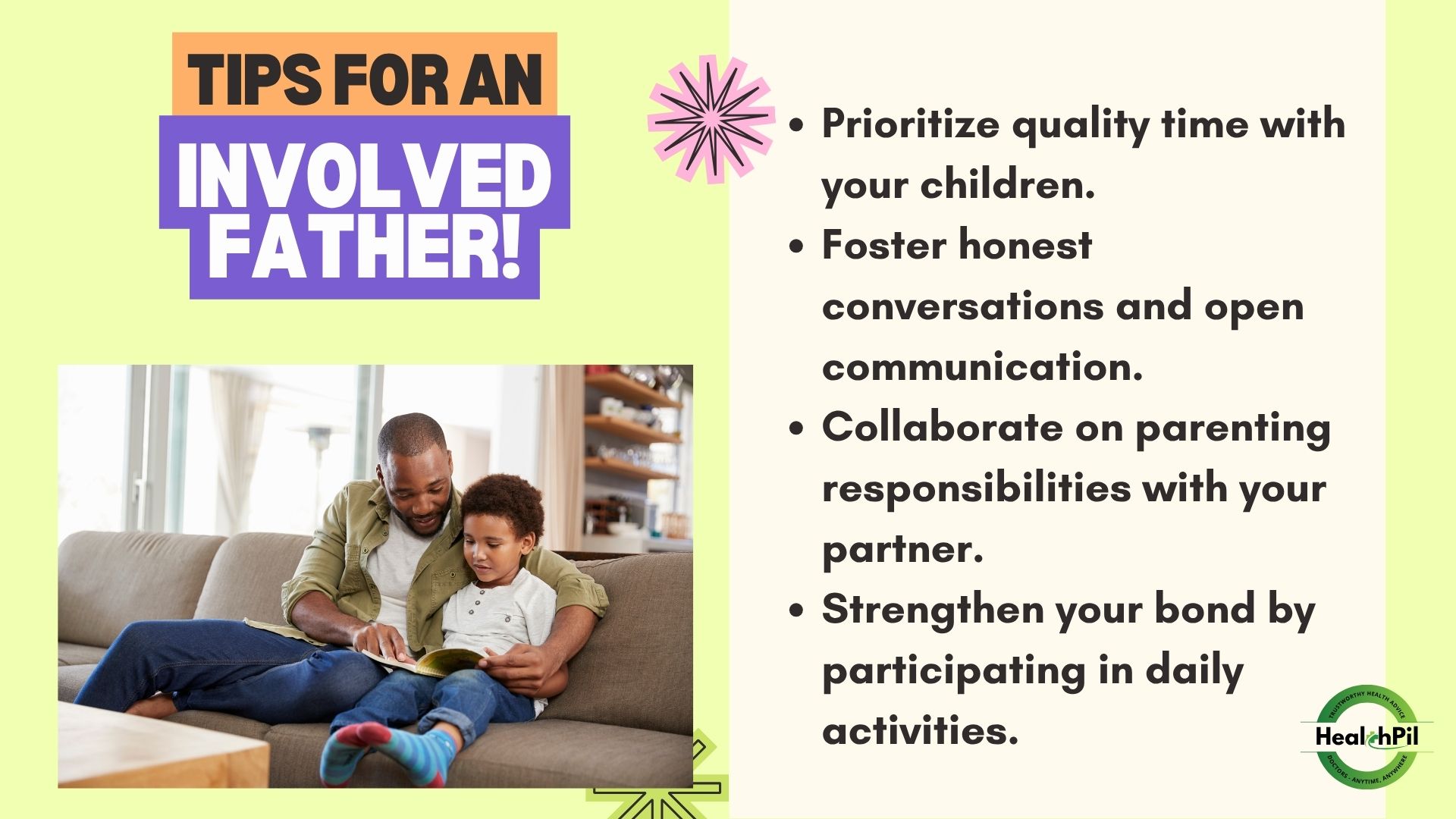
Father-child bonding does not require grand gestures or elaborate activities. It is built reliably and powerfully through small, consistent, daily interactions.
- Talk and sing to your baby. Newborns recognise their father’s voice and find it soothing. Talking during nappy changes, singing during bath time, narrating your actions all of this builds the neural pathways that support language development and emotional connection simultaneously.
- Read together. Reading with your child from infancy is one of the highest-return parenting activities available. It builds vocabulary, supports cognitive development, models that learning is enjoyable, and creates a ritual of closeness that children associate with safety and warmth.
- Participate in daily routines. Feeding, bathing, bedtime these aren’t chores. They’re relationship-building opportunities. A father who is present for these routines is not helping with childcare. He is parenting. The distinction matters.
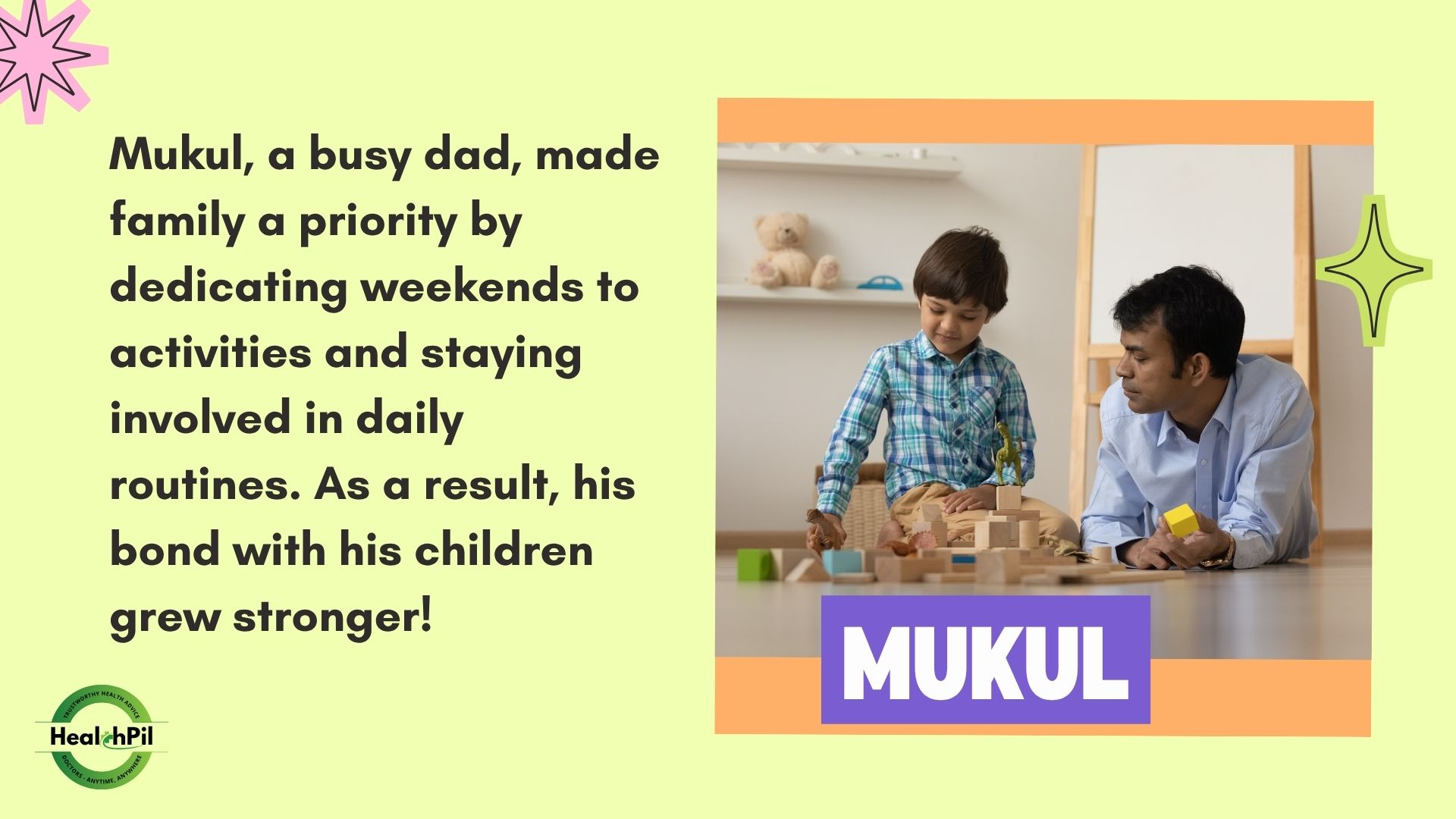
- Play properly and freely. Age-appropriate play activities, particularly physical play, are associated with improved emotional regulation, stronger social skills, and greater child confidence. Play is how children process the world. A father on the floor, building blocks or kicking a ball, is doing something developmentally significant.
- Quality time every day. Even twenty minutes of undivided, phone-away, child-led time sends a message that nothing else quite does: you have my full attention. You matter most right now. Parenting and mental health research consistently shows that children who receive regular quality time with both parents show lower rates of anxiety, depression, and behavioural difficulties.
Challenges New Fathers Face and How to Navigate Them
Fatherhood is rewarding. It is also genuinely hard in ways that aren’t always acknowledged.
- Sleep deprivation affects judgement, emotional regulation, and patience all of which matter enormously in parenting. It is not weakness to name this. It is accuracy.
- Balancing work and family life is one of the most common parenting challenges fathers report. The pressure to provide financially while also being present as a parent creates real tension that does not resolve itself without deliberate, ongoing attention.
- Parenting uncertainty not knowing what you’re doing, feeling out of your depth, making mistakes is universal among new fathers. Parenting skills develop through practice and reflection, not instinct alone.
- Supporting a partner during the postpartum period including understanding postpartum mood changes and stepping up practically during a time when a partner is recovering is an area where many fathers feel underprepared.
Recognising these challenges openly, seeking parenting support when needed, and connecting with other fathers navigating the same terrain all help. Modern parenting styles increasingly acknowledge that fathers need support structures too not just mothers.
Supporting Your Partner: Parenting as a Team
Parenting style effects are shaped not just by how individual parents behave, but by the quality of the parenting partnership between them. Family dynamics in homes where parents work as a team sharing responsibilities, communicating openly, supporting each other’s wellbeing consistently show better outcomes for children than those where the parenting load is imbalanced or the relationship is strained.
Fathers who actively share parenting responsibilities feeding, nappy changes, school runs, emotional support during difficult moments reduce the load on their partners and increase their own engagement and competence simultaneously. Parenting values are modelled as much as they are taught. A child who watches their father treat their mother with respect, who sees shared responsibility in action, is learning something about relationships that will shape them for decades.
When to See a Doctor
Most parenting challenges settle with time, support, and learning. But sometimes professional guidance makes a real difference.
Consider speaking with a paediatrician or child psychologist if your child shows delays in speech, social, or emotional development; has persistent behavioural problems affecting home or school; experiences extreme anxiety, withdrawal, or frequent emotional outbursts; or if family conflicts seem to be affecting their wellbeing. Also reach out if you feel persistently overwhelmed or unable to cope.
Early support works better than waiting. An online consultation makes it easy to get expert guidance from home and seeking help is a sign of good parenting, not inadequacy.
How HealthPil Can Help
HealthPil connects parents with experienced paediatricians and child development specialists who provide evidence-based parenting guidance, child behaviour management support, and developmental assessment all available online, from wherever you are.
Whether you have concerns about your child’s development, want guidance on effective parenting strategies, or simply need a trusted professional to speak with about a parenting challenge the right support is available. Book your online consultation with HealthPil today.
Summary
Involved fathers shape child development in ways that are profound, well-documented, and irreplaceable. From emotional regulation and social skills development to academic success and child self-esteem the parenting influence on children from engaged fathers runs deep. Understanding different parenting styles, practising positive parenting, showing up consistently in daily routines, and supporting a co-parenting partnership are the foundations of effective fatherhood. The role is not peripheral. It is central. And the children being raised by engaged, present fathers carry that forward for the rest of their lives.
Frequently Asked Questions
How can I be more involved in my child's life?
Prioritize quality time, engage in activities together, and be present for important moments.
What if my work schedule makes it difficult to spend time with my children?
Look for opportunities to connect during your available time, such as family dinners or weekend outings.
How can I support my partner in parenting?
Share responsibilities, communicate openly, and show appreciation for each other’s efforts.
What activities can I do with my children?
Play sports, read books, visit parks, or engage in creative projects—find what interests your child!
Is it okay to ask for help as a father?
Absolutely! Seeking advice or support from other fathers or parenting groups is beneficial.
References
- Yogman M, Garfield CF; Committee on Psychosocial Aspects of Child and Family Health. Fathers’ Roles in the Care and Development of Their Children. Available at:
PubMed - Pruett KD. Role of the Father. Available at:
PubMed
Disclaimer
The information provided in this article is for awareness purposes only and should not replace professional medical advice. Always consult your healthcare provider for personalized medical guidance.


Read our editorial policy