

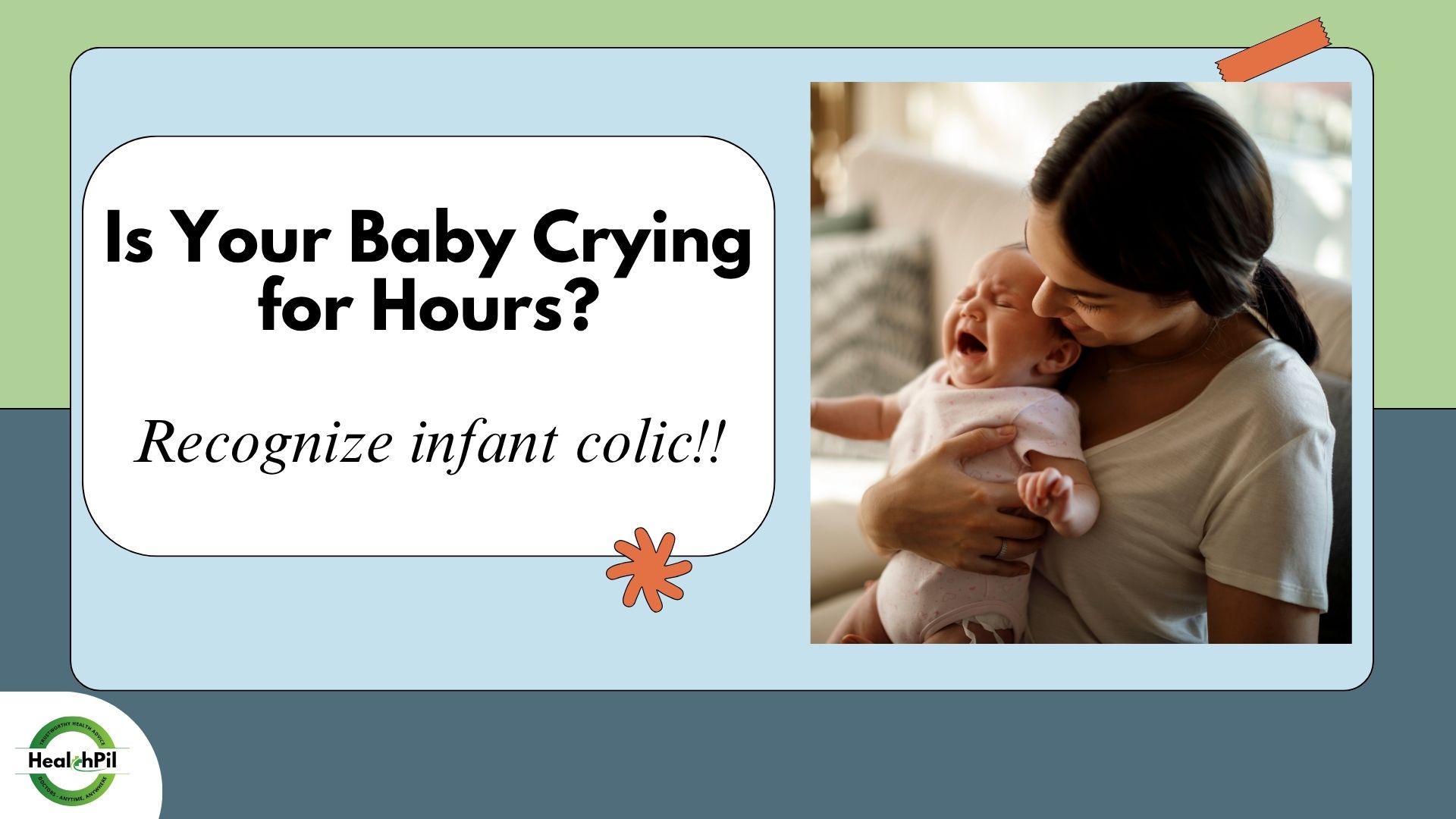


You’ve fed her. Changed her. Held her. Rocked her. And still, she’s screaming that same high-pitched, inconsolable cry, night after night, right around the same time.
You start to wonder if you’re doing something wrong. You’re not.
If this sounds familiar, you’re likely dealing with colic one of the most common, most exhausting, and most misunderstood phases of early infancy. It’s genuinely hard. But it’s also temporary, and understanding what’s actually happening makes it a little more manageable to get through.
What Is Colic?
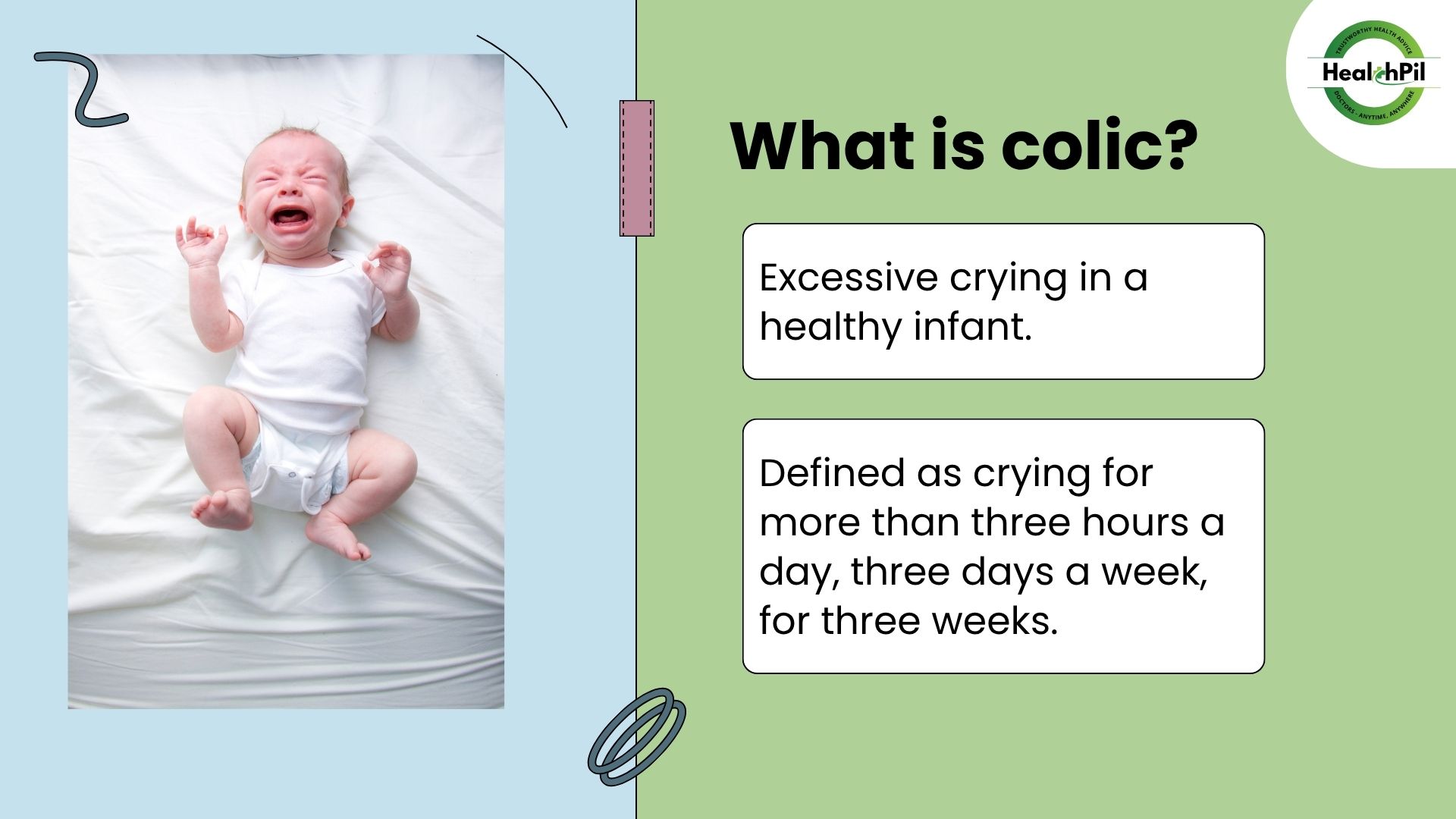
Colic refers to frequent, intense, and prolonged crying in an otherwise healthy baby, with no clear cause. Doctors often use what’s called the “Rule of Three” to describe it: crying for more than 3 hours a day, on more than 3 days a week, for at least 3 weeks.
Colic usually begins when a baby is around 2 to 3 weeks old, tends to peak around 6 weeks, and gradually settles by 3 to 4 months of age. It’s important to know this clearly: colic is not caused by poor parenting, and it doesn’t mean something is medically wrong with your baby.
How Common Is Colic?
Colic is genuinely common studies estimate it affects anywhere from roughly 3% to nearly 28% of babies worldwide, depending on how it’s measured. It happens regardless of whether a baby is breastfed or formula-fed, and it isn’t linked to gender.
If you’re going through this, you are very much not alone even if it feels isolating at 2am with a baby who won’t stop crying.
Signs and Symptoms of Colic
A baby with colic may:
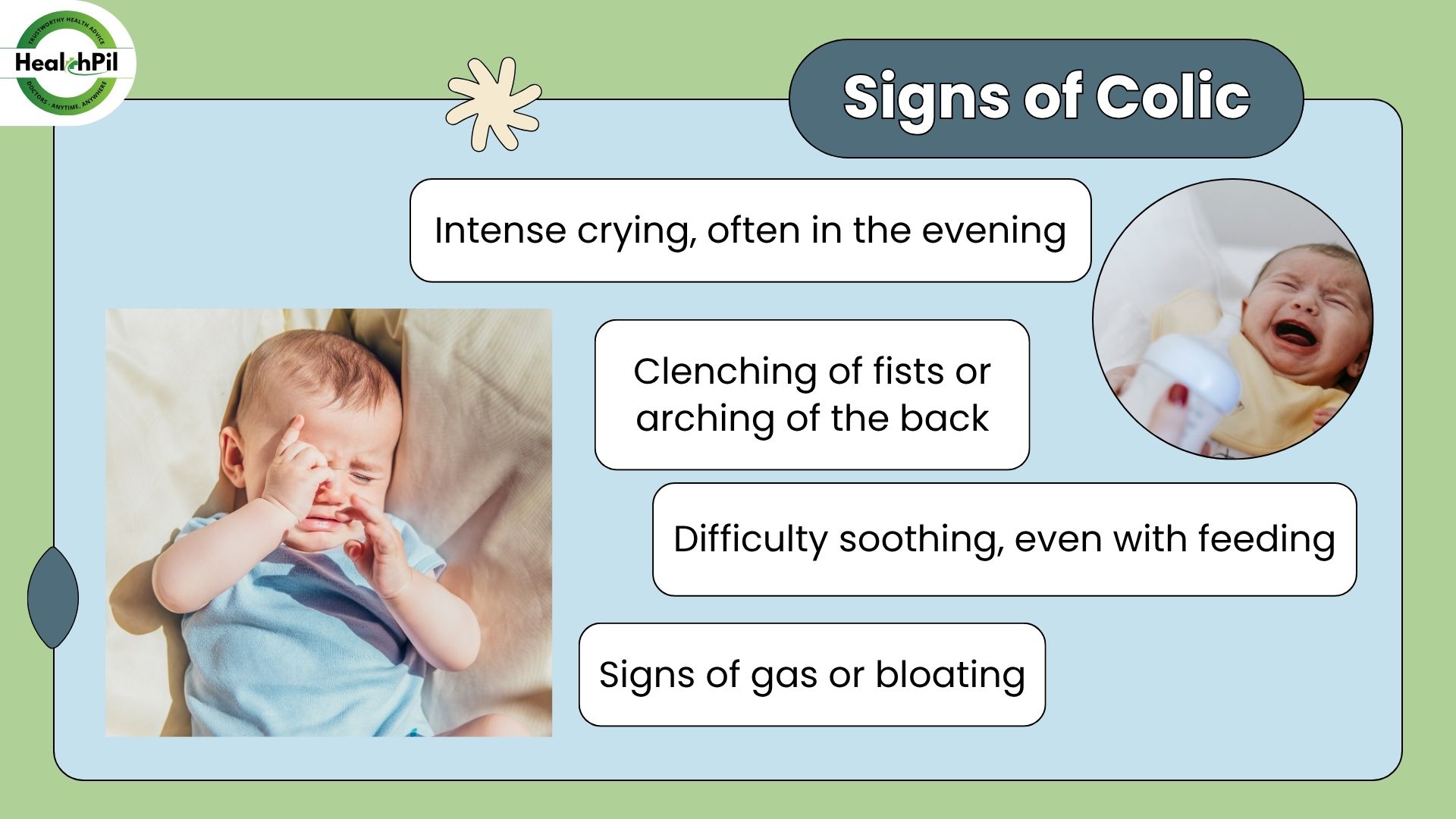
- Cry suddenly and intensely, often for no obvious reason commonly in the late afternoon or evening
- Have a high-pitched cry and look flushed or tense in the face
- Clench their fists, curl up their legs, or arch their back during crying spells
- Show a tight, distended tummy during episodes
- Sometimes pass gas or have a bowel movement toward the end of an episode
- Be genuinely difficult to soothe, even with feeding, holding, or comforting
Episodes can last anywhere from a few minutes to several hours. Between episodes, colicky babies usually feed, sleep, and grow completely normally which is actually one of the reassuring signs that this is colic and not something else.
What Causes Colic?
The honest answer is that the exact cause of colic isn’t fully understood and that uncertainty is part of what makes it so frustrating for parents. It’s likely a combination of factors, including:
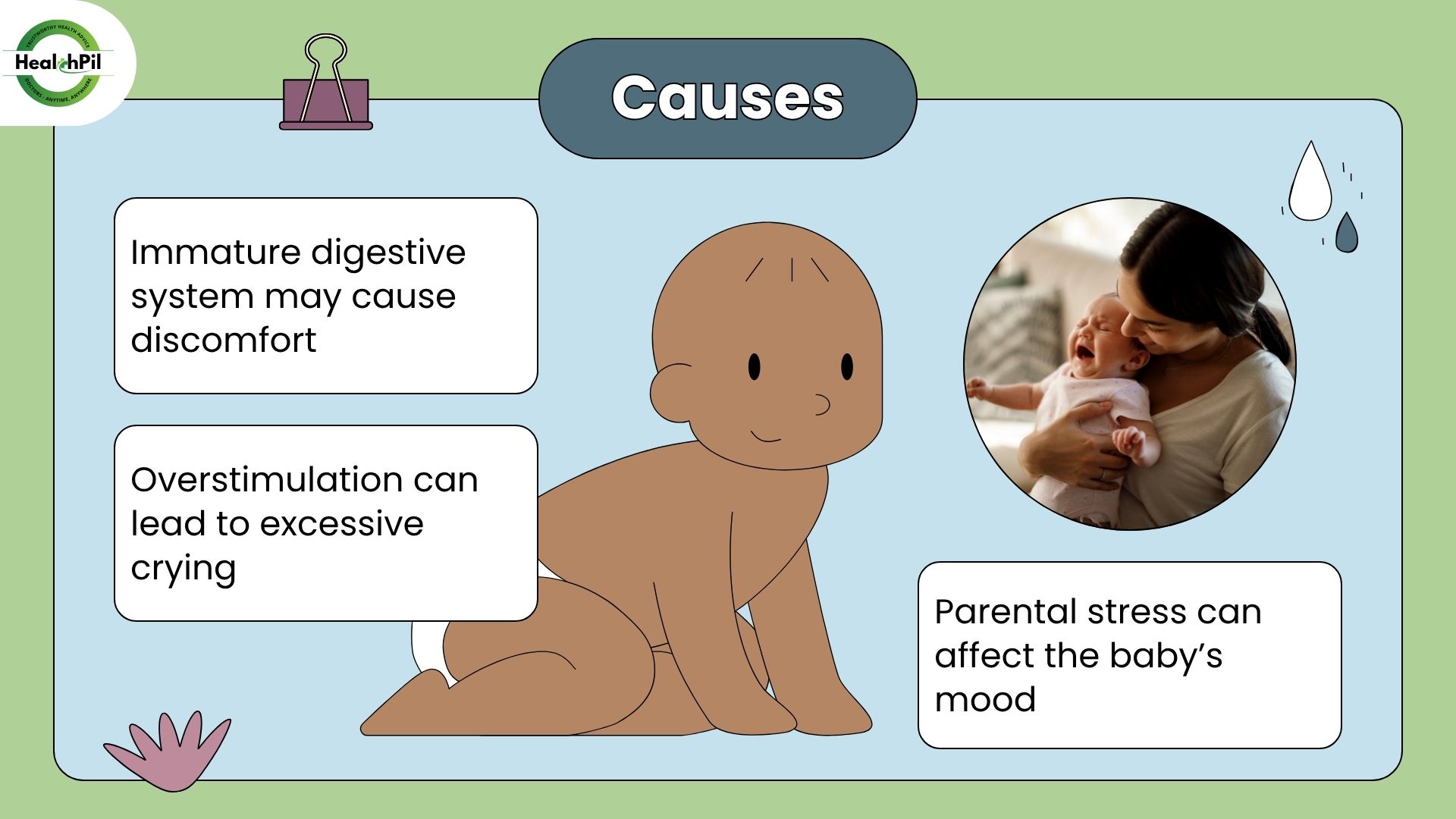
Digestive Discomfort — Many colicky babies seem to have some tummy discomfort. This can include gas or bloating from swallowed air, temporary difficulty digesting lactose, or in rare cases, sensitivity to proteins in cow’s milk or foods from a breastfeeding mother’s diet.
Feeding-Related Factors — Overfeeding, underfeeding, feeding too quickly, or an imbalance between foremilk and hindmilk during breastfeeding can all contribute to tummy discomfort.
Gut Hormones — Certain hormones involved in digestion and gut movement may be more active in some babies, making their digestive system more sensitive during this early stage.
Normal Developmental Overwhelm — Newborns are still adjusting to life outside the womb. Lights, sounds, hunger, and tiredness can all feel overwhelming to an immature nervous system, and crying is sometimes simply how that gets expressed.
Family Stress — Parental stress or anxiety doesn’t directly cause colic, but babies are sensitive to their environment, and tension at home can sometimes contribute to longer or more intense crying spells.
It bears repeating: colic is not your fault, and it doesn’t reflect anything you’re doing wrong as a parent.
Risk Factors for Colic
While colic can affect any baby, some factors are associated with a higher likelihood:
- Younger age colic is most common between 2 weeks and 4 months, and very uncommon after 5 months
- Feeding with cow’s milk-based formula, in babies with a possible sensitivity
- Preterm birth or low birth weight
- Being a firstborn child
- A mother with allergic conditions like asthma, eczema, or hay fever
- Persistent nausea during pregnancy
- Postpartum depression or high maternal stress after delivery
Having one or more of these doesn’t mean colic is guaranteed it simply means slightly higher odds.
How Is Colic Diagnosed?
Colic is typically diagnosed through a detailed conversation with your pediatrician and a physical exam not through lab tests or scans. Your doctor will usually ask about feeding patterns, sleep, bowel movements, and your baby’s growth, and will observe your baby’s overall behaviour.
A baby with true colic will otherwise look healthy, feed well, and gain weight normally between crying episodes. If your doctor notices anything unusual during the exam for example, signs suggesting an infection, a hernia, reflux, or another underlying issue further evaluation may be recommended. In most straightforward cases, though, no tests are needed at all.
Soothing Strategies That Actually Help
No single technique works for every baby, so it’s worth trying a few to see what helps yours:
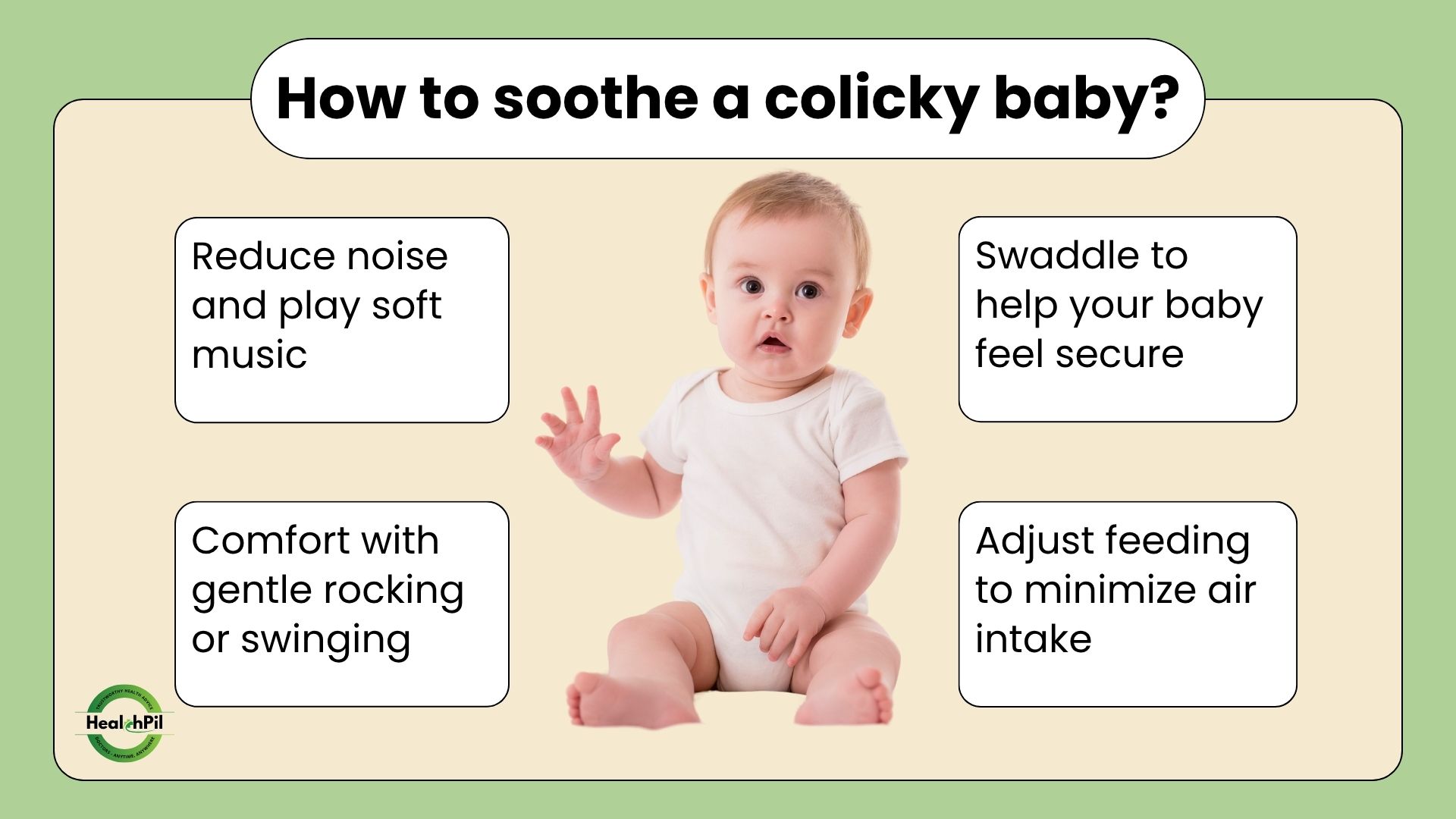
Create a Calm Environment — Dim the lights, reduce noise, and try soft white noise (a fan, gentle music) to create a soothing atmosphere.
Gentle Movement — Rocking, swaying, gentle bouncing, or a stroller or car ride can be genuinely calming for a fussy baby.
Swaddling — Wrapping your baby snugly can recreate the secure, contained feeling of the womb and help reduce crying.
Skin-to-Skin Contact — Simply holding your baby against your skin can be remarkably calming for both of you.
Warmth on the Tummy — A warm (not hot) towel or gentle tummy massage can sometimes ease gas-related discomfort.
Pacifier — Sucking is naturally soothing for many babies and can help settle a crying spell.
Try, Adjust, Repeat — What works one day may not work the next. That’s normal, not a sign you’re doing something wrong.
Feeding Adjustments Worth Trying
Since digestion is often involved, small feeding changes can genuinely help:
- Keep your baby upright during and after feeds to reduce swallowed air
- Burp frequently, both during and after feeding
- If breastfeeding, let your baby finish one breast fully before switching, so they get the more satisfying hindmilk, not just the earlier, lighter foremilk
- If bottle-feeding, use a slow-flow nipple and avoid feeding too quickly
- Avoid overfeeding — a feeding session of around 20 minutes is generally enough
- If breastfeeding and colic persists, some mothers find it helps to temporarily cut back on dairy, caffeine, or chocolate — though this should be discussed with your pediatrician first, not done on your own long-term
- If a cow’s milk protein sensitivity is suspected, your doctor may suggest trialling a hypoallergenic formula
Possible Complications of Colic
Colic itself is not dangerous and doesn’t cause lasting harm to your baby. But it’s worth understanding the real effects it can have on the whole family, so you can watch for them and get support early:
- Caregiver exhaustion and stress — Persistent crying, especially at night, is genuinely draining and can affect parents’ mental health.
- Overfeeding — Not always knowing why a baby is crying can lead to feeding more often than needed, which can sometimes make discomfort worse.
- Sleep deprivation — For both baby and parents, which compounds stress further.
- Strain on parent-infant bonding — Persistent, hard-to-soothe crying can sometimes affect how connected a parent feels to their baby in the moment, and can occasionally lead to stopping breastfeeding earlier than planned.
- A genuinely important safety note — In rare cases, the extreme frustration caused by inconsolable crying has been linked to a heightened risk of shaken baby syndrome, where a caregiver, overwhelmed in the moment, shakes a baby forcefully enough to cause serious injury. This is exactly why knowing what to do when you feel at your limit (see below) matters so much — not as a judgment, but as genuine protection for both you and your baby.
None of this is meant to alarm you it’s meant to help you recognise that support during this phase isn’t optional, it’s necessary.
Caring for Yourself While Caring for a Colicky Baby
This part matters as much as anything else in this guide.
If you feel overwhelmed, it is completely safe and appropriate to place your baby down gently in their crib and step into another room for a few minutes to collect yourself. A baby crying alone and safe in a crib for a short while is far better than a caregiver reaching a breaking point while holding them.
Ask for help from a partner, a family member, or a friend even if it’s just so you can shower or sleep for an hour. Talk to your pediatrician or a lactation consultant if you’re struggling; this is exactly the kind of thing they’re there to help with, not something to feel embarrassed about.
If you notice signs of persistent low mood, anxiety, or feeling unable to cope beyond typical exhaustion, please talk to a healthcare provider. Postpartum depression and anxiety are common, genuinely treatable, and nothing to be ashamed of and they deserve care just as much as your baby’s colic does.
Prevention Strategies
Colic can’t always be prevented, but a few things may help reduce how often or how intensely it happens:
- Feed your baby upright and burp them often to reduce swallowed air
- Feed at a calm, steady pace rather than rushing
- Use a slow-flow bottle nipple if bottle-feeding
- Keep the environment calm and avoid overstimulation, especially in the evenings
- If breastfeeding, watch for a possible link between your diet and symptoms, and discuss it with your doctor rather than eliminating foods on your own
- Respond to your baby’s cues promptly holding and responsiveness may help reduce overall fussiness
Emergency Warning Signs When to Seek Help Immediately
Most crying, even a lot of it, is simply colic. But a few signs suggest something else may be going on and need urgent medical attention. Seek immediate care if your baby:
- Has a weak, continuous, or unusual high-pitched cry that’s different from their normal cry
- Appears floppy, unusually drowsy, or difficult to wake
- Refuses feeds entirely, or vomits green or yellow fluid
- Has blood in their stool, or persistent diarrhoea
- Has a fever of 38°C (100.4°F) or higher if under 3 months old, or 39°C (102.2°F) or higher between 3 and 6 months
- Has a soft spot on the head (fontanelle) that looks swollen or bulging
- Has a seizure, or turns pale, blue, or blotchy
- Shows signs of difficulty breathing — fast, noisy, or grunting breaths
None of these are typical colic symptoms. If you see any of them, don’t wait seek emergency care right away.
When Should You See a Doctor?
Beyond the emergency signs above, it’s worth talking to your pediatrician if:
- Crying doesn’t improve at all with comfort measures over time
- Your baby’s crying pattern changes suddenly or becomes different from their usual colic episodes
- Crying continues well beyond 3 to 4 months of age
- You notice signs of another condition alongside crying like a rash, reflux symptoms, or poor weight gain
- You are finding it genuinely difficult to cope, for any reason
An online pediatric consultation through HealthPil can help you get reassurance, rule out other causes, and get practical, personalised strategies without needing to leave the house during an already exhausting time.
How HealthPil Can Help
HealthPil connects you with experienced pediatricians who can assess your baby’s crying pattern, help rule out other underlying causes, and offer practical, personalised strategies for managing colic. We also connect parents with support for their own wellbeing during this demanding stage because caring for you is part of caring for your baby. Whether you need reassurance that what you’re seeing is normal, or guidance because something feels different expert support is available through an online consultation from wherever you are.
Book your online pediatric consultation with HealthPil today.
Summary
Colic is common, temporary, and not a sign of poor parenting or a serious illness it affects a significant number of babies worldwide, typically starting around 2-3 weeks, peaking near 6 weeks, and resolving by 3-4 months. It’s diagnosed through your pediatrician’s assessment rather than tests, based on a baby who cries intensely but otherwise feeds, sleeps, and grows normally. Soothing strategies, feeding adjustments, and a calm environment can help, though what works varies from baby to baby. Colic itself doesn’t harm your baby, but it can be genuinely hard on caregivers — which is exactly why looking after your own wellbeing, asking for help, and knowing when to step away safely matters just as much as any soothing technique. Watch for emergency warning signs like fever, blood in stool, or breathing difficulty, which point to something other than colic and need immediate care. With time, patience, and support, this phase passes.
Frequently Asked Questions
How long does colic last?
Colic typically begins around 2-3 weeks of age and can last until 3-4 months of age.
Is colic harmful to my baby?
Colic itself is not harmful, but it can be distressing for both the baby and the parents. It usually resolves on its own.
Can colic be caused by my diet if breastfeeding?
Some babies may have sensitivities to certain foods in breast milk, such as dairy or caffeine. Consult your healthcare provider for guidance.
What can I do if nothing seems to help?
If soothing techniques are not effective, consult your pediatrician for further evaluation and support.
Will my baby grow out of colic?
Yes, most babies outgrow colic by the time they reach four months old.
References
- Banks JB, Rouster AS, Chee J. Infantile Colic. StatPearls Publishing. Available at:
NCBI Bookshelf - Early-Life Risk Factors for both Infant Colic and Excessive Crying without Colic. Available at:
PubMed
Disclaimer
The information provided in this article is for awareness purposes only and should not replace professional medical advice. Always consult your healthcare provider for personalized medical guidance

Read our editorial policy