

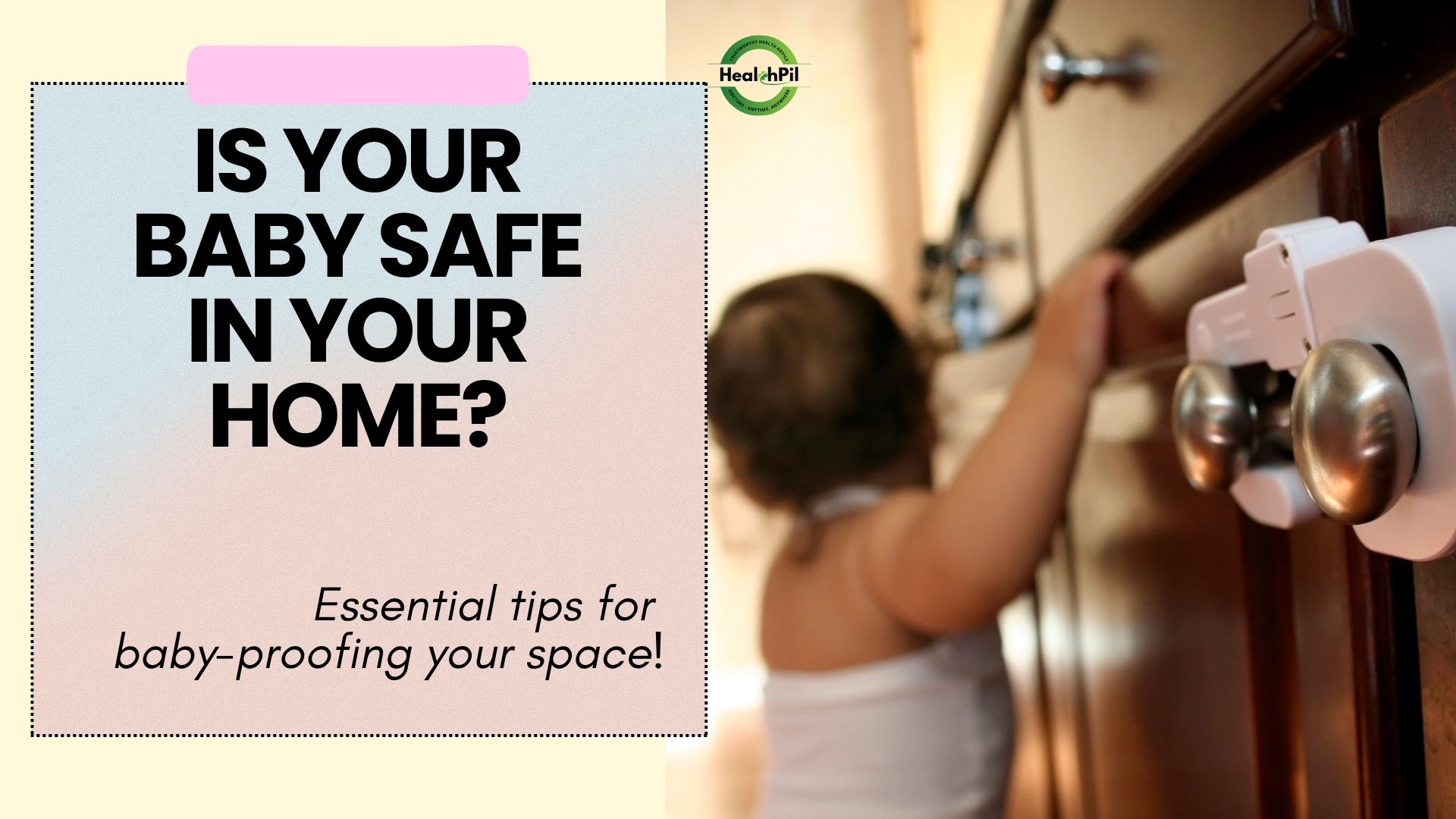



Most parents begin baby-proofing only after their baby starts crawling—but by then, many safety risks are already within reach. A home that’s safe for a newborn may not be safe for a crawling baby or a curious toddler. As babies grow, they quickly develop new skills like rolling, crawling, climbing, and walking, making regular home safety checks essential.
The best approach is to baby-proof your home in stages, based on your baby’s age and development, while also paying attention to room-specific hazards. This guide explains when to start baby-proofing, how to make each area of your home safer, common safety risks to watch for, and practical tips to help create a secure environment for your growing child.
When Should You Start Baby-Proofing?
Start the basics around 3 months before your due date — jobs like anchoring furniture, fixing window guards, or reorganising low cabinets take more time than expected, and you won’t have the energy for them in the newborn haze. Do a second, more thorough pass at 6–10 months, right as crawling and pulling-up begin. A third check is worth doing again around 12–15 months, when walking starts and your baby’s reach literally and in terms of curiosity expands overnight.
The single biggest mistake parents make isn’t skipping baby-proofing it’s doing it once and assuming it’s done. Babies gain new abilities every few weeks. Your home’s safety setup needs to keep pace.
Stage 1: Baby-Proofing for a Newborn (0–6 Months)
Newborns can’t move on their own, so it’s tempting to push baby-proofing down the priority list. But this stage is actually about locking in the life-saving basics before sleep deprivation makes careful decision-making harder — and before your baby’s mobility catches you off guard.
Fire and emergency readiness
- Install smoke and carbon monoxide detectors on every floor of the house. In older Indian homes without built-in detectors, standalone battery-operated units are inexpensive and easy to fit.
- Keep a fire extinguisher in an easily reachable spot in the kitchen, and know how to use it.
- If you live in a high-rise apartment, think through your fire escape plan now — which stairwell, who carries the baby, where you meet outside.
Furniture and fall prevention
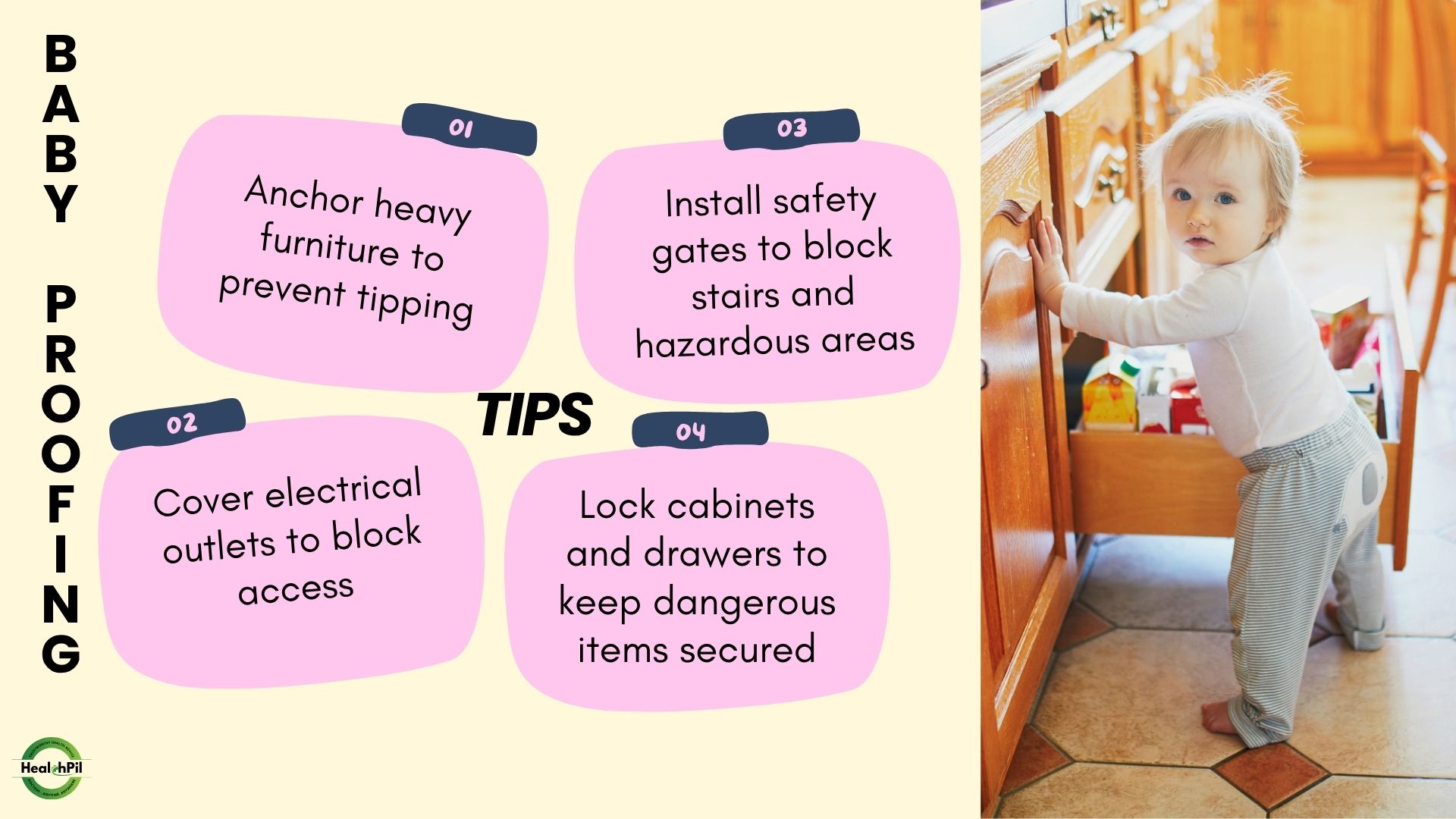
- Anchor bookshelves, dressers, wardrobes, and TVs to the wall using anti-tip straps. This matters even at the newborn stage because these anchors need to be in place well before your baby starts pulling up on furniture retrofitting later, in a rush, is harder to do properly.
- Avoid placing anything heavy a lamp, a decorative object, a speaker on furniture your baby will eventually be able to reach or climb.
Bathing and water heater safety
- Set your water heater (or geyser thermostat) so water never exceeds 120°F (49°C). Test it by running the tap until it’s as hot as it gets, then checking with a thermometer. This one setting alone prevents a huge share of accidental scalding injuries later.
- If you use a bucket-and-mug system rather than a geyser tap, be extra mindful hot water in an open bucket is easy for a baby to reach into once they’re crawling.
Safe sleep setup
- Keep the crib or cot completely empty for the first 12 months no pillows, blankets, bumpers, stuffed toys, or loose bedding. This is standard safe-sleep guidance and reduces suffocation risk significantly.
- Keep all cords phone chargers, baby monitor cables, curtain and blind cords at least 3 feet away from the crib. A cord within reach of a sleeping or standing baby is a strangulation risk.
- If you’re using a mosquito net over the crib, make sure it’s tucked in securely and can’t be pulled down into the crib itself.
Water bodies
- If you have a swimming pool, hot tub, or even an open overhead water tank accessible from the house, install a gate or lock now. It’s far easier to set this up before your baby is mobile than to retrofit it under pressure.
One thing worth doing now
- Consider taking an infant CPR class. It’s a small time investment in the newborn months, and it matters more than almost any physical safety product you’ll buy.
Stage 2: Baby-Proofing for a Crawling Baby (6–10 Months)
This is when the real work starts. The moment your baby can crawl even a few feet, get down on the floor yourself and look around at their eye level you’ll spot hazards standing height completely hides.
Cabinets, drawers, and chemicals
- Add childproof latches to every cabinet within your baby’s reach that holds cleaning supplies, medicines, or sharp objects.
- Move bleach, phenyl, dishwasher detergent (especially pods they’re dangerous if bitten into), and any strong cleaning agents out of low cabinets entirely, even if those cabinets are latched. Latches can fail or be worked open by a persistent toddler later.
- If you keep a “puja” area, medicine box, or first-aid kit at floor or low-shelf level, as many Indian homes do, move it up or lock it these are often overlooked because they don’t register as “chemicals.”
Electrical safety
- Cover every electrical outlet within reach, or replace with child-safe versions. In Indian homes with lower-set switchboards, this is worth double-checking room by room.
- Tuck extension boards and power strips behind furniture these are common in Indian households (for chargers, routers, coolers) and are exactly the kind of low, exposed, multi-socket object a crawling baby is drawn to.
- Secure loose wiring, especially near TV units, routers, and inverter/UPS setups, which tend to have a lot of visible cable.
Sharp edges and hard surfaces
- Add corner guards to coffee tables, TV units, and any furniture at head-height for a crawling baby.
- If you have exposed brick, stone, or marble surfaces (common around fireplaces or entryway ledges), pad these too a fall onto a hard edge is far more dangerous than onto a cushioned one.
Bathroom and drowning risk
- Lock the toilet lid. Babies can drown in just a few inches of standing water, and this is one of the most underestimated risks in Indian homes.
- Never leave buckets, tubs, or drums of stored water unattended and accessible very relevant in homes that store water for daily use or during water-supply shortages. A bucket left in a bathroom or balcony is a real hazard once a baby starts crawling toward it.
- Keep bathroom doors closed or gated when not in use.
Choking hazards
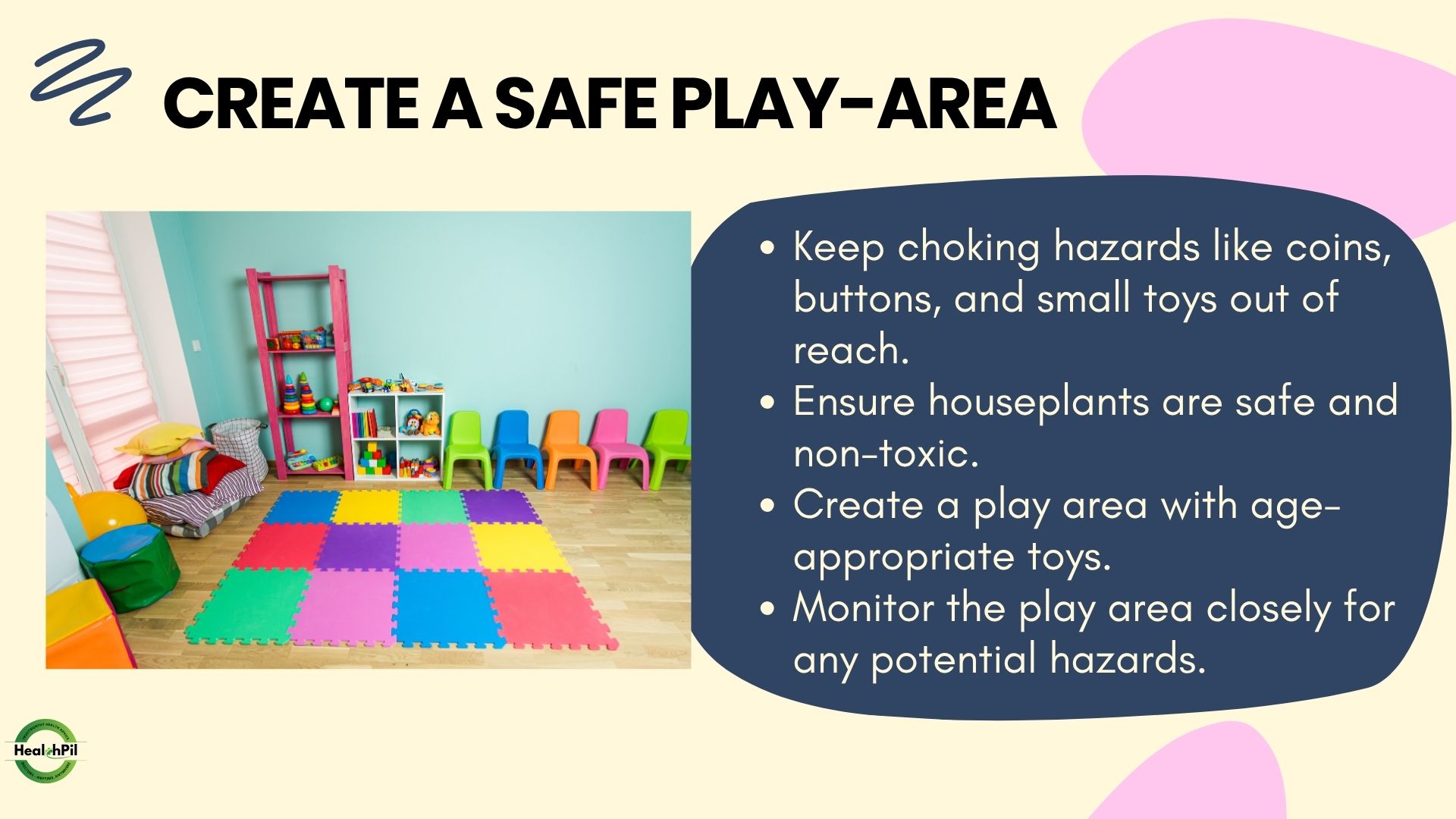
- Use the toilet-paper-tube test: if a small object a coin, button, battery, bead, safety pin fits inside a toilet paper roll, it’s small enough to choke on and needs to be kept out of reach.
- Check doorstops with removable rubber caps these caps are a choking hazard on their own. Swap for one-piece, child-safe versions.
- Be especially careful with small toy parts belonging to older siblings Lego pieces, doll shoes, marbles which tend to end up on the floor in mixed-age households.
Kitchen basics for this stage
- Never carry hot food, tea, or liquids while holding your baby. A sudden movement can cause a severe burn in seconds.
- Keep the kitchen gate or door closed when cooking, even briefly.
Stage 3: Baby-Proofing for a Walking Baby (10–18 Months)
Once your baby is upright, their reach physical and behavioural expands dramatically. Things that were “too high” last month are now within grabbing distance.
Windows and balconies
- Ensure windows can’t open more than 4 inches, or install window guards. This applies to any window a baby could reach after climbing on a bed, sofa, or windowsill ledge.
- Balconies deserve special attention in Indian homes. Many apartments have railings with wide gaps or low parapet walls that are climbable for a toddler. Add safety netting or a secondary barrier if your balcony railing has gaps wider than 4 inches, or if the parapet is low enough for a determined toddler to climb using a chair or planter.
- Move furniture chairs, stools, low tables away from windows and balcony doors so they can’t be used as a step-up.
Kitchen, deep dive
- Lock the kitchen or install a gate at its entrance walking toddlers are drawn to kitchens because that’s where the family gathers.
- Add stove knob covers and, if possible, an oven or gas cylinder safety lock.
- Always cook on the back burners, and keep pan and vessel handles turned inward so they can’t be grabbed or pulled.
- Store LPG cylinder connections and regulators out of easy reach, and check hose connections periodically this matters more in Indian kitchens where cylinders are often floor-level.
- Store knives and sharp tools in a latched drawer, never left on the counter or in the sink.
Chemicals, alcohol, and medicines
- Move alcohol and any CBD or similar products to a high, locked cabinet.
- Continue keeping medications locked away this includes over-the-counter tablets, Ayurvedic preparations, and anything kept in a bag or purse, since toddlers often mistake pills for candy.
Firearms
- If firearms are kept in the home, store them unloaded, locked, and separate from ammunition.
Crib and furniture adjustments
- Lower the crib mattress to its lowest setting once your baby can pull up to stand — this prevents them from climbing or toppling over the rail.
- Keep the floor around the crib cushioned and free of hard objects in case of a fall during this “escape artist” phase.
Dining and tabletop hazards
- Skip tablecloths. Toddlers pull them sometimes to help themselves up and everything on the table comes down with the cloth. Switch to placemats or a bare table.
- Keep hot beverages, glass items, and anything breakable well back from table edges.
Stage 4: Baby-Proofing for a Toddler (18 Months and Beyond)
Toddlers understand more, but they’re also faster, stronger, and more determined than they were a few months ago. This stage is less about locking everything down and more about staying one step ahead while starting to explain “why” certain things are off-limits.
Small appliances and fire hazards
- Keep matches, lighters, and incense/agarbatti out of reach and, ideally, out of sight.
- Never leave small kitchen appliances a blender, mixer-grinder, or iron plugged in and unattended, even for a moment.
- During festival seasons (Diwali, for example), be extra cautious with diyas, candles, and firecrackers keep them well out of a toddler’s reach and supervise closely.
Choking and swallowing
- Never leave balloons unsupervised in a toddler’s room a popped balloon is a serious and often underestimated choking hazard.
- Hide the piggy bank or any container of coins. Coins remain one of the most commonly swallowed objects by toddlers.
- Keep mosquito repellent liquids, coils, and vaporizer refills common in Indian homes locked away; these are toxic if ingested and often stored at low, accessible heights.
Doors and boundaries
- Lock doors leading outside, and if your toddler learns to work a lock, add a secondary latch high enough to be out of reach.
- Keep bathroom doors either locked or freely accessible from the outside toddlers can get themselves stuck inside, and quick access matters in that moment.
Extended family and domestic help awareness
- In many Indian households, grandparents, domestic help, or extended family also supervise the baby at different points in the day. It’s worth doing a quick walkthrough with everyone involved so the same safety rules locked cabinets stay locked, gates stay closed, hot water in the kitchen isn’t left within reach — are followed consistently, not just when the parents are watching.
Room-by-Room Quick Checklist
Living Room: Furniture anchored to wall · Corner guards on tables · Cords hidden or bundled · Outlets covered · Breakables moved up · No tablecloths
Kitchen: Gate at entrance · Stove knob covers · Back-burner cooking habit · Knives in latched drawer · Cleaning agents locked and moved up · Cylinder/hose checked
Bathroom: Toilet lid locked · No standing water in buckets/tubs · Medicines and cleaning agents locked · Non-slip mat · Door kept closed
Bedroom/Nursery: Empty crib (no pillows/bumpers/toys) · Cords 3+ feet from crib · Mattress lowered as baby grows · Heavy furniture anchored
Balcony/Windows: Window guards or 4-inch max opening · Balcony netting for wide-gap railings · No climbable furniture nearby
Common Mistakes Around the House: Puja area chemicals or matches left low · Extension boards left exposed · Mosquito repellents at low shelf height · Doorstops with removable caps
A Few Things Every Stage Has in Common
- Get on the floor at your baby’s height whenever your home layout changes new furniture, a moved rug, a new gadget, festival decorations. What looks safe from adult height often isn’t from a baby’s.
- Common sense beats gadgets. You don’t need every safety product on the market you need the right ones, applied consistently, for your specific home.
- Re-check every few weeks, not just once. Babies gain new physical abilities faster than most parents update their safety setup the gap between “can’t reach it” and “can reach it” is often just a growth spurt away.
- Everyone in the household needs to be on the same page — parents, grandparents, and help alike since inconsistent enforcement is one of the most common ways a “baby-proofed” home still has gaps.
How HealthPil Can Help
Keeping your child safe at home goes beyond installing safety products—it also requires expert guidance as your baby grows. At HealthPil, you can book an online consultation with experienced pediatricians to receive personalized advice on baby-proofing your home, preventing common childhood injuries, and managing age-specific safety concerns.
Our pediatric experts can help you:
- Understand age-appropriate baby-proofing measures
- Identify potential safety hazards at home
- Get guidance after minor falls, burns, or accidental injuries
- Learn first-aid measures and injury prevention tips
- Receive expert recommendations for your baby’s overall health and development
Book an online pediatric consultation with HealthPil to get trusted medical advice and ensure your little one grows up in a safer, healthier environment.
When to See a Doctor
While most baby-proofing concerns can be addressed at home, seek immediate medical attention if your child experiences any injury or emergency, such as:
- A fall from a significant height or a head injury
- Difficulty breathing or choking
- Swallowing a button battery, magnet, medication, or any poisonous substance
- Burns caused by hot liquids, fire, or electrical accidents
- Severe cuts, heavy bleeding, or suspected fractures
- Loss of consciousness, seizures, or unusual drowsiness after an injury
- Near-drowning incidents, even if your child appears to recover initially
If you’re unsure whether your child’s injury requires urgent care or need advice on creating a safer home environment, book an online consultation with a pediatrician for expert guidance and timely medical support.
Summary
Baby-proofing is an ongoing process that should evolve as your child grows. A home that is safe for a newborn may not be safe for a crawling baby or an active toddler. By baby-proofing your home based on your child’s developmental stage and addressing room-specific hazards, you can significantly reduce the risk of falls, burns, choking, poisoning, and other preventable injuries. Regularly reviewing your home’s safety measures and staying one step ahead of your child’s curiosity can help create a secure environment where they can explore and grow with confidence. If you have concerns about your child’s safety, development, or injury prevention, book an online consultation with a HealthPil pediatrician for personalized guidance and expert advice.
Frequently Asked Questions
When should I start baby-proofing my home?
Begin baby-proofing as soon as your baby starts to crawl or explore, typically around 6-10 months.
What are common choking hazards in the home?
Small toys, coins, buttons, and food items like grapes or nuts can pose choking risks.
How can I ensure my baby is safe while playing outside?
Supervise outdoor play, ensure safe play equipment, and check for any potential hazards in the yard.
Should I be concerned about sharp edges on furniture?
Yes, use corner guards or padding to cover sharp edges on tables and furniture to prevent injury.
How often should I reassess my baby-proofing measures?
Regularly review and update your baby-proofing as your child grows and their abilities change.
References
- Kim MY, Lee HN, Lee YK, Kim JS, Cho H. Analysis of Research on Interventions for the Prevention of Safety Accidents Involving Infants: A Scoping Review. Available at:
PMC - Phelan KJ, Khoury J, et al. Unintentional Injury, Supervision, and Discourses on Childproofing Devices. Available at:
PMC
Disclaimer
The information provided in this article is for awareness purposes only and should not replace professional medical advice. Always consult your healthcare provider for personalized medical guidance.

Read our editorial policy