


Every parent has a moment usually when they’re frustrated, exhausted, or watching another child behave in a way theirs doesn’t where they wonder: am I doing this right?
The honest answer is there’s no single right way to raise a child. But decades of research in child psychology have shown that certain parenting approaches consistently lead to better outcomes in emotional development, academic success, social skills, and long-term mental health.
Understanding the different parenting styles isn’t about judging yourself or fitting into a box. It’s about becoming more aware of what you’re doing, why you’re doing it, and whether small adjustments might make a real difference for your child and your family.
What Are the 4 M It is after Tagalog ain Parenting Styles?
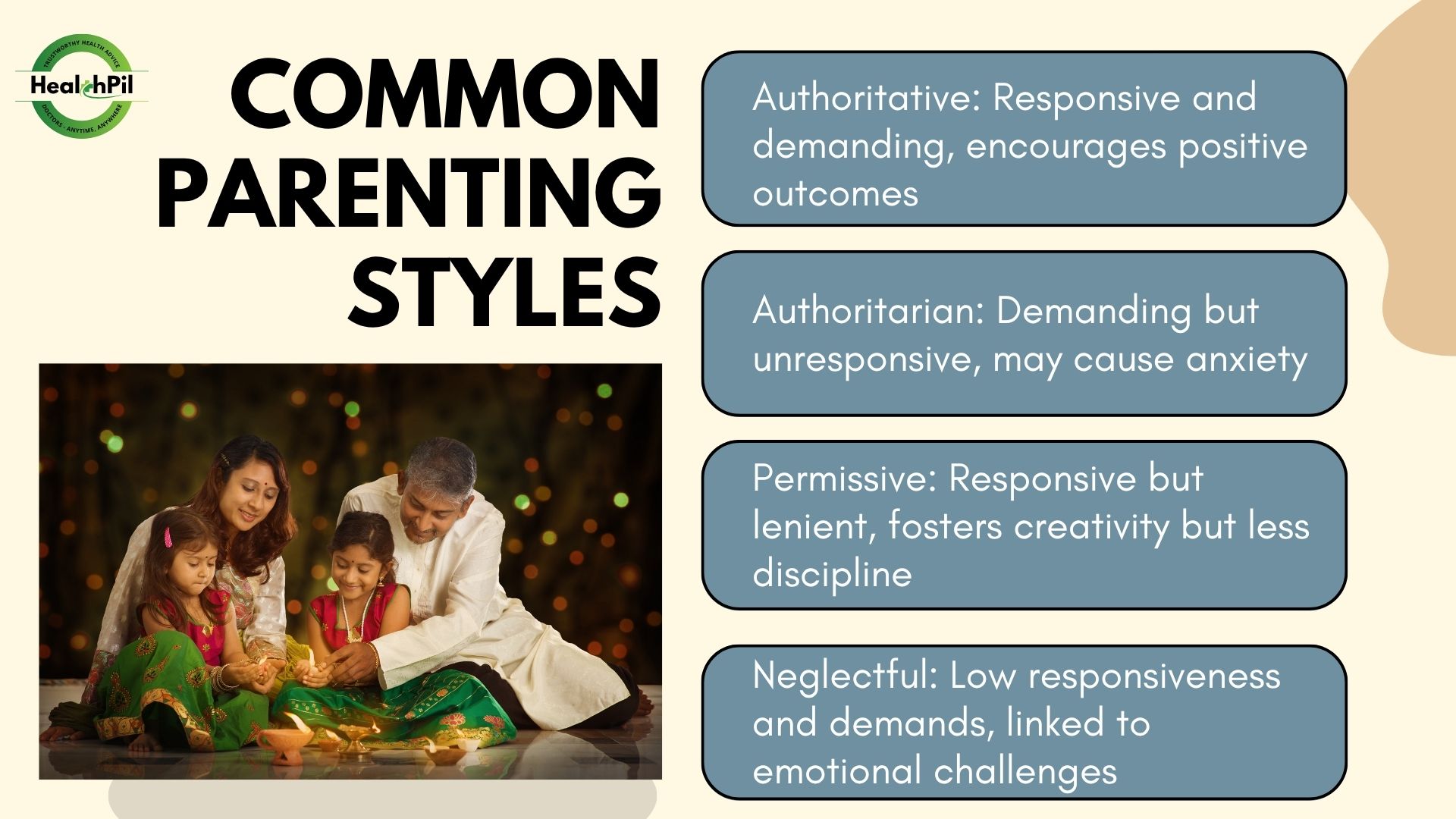
Psychologist Diana Baumrind first identified three core parenting styles in the 1960s through direct observation of families. A fourth was later added by researchers Maccoby and Martin. These four styles are built around two dimensions:
- Responsiveness — how emotionally available, warm, and supportive a parent is
- Demandingness — how much structure, rules, and expectations a parent sets
The combination of these two factors produces four distinct approaches, each with very different effects on a child’s behaviour, mental health, and development.
Authoritative Parenting
Authoritative parenting sits at the intersection of high warmth and high expectations. Parents are emotionally available and nurturing, but they also set clear boundaries and hold children accountable.
Rules exist, and children are expected to follow them but the reasons behind the rules are explained. Children’s opinions are heard. Independence is encouraged within boundaries. When things go wrong, the response is firm but not harsh.
Ask yourself:
- Do you put effort into maintaining a warm relationship with your child, even while enforcing rules?
- Do you explain the reasoning behind your rules, rather than just stating them?
- Do you take your child’s feelings into account while still holding boundaries?
If these sound familiar, you’re likely leaning authoritative.
What this looks like: A child wants to stay up late. An authoritative parent says, “I know you want more time, but sleep helps you feel good tomorrow. You can stay up a little later on the weekend.” The conversation is calm. The child feels heard, even while being corrected.
Impact on child development: Research consistently links authoritative parenting to the most positive outcomes across nearly every measure — higher self-esteem, stronger emotional regulation, better academic performance, more developed social skills, and greater resilience. Children raised this way learn to make decisions within a framework of values, which builds genuine independence rather than dependency or rebellion. The American Academy of Pediatrics recommends this approach as the most effective for healthy child wellbeing.
Authoritarian Parenting
Authoritarian parenting combines high demands with low responsiveness. Rules are strict and expectations are high, but emotional warmth and explanation are limited.
“Because I said so” is the defining phrase. Obedience is expected, not discussed. Discipline is often punishment-based, and the parent-child relationship feels more hierarchical than communicative.
Ask yourself:
- Do you believe children should follow rules without questioning them?
- Do conversations about rules often end without much explanation?
- Is discipline usually about consequences rather than understanding?
If these feel familiar, you may be leaning authoritarian, even with good intentions.
What this looks like: A child asks why they have to finish homework right now. An authoritarian parent says, “Because I said so. No more questions.” There’s little room for the child to explain or ask.
Impact on child development: Children raised in highly authoritarian environments can achieve academically — partly through fear of consequences — but they often struggle with self-esteem, anxiety, and independent decision-making. Because they’ve been told what to do rather than helped to understand why, they can find it harder to make choices when parental authority isn’t around. Some research links this style to increased anxiety and lower social competence in children.
Permissive Parenting
Permissive parenting combines high warmth with low demands. Parents are emotionally responsive, loving, and involved but rules and boundaries are minimal. The approach feels more “friend” than “guide.”
Ask yourself:
- Do bedtimes and rules feel more like suggestions than expectations?
- Do you often let things go rather than follow through on a consequence?
- Does saying “no” feel like it gets in the way of your child’s happiness?
If this sounds like you, you may be leaning permissive.
What this looks like: A child refuses to do homework. A permissive parent says, “It’s fine, you’ve had a long day. Do it later if you feel like it” — without setting a clear expectation.
Impact on child development: Children raised permissively often feel genuinely loved, which matters. But without consistent structure, they can struggle to develop self-discipline, manage frustration, and respect authority. School performance can suffer when children haven’t learned to handle demands and expectations. Permissive parenting can also carry practical health risks — without consistent limits, children may struggle with healthy eating habits, regular sleep schedules, or routines like brushing their teeth. None of this is about blame. It’s simply what happens when structure is missing alongside the warmth.
Neglectful Parenting
Neglectful parenting sometimes called uninvolved parenting combines low responsiveness with low demands. There’s minimal emotional engagement, minimal rules, and minimal involvement in a child’s daily life.
This is different from being a busy parent. Neglectful parenting is a consistent pattern of emotional unavailability and disengagement.
What this looks like: A child spends the evening alone, with no one checking on homework, meals, or how their day went — not because the parent doesn’t care, but because attention and involvement are consistently missing.
Impact on child development: The effects of neglectful parenting on child development are consistently the most negative across research. Children in uninvolved family settings often struggle with self-esteem, emotional regulation, forming healthy relationships, academic performance, and mental health. The absence of a secure parental relationship creates gaps in development that are hard to fill later.
Parenting Styles at a Glance
Style | What the Parent Is Like | Effect on the Child |
Authoritative | Warm, sets clear rules, explains reasons, listens | Confident, emotionally steady, does well socially and academically |
Authoritarian | Strict, expects obedience, little warmth or explanation | Can follow rules well, but may struggle with confidence and decision-making |
Permissive | Loving and warm, but few rules or limits | Struggles with self-discipline and handling frustration |
Neglectful | Minimal involvement, attention, or guidance | Often struggles with self-esteem, relationships, and emotional regulation |
How Parenting Styles Affect Child Development
The impact of parenting style goes far beyond behaviour. It shapes:
- Emotional intelligence — the ability to recognise, understand, and manage emotions, and respond to others’
- Resilience — the capacity to recover from setbacks and manage stress
- Social skills — how children form friendships, resolve conflict, and navigate social situations
- Academic performance — not just grades, but motivation, persistence, and attitude toward learning
- Mental health — anxiety, self-worth, and the ability to cope with difficulties
- Personality development — how children come to see themselves and their place in the world
Consistency is one of the most important factors across all styles. A child who can predict how their parent will respond — who knows that rules mean rules and warmth means warmth — develops a more secure sense of self than one navigating unpredictability.
Cultural and Family Influences on Parenting
Parenting doesn’t happen in isolation. It’s shaped by the world around it too.
In many Indian households, extended family plays an active role grandparents, aunts, and uncles often share in decisions and daily care. This can bring more support, but it can also mean navigating different opinions about discipline and structure.
Financial pressures, work demands, and access to schools or support systems all shape how much time and energy a parent has for consistent structure. None of this excuses harmful patterns, but it explains why parenting doesn’t look the same in every home and why comparing yourself to another family’s approach rarely tells the full story.
What about gentle parenting? Gentle parenting focuses on empathy, respect, and understanding a child’s emotions. It overlaps closely with authoritative parenting both use warmth and clear boundaries but gentle parenting places extra emphasis on validating feelings before setting limits.
Can Parenting Styl Play es Be Mixed?
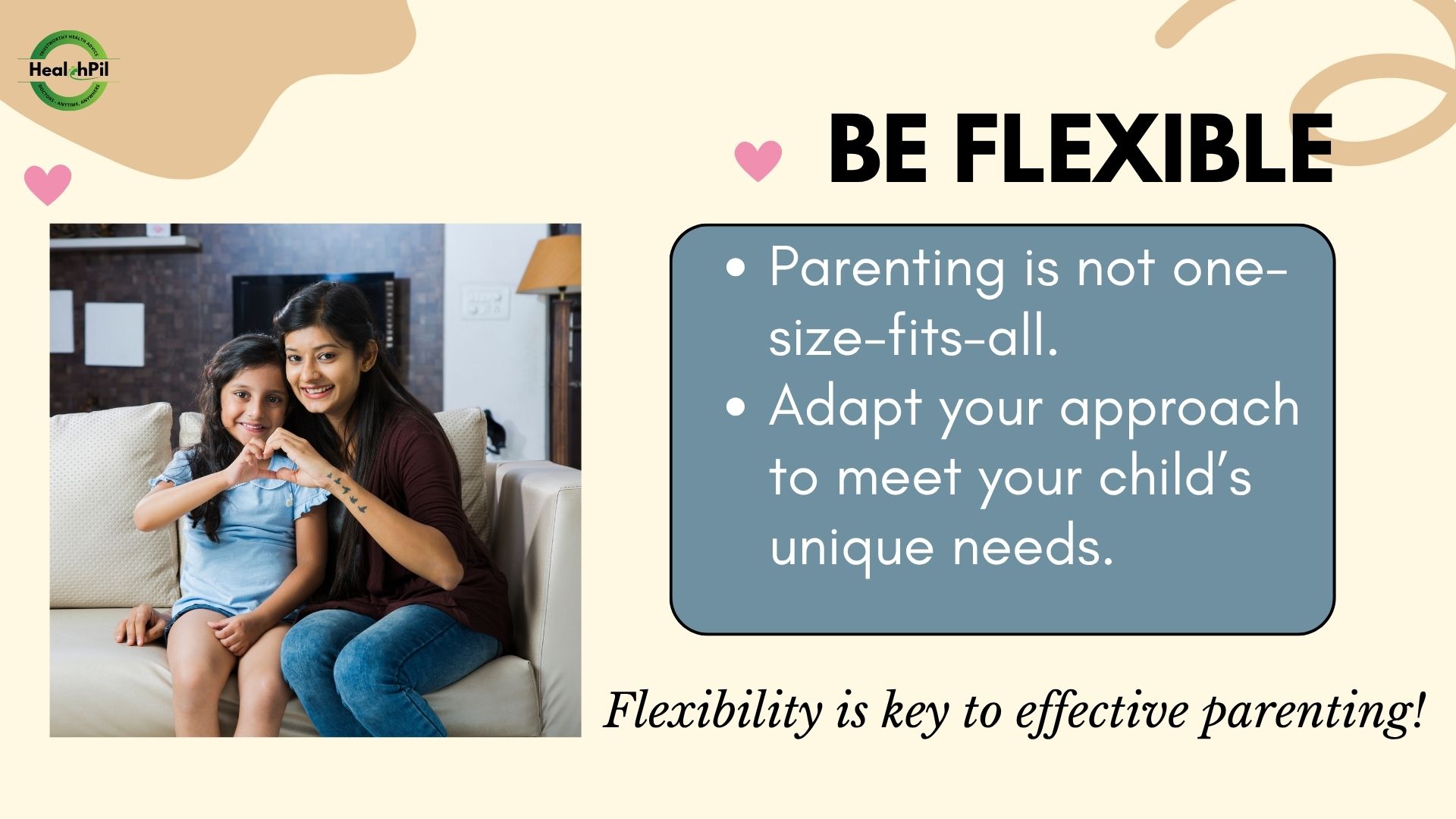
Yes and in practice, most parents naturally combine elements of different approaches. Balanced parenting means adapting to the child, the situation, and the moment, while keeping emotional support and clear expectations as the foundation.
Using a more structured approach during safety situations, a more permissive approach for creative play, and a more emotionally focused approach during difficult feelings isn’t inconsistency it’s responsive parenting.
There’s no such thing as perfect parenting, and no parent fits neatly into one box all the time. If you notice yourself leaning permissive on a hard day, or authoritarian when you’re exhausted, that’s not failure — it’s being human. Guilt doesn’t help anyone; small, consistent adjustments do.
Finding Your Parenting Style
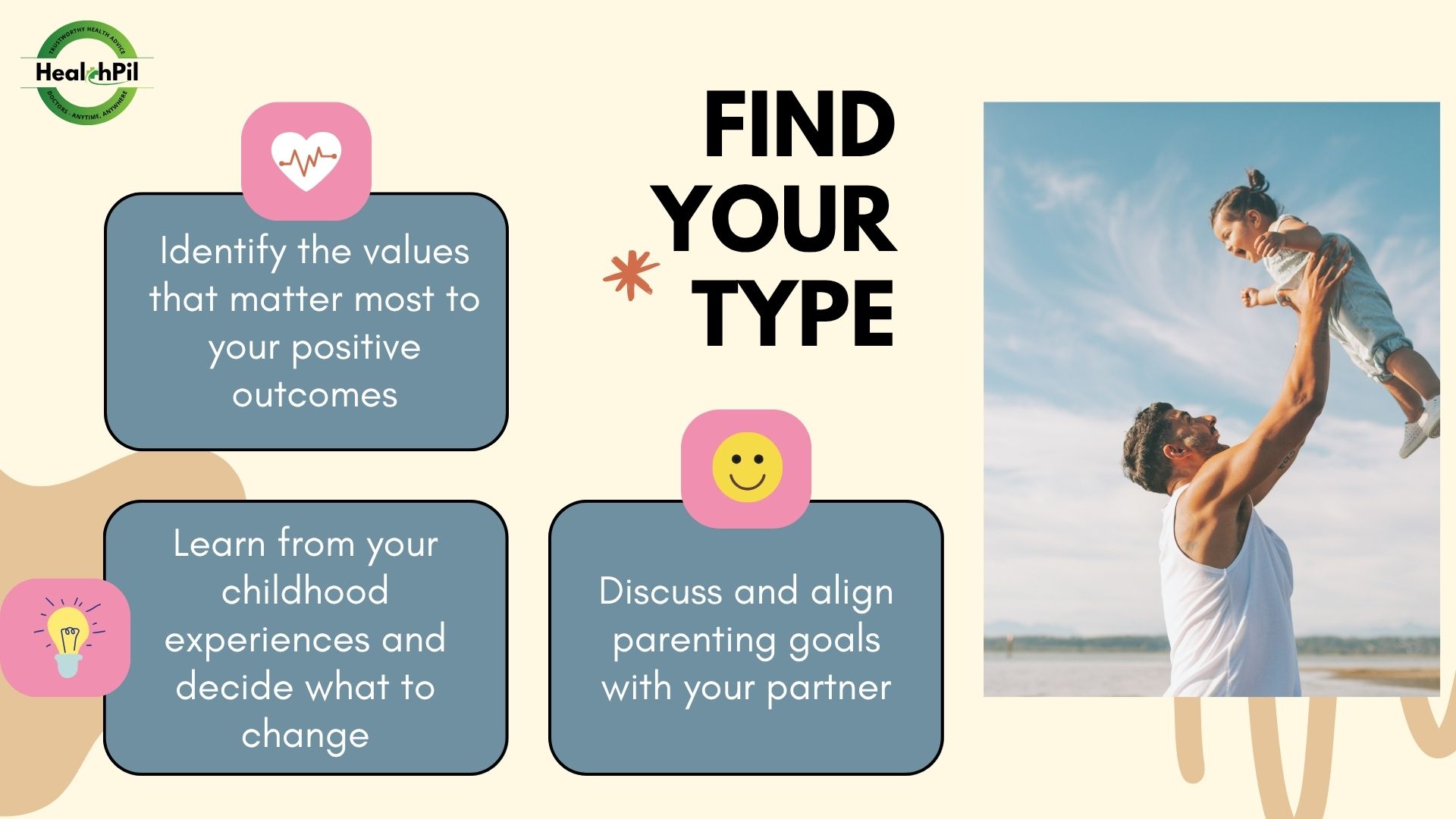
- Reflect on your own upbringing. Most parents parent the way they were parented sometimes deliberately, sometimes automatically. Thinking honestly about what worked in your childhood, what didn’t, and what you want to carry forward is a good starting point.
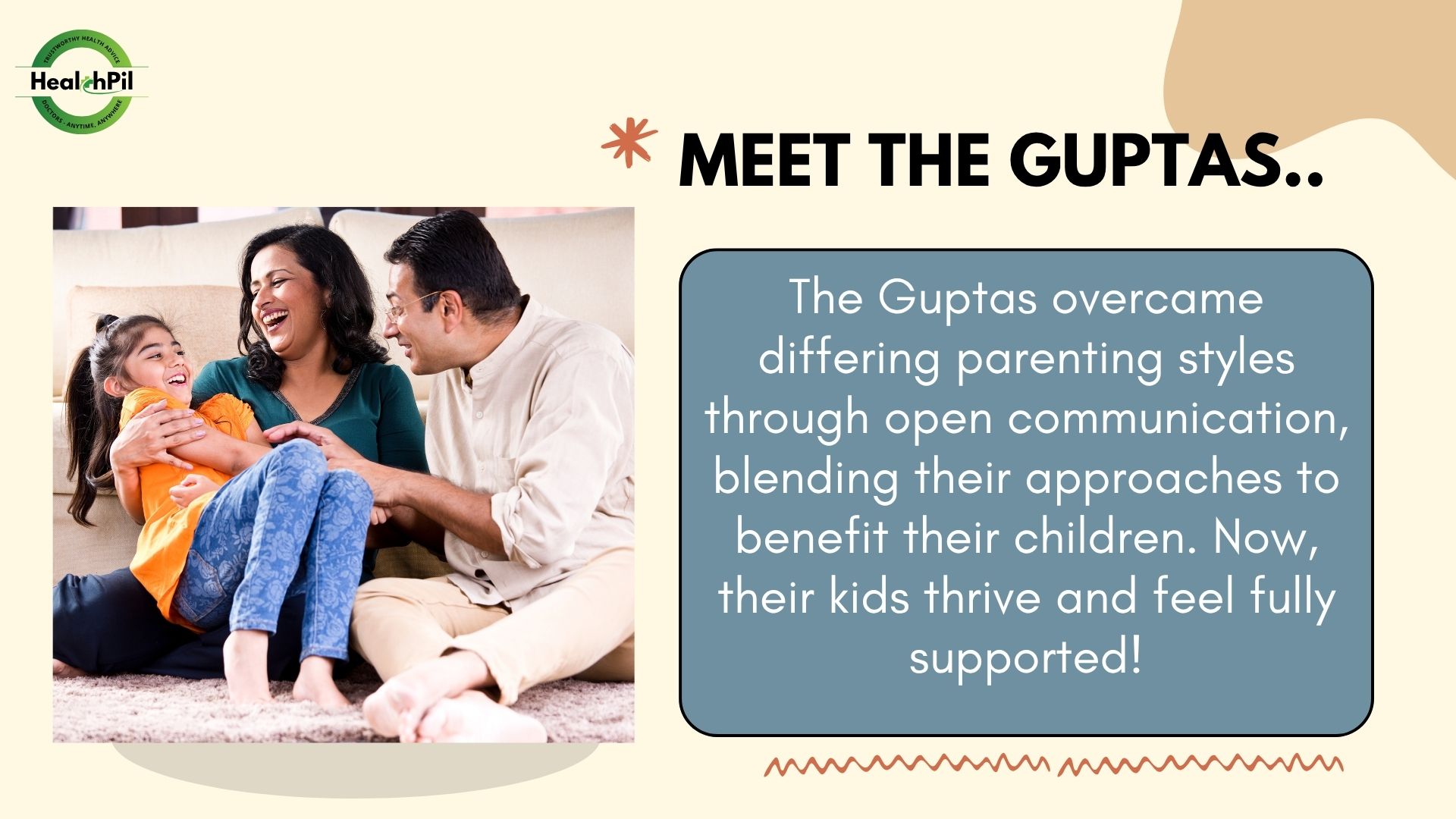
- Talk to your partner. When parents have very different approaches, children quickly learn to navigate between them, which undermines consistency for both. A shared understanding doesn’t require agreeing on everything just enough alignment that children experience a coherent family environment.
- Watch your child. Different children need different things. A child with an anxious temperament may need more reassurance alongside structure. A confident, independent child may need firmer boundaries more than emotional reassurance.
- Be flexible without losing consistency. Parenting works best when applied consistently over time but flexibility matters too, as children grow and circumstances change.
Tips for Improving Your Parenting Skills
- Listen actively — not just to what your child says, but to what they’re communicating through behaviour
- Set clear, consistent boundaries — children feel more secure when they know what to expect
- Model the behaviour you want to see — children learn more from what parents do than what they say
- Manage your own stress — your emotional state directly affects your child’s emotional state
- Explain your reasons — especially for rules and consequences; this builds responsibility over time
- Celebrate effort, not just performance — character and resilience matter as much as results
- Seek support when needed — books, parenting groups, and professional guidance are all legitimate tools
When Should Parents Seek Professional Guidance?
Parenting is one of the hardest things people do, and asking for help is a sign of good parenting, not failure. Consider speaking with a child psychologist, paediatrician, or parenting counsellor if:
- Your child shows persistent behavioural problems affecting school, friendships, or family relationships
- You feel consistently overwhelmed, anxious, or unsure about managing your child’s behaviour
- There’s ongoing conflict between parents about parenting approaches that isn’t resolving
- Your child shows signs of anxiety, low self-esteem, or developmental concerns
- Significant family changes divorce, relocation, a new sibling are creating challenges that aren’t settling with time
How HealthPil Can Help
HealthPil connects you with experienced paediatricians, child psychologists, and family counsellors who provide practical parenting guidance tailored to your child’s needs and your family’s dynamics. Whether you have concerns about your child’s behaviour, emotional development, or simply want guidance on the right approach for your family expert support is available through an online consultation from home. Book your child psychologist consultation with HealthPil today.
Summary
The four main parenting styles authoritative, authoritarian, permissive, and neglectful were first identified by Diana Baumrind and have since been extensively studied for their impact on child development. Authoritative parenting, which combines warmth with clear expectations, consistently produces the best outcomes. Most parents naturally combine elements of different styles balanced, consistent warmth and structure is the goal, not rigid adherence to one type. If parenting feels overwhelming at any point, support is available, and asking for it is a strength, not a weakness.
Frequently Asked Questions
What are the 4 main parenting styles?
Authoritative, authoritarian, permissive, and neglectful first identified by psychologist Diana Baumrind, with a fourth added later by Maccoby and Martin.
Which parenting style is considered the best?
Authoritative parenting is widely considered the most effective, as it combines warmth with clear structure and consistently shows the best outcomes for children.
Can a parent use more than one style?
Yes. Most parents naturally blend approaches depending on the situation, as long as warmth and consistency remain the foundation.
What is gentle parenting?
Gentle parenting focuses on empathy and understanding a child’s emotions, closely overlapping with authoritative parenting but with extra emphasis on validating feelings.
Does parenting style affect a child's mental health?
Yes. Research links parenting style to a child’s emotional regulation, self-esteem, resilience, and long-term mental health.
When should I seek professional parenting support?
If your child shows persistent behavioural or emotional difficulties, or you feel consistently overwhelmed, a child psychologist or paediatrician can help.
Can I get parenting guidance online?
Yes. HealthPil connects parents with child psychologists and family counsellors for online consultations from home.
References
- Sanvictores T, Mendez MD. Types of Parenting Styles and Effects on Children. StatPearls Publishing. Available at:
NCBI Bookshelf - McWhirter AC, McIntyre LL, Kosty DB. Parenting Styles, Family Characteristics, and Teacher-Reported Behavioral Outcomes in Kindergarten. Available at:
PMC
Disclaimer
The information provided in this article is for awareness purposes only and should not replace professional medical advice. Always consult your healthcare provider for personalized medical guidance.

Read our editorial policy