
Close Menu

    Subscribe to Updates

    Get the latest creative news from FooBar about art, design and business.

    Consent(Required)

    What's Hot

    Food Poisoning and Gastroenteritis Symptoms, Treatment & Prevention Guide

    May 6, 2026

    Hyperhidrosis (Excessive Sweating): Causes, Types, and Treatment Options

    May 1, 2026

    Muscle Cramps: Causes, Treatment, and When to See a Neurologist

    April 20, 2026
    Facebook X (Twitter) Instagram
    Facebook X (Twitter) Instagram YouTube
    Healthpil
    +91 962 596 0259 Book Appointment
    • Home
    • Ask Doubts
    • About
    • Consult Doctors
    • Medicine A to Z
      • Drugs A to Z
      • Diagnostics A to Z
    • Explore
      1. Healthpil Originals
      2. Health Gatha
      3. White Coat Chronicles
      4. Myth vs. Medicine
      5. Teen Talk Unfiltered
      6. Medical Specialities
      7. Hindi
      8. View All
      9. View All

      Are Herbal Supplements Hurting Your Kidneys? What You Need to Know

      September 18, 2025

      Is Your Herbal Medicine Bad for Your Heart?

      September 18, 2025

      Are Herbal Supplements Messing Up Your Digestive Health?

      September 17, 2025

      Can Ayurvedic and TCM herbs Harm Your Lungs? The Respiratory Risks of Traditional Medicine

      September 17, 2025

      Are Herbal Supplements Hurting Your Kidneys? What You Need to Know

      September 18, 2025

      Is Your Herbal Medicine Bad for Your Heart?

      September 18, 2025

      Are Herbal Supplements Messing Up Your Digestive Health?

      September 17, 2025

      Can Ayurvedic and TCM herbs Harm Your Lungs? The Respiratory Risks of Traditional Medicine

      September 17, 2025

      Are Herbal Supplements Hurting Your Kidneys? What You Need to Know

      September 18, 2025

      Is Your Herbal Medicine Bad for Your Heart?

      September 18, 2025

      Are Herbal Supplements Messing Up Your Digestive Health?

      September 17, 2025

      Can Ayurvedic and TCM herbs Harm Your Lungs? The Respiratory Risks of Traditional Medicine

      September 17, 2025

      Are Herbal Supplements Hurting Your Kidneys? What You Need to Know

      September 18, 2025

      Is Your Herbal Medicine Bad for Your Heart?

      September 18, 2025

      Are Herbal Supplements Messing Up Your Digestive Health?

      September 17, 2025

      Can Ayurvedic and TCM herbs Harm Your Lungs? The Respiratory Risks of Traditional Medicine

      September 17, 2025

      Are Herbal Supplements Hurting Your Kidneys? What You Need to Know

      September 18, 2025

      Is Your Herbal Medicine Bad for Your Heart?

      September 18, 2025

      Are Herbal Supplements Messing Up Your Digestive Health?

      September 17, 2025

      Can Ayurvedic and TCM herbs Harm Your Lungs? The Respiratory Risks of Traditional Medicine

      September 17, 2025

      Are Herbal Supplements Hurting Your Kidneys? What You Need to Know

      September 18, 2025

      Is Your Herbal Medicine Bad for Your Heart?

      September 18, 2025

      Are Herbal Supplements Messing Up Your Digestive Health?

      September 17, 2025

      Can Ayurvedic and TCM herbs Harm Your Lungs? The Respiratory Risks of Traditional Medicine

      September 17, 2025

      Are Herbal Supplements Hurting Your Kidneys? What You Need to Know

      September 18, 2025

      Is Your Herbal Medicine Bad for Your Heart?

      September 18, 2025

      Are Herbal Supplements Messing Up Your Digestive Health?

      September 17, 2025

      Can Ayurvedic and TCM herbs Harm Your Lungs? The Respiratory Risks of Traditional Medicine

      September 17, 2025

      Are Herbal Supplements Hurting Your Kidneys? What You Need to Know

      September 18, 2025

      Is Your Herbal Medicine Bad for Your Heart?

      September 18, 2025

      Are Herbal Supplements Messing Up Your Digestive Health?

      September 17, 2025

      Can Ayurvedic and TCM herbs Harm Your Lungs? The Respiratory Risks of Traditional Medicine

      September 17, 2025

      Are Herbal Supplements Hurting Your Kidneys? What You Need to Know

      September 18, 2025

      Is Your Herbal Medicine Bad for Your Heart?

      September 18, 2025

      Are Herbal Supplements Messing Up Your Digestive Health?

      September 17, 2025

      Can Ayurvedic and TCM herbs Harm Your Lungs? The Respiratory Risks of Traditional Medicine

      September 17, 2025
    • Contact Us
    Healthpil
    Home»Skin and Hair Health»Hyperhidrosis (Excessive Sweating): Causes, Types, and Treatment Options
    Skin and Hair Health

    Hyperhidrosis (Excessive Sweating): Causes, Types, and Treatment Options

    Excessive sweating even without heat or exercise? Hyperhidrosis causes, symptoms, and treatment options explained, with guidance on when to seek medical help
    Team HealthpilBy Team HealthpilMay 1, 2026Updated:May 7, 2026No Comments10 Mins Read
    Facebook Twitter WhatsApp Email
    excessive sweating hyperhidrosis condition sweating
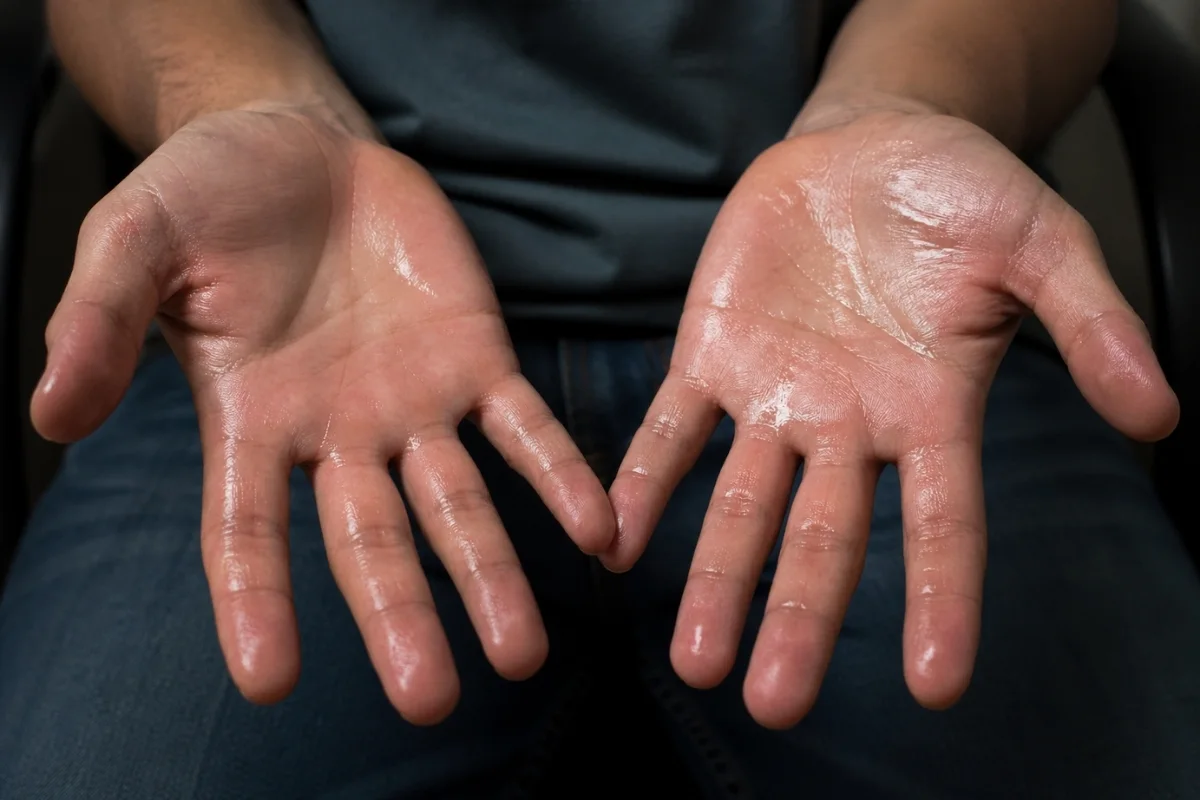
    Hyperhidrosis causes excessive sweating beyond normal body needs and can occur without clear triggers.
    Share
    Facebook Twitter Email

    Do you find yourself sweating excessively even when it’s not hot or you’re not physically active? If your palms stay wet, clothes get soaked easily, or sweating starts without a clear reason, it could be a condition called hyperhidrosis. 

    Table of Content hide
    What is Hyperhidrosis?
    How is Hyperhidrosis Different from Normal Sweating?
    Why does hyperhidrosis (excessive sweating) happen?
    Types of hyperhidrosis
    Primary (focal) hyperhidrosis
    Secondary (generalised) hyperhidrosis
    Areas where people notice excessive sweating (hyperhidrosis) the most
    When should you actually see a doctor for hyperhidrosis (excessive sweating)?
    How is hyperhidrosis diagnosed?
    Treatment options for hyperhidrosis (excessive sweating)
    Topical treatments
    Oral medications
    Iontophoresis
    Botox injections
    Advanced treatment options
    Simple things that can help with excessive sweating (hyperhidrosis) in day to day life
    Common myths about hyperhidrosis (excessive sweating)
    You do not have to just live with hyperhidrosis
    How HealthPil can help
    Summary Hyperhidrosis
    Frequently Asked Questions (FAQs)
    References

    What is Hyperhidrosis?

    Hyperhidrosis is a medical condition in which a person experiences excessive sweating beyond what the body actually needs. It can occur even when there is no heat, no physical activity, and sometimes without any clear reason.

    If your palms are constantly wet, your clothes get soaked quickly even in a normal environment, or you find yourself avoiding handshakes or social situations because of sweating, it may be hyperhidrosis.

    Hyperhidrosis affects roughly 2–5% of the population and is often underreported because many people assume it is a hygiene issue or just a normal body trait. However, it is a manageable medical condition when addressed properly.

    How is Hyperhidrosis Different from Normal Sweating?

    Sweating is a natural process that helps the body cool itself down. It usually happens during exercise, in hot weather, or when you are anxious, which is completely normal.

    However, in hyperhidrosis, sweating goes beyond this normal need. The body produces excessive sweat even without triggers like heat or physical activity. This difference makes hyperhidrosis a condition that may require proper evaluation and management.

    Hyperhidrosis

    Why does hyperhidrosis (excessive sweating) happen?

    Normally, sweating is part of thermoregulation, which means the body increases sweat production to cool itself when internal temperature rises. This process is controlled by the sympathetic nervous system, where specific nerve fibres release a chemical called acetylcholine that signals the sweat glands to start working. But, in hyperhidrosis, this system becomes overactive, so there is increased sympathetic outflow and more frequent acetylcholine signalling. 

    As a result, the sweat glands get activated even when the body does not actually need cooling, leading to excessive sweating without obvious triggers like heat or physical activity. This is also called primary hyperhidrosis.

    In secondary hyperhidrosis, there is usually an underlying cause. Some common ones include:

    • Thyroid problems, especially hyperthyroidism
    • Diabetes
    • Certain infections
    • Neurological conditions
    • Hormonal changes like menopause
    • Medications such as antidepressants or some blood pressure drugs
    • Increased stress or anxiety, which can make the sweating worse

    Excess weight can also contribute, as the body tends to generate and retain more heat.

    Types of hyperhidrosis

    Hyperhidrosis is broadly divided into two types, and understanding is important to know how it is treated.

    Primary (focal) hyperhidrosis

    This is the more common type. It usually affects specific areas like the palms, soles, underarms, or face. But, the rest of the body sweats normally.

    It often starts early, sometimes in childhood or teenage years, and many times there is a family history. There is no underlying disease causing it, but the sweat glands are more active than they should be. One typical feature is that sweating usually reduces or stops during sleep.

    Secondary (generalised) hyperhidrosis

    This type involves sweating over larger areas or the entire body. It is usually triggered by something else, like a medical condition or certain medications.

    It can start later in life and may even occur during sleep. If someone develops sudden, unexplained sweating as an adult, especially along with other symptoms, this needs proper medical evaluation.

    Areas where people notice excessive sweating (hyperhidrosis) the most

    Not everyone sweats everywhere. In many cases, it is very localized!

    • Palms can stay constantly wet, making it difficult to hold things or even shake hands comfortably
    • Soles can cause slipping in footwear and sometimes skin problems
    • Underarms often lead to visible sweat patches and frequent outfit changes
    • Face and scalp sweating can feel very noticeable in social or professional situations

    Over time, this can start affecting confidence, work, and even daily interactions. It is not a small issue for people dealing with it regularly.

    “Normally sweating is meant to regulate body temperature, but in hyperhidrosis the nerve signals that trigger sweating become overactive, so people end up sweating even without heat or exertion. It can affect simple things like holding objects or shaking hands, but the important thing is that it is a treatable condition if addressed properly,” says Dr. Rahul Chawla, AIIMS-trained Neurologist and founder of HealthPil.

    When should you actually see a doctor for hyperhidrosis (excessive sweating)?

    Many people ignore it for years, but there are some situations where you should not delay:

    • If sweating is interfering with your daily life or confidence
    • If it has started suddenly in adulthood
    • If you are experiencing night sweats
    • If it comes along with weight loss, fever, or a fast heartbeat

    These signs may point towards a secondary cause that needs to be identified!

    How is hyperhidrosis diagnosed?

    Most of the time, diagnosis is based on your history and symptoms. A doctor will ask when it started, which areas are involved, and whether there are any triggers or associated symptoms.

    Basic tests may be advised to rule out conditions like thyroid disorders or diabetes if secondary hyperhidrosis is suspected.

    There are also simple tests like the starch-iodine test to map sweating areas, but in many cases, they are not even necessary if the history is clear.

    Treatment options for hyperhidrosis (excessive sweating) 

    Treatment depends on how severe the sweating is and which areas are affected. It is not one size fits all.

    Topical treatments

    These are usually the first step. Strong antiperspirants containing aluminium salts are applied at night to help block sweat glands. They work well for mild to moderate cases.

    Oral medications

    Certain medicines reduce the signals that stimulate sweat glands. They can be helpful, especially in more widespread sweating, but they may come with side effects like dry mouth or constipation, so they should be used carefully and only with your doctor’s advice .

    Iontophoresis

    This is commonly used for palms and soles. The hands or feet are placed in water, and a mild current is passed through it. It reduces sweat production over time with regular sessions.

    Botox injections

    Botox blocks the nerve signals that trigger sweating. It is especially effective for underarms and is also used for palms and soles in some cases. The results can last several months.

    Advanced treatment options

    For severe cases that do not respond to other treatments, procedures like laser-based treatments or surgeries may be considered. These are usually last options and need proper discussion with a specialist.

    Simple things that can help with excessive sweating (hyperhidrosis) in day to day life

    While treatment is important, small changes can also make a noticeable difference:

    • Wear breathable fabrics like cotton
    • Apply antiperspirants at night on dry skin
    • Use absorbent insoles if foot sweating is an issue
    • Keep tissues or cloth handy for palms or face
    • Try to identify and reduce triggers like caffeine or spicy food
    • Work on stress management, because stress can worsen symptoms

    These will not cure hyperhidrosis, but they can make your daily life easier.

    Common myths about hyperhidrosis (excessive sweating)

    A lot of confusion around sweating comes from misinformation.

    “It means I am unhygienic.”
    No. Hyperhidrosis has nothing to do with cleanliness. It is about how the sweat glands are functioning.

    “More sweating means toxins are leaving the body.”
    Sweat is mostly water and salt. Your liver and kidneys handle detoxification, not your sweat glands. So, it’s not ‘toxins’ leaving your body.

    “It will go away on its own.”
    In most cases, especially primary hyperhidrosis, it does not just disappear on its own. It may improve slightly over time, but proper treatment makes a huge difference.

    You do not have to just live with hyperhidrosis 

    A lot of people adjust their lives around hyperhidrosis instead of treating it, mostly because they are not aware that we now have effective options to manage the condition.

    Whether it is a simple topical treatment or something more advanced like Botox, there are ways to control it depending on how severe your hyperhidrosis is. The first step is to stop ignoring it and speak to a doctor who can guide you properly and make your daily life much easier.

    How HealthPil can help

    HealthPil makes it easier to take that first step. You can find qualified doctors, understand your symptoms better, and get the right guidance without confusion. Instead of trying random solutions, you can connect with the right specialist and start a proper treatment plan based on your condition.

    Summary Hyperhidrosis

    Hyperhidrosis is a condition of excessive sweating that goes beyond the body’s normal need to regulate temperature. Unlike typical sweating caused by heat or physical activity, it can occur without any clear trigger and commonly affects areas like the palms, soles, underarms, or face. It is broadly classified into primary hyperhidrosis, caused by overactive nerve signals, and secondary hyperhidrosis, which may be linked to underlying conditions such as thyroid disorders, diabetes, infections, or certain medications.

    Symptoms of hyperhidrosis can interfere with daily life, causing discomfort, social anxiety, and difficulty in routine activities. Treatment options include topical antiperspirants, medications, iontophoresis, and advanced therapies like Botox, along with lifestyle changes to manage triggers. If excessive sweating is persistent or sudden, it is important to consult a doctor for proper diagnosis and effective hyperhidrosis treatment to improve overall quality of life

    Hyperhidrosis

    Frequently Asked Questions (FAQs)

    Q1. Is hyperhidrosis dangerous?

    It is usually not dangerous on its own, but it can affect quality of life significantly. If it is secondary, then the underlying cause needs to be addressed.

    Q2. Can hyperhidrosis be cured permanently?

    It may not always be permanently cured, especially primary hyperhidrosis, but it can be controlled very effectively with the right treatment

    Q3. Does hyperhidrosis run in families?

    Yes, many people with primary hyperhidrosis have a family history.

    Q4. When does hyperhidrosis usually start?

    Primary hyperhidrosis often begins in childhood or teenage years, while secondary hyperhidrosis can start later.

    Q5. Can lifestyle changes alone fix hyperhidrosis?

    Lifestyle changes can help reduce symptoms slightly, but moderate to severe cases usually need medical treatment.

    Q6. How do I book an appointment on HealthPil?

    You can go to the HealthPil platform, search for a relevant specialist like a dermatologist or neurologist, choose a suitable time slot, and confirm your consultation easily.

    Q7. How can I connect with a doctor through HealthPil?

    You can search by symptom or specialty, check doctor profiles, and book either an online video consultation from the comfort of your home.

    References

    1. Hyperhidrosis: Diagnosis and treatment. American Academy of Dermatology. Available at: https://www.aad.org/public/diseases/a-z/hyperhidrosis-treatment
    2. Brackenrich J, Medeus CF. Hyperhidrosis. StatPearls Publishing; 2026. Available at: http://www.ncbi.nlm.nih.gov/books/NBK459227/
    3. International Hyperhidrosis Society. Treatment Overview. Available at: https://www.sweathelp.org/hyperhidrosis-treatments/treatment-overview.html


    Medical disclaimer: This content is meant for general awareness and education. It is not a substitute for professional medical advice, diagnosis, or treatment. If you are dealing with excessive sweating or any related symptoms, consult a qualified doctor for proper evaluation and guidance.

    Team Healthpil
    Written By Team Healthpil MBBS, MD Medicine, DM Neurology (AIIMS Delhi)
    Last Updated 07 May 2026
    We provide you with authentic, trustworthy and relevant information.
    Read our editorial policy
    causes of excessive sweating excessive sweating excessive sweating problem how to stop sweating hyperhidrosis hyperhidrosis symptoms hyperhidrosis treatment sweating disorder
    Share. Facebook Twitter WhatsApp Email
    Previous ArticleMuscle Cramps: Causes, Treatment, and When to See a Neurologist
    Next Article Food Poisoning and Gastroenteritis Symptoms, Treatment & Prevention Guide

    Related Articles

    Scared of Sunburn? Protect Your Skin and Get Ready for Your Beach Holiday!

    June 10, 2025 Skin and Hair Health

    Is acne curable?” Discover the Truth Behind Acne Treatments and What Works!

    June 10, 2025 Skin and Hair Health

    Laser Therapy for Skin: The Truth About Side Effects and Why You Should Only Consult a Dermatologist!

    June 10, 2025 Skin and Hair Health

    Stretch Marks: Why Do They Happen and How to Get Rid of Them?

    June 10, 2025 Skin and Hair Health
    Leave A Reply Cancel Reply

    20 − 9 =

    I agree to the terms and privacy policy.

    Disclaimer: Please avoid sharing personal health details in comments. Comments are public and moderated. For private health queries, use the Ask A Doubt section. By commenting, you agree to our Privacy Policy.

    Health and Wellness

    Child Safety and Online Predators: Why parents should think twice before posting children’s photos and videos on social media!

    November 11, 2025

    Fake ORS Banned by FSSAI: Why a Pediatrician Fought an 8-Year Battle to Stop Sugary Drinks Mislabelled as “ORS”?

    October 24, 2025

    Are Herbal Supplements Hurting Your Kidneys? What You Need to Know

    September 18, 2025

    Is Your Herbal Medicine Bad for Your Heart?

    September 18, 2025
    Connect with Us
    • Facebook
    • Instagram
    • YouTube
    • Twitter
    Don't Miss

    Child Safety and Online Predators: Why parents should think twice before posting children’s photos and videos on social media!

    Every parent loves to capture those little moments — the first step, the first day…

    Fake ORS Banned by FSSAI: Why a Pediatrician Fought an 8-Year Battle to Stop Sugary Drinks Mislabelled as “ORS”?

    October 24, 2025

    Why Asthma Attacks are on the Rise: Unseen Influence of Air Pollution!

    May 26, 2025

    Stroke and Air Pollution: Is Your Environment Putting You at Risk?

    May 26, 2025

    Subscribe to Updates

    Get the latest creative news from SmartMag about art & design.

    Consent(Required)

    About Us
    About Us

    HealthPil: Get Your Daily Dose of Trusted Health Advice– Consult a Doctor Anytime, Anywhere!
    We're accepting new partnerships right now.

    Facebook X (Twitter) Instagram YouTube
    Contact Us
    EmailEmail Us:
    contact@healthpil.com
    whatsappContact:
    +91 962 596 0259
    Specialties
    • Neurology
    • Cardiology
    • Psychiatry
    • Orthopedics
    • Gynaecology
    • Pediatrics
    • Neurosurgery
    • Neurosurgery
    • Ophthalmology
    • ENT
    • Oncology
    Quick Links
    • Home
    • About
    • Blog
    • Ask Doubts
    • Consult Doctors
    • Contact Us
    • Disclaimer
    • Privacy Policy
    • Terms and Conditions

    Type above and press Enter to search. Press Esc to cancel.

    Book Appointment
    Copyright © 2026 HealthPil. All Rights Reserved.