




When Screens Take Over
Dinner time. The phone comes out “just for five minutes” so you can finish cooking in peace. Five minutes becomes forty. And now bedtime is a battle, because turning the screen off feels like taking away the only thing that kept the evening calm.
Most parents know this scene well. It’s not really about the tablet or the phone it’s about how quickly screens became the easiest tool in the house, and how hard it is to notice when “a little help” turned into something bigger.
Screens aren’t the enemy. Used well, they teach, entertain, and connect. But too much, too early, or at the wrong times can genuinely affect a child’s sleep, mood, and development. Knowing where the line is and how to manage it without constant fights makes a real difference.
Why Screen Time Matters So Much Today
Screen use among children has climbed sharply over the past few years. Studies show children aged 8 to 12 spend roughly 4 to 6 hours on screens daily, and teenagers can spend up to 9 hours. Research has also linked every additional hour of screen time to a measurable rise in childhood myopia risk. Yet more than 60% of children aged 6 to 17 exceed the recommended daily limits.
This isn’t about eliminating screens completely that’s not realistic, and it’s not necessary. It’s about understanding what healthy limits actually look like, and building habits early that protect a child’s sleep, focus, and development.
The Impact of Screen Time on Children
Too much screen time can affect children in ways that aren’t always obvious at first.
- Sedentary habits — more time on screens usually means less physical activity, which can contribute to weight gain and other health concerns over time.
- Disrupted sleep — blue light from screens can interfere with the body’s natural sleep signals, making it harder for children to fall asleep and get restful sleep.
- Mood and focus — excessive screen time is linked to increased irritability, anxiety, and difficulty concentrating in children.
- Reduced social interaction — time spent on screens often comes at the cost of face-to-face interaction, which plays a big role in building social skills.
- Eye strain — prolonged close-up screen use is associated with increased risk of myopia (nearsightedness) in children.
None of this means occasional or purposeful screen use is harmful. It’s the pattern — how much, how often, and what it’s replacing — that matters most.
Recommended Screen Time Guidelines by Age
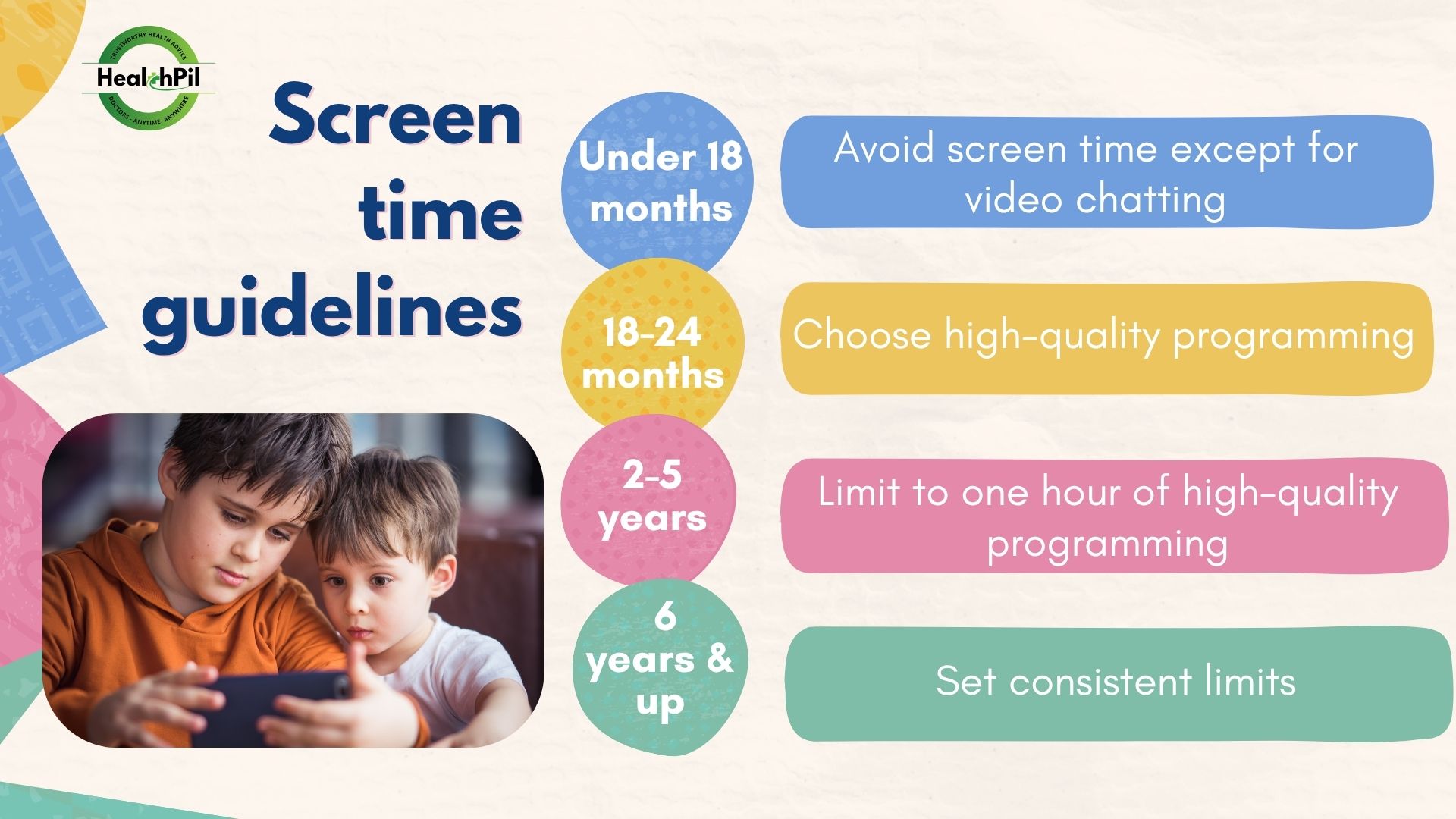
The American Academy of Pediatrics (AAP) has laid out age-based guidelines to help parents find a healthy balance.
- Under 18 months — No screen time recommended, except for video chatting with family. Focus on interactive play, talking, and reading together instead.
- 18 to 24 months — If screens are introduced, choose high-quality programming and watch together, so you can help your child understand what they’re seeing.
- 2 to 5 years — Limit screen time to about one hour a day of high-quality content. Watching together and discussing what’s on screen helps make it a more active, less passive experience.
- 6 to 12 years — Limit recreational screen time to around 2 hours a day. Prioritise interactive content over passive viewing, and make space for outdoor play, reading, and family time alongside it.
- 13 to 18 years — Recreational screen time should also stay around 2 hours a day, though schoolwork may reasonably need more. Watch for signs of poor sleep or anxiety linked to screen use, and try to keep at least the hour before bed screen-free.
These are guidelines, not strict rules every family’s situation is a little different. But they’re a useful benchmark to check against.
Signs Your Child May Be Getting Too Much Screen Time
Sometimes it’s hard to tell if screen use has crossed a line. These are the signs worth paying attention to:
- Trouble falling asleep, or waking up tired despite enough hours in bed
- A shorter attention span — difficulty focusing on schoolwork, conversations, or even other games
- Mood swings or irritability, especially when screens are taken away
- Losing interest in outdoor play, reading, or hobbies they used to enjoy
- Declining academic performance
- Frequent headaches or eye strain
- Withdrawing from family or friends in favour of screen time
If you notice several of these together, it’s a good moment to revisit your family’s screen time habits not as a punishment, but as a reset.
Screen Time and Sleep Avoiding Disruptions
Sleep is one of the areas screens affect most directly, so it deserves a closer look.
Blue light from screens can reduce melatonin production, the hormone that signals to the body it’s time to sleep. Engaging content games, videos, social media can also overstimulate the brain right when it should be winding down.
A few things genuinely help:
- Turn off screens at least an hour before bedtime
- Keep TVs, tablets, and phones out of the bedroom
- Build a calming pre-sleep routine — reading, quiet play, or a warm bath work well
- If screen use close to bedtime is unavoidable, use night mode or a blue-light filter to reduce the impact
Small, consistent changes here often make a noticeable difference within a week or two.
Tips for Managing Screen Time
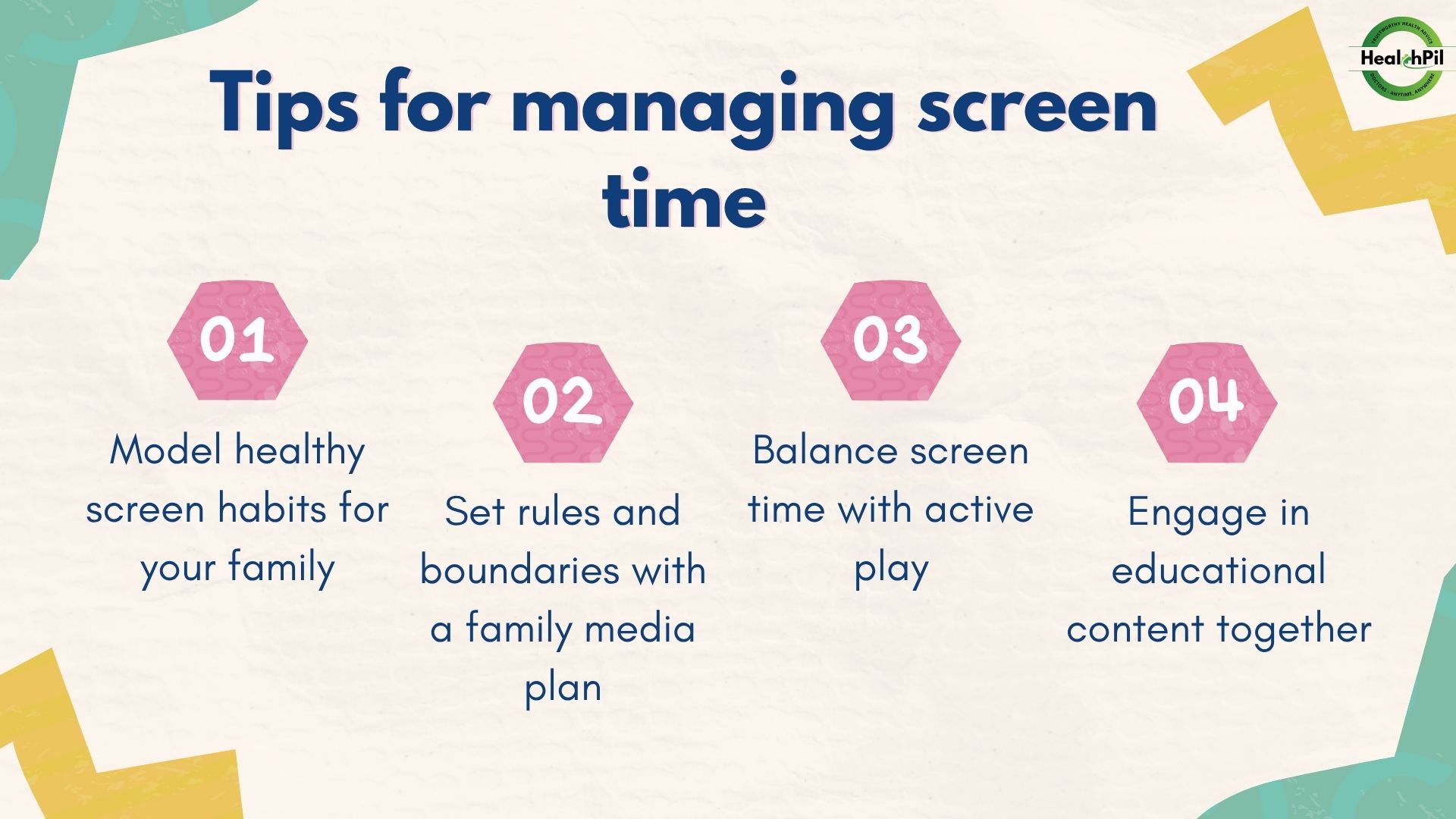
- Model healthy habits yourself. Children notice when parents are constantly on their phones. Being mindful of your own screen time and prioritising face-to-face moments sets the tone for the whole family.
- Set family screen rules together. Involve your child in the conversation. Agree on screen-free times (like meals) and screen-free zones (like bedrooms). Rules feel less like punishment when everyone helped set them.
- Balance screens with physical activity. Outdoor play, sports, or simply time outside helps offset the sedentary nature of screen use.
- Engage during screen time, not just around it. Watching a show together, playing an educational game side by side, or discussing what they learned turns passive screen time into something more active.
- Use parental controls thoughtfully. Review content together where possible, and use age-appropriate settings to limit exposure to unsuitable material but pair this with conversation, not just restriction.
Screen Time Myths Cleared Up
“Educational apps don’t count as screen time.” Not quite. Educational content is better than passive viewing, but it still counts toward daily limits and still affects sleep if used too close to bedtime.
“My child will fall behind if they don’t use screens young.” There’s no strong evidence that early or heavy screen use gives children a developmental advantage. Interactive play, conversation, and reading build the same skills — often better.
“A little extra screen time on a bad day won’t hurt.” Occasional flexibility is fine. It’s the consistent daily pattern that matters most for development and sleep, not the occasional exception.
When Should You Talk to a Professional?
Most screen time concerns can be managed with adjustments at home. But it’s worth talking to a paediatrician or child psychologist if:
- Screen time battles are causing constant, severe conflict at home
- Your child shows signs of anxiety, low mood, or withdrawal linked to screen use
- Sleep problems persist despite reducing evening screen time
- Academic performance or attention span is noticeably declining
- You’re concerned your child may be developing an unhealthy dependence on screens or specific apps/games
An online consultation with a paediatrician or child psychologist through HealthPil is a practical first step if you’re not sure whether what you’re seeing is typical or needs closer attention.
How HealthPil Can Help
HealthPil connects parents with experienced paediatricians and child psychologists who can help assess your child’s screen habits, offer practical strategies tailored to your family, and support you through any related sleep, mood, or behavioural concerns. Whether you’re setting up healthy habits early or trying to course-correct after things have gotten out of hand expert guidance is available through an online consultation from wherever you are. Book your consultation with HealthPil today.
Summary
Screen time has become a significant part of childhood, and managing it well matters for sleep, mood, focus, and development. The AAP recommends no screens for children under 18 months (except video calls), limited high-quality content for toddlers, about one hour daily for ages 2-5, and around two hours of recreational screen time for older children and teens. Watch for signs like disrupted sleep, irritability, or declining focus as cues that habits need adjusting. Turning off screens before bedtime, setting family rules together, and balancing screen use with physical activity all help build healthier habits. If screen-related conflict, sleep issues, or mood changes persist, a paediatrician or child psychologist can help. For guidance tailored to your family, connect with HealthPil today.
Frequently Asked Questions
How can I reduce my child’s screen time?
Set clear rules, establish a family media plan, and encourage other activities.
What are some good educational shows for young children?
Look for programs that promote learning, such as Sesame Street or educational apps that foster interactive play.
Is it okay for my child to have screen time on weekends?
Yes, but ensure it doesn’t exceed recommended limits and balance it with other activities.
How do I handle screen time during family gatherings?
Set expectations for screen usage during gatherings and encourage social interaction among family members.
What if my child is resistant to reducing screen time?
Involve them in discussions about screen time and offer alternatives that are fun and engaging.
References
- Kar SS, Dube R, Goud BKM, et al. Impact of Screen Time on Development of Children. Available at:
PubMed - Madigan S, McArthur BA, Anhorn C, Eirich R, Christakis DA. Associations Between Screen Use and Child Language, Motor, and Cognitive Development: A Systematic Review and Meta-analysis. Available at:
PMC
Disclaimer
The information provided in this article is for awareness purposes only and should not replace professional medical advice. Always consult your healthcare provider for personalized medical guidance.

Read our editorial policy