


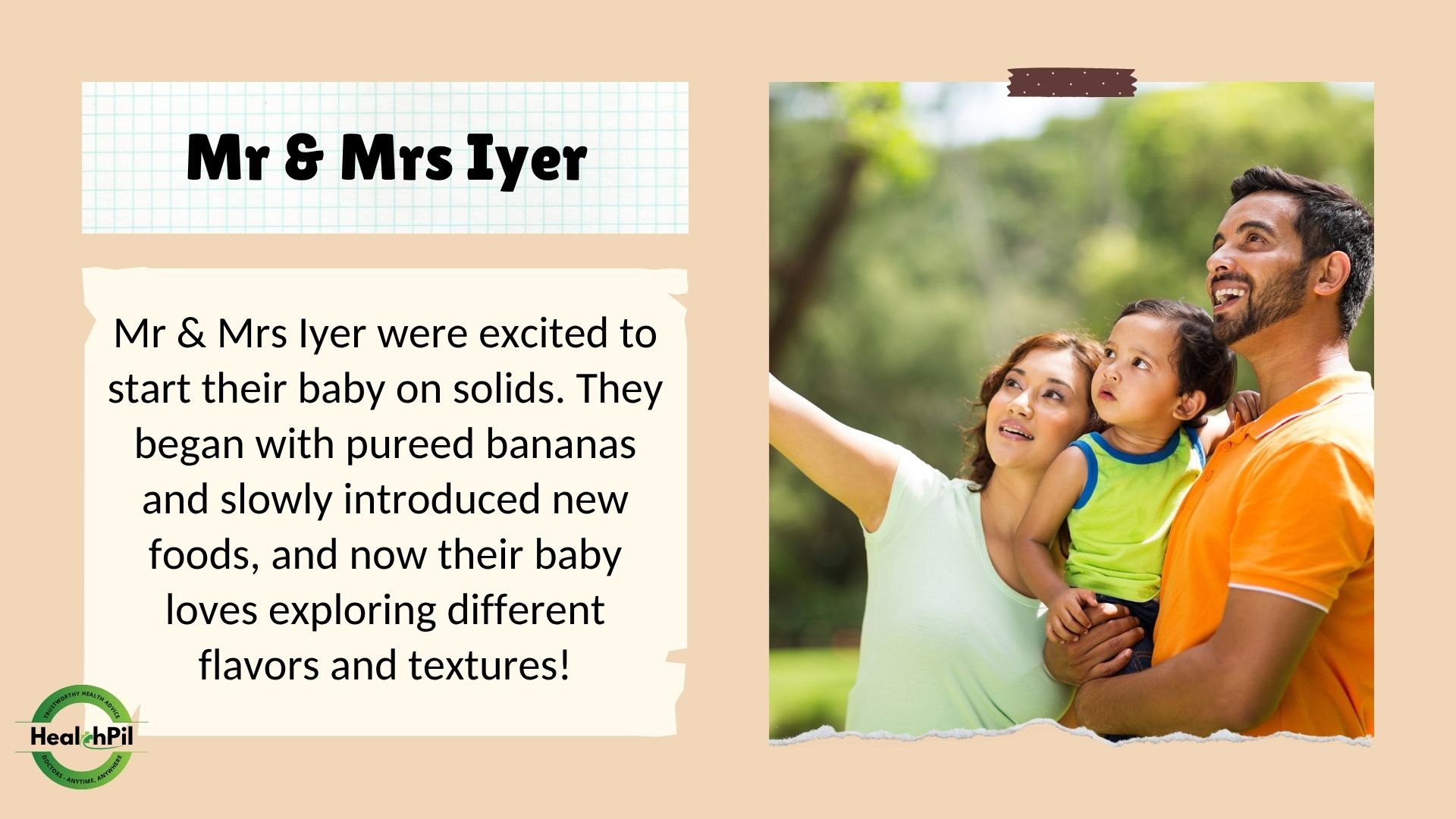
There’s a moment usually somewhere around the fifth or sixth month when your baby starts watching you eat with an intensity that feels almost accusatory. Eyes tracking every forkful. Mouth opening slightly as yours does. Hands reaching toward your plate.
That moment is your baby telling you something. And if you know what to look for, it’s one of the clearest signs that the next chapter of their feeding journey is about to begin.
Starting solids is one of the most exciting milestones of the first year. It’s also one that comes with a lot of questions when exactly, what foods, how much, what to avoid, what to do if they refuse. This guide covers all of it, practically and honestly.
What Actually Happens When Babies Start Solid Foods?
Introducing solid foods isn’t just about nutrition though that matters enormously. It’s about baby growth and development across multiple dimensions at once.
Around 6 months, breast milk or formula alone can no longer meet all of a baby’s nutritional needs particularly for iron and zinc. Baby food introduction begins the process of filling those gaps. But it also does something else: it begins developing baby chewing development, baby swallowing development, hand-eye coordination, and the sensory experience of different tastes and textures that shapes baby taste development and healthy baby eating habits for years to come.
This is baby sensory food exploration in its earliest form. And how it goes relaxed, patient, varied matters as much as what gets eaten.
When to Introduce Solid Foods: The Signs That Actually Matter
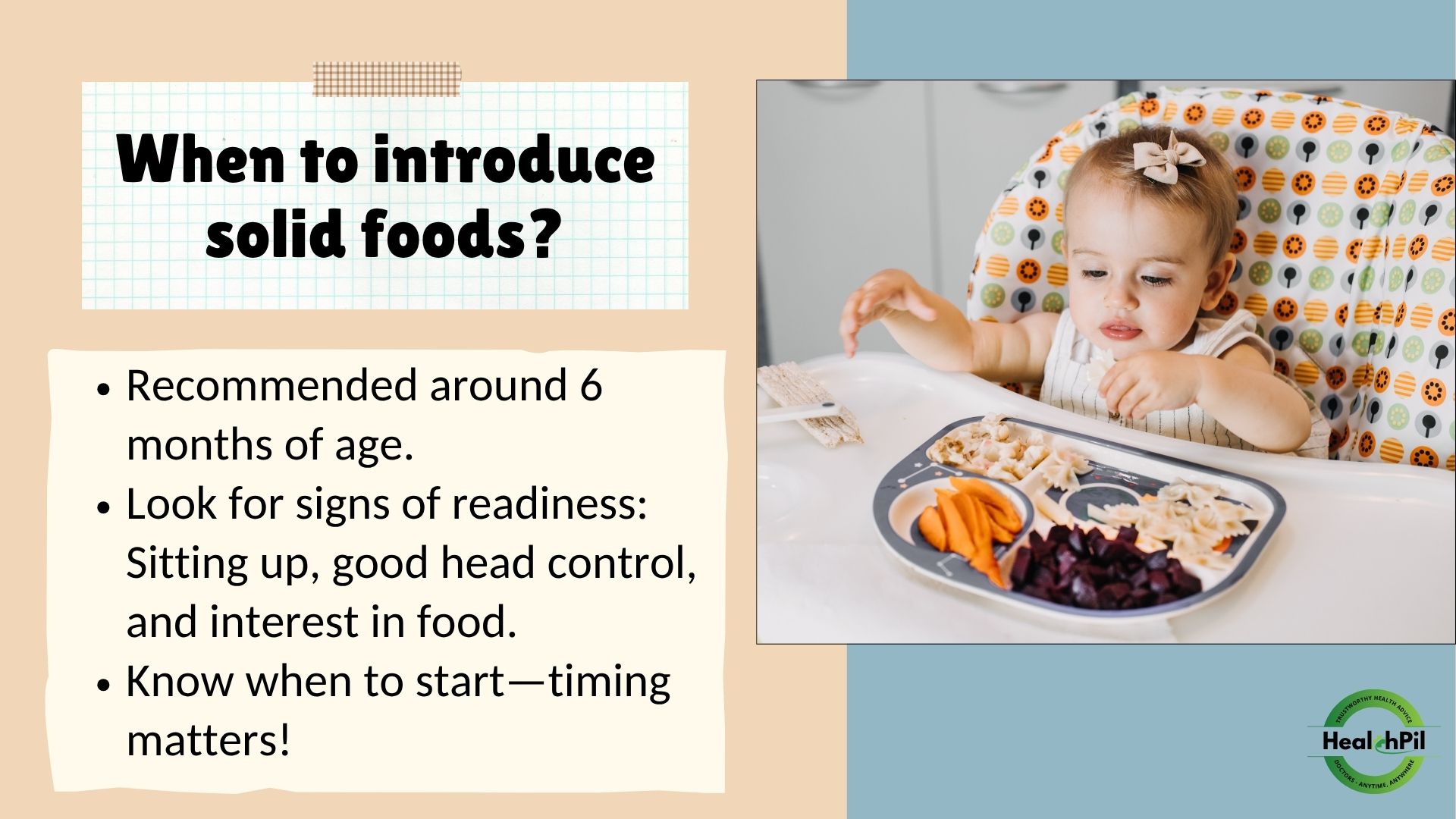
The question of when to introduce solid foods isn’t answered by the calendar alone. Age is a starting point most babies are developmentally ready for starting solids for babies around 6 months. But the signs baby is ready for solids are more reliable than the date on the birth certificate.
- Your baby can sit up with minimal support — this is non-negotiable for safe feeding. Baby feeding milestones include the ability to hold an upright position that keeps the airway safe during swallowing.
- Head control is steady — your baby can hold their head upright and turn it away from food they don’t want. This is an important safety marker.
- Interest in food is obvious — the watching, reaching, and mouth-opening described above. When a baby shows consistent curiosity about what you’re eating, their baby appetite development is signalling readiness.
- The tongue-thrust reflex has faded — young babies instinctively push objects out of their mouths with their tongues. When this reflex diminishes, solid food stays in rather than being pushed straight back out.
- When do babies start eating solid food? For most, somewhere between 5 and 7 months but always with these signs present, not just because a particular age has been reached.
Best First Foods for Babies at 6 Months
When starting, keep it simple. Single-ingredient baby puree foods and mashed foods for babies are where to begin one food, one texture, one new flavour at a time.
- Annaprashana: The Indian First Feeding Ceremony In many Indian households, the first taste of solid food is marked with a small ceremony Annaprashana, sometimes called the “grain initiation.” It usually happens somewhere between five and eight months, often with rice or a rice-based dish like kheer offered as the baby’s first bite.
If kheer is part of the ceremony, skip the sugar. Babies under one shouldn’t have added sugar or salt. A little date syrup made by soaking dates overnight, peeling them, and blending the pulp works well as a natural, baby-safe sweetener instead.
Whether or not a family follows this tradition, the idea behind it is the same as the medical guidance: a gentle, celebrated first step into solid food.
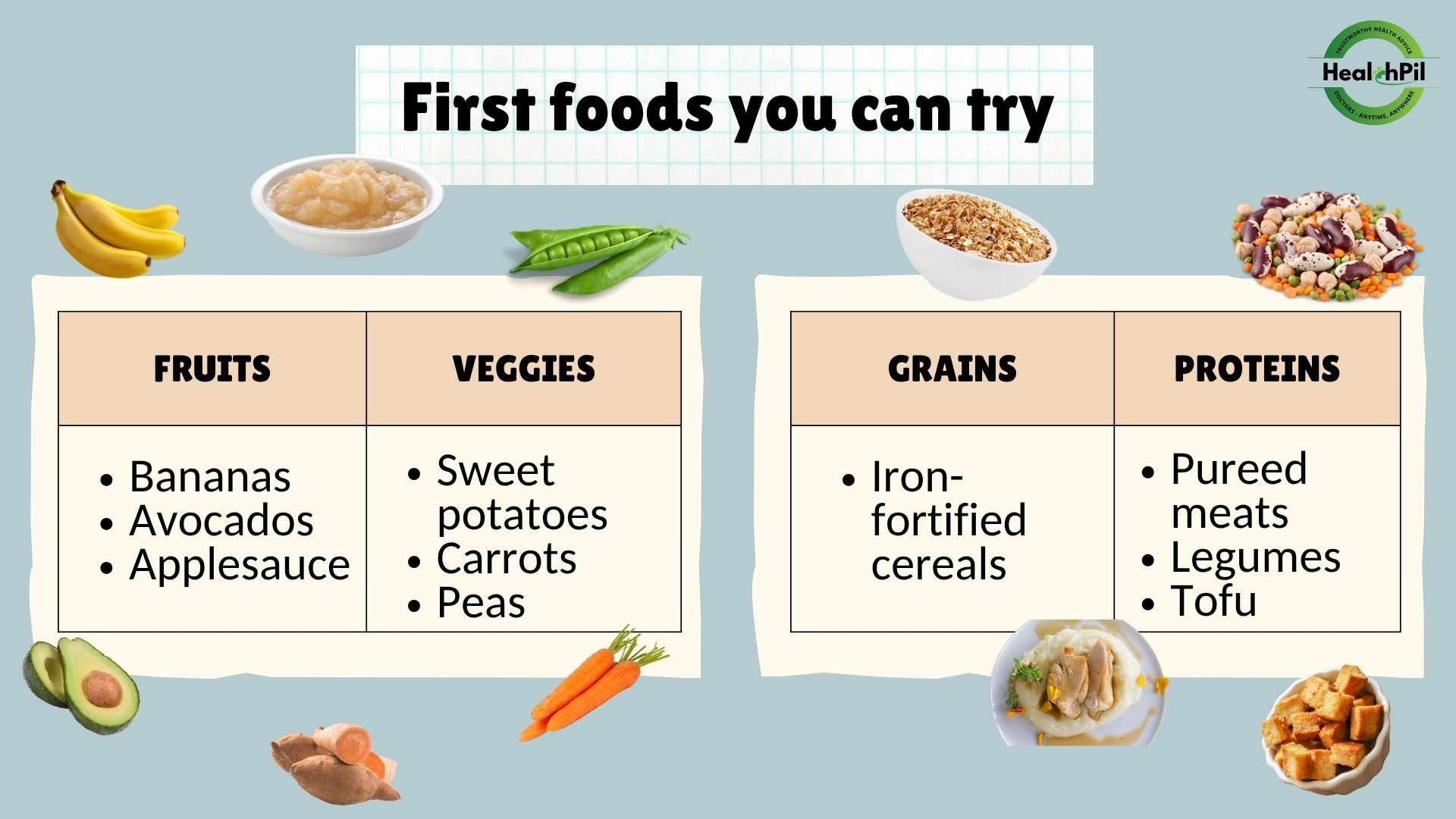
- Fruits — bananas, pears, avocados, mangoes, and steamed peaches are soft, easy to digest, and naturally sweet enough that most babies accept them readily. Bananas and avocados require almost no preparation.
- Vegetables — sweet potatoes, carrots, peas, pumpkin, and steamed broccoli are excellent first foods for babies. They provide vitamins, fibre, and variety in flavour that begins developing baby taste development early.
- Iron-rich foods — iron is one of the most critical nutrients at this stage. Iron-fortified cereals, ragi porridge, moong dal, and lentil purees are among the best baby food for 6 month old in terms of nutritional value. Baby brain development depends significantly on adequate iron.
- Proteins — soft tofu, mashed beans, pureed chicken, and lentils are appropriate as the baby becomes more comfortable with eating. Nutrition for infants at this stage begins shifting toward a broader nutrient profile.
Can I mix baby food with breast milk? Yes mixing purees with breast milk or formula is a great way to ease the transition, creating a familiar flavour in an unfamiliar texture.
How Much Solid Food Should Babies Eat?
This is one of the most common questions parents ask and the honest answer is: not much, at first.
Begin with one to two teaspoons, once a day. The goal in the first weeks of baby food introduction is not nutrition breast milk or formula still provides that. The goal is exploration. Baby feeding schedule after starting solids should keep milk feeds as the priority, with solids as an addition rather than a replacement. How much solid food should babies eat first? As much as they want which, initially, may be almost nothing. That’s completely normal. Follow the baby’s lead, not a volume target.
How much and how often, by age:
- 6 months (just starting) — 1-2 teaspoons, once a day. Milk feeds remain the main source of nutrition.
- 7-8 months — 2-3 small meals a day, roughly 2-3 tablespoons per meal. Milk feeds continue alongside.
- 9-10 months — 3 meals a day, closer to ¼ to ½ cup per meal, plus a small snack if the baby seems ready for it.
- 11-12 months — 3 meals and 1-2 small snacks a day, moving toward family-style meals with softer textures.
What You’ll Need to Get Started
Nothing fancy is required. A soft baby spoon, a small bowl, a bib, and a high chair or secure seat cover the basics. Food should be smooth and runny in the early weeks, thickening gradually as the baby gets used to texture.
What About Water?
Once solids begin, a few sips of water after meals is fine especially in warmer months. It doesn’t replace breast milk or formula, which should still cover most of a baby’s fluid and nutrition needs. Just a few sips, not a bottle or cup filled up, is all that’s needed at this stage.
The 3–5 Day Rule: Why It Matters for Baby Food Allergy Prevention
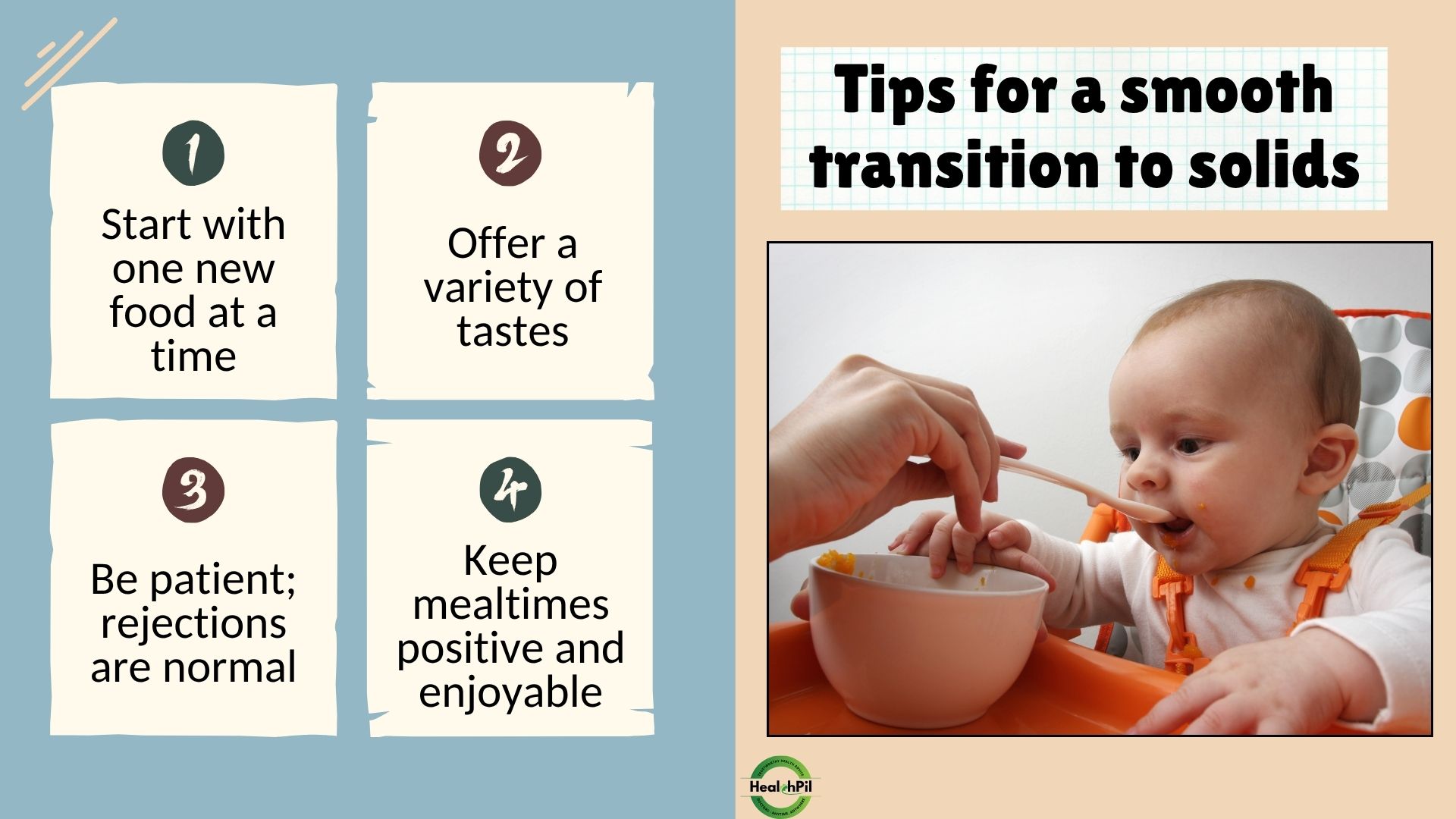
How to introduce solids step by step begins with one important discipline: introduce one new food at a time, and wait 3 to 5 days before introducing another.
This is the foundation of baby food allergy prevention. If a rash, vomiting, bloating, diarrhoea, or unusual fussiness appears after a new food, the 3–5 day gap makes it possible to identify the cause. Introducing multiple new foods simultaneously makes that identification almost impossible.
Foods to watch particularly carefully include eggs, peanut products, tree nuts, fish, wheat, and dairy the most common allergens. Introduce these individually, during the day, when you can observe your baby’s reaction.
Safe Finger Foods for Babies and Baby-Led Weaning
Around 8 to 9 months, baby self-feeding development reaches a point where baby finger foods become appropriate. Baby hand-eye coordination, baby chewing development, and the pincer grip all develop rapidly at this stage through the practice of picking up and managing small pieces of food independently.
Safe finger foods for babies include banana slices, steamed vegetable sticks, soft fruit pieces, cooked pasta, small rice cakes, and soft cheese pieces. Everything should be soft enough to be squashed between your fingers easily if it passes that test, it’s unlikely to pose a choking risk.
Is baby-led weaning safe? Yes when done correctly, with appropriate foods and supervision. Baby-led weaning vs spoon feeding is a genuine choice rather than one being better than the other. Many parents find a combination approach offering both purees and soft finger foods works best for their baby’s comfort and developmental stage.
Baby self-feeding skills, independent eating for babies, and confidence around food are all supported by allowing babies to explore textures and manage food at their own pace.
Foods to Avoid Before Age One
This section matters. Certain foods carry real risks in the first year:
- Honey — should never be given before 12 months due to the risk of infant botulism. What foods should babies avoid before 1 year always begins with honey.
- Whole nuts, popcorn, hard raw vegetables, and whole grapes — choking risks. Can babies choke on finger foods? Yes, if those foods are inappropriately hard or large. Always supervise mealtimes and cut foods to appropriate sizes.
- Salt and sugar — baby kidneys cannot process high salt loads, and early exposure to added sugar shapes taste preferences in ways that affect healthy baby eating habits long-term.
- Cow’s milk as a main drink — Can babies drink cow milk before one year? Not as their primary drink. Cow’s milk lacks the right nutritional profile for infants under 12 months, though small amounts used in cooking or mixed into foods are fine.
- Processed foods — additives, preservatives, and high salt/sugar content make processed foods inappropriate at this stage.
- Eggs deserve their own note. Egg yolk can usually be introduced around 9 months — start with about a quarter teaspoon and watch for any reaction. Egg white is more allergenic and is generally introduced only after the first birthday.
Breastfeeding, Formula Feeding, and Solids How They Work Together
Breastfeeding and solids, and formula feeding and solids, follow the same principle: milk remains the primary nutrition source through the first year. Solids are introduced alongside milk, not instead of it.
The baby feeding transition is gradual. By around 9 to 12 months, solid food intake increases and milk feeds naturally begin to reduce but this happens at the baby’s own pace, not on a fixed schedule.
Baby feeding support from a lactation consultant or paediatrician is particularly valuable if you’re unsure how to manage this balance, especially if breastfeeding is your primary feeding method.
What to Do If Your Baby Refuses Solid Foods
Baby food introduction rarely goes perfectly. Many babies reject foods repeatedly before accepting them research suggests a baby may need to be offered a food 10 to 15 times before accepting it. That is not failure. That is normal baby taste development.
If your baby refuses solids, stay calm and patient. Avoid pressure or coaxing. Offer the food again in a day or two. Vary the preparation the same vegetable pureed smooth versus slightly textured can produce completely different reactions. Make mealtimes enjoyable, social, and low-pressure.
Baby-led feeding philosophy supports allowing babies to regulate their own intake. Forcing or pressuring almost always backfires and can create negative associations with mealtimes that persist.
Homemade Baby Food vs Commercial Options
Healthy homemade baby food ideas are simple, cheap, and nutritionally excellent. Steamed and blended sweet potato. Mashed banana with a little expressed breast milk. Lentil dal thinned to a smooth puree. Ragi porridge. These are nutritious, free of additives, and easy to make in batches.
Commercial baby purees are convenient and safe but read labels. Avoid anything with added salt, sugar, or additives. Pediatrician recommended baby foods are those with simple, recognisable ingredients and no unnecessary additions.
When to Speak With a Paediatrician
Consult a paediatrician or baby feeding specialist if your baby has difficulty swallowing, persistent vomiting after feeds, signs of allergic reaction, poor weight gain, repeated choking episodes, or continued refusal of solid foods beyond 8 months.
An online consultation for baby nutrition support is a practical, accessible option if you have concerns about your baby’s feeding habits, growth, or potential allergies without needing to travel to a clinic.
How HealthPil Can Help
HealthPil connects parents with experienced paediatricians and nutrition experts who specialise in infant feeding from guiding first food introductions to managing food allergies, supporting the breastfeeding and solids transition, and providing personalised feeding schedules and healthy baby meals planning. Whether you’re just starting out or working through a feeding challenge, expert support is available online, from home. Book your online consultation for baby nutrition support with HealthPil today.
Summary
Starting solids is one of the most significant milestones of the first year and one that works best when it’s led by the baby’s readiness rather than the calendar alone. The best first foods for babies are simple, single-ingredient, iron-rich, and introduced one at a time. Patience, variety, and a relaxed mealtime environment are the three things that matter most. The rest follows naturally.
Frequently Asked Questions
What is the best first food for my baby?
Start with single-ingredient purees like bananas or sweet potatoes.
How do I know if my baby is allergic to a food?
Watch for symptoms like hives, vomiting, or difficulty breathing after introducing a new food.
Can I continue breastfeeding while introducing solids?
Yes, continue breastfeeding or formula feeding as solids are introduced.
How much should my baby eat when starting solids?
Begin with small amounts, around 1-2 teaspoons, and gradually increase as your baby shows interest.
Should I avoid any foods when starting solids?
Avoid honey (risk of botulism), whole nuts, and foods that can be choking hazards.
References
- Borowitz SM. First Bites—Why, When, and What Solid Foods to Feed Infants. Available at:
PubMed - Fewtrell M, Bronsky J, Campoy C, et al. Complementary Feeding: A Position Paper by the European Society for Paediatric Gastroenterology, Hepatology and Nutrition (ESPGHAN). Available at:
PubMed
Disclaimer
The information provided in this article is for awareness purposes only and should not replace professional medical advice. Always consult your healthcare provider for personalized medical guidance.

Read our editorial policy