



Newborn sleep patterns are genuinely different from adult sleep. Unpredictable, exhausting, and completely normal. Understanding what’s actually happening and what to expect at each stage makes the whole thing significantly more manageable.
This blog covers newborn sleep from every angle. How much sleep babies need, why they wake so often, what safe sleep actually looks like, and what you can do to help everyone get a little more rest.
What Are Newborn Sleep Patterns?
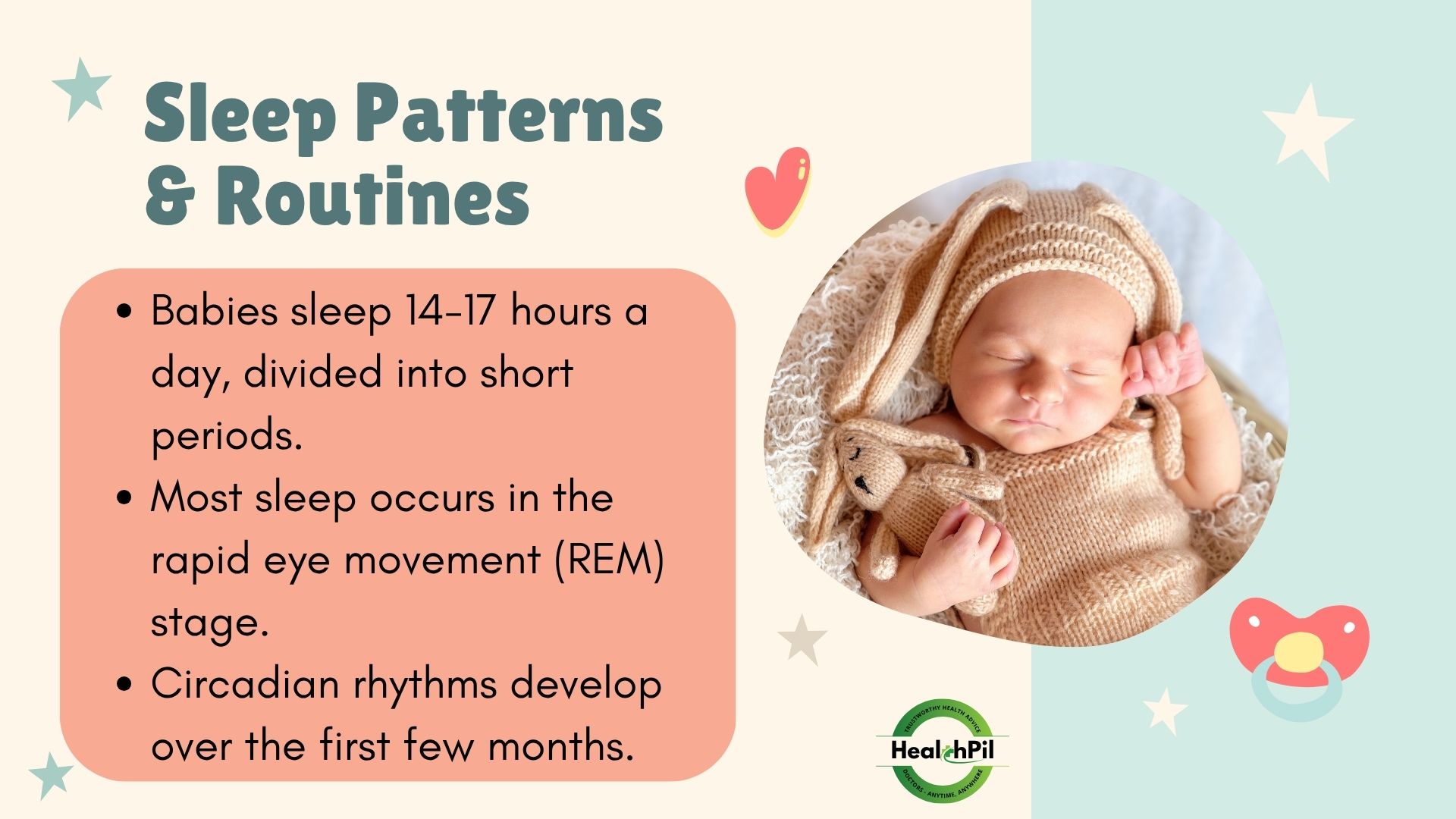
Newborn sleep patterns refer to how babies sleep and wake in the first few months of life. And here’s the honest truth they look nothing like adult sleep.
Newborns sleep a lot. But never for long stretches. Their sleep is broken into short cycles throughout the day and night, with no understanding yet of the difference between the two. Their baby circadian rhythm the internal body clock that tells us when to sleep and when to be awake hasn’t developed yet. It takes months to establish.
What makes newborn sleep especially different is how much time babies spend in REM sleep also called active sleep in newborns. Adults spend around 20 to 25 percent of their sleep in REM. Newborns spend closer to 50 percent. And REM sleep in babies isn’t wasted time it’s when the brain is developing most actively, processing everything the baby experienced while awake.
So the light, twitchy, easily disturbed sleep your newborn has? It’s doing something important.
How Much Sleep Do Newborns Need?
This is the question every exhausted parent asks first. Here’s the breakdown by age:
0 to 3 months 14 to 17 hours per day. Broken into periods of 2 to 4 hours. No predictable pattern yet.
4 to 6 months 12 to 16 hours per day. Sleep begins consolidating slightly. Longer stretches at night start becoming possible.
6 to 12 months 12 to 15 hours per day. More structured nap schedule begins to emerge. Most babies can sleep longer stretches at night by this stage.
These are averages. Newborn sleep hours vary between babies some sleep more, some less. What matters more than the exact number is that your baby is feeding well, gaining weight appropriately, and alert when awake.
Why Do Newborns Wake Up So Often?
Newborn night waking is one of the most challenging parts of early parenthood. But it has a clear biological explanation.
A newborn’s stomach is tiny. At birth it holds only about 5 to 7 millilitres. It can’t store enough milk whether breast milk or formula to last more than a few hours. Both breastfeeding and baby sleep and formula-fed baby sleep follow this same basic pattern in the early weeks. Feeding every 2 to 3 hours, including through the night, is what a newborn’s body actually requires.
Beyond hunger, babies also wake because:
- They need comfort the world outside the womb is very different. The warmth, sound, and closeness of a parent is genuinely regulating for a newborn’s nervous system.
- Growth spurts during periods of rapid growth, babies feed more frequently and may wake more often. Common around 2 to 3 weeks, 6 weeks, and 3 months.
- Day and night confusion in babies newborns don’t know that night is for sleeping. The baby circadian rhythm that regulates this develops over the first 3 to 4 months. Until then, day and night feel the same to them.
- Developmental changes as the brain develops, sleep patterns shift. These are sometimes called sleep regressions periods where previously settled sleep becomes disrupted again.
How Feeding Affects Newborn Sleep
Feeding and sleep are closely connected during the first few months of life. Since newborns have small stomachs, they need frequent feeding throughout the day and night. Breastfed babies often wake every 2–3 hours, while formula-fed babies may sleep slightly longer between feeds. As babies grow and consume larger feeds, longer sleep stretches gradually become possible.
Understanding the Newborn Sleep Cycle
An adult sleep cycle lasts around 90 minutes. A newborn sleep cycle lasts only 45 to 50 minutes. This is why babies so often wake after a short nap they’ve completed one full cycle and haven’t yet learned to connect into the next one independently.
The newborn sleep stages move between:
- Active sleep (REM) light sleep. The baby may twitch, smile, move their eyes under closed lids, or make small sounds. Easily disturbed. Important for newborn sleep development and brain growth.
- Quiet sleep (non-REM) deeper, calmer sleep. Breathing is more regular. The baby is harder to wake. This stage deepens as babies get older.
As weeks pass and baby sleep development continues, sleep cycles gradually lengthen and the proportion of REM sleep decreases. Night sleep consolidates. The infant sleep schedule begins to take shape.
Baby Sleep Patterns by Age
Age | Total Sleep (24 hrs) | Night Sleep | Day Naps | Key Highlight |
0–6 weeks | 14–17 hours | Broken, 2–4 hr bursts | 4–6 naps | No day-night rhythm yet |
6–12 weeks | 14–16 hours | Slightly longer stretches (3–4 hrs) | 4–5 naps | First signs of a pattern |
3–4 months | 13–15 hours | 5–6 hr stretches begin | 3–4 naps | Circadian rhythm developing |
4–6 months | 12–16 hours | Improving, some 5–6 hr stretches | 2–3 naps | Nap schedule starts settling |
6–12 months | 12–15 hours | 10–12 hrs with some waking | 2 naps | Most structured stage yet |
Newborn Sleep Cues Signs Your Baby Is Sleepy
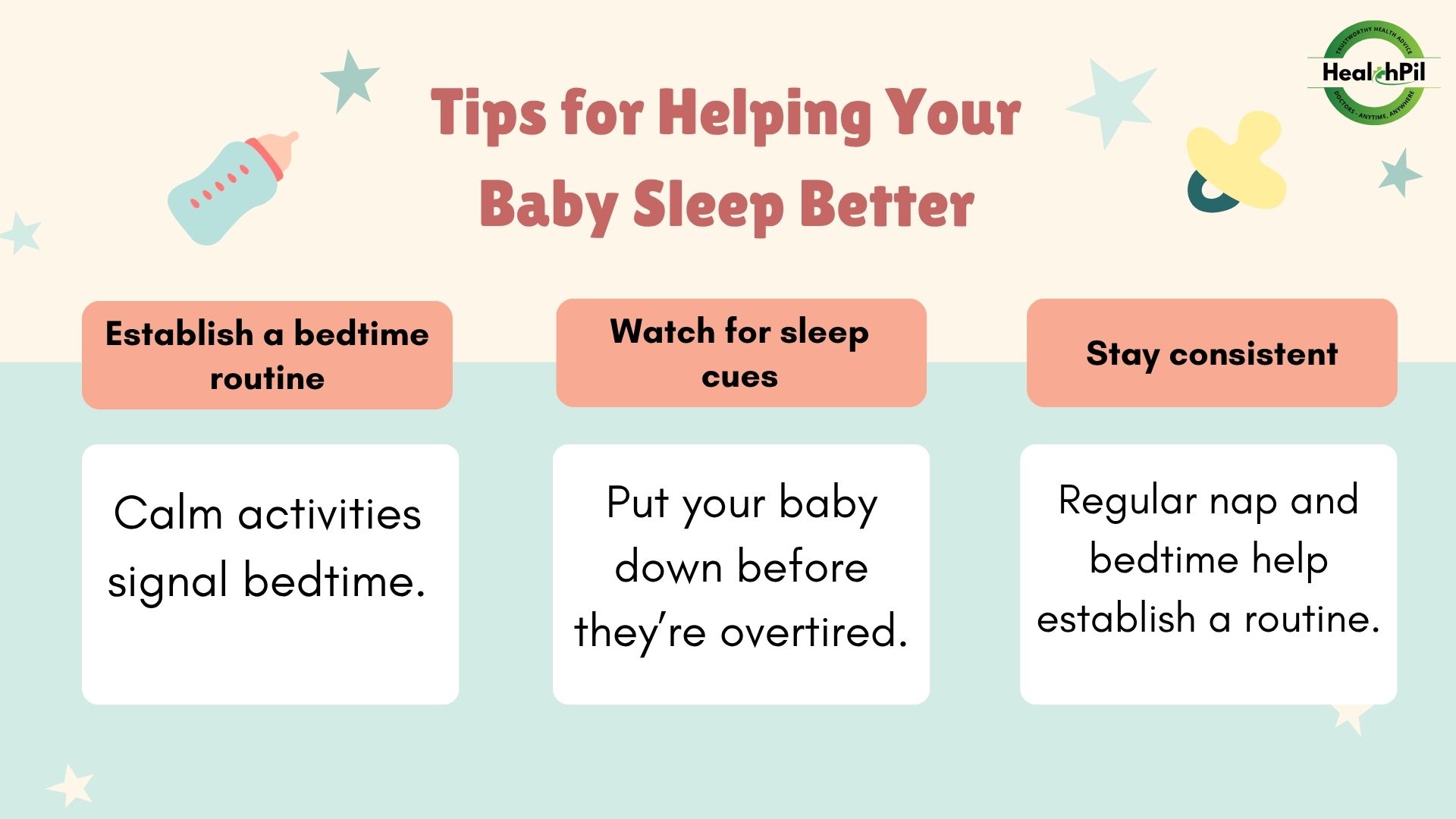
Watching for baby sleep cues the signs that your baby is getting tired is one of the most practical skills you can develop as a new parent.
- Early sleep cues yawning, staring blankly, slowing down movements, losing interest in toys or faces. This is the ideal window. Put the baby down now.
- Later sleep cues rubbing eyes, pulling ears, becoming fussy, arching the back. Still manageable but getting close to overtired.
- Overtired baby signs crying that’s hard to settle, hyperactivity that looks like energy but is actually over-stimulation, difficulty latching. This is harder territory. An overtired baby is harder to settle than a tired one.
The goal is to catch the early window before overtired sets in. It takes practice. And some days you’ll miss it. That’s fine.
Safe Sleep Practices What Every Parent Needs to Know
Safe sleep for babies is not negotiable. The following practices significantly reduce the risk of SIDS (Sudden Infant Death Syndrome) and are recommended by paediatricians globally.
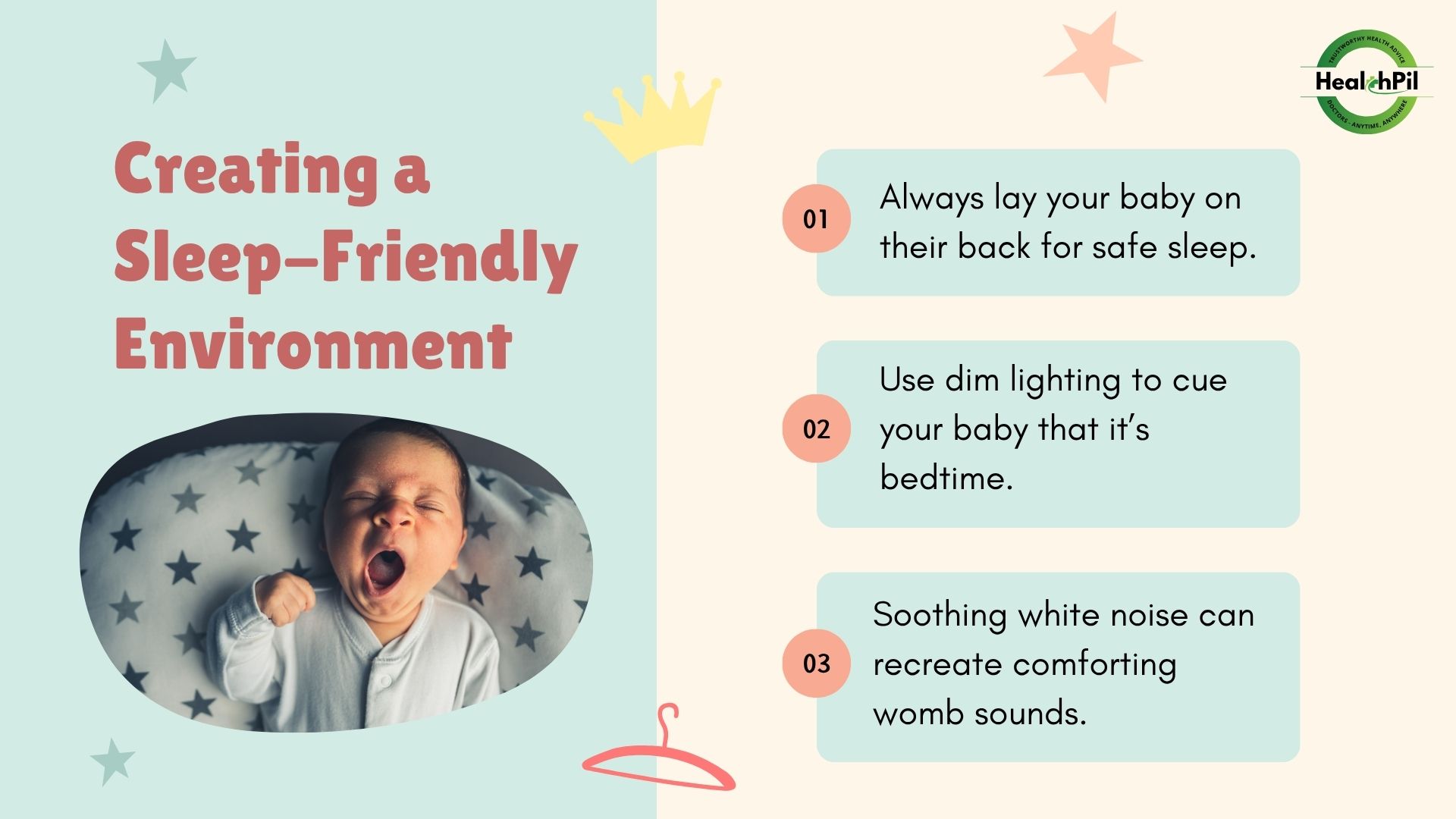
- Baby sleeping on back always place your baby on their back for every sleep. This is the single most important safe sleep practice. Crib safety for newborns begins here.
- Firm, flat surface use a firm mattress with a fitted sheet. No soft bedding, pillows, bumpers, or toys in the sleep space.
- Room sharing without bed sharing the safest setup is baby in their own sleep space in your room for the first 6 months. Not in your bed.
- Temperature keep the room comfortably cool. Overheating is a risk factor. Dress baby in one more layer than you would wear.
- No smoking exposure to smoke significantly increases SIDS risk.
- Breastfeeding associated with reduced SIDS risk when done safely. These are SIDS prevention guidelines that every parent should know.
- A note on co-sleeping: Room-sharing (baby in their own sleep space, in the parents’ room) is different from bed-sharing (baby sleeping in the same bed as a parent). Bed-sharing increases SIDS risk and isn’t recommended by paediatricians, even though it’s common practice in many Indian households. If a baby does end up in the parents’ bed, the safest option is still to move them to their own firm, flat sleep surface as soon as possible.
Creating a Sleep-Friendly Environment
- White noise for babies a white noise machine or app creates a consistent background sound that mimics the womb environment. Many babies sleep longer and more deeply with white noise. It also masks sudden household sounds that might otherwise disturb light sleep.
- Dim lighting keep the room dim during night feeds. Bright light signals “awake time” to the developing baby circadian rhythm. Keep things calm and dark at night even during feeds and nappy changes.
- Swaddling for newborn sleep swaddling recreates the snug feeling of the womb and reduces the startle reflex that wakes many newborns. Use a safe swaddle technique arms secure but hips loose. Stop swaddling when baby shows signs of rolling.
- Temperature slightly cool rather than warm. Overheating is associated with increased SIDS risk.
Why Do Babies Confuse Day and Night?
Newborns are not born with a fully developed body clock. During the first few weeks, they may sleep longer during the day and remain awake more often at night. Exposure to natural daylight during the day and a calm, dim environment at night helps babies gradually develop a healthy sleep-wake cycle.
Newborn Bedtime Routine Building Healthy Sleep Habits
A newborn bedtime routine doesn’t need to be elaborate. It needs to be consistent. The goal is to create a predictable sequence of events that signals to the baby sleep is coming. Over weeks, this becomes a genuine cue. The routine does part of the work of settling. A simple baby bedtime routine might look like:
Bath warm, calm, brief.
Feed last feed before sleep.
Dim the room signal the transition.
Gentle rocking or holding brief, calm contact.
Put down drowsy but awake when developmentally appropriate, this helps babies learn to settle independently.
Consistency matters more than complexity. The same order, every night, signals the same thing. Even at 6 to 8 weeks, starting a simple sleep routine for newborns begins building the association between these activities and sleep.
Common Sleep Challenges New Parents Face
- Frequent night waking normal in early months. Gradually reduces as feeding needs decrease and sleep cycles mature.
- Day and night confusion in babies common in the first 6 to 8 weeks. Help correct it by keeping days bright and stimulating, nights dim and quiet.
- Short naps a baby who wakes after exactly 45 minutes has completed one sleep cycle. Helping them connect to the next cycle is a skill that develops with time.
- Difficulty settling some babies need more help than others. This is temperament, not a parenting failure.
- Sleep regression common around 4 months, 8 months, and during illness or developmental leaps. Normal. Temporary.
- Overtired baby signs the harder-to-settle, harder-to-sleep cycle. Prevention through watching sleep cues is more effective than managing an overtired baby.
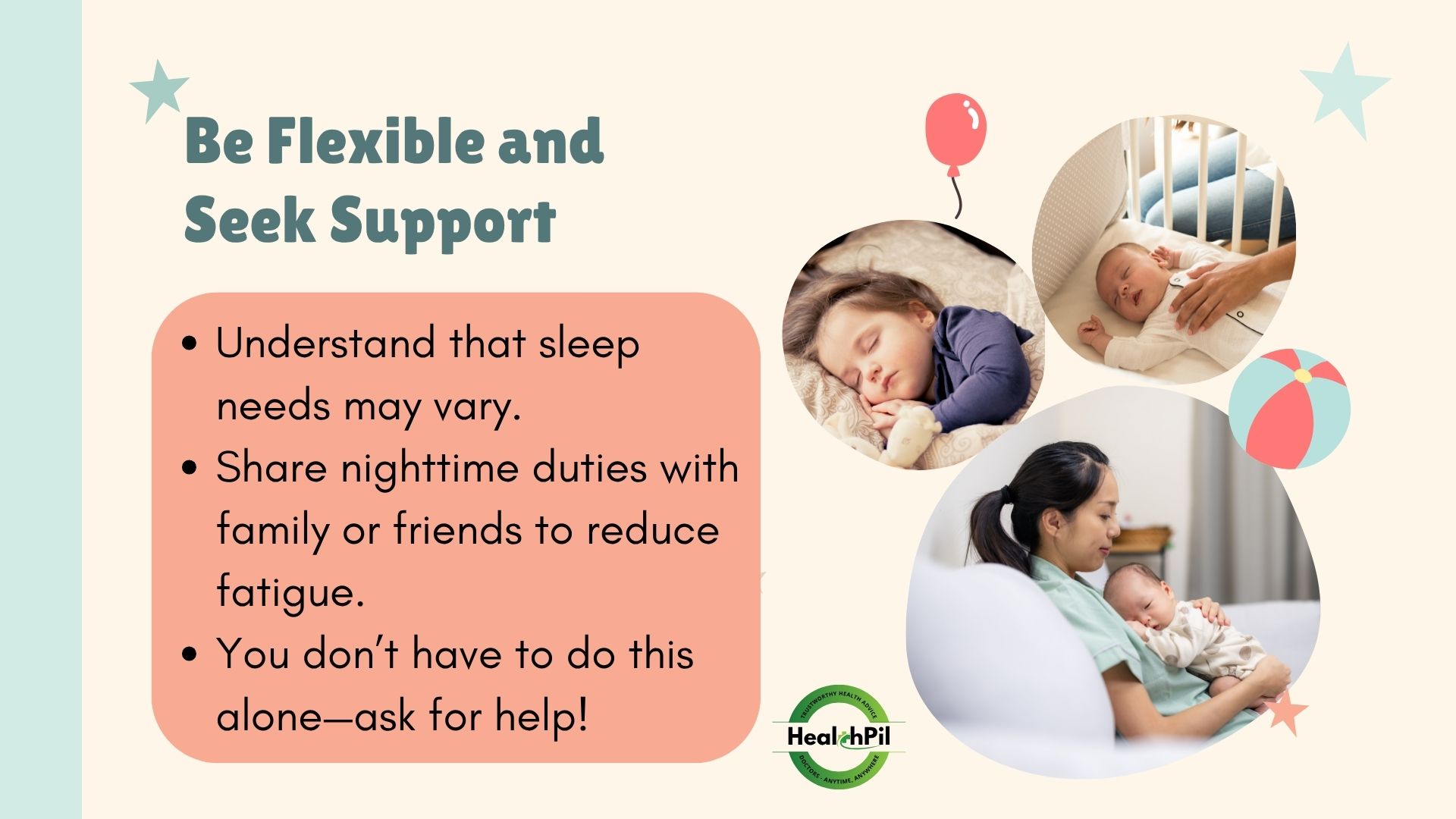
- Nap when your baby naps. It sounds obvious, but it’s one of the most underused newborn sleep tips there is. Using every nap to catch up on chores instead of resting yourself catches up with you fast. A tired, unrested parent finds every part of newborn care harder — including sleep coaching.
The Witching Hour: Why Evenings Are Harder
Many parents notice their baby gets fussier in the evening, often between 5 PM and 10 PM. This is sometimes called the “witching hour,” and it’s extremely common in the first few months.
It usually isn’t caused by anything wrong babies are often just overstimulated from the day, and evening is when they release it. Dimming lights early, gentle rocking, a calm environment, and simply riding it out with patience helps most babies through this phase. It typically fades by around 3 to 4 months.
How HealthPil Can Help
Navigating newborn sleep on broken rest, with conflicting advice coming from everywhere, is one of the hardest parts of new parenthood. HealthPil connects you with experienced paediatricians who can assess your baby’s sleep patterns, give personalised guidance on feeding and settling, and help you understand what’s normal versus what needs attention. Whether you have a specific concern or simply want reassurance that everything is on track expert support is available through an online consultation from wherever you are.
Book your online consultation with HealthPil today.
When Should You Consult a Paediatrician?
Most newborn sleep irregularity is completely normal. But speak to a doctor if:
Your baby sleeps significantly less than expected for their age. Feeding is difficult or baby isn’t gaining weight appropriately. Baby snores, has noisy breathing, or shows signs of breathing difficulty during sleep. Baby is very difficult to wake for feeds in the first weeks. Sleep patterns suddenly change dramatically without obvious reason. You’re concerned about anything at all a paediatrician would always rather hear from you.
An online consultation with a paediatrician through HealthPil means you can get expert guidance on your newborn’s sleep, feeding, and development from home without travelling with a tired baby.
Summary
Newborn sleep patterns are unpredictable, frequent, and completely normal. Babies need 14 to 17 hours of sleep per day in short cycles, spend large amounts of time in REM sleep for brain development, and wake frequently because their stomachs are small and their body clocks are still developing. Safe sleep practices baby sleeping on back, firm surface, no soft bedding are essential from day one. A consistent newborn bedtime routine, watching for baby sleep cues, and creating a calm sleep environment all support better sleep over time. If you have concerns, speak with a paediatrician early.
Frequently Asked Questions
How many hours should a newborn sleep?
Most newborns need 14 to 17 hours of sleep per day, spread across multiple short periods. This gradually reduces and consolidates as the baby grows.
Why does my newborn only sleep for 45 minutes?
This is one complete newborn sleep cycle. Babies often wake between cycles because they haven’t yet learned to connect into the next one independently. It’s very common and improves with age.
Is it safe for my newborn to sleep on their stomach?
No. Baby sleeping on back is the safest position for every sleep. This is the most important SIDS prevention measure. Always place babies on their backs.
Can white noise help my baby sleep?
Yes. White noise for babies mimics the sounds of the womb and can help babies settle and stay asleep longer. It also masks sudden household sounds.
When will my baby start sleeping through the night?
There is no single answer every baby is different. Many babies begin giving longer night stretches between 3 and 6 months as their baby circadian rhythm matures and feeding needs decrease.
Is swaddling safe for newborns?
Yes, when done correctly. Swaddling for newborn sleep should keep the arms secure but allow the hips to move freely. Stop swaddling when baby shows signs of rolling.
Can I get an online consultation for my baby's sleep problems?
Yes. HealthPil connects parents with experienced paediatricians who can assess your baby’s sleep patterns, feeding, and development through an online consultation from home, at a time that works for you.
References
- Mindell JA, et al. Development of Infant Sleep: Implications for Health and Development. Available at:
PubMed - De Beritto TV. Newborn Sleep: Patterns, Interventions, and Outcomes. Available at:
PubMed
Disclaimer
The information provided in this article is for awareness purposes only and should not replace professional medical advice. Always consult your healthcare provider for personalized medical guidance.

Read our editorial policy