

A quick check at the dentist. The doctor taps a tooth, looks at the X-ray, and says “You have a small cavity here.”
Most people’s first reaction is something between mild concern and complete dismissal. It is just a cavity. How bad can it be?
The honest answer is left alone, very bad. Dental cavities are one of the most common health problems in the world, affecting children and adults equally. And because they rarely hurt in the beginning, most people do not take them seriously until the damage has gone much deeper than it needed to.
What Are Cavities?
Cavities also called dental caries or tooth decay are permanently damaged areas in the tooth caused by bacteria, plaque buildup, and acid attacks on enamel. Once a cavity forms, it does not repair itself. It only gets bigger.
A small cavity treated early is a quick, straightforward fix. The same cavity ignored for a year can reach the nerve of the tooth and require a root canal or the tooth may need to come out entirely.
What Causes Cavities?
Cavities in teeth develop because of bacteria. The mouth is full of bacteria, and many of them are harmless. But certain bacteria feed on sugary foods and carbohydrate-rich foods left on the teeth after eating, and when they do, they produce acids. These acids attack the enamel the hard outer layer of the tooth and over time, that acid attack on enamel breaks it down.
Poor oral hygiene, frequent snacking, sugary foods and cavities, sticky foods causing cavities, dry mouth, and not brushing with fluoride toothpaste regularly all make the problem worse.
How Tooth Decay Develops
It starts with dental plaque a soft, sticky film of bacteria that forms on the teeth throughout the day. When plaque bacteria feed on sugar and starches, they release acids that weaken enamel. At first the damage shows up as white spots on teeth early signs of enamel erosion. Over time, if nothing changes, those weakened areas become small holes. Those holes become cavities. And cavities left untreated go deeper, reaching the dentin and eventually the pulp at the centre of the tooth.
Cavities in India Numbers Worth Knowing
Tooth decay is one of the most common dental problems in India. According to the WHO, 60–90% of school-age children and many adults are affected, with over half of Indian children having untreated cavities.
The main causes include frequent sugary foods and drinks, sticky sweets, poor brushing habits, and irregular dental check-ups. Many people visit the dentist only after pain begins, when the cavity has already become severe.
The good news is that early dental check-ups, proper brushing, and limiting sugary snacks can prevent most cavities before they require extensive treatment.
Cavity treatment cost in India:
|
Treatment |
Approximate Cost |
|
Composite (tooth-coloured) filling |
Rs 800 – Rs 2,500 per tooth |
|
Amalgam (metal) filling |
Rs 500 – Rs 1,500 per tooth |
|
Dental crown |
Rs 3,000 – Rs 15,000 |
|
Root canal treatment |
Rs 3,000 – Rs 12,000 per tooth |
|
Pit and fissure sealant |
Rs 500 – Rs 1,500 per tooth |
These are general ranges actual costs vary by city, clinic, and severity. Early treatment is always less expensive than waiting.
Types of Cavities
Coronal Cavities
These are the most common type. They form on the chewing surfaces of the teeth or between teeth. Cavities between teeth are particularly easy to miss because they are not visible to the naked eye they are usually caught on dental X-rays.
Root Cavities
Root cavities develop on the exposed roots of teeth, usually in people who have gum recession. Receding gums and cavities often go together because root surfaces have less protection than enamel-covered surfaces and are more vulnerable to decay.
Recurrent Cavities
These form around existing fillings or dental crowns. Even a perfectly placed filling can develop new decay around its edges over time, especially if oral hygiene slips or sugary foods and cavities become a regular pattern again.
Risk Factors for Cavities
Some people are more prone to cavities than others. Common risk factors include poor oral hygiene, regular consumption of sugary or sticky foods, dry mouth, frequent snacking between meals, gum recession, smoking, and a family history of tooth decay.
Bacteria causing cavities thrive in mouths that are not cleaned regularly or that are frequently exposed to sugar without rinsing or brushing afterward.
Early Signs of Cavities
Cavities often develop silently. By the time they cause obvious pain, the decay is usually well underway. Knowing the early signs helps catch them before they go deep.
Sensitivity
Hot and cold sensitivity is one of the earliest cavity symptoms. Pain while eating sweets, or discomfort with very hot or cold foods and drinks, can point to enamel erosion or a cavity beginning to form. Tooth sensitivity that keeps coming back particularly in one specific tooth is worth getting checked.
Visible Holes or Pits
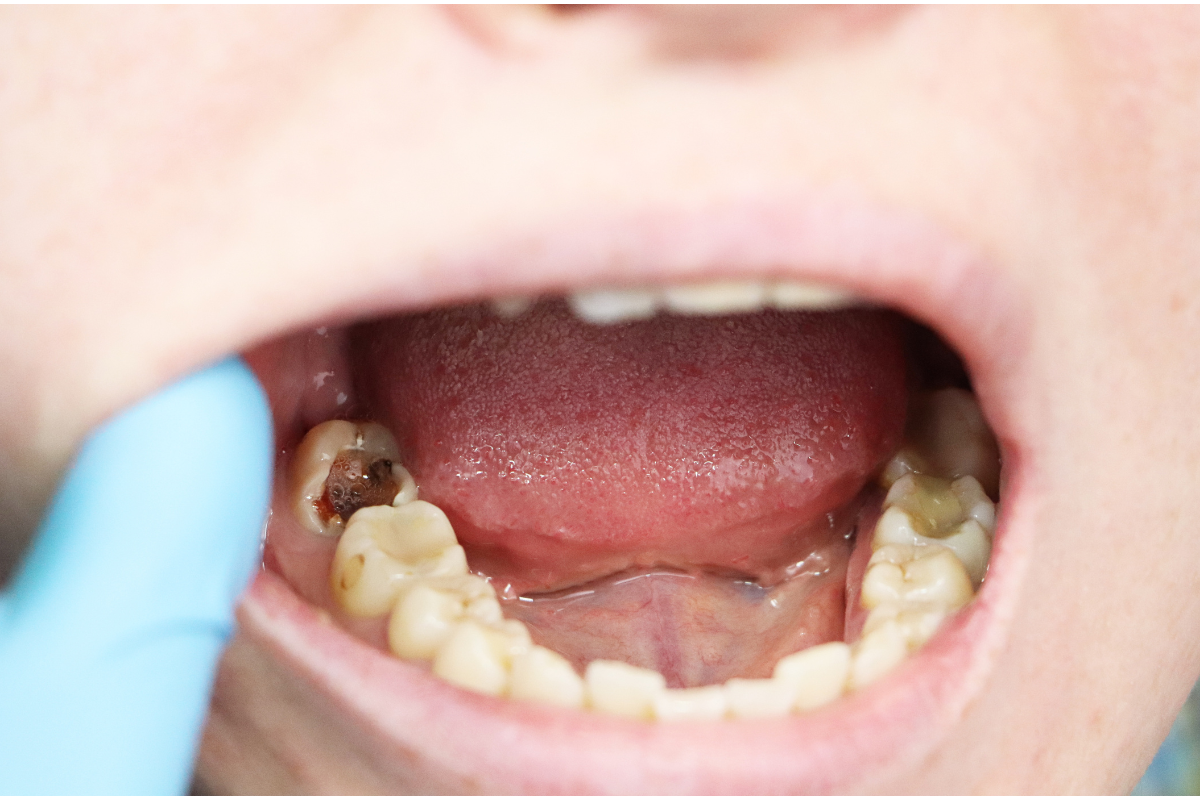
Visible holes in teeth or dark spots black spots on teeth or brown stains on teeth are signs that decay has already progressed beyond the surface. At this point the cavity needs treatment, not monitoring.
Toothache
A toothache that is persistent or comes and goes especially with pain while chewing or pain while eating sweets is a sign the decay may be reaching deeper layers of the tooth. Do not wait for toothache to become severe before seeing a dentist.
Other early signs include white spots on teeth, bad breath that comes from bacterial activity in the decayed area, and food getting stuck repeatedly in the same spot.
How Are Cavities Diagnosed?
Cavity diagnosis involves an oral examination, dental X-rays to detect cavities between teeth and below the surface, and sometimes special diagnostic tools that help dentists find hidden tooth decay before it becomes visible. Regular X-rays are one of the best tools for catching cavities in teeth before they cause pain.
Stages of Tooth Decay
Tooth decay symptoms get more serious at each stage. It starts with enamel decay the earliest and most treatable stage. If untreated, it moves to dentin decay, where the softer layer beneath the enamel is affected and sensitivity increases. Then comes pulp infection, where bacteria reach the innermost part of the tooth. The final stage is a dental abscess a painful collection of pus caused by a bacterial infection that can spread beyond the tooth if not treated urgently.
Can Cavities Heal Naturally?
Very early enamel damage before a hole has actually formed can sometimes be reversed through enamel remineralisation. This is where fluoride toothpaste, fluoride treatment, and fluoride rinse play a role. Fluoride helps repair weakened enamel by making it more resistant to further acid attacks.
Once a cavity has formed once there is an actual hole in the tooth it cannot heal on its own. It needs dental treatment.
Treatment for Cavities
Fillings
Fillings for cavities are the most common cavity treatment. The dentist removes the decayed material and fills the space with either amalgam fillings strong metal fillings or composite resin fillings tooth-coloured fillings that blend in naturally. The choice depends on the location and size of the cavity. This falls under restorative dentistry and is usually completed in a single visit.
Crowns
When tooth decay has damaged a large portion of the tooth and a filling is not enough to restore it properly, a dental crown a cap that covers the entire tooth is used. Dental crowns protect the remaining tooth structure and restore normal function.
Root Canals
If the cavity has reached the pulp and caused a pulp infection or dental abscess, root canal therapy is needed. The infected tissue is removed, the canal is cleaned and sealed, and a crown is usually placed on top.
Root canal therapy saves the tooth avoiding extraction when the infection has gone deep.
Complications of Untreated Cavities
Cavities that are not treated do not stay small. Severe tooth decay progresses to severe tooth pain, tooth infection, dental abscess, gum swelling, halitosis from bacterial activity, and eventually tooth loss. The deeper the decay goes, the more complex and expensive the treatment becomes.
Early treatment is almost always simpler, faster, and more comfortable than treating an advanced cavity.
How to Prevent Cavities
Cavity prevention is straightforward. Brush twice daily with fluoride toothpaste, floss every day as part of your oral hygiene routine, limit sugary foods and drinks, rinse after eating when you cannot brush, visit the dentist regularly for check-ups and preventive dental care, drink fluoridated water where available, and ask your dentist about pit and fissure sealants or dental sealants thin protective coatings applied to the chewing surfaces of back teeth that are particularly prone to decay.
Brushing and flossing consistently is the single most effective thing anyone can do for healthy teeth and gums.
Best Foods for Healthy Teeth
Some foods actively support tooth health. Dairy products like milk, cheese, and yoghurt are high in calcium and help strengthen enamel. Leafy vegetables, nuts, apples, and carrots stimulate saliva production which naturally cleans the mouth. Water-rich foods help rinse away food particles and keep the mouth hydrated.
Foods and Drinks That Cause Cavities
The biggest culprits are candy, soft drinks, sticky sweets, sugary snacks, and starchy foods like bread and chips that break down into sugars in the mouth. Sticky foods causing cavities are particularly problematic because they cling to the tooth surface and give bacteria more time to produce acid. Limiting these or at least rinsing with water after eating them makes a real difference over time.
How Fluoride Helps Prevent Cavities
Fluoride toothpaste and fluoride treatment strengthen tooth enamel by incorporating into its structure and making it more resistant to acid. Fluoride also supports enamel remineralisation helping repair areas that have been weakened by acid before a full cavity forms.
It is one of the most well-evidenced tools in cavity prevention and is available in toothpaste, professional fluoride rinse applications, and fluoride treatments at the dental clinic.
When Should You See a Dentist for Cavities?
See a dentist for cavities if you have tooth pain that does not settle, hot and cold sensitivity that keeps returning, visible holes in teeth or dark spots on the tooth surface, gum swelling near a tooth, persistent bad breath, or pain while chewing that has developed gradually.
Do not wait for the pain to become severe cavities in adults and cavities in children both progress faster than most people expect once they reach the dentin layer.
If getting to a clinic is not immediately possible, an online dental consultation is a practical first step. Describe your cavity symptoms where the pain is, what triggers it, how long it has been happening and a dentist can advise on how urgently treatment is needed and what cavity treatment options are most likely appropriate for your situation.
Cavities in Children and Adults
Cavities in children most commonly form on the chewing surfaces of the back teeth and between teeth. Cavities in adults tend to develop on root surfaces particularly as gum recession increases with age and around existing restorations. The causes are the same: plaque buildup, bacteria causing cavities, poor oral hygiene, and regular exposure to sugary or carbohydrate rich foods. The oral hygiene routine that works for prevention is also the same across all ages.
Myth 1: Only children get cavities.
Dental cavities affect all age groups. Adults particularly those with gum recession, dry mouth, or existing dental restorations are just as vulnerable as children. Root cavities specifically are more common in adults over 40.
Myth 2: Cavities are not a big deal.
An untreated cavity is one of the most common causes of severe tooth pain, dental abscess, and tooth loss. A small cavity treated with a filling becomes a root canal situation if ignored long enough. The tooth may eventually need to be extracted entirely.
Myth 3: If there’s no pain, there’s no cavity.
Most cavities cause no pain in their early stages. By the time a toothache develops, the decay has usually reached the dentin or pulp significantly deeper and more complex to treat. Pain is a late symptom, not an early warning.
Myth 4: Sugar is the only thing that causes cavities.
Sugar is the main fuel for cavity causing bacteria but starchy foods like bread, chips, and crackers break down into sugars in the mouth and cause the same acid attacks on enamel. Frequency of exposure matters as much as the amount snacking throughout the day keeps acid levels elevated constantly.
Myth 5: Filling a cavity means it won’t come back.
A filling restores the tooth it does not make it immune to future decay. Recurrent decay can form around the edges of existing fillings, particularly if oral hygiene slips. This is why keeping up with dental check-ups even after fillings is important.
How HealthPil Can Help
HealthPil connects you with experienced dental professionals who can assess tooth decay, recommend the right cavity treatment, and help you build a preventive dental care plan. Book an online dental consultation today early treatment is always easier than waiting.
Summary
Dental cavities are common but preventable. They develop from plaque, bacteria, and frequent sugar intake. Early cavities may be reversed with fluoride, but once a hole forms, treatment such as a filling, crown, or root canal is needed. Brushing twice daily, flossing, limiting sugary foods, and regular dental check-ups are the best ways to prevent cavities. Book an online dental consultation through HealthPil today.
FAQs
1. What are the early signs of a cavity?
Early signs include white spots on teeth, sensitivity to hot, cold, or sweet foods, dark or brown spots on the tooth surface, and food getting stuck repeatedly in the same spot. Most cavities cause no pain in the early stages pain usually means the decay has already gone deeper
2. Can a cavity heal on its own?
Very early enamel damage can sometimes be reversed through fluoride toothpaste and fluoride treatment before an actual hole forms. Once a cavity has formed, it cannot heal on its own and needs dental treatment a filling, crown, or root canal depending on how deep the decay has gone
3. How do I know if I need a filling or a root canal?
A filling is sufficient when decay is limited to the outer layers of the tooth. A root canal is needed when decay has reached the pulp the innermost part of the tooth causing infection or severe pain. Your dentist will confirm this through an examination and X-ray.
4. Are cavities more common in children or adults?
Both. Cavities in children commonly form on the chewing surfaces of back teeth. Adults particularly those with gum recession, dry mouth, or existing fillings are equally vulnerable, especially to root cavities and recurrent decay around old restorations.
5. How can I prevent cavities naturally?
Brush twice daily with fluoride toothpaste, floss every day, limit sugary and sticky foods, rinse with water after eating when brushing isn’t possible, and attend regular dental check-ups. Dental sealants are also an effective preventive option for back teeth, particularly in children.
6. Can I consult a dentist online for cavity concerns?
Yes. If you notice sensitivity, dark spots, or tooth pain and cannot visit a clinic immediately, you can book an online dental consultation through HealthPil. Describe your symptoms, share photos if needed, and a HealthPil dentist will assess how urgently treatment is required and which cavity treatment option suits your situation best.
References
- Rathee M, Sapra A. Dental Caries. StatPearls Publishing. Available at:
NCBI Bookshelf - Rathee M, Sapra A. Dental Caries. Available at:
PubMed
Disclaimer:
The information in this article is not intended as a substitute for professional dental treatment or advice. Always consult your dentist for an accurate diagnosis and personalised treatment plan.

Read our editorial policy