

Most people visit a dentist only when something hurts. But by the time dental pain shows up, the problem has usually been building for months sometimes years. Cavities, gum disease, and even oral cancer develop quietly, with little to no discomfort in the early stages. A routine dental check-up exists precisely to catch these issues before they reach that point.
This article covers everything you need to know about regular dental check-ups why they matter, what actually happens during an appointment, how often you should go based on your age, what gets missed when you skip visits, and how to maintain good oral hygiene between appointments. It also clears up some of the most common dental myths that keep people away from the dentist longer than they should be.
Why Are Regular Dental Check-ups Important?
Most people think a dentist visit is for when something hurts. It isn’t. A dental check-up is a prevention appointment the whole point is to find things before they cause pain.
Dental problems that feel like nothing early on cavities, early gum disease, small cracks become expensive, painful problems when left untreated. A cavity caught early is a small filling. The same cavity ignored for a year might need a root canal. Another year extraction and an implant.
The difference in cost, pain, and time is enormous. And all of it comes down to one six-monthly visit.
What Happens During a Dental Check-up?
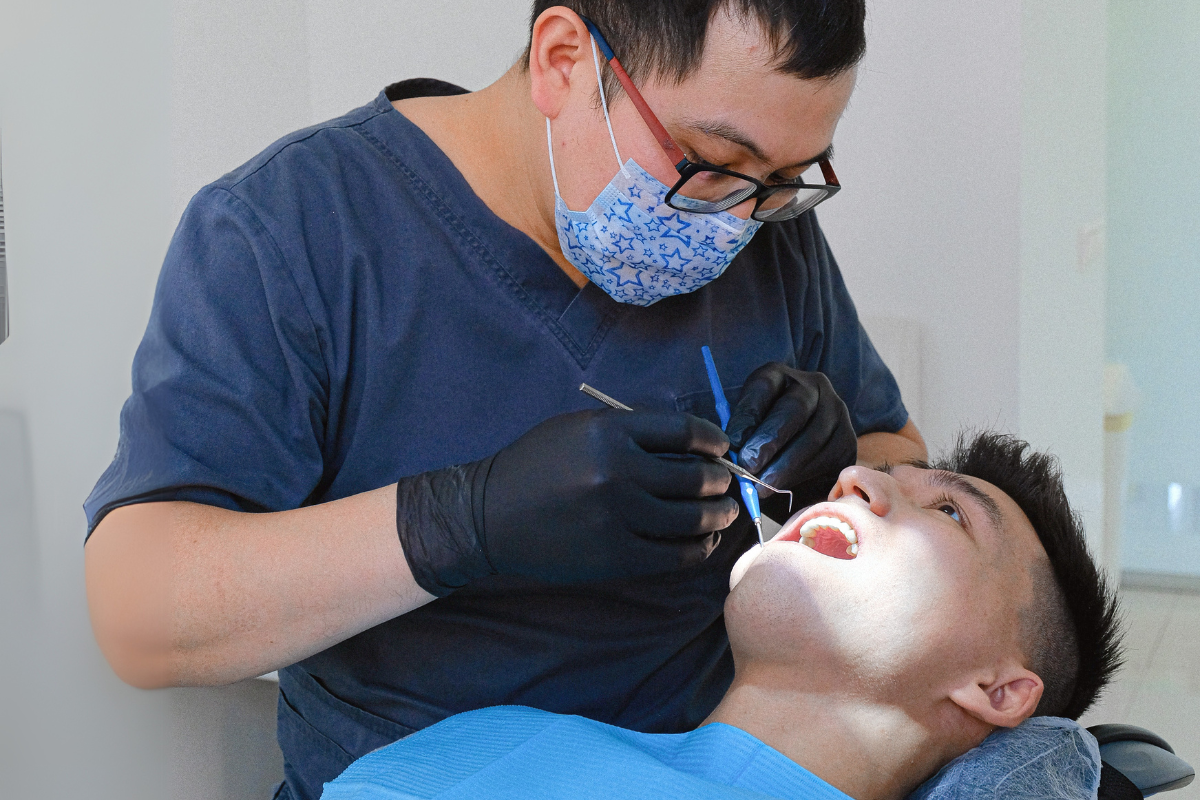
Many people avoid the dentist because they don’t know what to expect. Here is exactly what happens:
Medical history review — your dentist asks about medications, recent health changes, or symptoms you’ve noticed. This matters because conditions like diabetes, blood thinners, and osteoporosis all affect dental health and treatment.
Visual examination — every tooth is checked for signs of decay, cracking, or wear. The dentist also examines the gums, tongue, cheek lining, and roof of the mouth.
Gum pocket measurement — a thin probe measures the depth of the space between each tooth and gum. Deeper pockets indicate gum disease. This takes two minutes and is not painful.
X-rays — taken every 1-2 years to show what can’t be seen visually: bone levels, the roots of teeth, cavities between teeth, and any hidden infection. Modern dental X-rays use very low radiation doses.
Professional cleaning (scaling) — even the most thorough home brushing leaves plaque in areas that a toothbrush can’t reach — particularly behind back teeth and under the gumline. Scaling removes this buildup before it hardens into tartar that causes gum disease.
Oral cancer screening — takes under a minute. The dentist checks the tongue, floor of the mouth, cheeks, and throat for any abnormal tissue. Oral cancer found early has an 80%+ survival rate. Found late, outcomes drop sharply.
Treatment planning — if anything needs attention, the dentist explains what, why, and what happens if it’s left.
The whole appointment takes 30–60 minutes. Most of it is painless. The cleaning may feel slightly uncomfortable at specific spots usually exactly where the problem is building up.
How Often Should You Visit a Dentist?
The standard recommendation is every six months. But the right frequency depends on your age and oral health situation.
Children — first visit by age 1
As soon as the first tooth appears — or by age 1 at the latest. Not because anything is likely to be wrong, but because early visits build familiarity and comfort with dental care. Check-ups every 6 months from there. This is when habits are formed and when early cavity patterns are identified.
Teenagers — every 6 months, more if wearing braces
Hormonal changes during teenage years increase gum sensitivity and infection risk. Wisdom teeth development needs monitoring. Teenagers who wear braces need more frequent visits — plaque builds up around brackets and wires in ways that standard brushing misses.
Adults (20–40) — every 6 months
This is when gum disease most commonly begins — and most commonly goes unnoticed. Professional cleaning removes the buildup that causes it. Adults who smoke, have diabetes, or have had gum disease before may need visits every 3-4 months.
Middle-aged adults (40–60) — every 6 months, oral cancer screening essential
Oral cancer risk increases with age. Gum disease is more common and more serious in this group. Existing dental work — fillings, crowns, bridges — needs regular assessment. Diabetes and blood pressure medications can cause dry mouth, which increases cavity risk.
Seniors (60+) — every 6 months minimum, quarterly if dentures or implants
Gum recession, tooth sensitivity, and dry mouth from medications are common. Dentures and implants need regular checks and adjustments. The risk of oral cancer is highest in this group screening at every visit is not optional.
What Happens If You Skip Dental Check-ups?
People who avoid the dentist usually do so for one of three reasons — no pain, fear, or cost. All three end up working against them.
Cavities become root canals
A cavity that’s caught at 2mm is a simple filling 20 minutes, minimal cost. Left for 12-18 months, it reaches the nerve. Now it’s a root canal and a crown multiple visits, significantly more cost, and some discomfort.
Gum disease destroys bone silently
Periodontitis — the advanced stage of gum disease destroys the bone holding teeth in place. It causes no pain. People walk around with it for years, losing bone every month. By the time teeth start feeling loose, significant damage has already occurred.
Oral cancer goes undetected
Oral cancer is one of the most treatable cancers when found early and one of the most dangerous when found late. A 30-second visual check at a routine appointment is what catches it early.
Costs go up, not down
Avoiding the dentist to save money consistently results in higher costs. A Rs 500 scaling appointment prevents a Rs 8,000–15,000 root canal. Prevention is genuinely cheaper than treatment always.
Overall health is affected
The mouth is not separate from the rest of the body. Chronic gum infection puts bacteria into the bloodstream. Poor oral health is directly linked to higher risk of heart disease, harder-to-control diabetes, and respiratory infections. Treating gum disease in diabetic patients measurably improves blood sugar control.
Oral Hygiene Between Check-ups
A dental check-up is only as effective as what you do between visits.
Brush twice daily — properly
Two full minutes, twice a day. Most people brush for under a minute. Use a fluoride toothpaste. Angle the brush at 45 degrees toward the gumline — where gum disease starts. Replace the brush every 3 months.
Floss every day
Non-negotiable. The spaces between teeth where gum disease most commonly starts cannot be reached by a toothbrush. Floss reaches them. One minute a day prevents significant damage.
Use fluoride toothpaste
Fluoride strengthens enamel and reduces cavity risk. It is the single most evidence-backed ingredient in toothpaste. Any toothpaste without fluoride is essentially cosmetic.
Reduce sugar and acid
Sugar feeds the bacteria that cause cavities. Acidic drinks — soft drinks, citrus juices, sports drinks — erode enamel directly. It’s not about never having them — it’s about limiting frequency and rinsing with water after.
Don’t smoke
Smoking causes gum disease, masks its early symptoms by reducing bleeding, stains teeth, causes dry mouth, and significantly increases oral cancer risk. Every one of these is a direct result of tobacco. Stopping is the single most impactful thing a smoker can do for their oral health.
Dental Check-up Myths Cleared Up
“If there’s no pain, my teeth are fine.”
Pain is a late symptom of most dental problems. Cavities, gum disease, and oral cancer all develop silently for months or years before causing discomfort. The absence of pain means nothing about the absence of a problem.
“I only need to go once a year.”
Twice yearly is the standard recommendation for a reason. Six months is roughly how long it takes for tartar to build to levels that cause gum inflammation and how long early cavities take to progress. Annual visits miss this window.
“Dental check-ups are only about teeth.”
They also screen for oral cancer, assess jaw joint health, check for signs of teeth grinding, monitor bone levels, and in some cases pick up signs of systemic conditions like diabetes and acid reflux that show up in the mouth first.
“Children don’t need to see a dentist until they lose their baby teeth.”
Baby teeth matter. They hold space for permanent teeth, affect speech development, and their health directly influences the permanent teeth underneath. Children should start dental visits from age 1.
“Scaling weakens teeth.”
Scaling removes plaque and tartar from the tooth surface it does not touch or damage enamel. Temporary sensitivity after scaling is common for 1–2 days as gums recover. It does not indicate damage.
When Should You See a Dentist Immediately?
Don’t wait for the six-month mark if you notice:
- Tooth pain of any kind
- Bleeding gums during brushing or at any other time
- A loose tooth
- Sensitivity that is new or getting worse
- A sore, ulcer, or white/red patch in the mouth that hasn’t healed in 2 weeks
- Swelling in the face or jaw
- A broken or chipped tooth
Any of these needs a prompt appointment not a wait until the next scheduled check-up.
How HealthPil Can Help
HealthPil connects you with experienced dental professionals for routine check-ups, professional cleaning, oral cancer screening, and preventive dental care. Whether you are overdue for a check-up, have a concern you want looked at, or want to establish a regular dental care routine the right dentist is available through an online dental consultation from wherever you are.
Book your dental check-up consultation through HealthPil today.
Summary
Regular dental check-ups every six months catch cavities, gum disease, and oral cancer before they become serious. What happens at a check-up: medical history review, visual examination, gum pocket measurement, X-rays, professional cleaning (scaling), oral cancer screening, and treatment planning. Skipping visits turns small problems into large, expensive ones. Children should start dental visits from age 1. Teenagers need visits every 6 months more with braces.
Adults, middle-aged adults, and seniors all need twice-yearly visits at minimum. Between visits brush twice daily for two full minutes, floss daily, use fluoride toothpaste, reduce sugar and acid, and don’t smoke. Book your online dental consultation through HealthPil today.
FAQs
Q1. How often should I visit the dentist?
Most people should visit every 6 months. Those with gum disease, braces, diabetes, or a history of frequent cavities may need visits every 3–4 months. Children start from age 1 and continue every 6 months.
Q2. Is dental scaling safe? Does it damage teeth?
Yes scaling is completely safe. It removes plaque and tartar from the tooth surface without touching enamel. Some temporary sensitivity for 1–2 days after is normal and resolves on its own. It does not damage teeth.
Q3. What is oral cancer screening and who needs it?
A 30-second visual check the dentist does during every routine visit examining the tongue, cheeks, floor of the mouth, and throat for abnormal tissue. Everyone needs it at every visit, particularly adults over 40 and anyone who smokes or uses tobacco.
Q4. Can poor oral health affect my overall health?
Yes, directly. Chronic gum infection puts bacteria into the bloodstream and is linked to higher risk of heart disease, harder-to-control diabetes, and respiratory infections. Treating gum disease in diabetic patients measurably improves blood sugar control.
Q5. My child has no pain do they still need a dental check-up?
Yes. Most childhood dental problems cause no pain in early stages. Baby teeth hold space for permanent teeth and affect speech development. Children should have dental check-ups from age 1, every 6 months — whether or not there are any symptoms.
Q6. How do I know if I have gum disease?
Common signs: bleeding gums when brushing, red or swollen gums, persistent bad breath, teeth feeling slightly loose, gum pulling away from teeth. But gum disease often has no symptoms at all which is precisely why regular check-ups include gum pocket measurement.
Q7. Is dental treatment covered by health insurance in India?
Standard health insurance in India rarely covers routine dental check-ups. Some dedicated dental insurance plans offer partial coverage. Government schemes like Ayushman Bharat cover emergency dental care for eligible patients. Check your specific policy and ask your dentist about payment plan options.
References
- Thomson WM, Williams SM, Broadbent JM, Poulton R, Locker D. Long-Term Dental Visiting Patterns and Adult Oral Health. Available at:
PMC - Deery C, et al. The Importance of Regular Dental Check-Ups in Preventive Oral Healthcare. Available at:
PMC
Disclaimer:
This information is intended for educational purposes and should not be used as a substitute for professional dental advice. Always consult your dentist for specific recommendations.

Read our editorial policy