

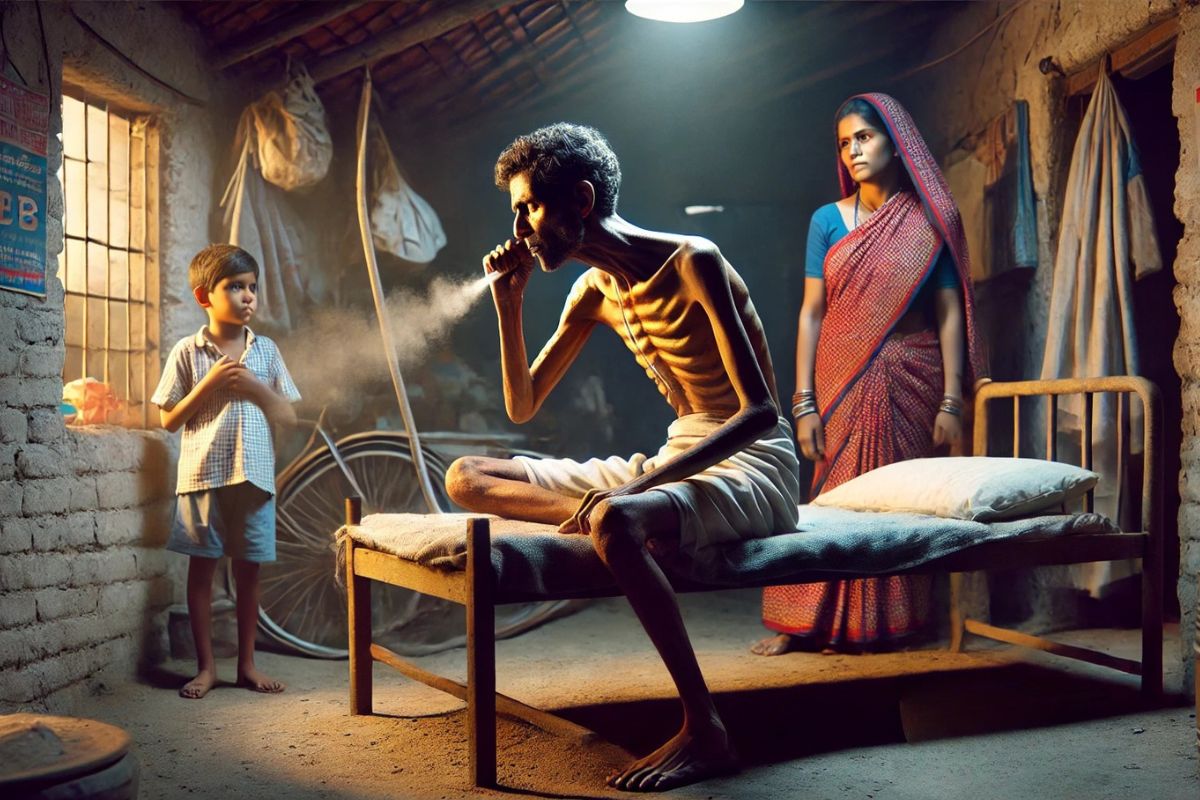
Tuberculosis (TB) is a bacterial infection caused by Mycobacterium tuberculosis. It spreads through the air when an infected person coughs, sneezes, or speaks, tiny droplets carry the bacteria to others nearby.
It most commonly affects the lungs. But TB can also affect the spine, kidneys, brain, and lymph nodes.
India carries the highest TB burden in the world over 25 lakh new cases every year. Yet most cases are completely curable when caught and treated early.
This article covers TB symptoms, causes, diagnosis, treatment, and when to see a doctor.
What Is Tuberculosis?
Tuberculosis TB is an infectious disease caused by a bacteria called Mycobacterium tuberculosis. Most of the time it attacks the lungs. That’s pulmonary tuberculosis.
But it doesn’t always stay there. Sometimes it moves to bones, kidneys, brain, or lymph nodes. That’s extrapulmonary tuberculosis.
TB is an airborne disease. When someone with active TB coughs or sneezes, tiny bacteria float in the air. Someone nearby breathes them in. That’s how TB transmission happens. No touching needed. Just shared air in a closed space.
It’s a contagious disease but also a curable one. With the right TB medicines, taken properly and fully, most people recover completely.
TB in India Why It Matters More Here
India carries a large share of the world’s TB cases higher than any other country. This isn’t a disease of the past. It’s an ongoing public health challenge, and that’s exactly why early recognition matters so much for Indian families.
Latent Tuberculosis vs Active Tuberculosis
Not everyone who carries the bacteria gets sick. Your immune system can hold them in check. This is called latent tuberculosis. No symptoms. Not contagious. But the bacteria are still there inside the body.
The problem? If immunity weakens from illness, poor eating, stress, or age latent tuberculosis can become active tuberculosis.
Active tuberculosis means symptoms appear. It means you can spread TB to others. And it means treatment is needed immediately.
Types of TB
- Pulmonary tuberculosis is the most common. It affects the lungs and causes chronic cough, chest pain, and breathing difficulty.
- Extrapulmonary tuberculosis affects organs outside the lungs bones, kidneys, brain, gut, lymph nodes.
- Miliary TB is serious. The TB infection spreads through the bloodstream to multiple organs at once. This is a medical emergency.
- Drug resistant TB including MDR-TB and XDR-TB happens when TB bacteria stops responding to standard TB medicines. This usually happens when someone doesn’t finish their full course of treatment. MDR-TB and XDR-TB take far longer to treat and are much harder to manage.
TB Symptoms Don’t Wait Too Long
Tuberculosis grows quietly. Early signs of TB feel like an ordinary chest infection. That’s why so many people wait too long before seeing a doctor.
Here are the tuberculosis symptoms to know:
- Persistent cough a chronic cough lasting three weeks or more that just won’t go away. This is the most common sign of pulmonary tuberculosis. A cough that keeps returning needs proper investigation.
- Blood in sputum / coughing up blood this is always serious. Any time blood appears when coughing, see a doctor the same day. Don’t wait.
- Chest pain a deep ache when breathing or coughing. Not sharp. Persistent and deep. This is one of the clearest TB symptoms people ignore.
- Unexplained weight loss losing weight without trying, alongside fever and tiredness. A classic tuberculosis symptom cluster that should never be dismissed.
- Night sweats not just feeling warm at night. Waking up completely soaked. Sheets wet. Clothes wet. Happening regularly. This is a well-known sign of active tuberculosis.
- Fever a low-grade fever that comes and goes, usually worse in the evenings. Easy to dismiss. Shouldn’t be.
- Fatigue not ordinary tiredness. A heavy, ongoing exhaustion that rest doesn’t fix. This kind of fatigue during a TB infection feels different from normal tiredness.
- Loss of appetite not wanting to eat, week after week, alongside the other tuberculosis symptoms above.
- Shortness of breath as pulmonary tuberculosis damages more lung tissue, breathing gradually becomes harder.
Any combination of these lasting more than two to three weeks needs medical attention. Not home remedies. Proper testing.
When TB Goes Beyond the Lungs
- Swollen lymph nodes especially in the neck. Lymph node TB is one of the most common forms of extrapulmonary tuberculosis and is often the first visible sign of TB infection outside the lungs.
- Bone TB causes long-lasting pain and stiffness in the spine or joints. Spinal bone TB can cause permanent damage if missed and left untreated.
- TB meningitis tuberculosis affecting the brain and its surrounding membranes. Severe headache, stiff neck, and confusion are the warning signs. TB meningitis is life-threatening and needs urgent treatment.
- Kidney TB causes blood in the urine and pain or difficulty urinating.
- Intestinal TB stomach pain and diarrhoea that often gets confused with other gut conditions.
Extrapulmonary tuberculosis is harder to diagnose because its symptoms don’t look like typical TB symptoms. This is why tuberculosis awareness knowing these less obvious signs genuinely saves lives.
TB Risk Factors Who Gets It More Easily?
Anyone can develop a TB infection. But some people face higher TB risk factors:
- HIV and TB together are extremely dangerous. HIV weakens the immune system completely. TB takes full advantage of that vulnerability. HIV and TB coinfection is one of the deadliest combinations in infectious disease globally.
- Diabetes and TB diabetes directly affects how the immune system responds to TB infection. People with diabetes have significantly higher chances of developing active tuberculosis. This connection between diabetes and TB is under-discussed but very real.
- Malnutrition and TB poor nutrition means a weak immune system. Malnutrition and TB are deeply linked, which is one reason TB disproportionately affects people without enough food.
- Smoking and TB smoking damages lung tissue and weakens the respiratory defences, making pulmonary tuberculosis far easier to develop. The connection between smoking and TB is strong and well-documented.
Also at higher TB risk: elderly people, young children, healthcare workers treating TB patients, people living in overcrowded spaces with poor ventilation, and anyone taking long-term medicines that suppress immunity.
Tuberculosis Diagnosis Tests That Confirm TB
Getting the right diagnosis is the first step. Several tests are used for tuberculosis diagnosis:
- Chest X-ray the first investigation for suspected pulmonary tuberculosis. It shows changes in lung tissue typical of TB infection.
- Sputum test mucus from the lungs is tested under a microscope. Directly checks for Mycobacterium tuberculosis bacteria. One of the most reliable tests for pulmonary tuberculosis diagnosis.
- Mantoux test / TB skin test a small amount of liquid injected under the skin. The reaction after 48 hours shows previous exposure to TB bacteria. The Mantoux test is still widely used across India for tuberculosis screening.
- IGRA blood test a blood test that detects latent tuberculosis. More accurate in certain situations than the TB skin test alone.
- GeneXpert test / CBNAAT test this changed tuberculosis diagnosis completely. It confirms TB within hours. It also shows immediately whether the bacteria are drug resistant crucial for identifying MDR-TB and XDR-TB early. The GeneXpert test and CBNAAT test are now standard tools in TB screening across India.
TB Treatment Finishing the Full Course Is Everything
Tuberculosis is curable. But the treatment is six months long and every single dose matters.
DOTS therapy Directly Observed Treatment Short course is the standard TB treatment. A combination of TB medicines including isoniazid, rifampicin, ethambutol, and pyrazinamide taken daily under supervision. DOTS therapy works. But it only works when completed fully.
Why does finishing matter so much? Because missing doses gives the bacteria a chance to survive and develop resistance. This is exactly how drug resistant TB MDR-TB and XDR-TB develops. MDR-TB needs 18 to 24 months of treatment using harder medicines like bedaquiline and delamanid. XDR-TB is even more difficult.
Stopping DOTS therapy early because you feel better is one of the most dangerous things a TB patient can do.
Nutrition during TB treatment eating well helps the body heal faster and handle the TB medicines better. Malnutrition and TB together make recovery much harder.
Regular follow-up check-ups during and after treatment confirm the TB is responding and help catch any complications early.
Government TB Programs in India
Good news — TB treatment in India doesn’t have to be expensive.
- NTEP (National Tuberculosis Elimination Programme) — This is the Government of India’s nationwide initiative to find, treat, and eventually eliminate TB. It runs through government hospitals and health centres across the country.
- Nikshay Portal — A government tracking system that monitors TB patients through their treatment journey, helping ensure nobody drops out midway.
- Free Diagnosis and Treatment — Under NTEP, TB testing (including GeneXpert/CBNAAT) and the full DOTS medicine course are available free of cost at government DOTS centres. Cost should never be a reason to skip TB treatment.
If you’re diagnosed with TB, ask your doctor about the nearest government DOTS centre, even if you’re also consulting privately.
Side Effects of TB Medicines What to Expect
TB medicines work well, but they can cause side effects. Knowing this in advance helps it stops people from panicking and stopping treatment on their own.
Common ones include:
- Nausea or loss of appetite in the first few weeks
- Orange-ish tinge to urine or tears harmless, just the medicine
- Mild joint pain
See a doctor immediately if you notice:
- Yellowing of skin or eyes (jaundice)
- Vision changes or blurred sight
- Severe vomiting
- Skin rash or itching all over the body
Never stop TB medicines on your own because of side effects. Talk to your doctor they can often adjust the treatment instead of stopping it.
TB Myths Quick Answers
“TB only affects the lungs.” No. Extrapulmonary tuberculosis affects bones, kidneys, brain, lymph nodes, and more.
“TB is an old disease.” Wrong. India carries one of the highest TB burdens in the world right now. Tuberculosis awareness is still urgently needed.
“Finish treatment and TB never returns.” Not guaranteed. TB relapses can happen, especially with incomplete treatment courses. TB screening after recovery is important for high-risk individuals.
“TB only spreads through very close contact.” No. Shared indoor air in poorly ventilated spaces is enough for TB transmission. This is what makes the airborne disease nature of TB so important to understand.
TB Prevention What Actually Works
- BCG vaccine given to babies at birth in India. The BCG vaccine protects children against severe forms of TB including TB meningitis and miliary TB. It is a critical part of TB prevention.
- TB screening if you’ve spent time near someone with active tuberculosis, get screened even without symptoms. Identifying latent tuberculosis early means preventive treatment can begin before active TB develops.
- Complete DOTS therapy the most powerful TB prevention tool against drug resistant TB spreading further.
- Ventilation open windows, fresh air, good airflow. Poor ventilation keeps TB bacteria in shared air longer. Simple but important for TB prevention.
- Respiratory hygiene covering the mouth when coughing or sneezing reduces TB transmission significantly.
- Address TB risk factors controlling diabetes and TB risk, quitting smoking, improving nutrition through diet, and treating HIV all directly reduce individual vulnerability to TB infection.
Caring for a TB Patient at Home
If someone in your family has active pulmonary TB, a few simple home practices reduce the risk to others while treatment starts working.
- Keep the room well-ventilated open windows, use a fan if possible
- The patient should cover their mouth with a tissue or cloth while coughing or sneezing, and dispose of it properly
- Wearing a mask indoors for the first couple of weeks of treatment helps, especially around children or elderly family members
- Once treatment starts, infectiousness drops sharply within 2-3 weeks but keep following precautions until your doctor confirms it’s safe to stop
- No need for separate utensils or extreme isolation once treatment is underway and your doctor has cleared it TB doesn’t spread through touch or shared food
When Should You See a Doctor?
Don’t wait for every symptom to appear before going.
See a doctor if you have a chronic cough lasting more than two weeks. If you cough up blood even once. If fever keeps returning. If night sweats are regular. If unexplained weight loss is happening. If shortness of breath is developing. If fatigue isn’t getting better with rest.
Been near someone with active tuberculosis? Get TB screening done. Even with no symptoms. Early diagnosis of TB infection whether latent tuberculosis or active tuberculosis changes outcomes significantly.
An online consultation with a pulmonologist through HealthPil means expert TB guidance from home. Describe your symptoms. Understand your GeneXpert test or Mantoux test results. Get proper tuberculosis diagnosis and treatment advice without delay.
How HealthPil Can Help
HealthPil connects you with experienced pulmonologists and infectious disease doctors who specialise in tuberculosis. From understanding TB symptoms and TB risk factors to reading CBNAAT test results and guiding DOTS therapy real expert TB support is available online from wherever you are.
Book your consultation with HealthPil today.
Summary
Tuberculosis is curable but only when caught and treated in time. Early signs of TB including persistent cough, night sweats, unexplained weight loss, fever, and fatigue are easy to miss but critical to act on. Tuberculosis diagnosis through sputum test, chest X-ray, and GeneXpert test confirms the TB infection. Six months of DOTS therapy cures most cases when completed fully. Stopping treatment creates drug resistant TB — MDR-TB and XDR-TB. BCG vaccine, TB screening, good nutrition, controlling diabetes and TB risk, quitting smoking, and completing treatment are the foundations of TB prevention. If something feels wrong don’t wait.
FAQ :-
Q1. What is the first sign of tuberculosis (TB)?
The most common early sign is a persistent cough lasting more than 2–3 weeks, often with fever, weight loss, or night sweats.
Q2. How does tuberculosis spread?
TB spreads through the air when a person with active TB coughs, sneezes, or speaks. It does not spread through food, water, or sharing utensils.
Q3. Is tuberculosis curable?
Yes. Most TB cases are completely curable with the full course of prescribed TB medicines.
Q4. What is the difference between latent and active TB?
Latent TB has no symptoms and isn’t contagious. Active TB causes symptoms and can spread to others.
Q5. How is tuberculosis diagnosed?
Doctors diagnose TB using sputum tests, chest X-rays, and GeneXpert (CBNAAT) testing.
Q6. Why is it important to complete TB treatment?
Stopping treatment early can lead to drug-resistant TB (MDR-TB/XDR-TB), which is much harder to treat.
Q7. When should I see a doctor for TB symptoms?
See a doctor if you have a persistent cough, coughing up blood, night sweats, unexplained weight loss, fever, or fatigue lasting more than two weeks.
References
- Tobin EH, Tristram D. Tuberculosis. StatPearls Publishing. Available at:
NCBI Bookshelf - Tobin EH, Tristram D. Tuberculosis. Available at:
PubMed
Disclaimer:
The article simply provides information. It is not a substitute for consulting an authorized doctor. For a diagnosis and treatment of tuberculosis or any other illness, always get medical advice.

Read our editorial policy