




Parenting in the Digital Age: Tips for Healthy Digital Habits!
In today’s world, screens are a big part of our everyday lives. While technology offers valuable educational tools, too much screen time can affect children’s health and development negatively. In this article, we’ll explore the importance of managing screen time and share practical tips for parents to strike a healthy balance.
The Impact of Screen Time on Children
● Too much screen time can encourage a sedentary lifestyle, which may lead to obesity and other health issues.
● Sleep patterns of children may get disrupted due to the blue light from screens, making it harder for kids to get good, restful sleep.
● Spending too much time on screens makes kids more irritable, anxious, and struggle with focusing.
● It also takes away from time spent interacting with others face-to-face, which is really important for their social skills.
Recommended Screen Time Guidelines
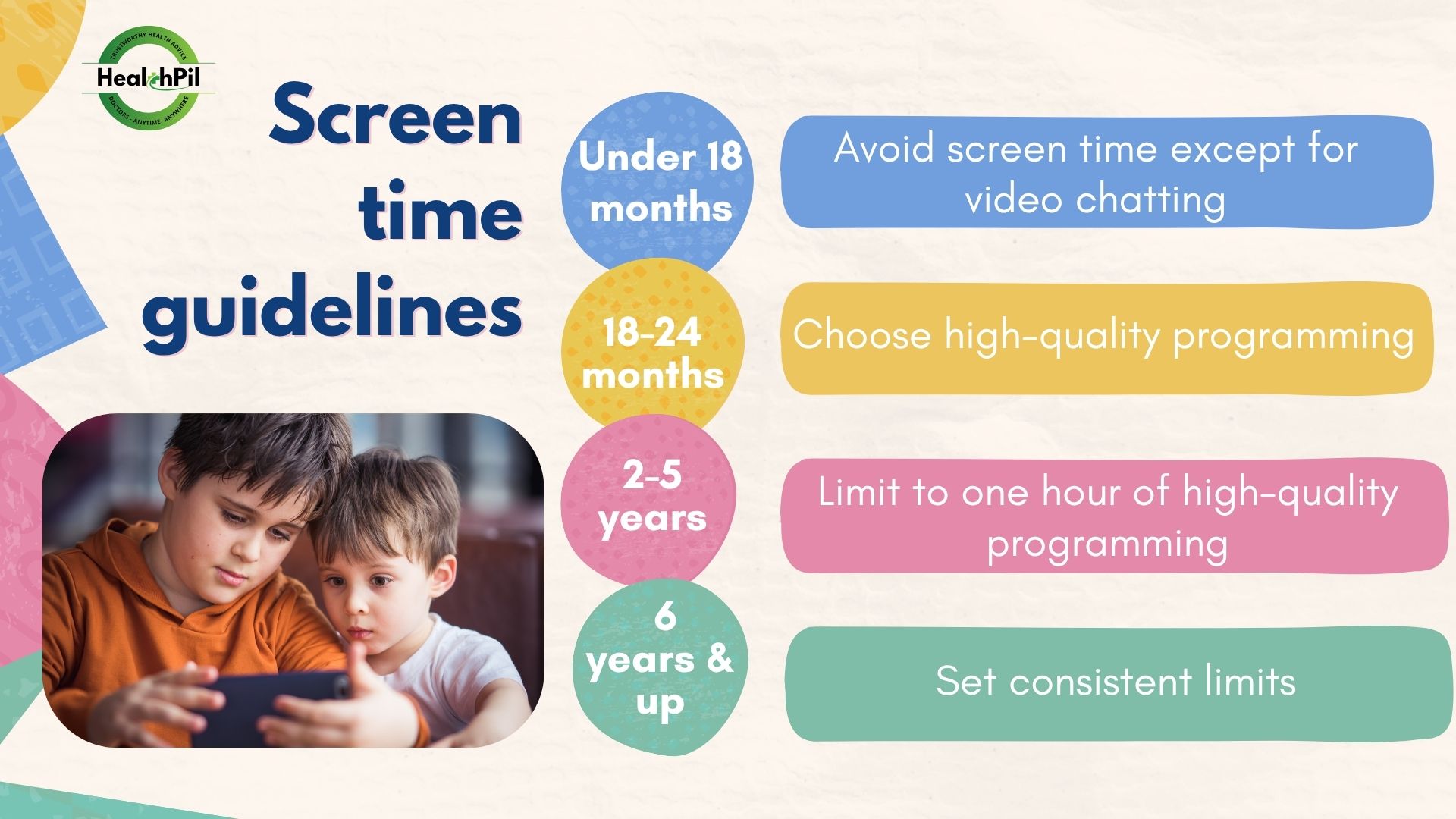
The American Academy of Pediatrics (AAP) has laid down guidelines for screen time based on age:
1. For children under 18 months:
No screen time except for video chatting. Focus on interactive play instead.
2. For children ages 18-24 months:
Pick high-quality programmes to watch with your child to help them understand what they are seeing.
3. For children ages 2-5 years:
Limit screen time to one hour per day of high-quality programmes, and watch together to facilitate discussion.
4. For children ages 6 years and older:
Set consistent limits on screen time to make sure that it does not interfere with sleep, physical activity, and other healthy behaviors.
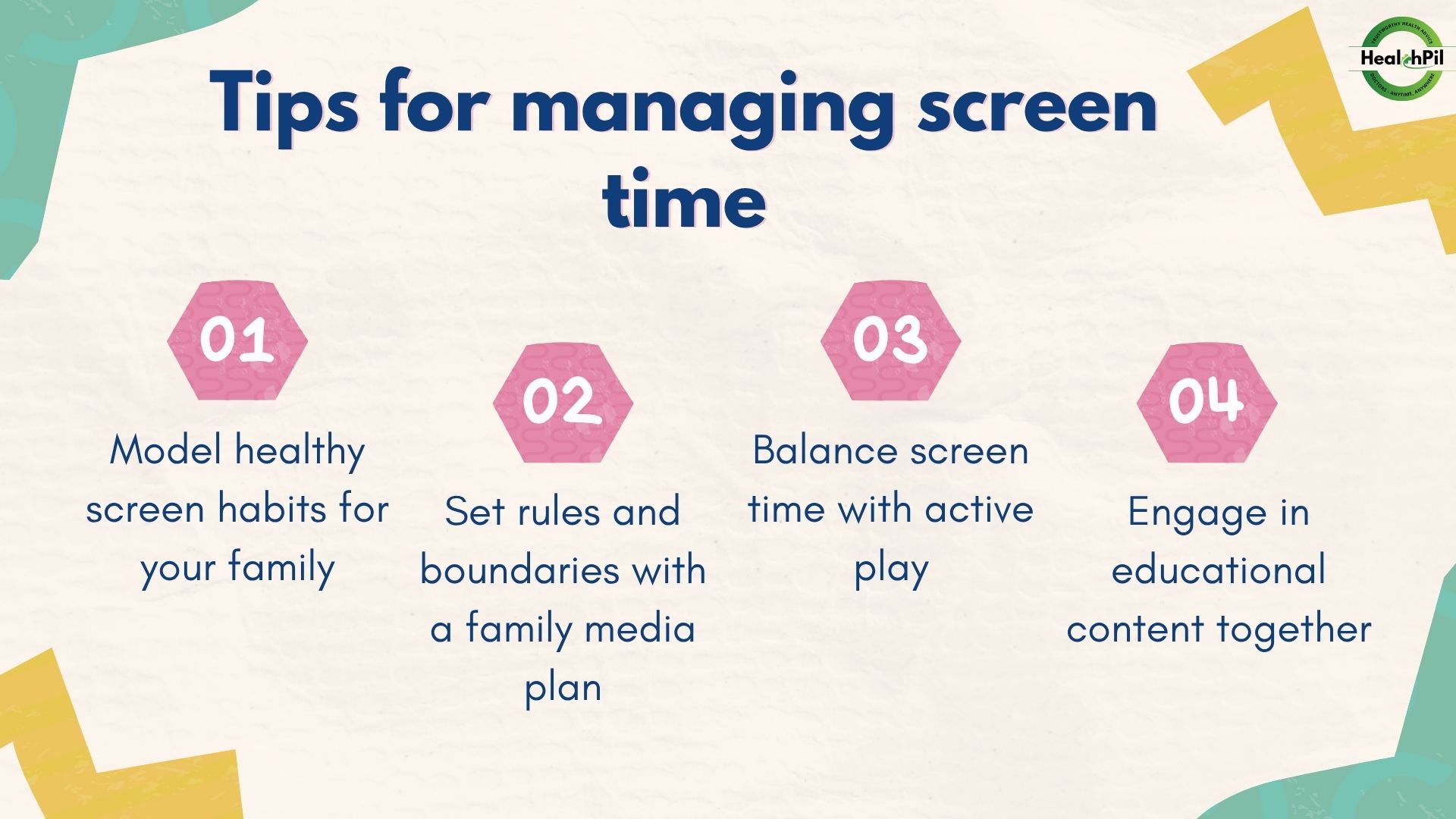
Tips for Managing Screen Time
1. Model healthy screen habits for your children. Be mindful of your own screen time and prioritize face-to-face interactions.
2. Discuss and establish screen time rules as a family. Set boundaries around usage and designate screen-free times and zones.
3. Promote physical activity and outdoor play to balance screen time. Make time for family activities that don’t involve screens.
4. Engage with your child during screen time. Play educational games, watch informative shows, and have discussions about what they’re learning.
5. Review and choose age-appropriate content together. Use parental controls to limit exposure to unsuitable material.
Frequently Asked Questions
How can I reduce my child’s screen time?
Set clear rules, establish a family media plan, and encourage other activities.
What are some good educational shows for young children?
Look for programs that promote learning, such as Sesame Street or educational apps that foster interactive play.
Is it okay for my child to have screen time on weekends?
Yes, but ensure it doesn’t exceed recommended limits and balance it with other activities.
How do I handle screen time during family gatherings?
Set expectations for screen usage during gatherings and encourage social interaction among family members.
What if my child is resistant to reducing screen time?
Involve them in discussions about screen time and offer alternatives that are fun and engaging.
Conclusion
Managing screen time is essential for promoting healthy development in children. By understanding the risks associated with excessive screen use and establishing clear guidelines, parents can create a balanced approach to technology. Remember, it’s about finding a healthy balance that works for your family.
Disclaimer
The information provided in this article is for awareness purposes only and should not replace professional medical advice. Always consult your healthcare provider for personalized medical guidance.

Read our editorial policy