

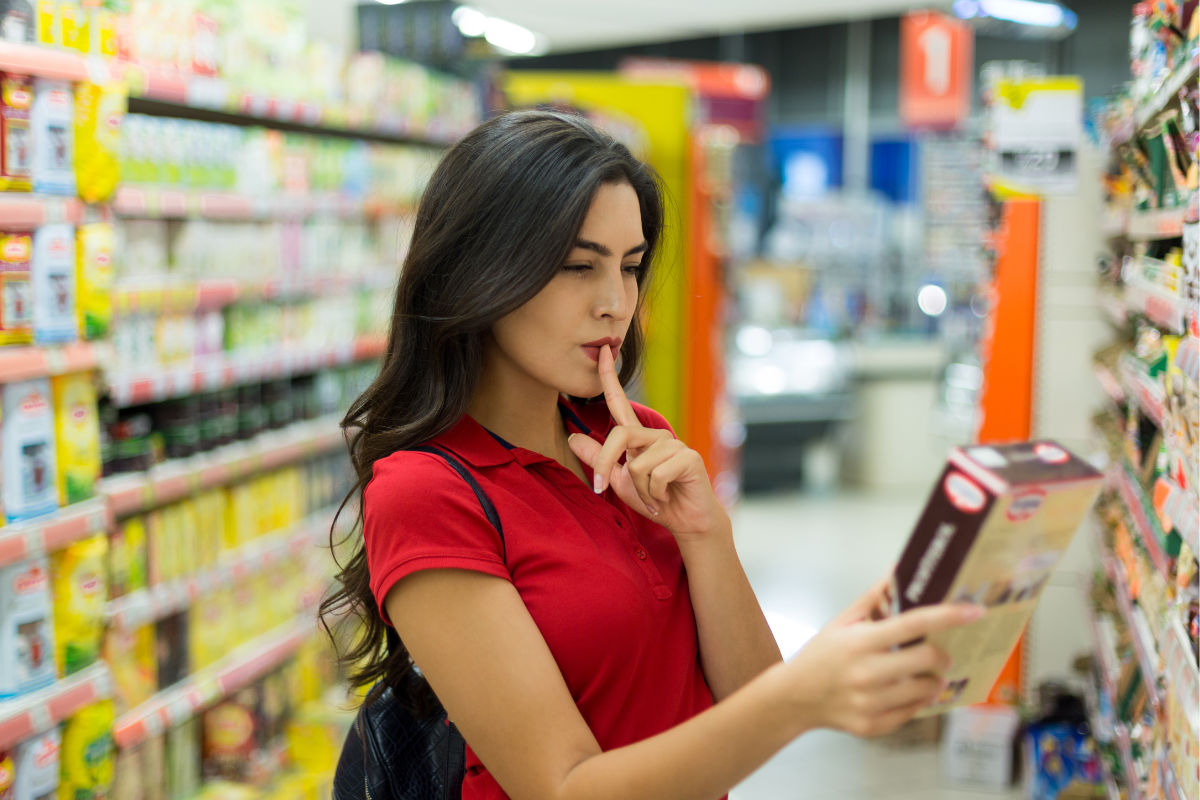
Packaged food has become part of nearly every household’s routine convenient, quick, and always within reach. But convenience comes with a catch: unless you actually know how to read what’s on the pack, you’re trusting the marketing on the front rather than the facts on the back. Food labels exist precisely to close that gap, giving you the real picture on ingredients, nutrition, shelf life, and health claims.
This guide breaks down every element of a food label, shows you exactly which numbers to check, and clears up the claims that are designed to sound healthier than they are.
Why Food Labels Actually Matter
A food label isn’t just fine print it’s the single most reliable source of truth on a package. It helps you:
- Understand the real nutritional content of a product, not just what the front-of-pack claims
- Compare similar products side-by-side to pick the genuinely healthier one
- Identify allergens and confirm safety through expiry dates
- Evaluate claims like “low fat” or “high fibre” against actual numbers
- Manage chronic conditions for people with hypertension, diabetes, or high cholesterol, label literacy is a genuine health-protection skill, not just a shopping habit
- Control portions and prevent the kind of unconscious overconsumption that comes from ignoring serving sizes
What’s Legally Required on a Food Label
1. Product Name and Ingredient List
Ingredients are listed in descending order by weight whatever appears first makes up the largest portion of the product. If sugar, oil, or refined flour tops the list, that tells you more about the product than any claim on the front of the pack ever will. If an ingredient is named or emphasised in the product’s branding (e.g., “strawberry yoghurt”), the label must also state what percentage of the product that ingredient actually makes up.
2. Allergen Information
Labels must clearly flag common allergens dairy, gluten, nuts, soy, egg, shellfish, and sesame among them no matter how small the quantity. Watch for two distinct types of allergen disclosure:
- Direct statement: “Contains: egg, milk” or an ingredient bolded within the list itself
- “May contain traces of…” a voluntary warning manufacturers add when a product is made on shared equipment with allergens. Its absence doesn’t guarantee a product is safer; it just means the manufacturer chose not to add the warning.
3. Manufacturer Details
Brand name, manufacturer address, and importer information (where applicable).
4. Nutrition Information Panel
This is the core of the label, listing values per 100g/100mL and per serving. The components you’ll typically find:
Component | What It Tells You |
Energy (Calories/kJ) | Total energy the food provides |
Total Fat | Overall fat content |
Saturated Fat | The fat type most linked to raised LDL cholesterol |
Trans Fat | Should read zero or as close to it as possible |
Total Carbohydrates | Includes both starches and sugars |
Sugars | Portion of carbs that’s sugar specifically |
Sodium | Salt content — critical for anyone managing blood pressure |
Protein | Structural/muscle-building nutrient |
Fibre & Micronutrients | Often listed voluntarily; look for these as a bonus indicator of quality |
The single most useful habit here: always compare the “per 100g” or “per 100mL” column across products, not the “per serving” column. Serving sizes are set by the manufacturer and vary wildly between brands a product that looks lower in sugar per serving might just have a smaller serving size.
5. Serving Size Where Most People Get Tricked
A package can look like a single portion and legally be labelled as two or more servings. A soup can listing “400mg sodium per serving” sounds moderate — until you realise the can contains two servings, and finishing it in one sitting means you’ve actually consumed 800mg. Always check how many servings are in the package you’re about to eat in one go, not just the number printed per serving.
6. Shelf Life and Dates The Three You’ll See
- Use by: For perishable foods (meat, fish, dairy). This is a genuine safety cutoff it’s illegal to sell food past this date, and eating it after isn’t advisable.
- Best before: The food remains safe to eat after this date but may lose quality, flavour, or texture.
- Baked on / Packed on: Tells you when the item was manufactured, common on bread useful for judging freshness even without an explicit expiry date.
7. Logos and Certification Marks (India-specific)
- FSSAI Logo: Confirms compliance with Indian food safety standards
- Veg/Non-Veg Symbol: Green dot in a green square = vegetarian; brown triangle in a brown square = non-vegetarian
- Fortified Food Logo: Product has added nutrients like iron or vitamin D
- Vegan Logo: Confirms a plant-based, animal-derivative-free product
- AGMARK: Quality certification for agricultural products like honey and spices
8. Food Additive Numbers
Additives must appear in the ingredient list, often as a function plus a code for example, “thickener (1442).” If an additive is derived from a known allergen, the label must state that too (e.g., “wheat thickener (1442)”). You don’t need to memorise every number, but recognising that a long string of E-numbers or coded additives usually signals a heavily processed product is a useful shortcut.
Which Products Skip the Full Label?
Not everything needs one. Common exemptions include very small packets, fresh fruits and vegetables, food made and sold at the point of sale (like bakery bread), items sold at fundraising events, and plain packaged water, tea, coffee, or spices.
Decoding Health and Nutrition Claims (With Actual Numbers)
Front-of-pack claims are marketing first, information second. Here’s what they actually mean, legally:
Claim | What It Actually Means |
“Fat free” | Must contain less than 0.15% fat |
“Cholesterol free” | Can be 100% cholesterol-free and still be high in fat |
“Lite” or “Light” | May only refer to colour, flavour, or texture — not necessarily fat or calorie content |
“Reduced fat/salt” | At least 25% less than the original version of that product — not necessarily low overall |
“Sugar free” / “No added sugar” | Free of table sugar (sucrose), but may still contain other sugars, and can still be high in calories or salt |
“Oven baked, not fried” | Product may still be sprayed or coated with fat before baking |
“All natural” | Not a guarantee of health — can still contain additives |
“Real fruit juice” | Legally usable with as little as 10% actual fruit juice content |
“Made with whole grain” | May still be predominantly refined flour |
“Organic” | Free of synthetic chemicals in production, but not automatically more nutritious |
“Gluten free” | A genuine health need only for those with gluten intolerance or coeliac disease — not inherently “healthier” for everyone else |
The rule of thumb: any claim on the front of a pack is an invitation to check the nutrition panel on the back never a substitute for it.
Sodium: The Nutrient Most Worth Watching Closely
Sodium deserves special attention because it hides more effectively than any other nutrient and because even small daily increases matter significantly for anyone managing blood pressure.
The Numbers That Matter
- Low sodium: 140mg or less per serving
- Avoid regularly: anything above 400mg per serving
- %DV (Percent Daily Value): aim for under 5% per serving; treat anything above 20% as high
- General target for those managing hypertension: keep total daily sodium below 1,500mg, though this should be confirmed with your doctor
Where Sodium Hides (Names to Watch For)
Sodium rarely appears simply as “salt.” Look out for: monosodium glutamate (MSG), sodium bicarbonate (baking soda), sodium nitrate/nitrite (common in processed meat), sodium citrate, celery salt, garlic salt, meat or yeast extract, rock salt, and stock cubes.
Foods That Are Surprisingly High in Sodium
- Breakfast cereals (200–300mg per serving in some brands)
- Bread and bread rolls (up to 150mg per slice)
- Salad dressings and sauces
- Instant noodles and packaged ready meals (can exceed a full day’s safe sodium limit in a single pack)
- “Healthy-looking” frozen meals (some carry 700mg+ sodium per meal)
Practical Ways to Cut Sodium Without Losing Flavour
- Cook more meals from scratch this is the single biggest lever you control
- Rinse canned beans, vegetables, and tuna this alone can remove up to 40% of their sodium
- Lean on garlic, lemon, pepper, and fresh herbs for flavour instead of salt
- Choose fresh produce and lean meats over processed equivalents wherever practical
- Pick “no salt added” versions of canned and packaged staples
- Myth check: sea salt, Himalayan pink salt, and regular table salt all contain roughly the same sodium by weight — none of them is a “safe” swap for someone watching sodium intake
Sugar and Fat: Names They Hide Behind
Sugar can appear as: brown sugar, corn syrup, dextrose, fructose, glucose, golden syrup, honey, fruit juice concentrate, lactose, malt, maltose, mannitol, maple syrup, molasses, raw sugar, sorbitol, or xylitol.
Fat can appear as: beef fat, butter, shortening, coconut or palm oil, copha, cream, dripping, lard, mayonnaise, hydrogenated oils, full cream milk powder, or mono/di/triglycerides.
If any of these show up in the first three or four ingredients, treat the “low fat” or “no added sugar” claim on the front with real scepticism.
How to Actually Read a Label Step by Step
- Start with the ingredient list, not the nutrition panel. Anything in the first three ingredients is what you’re mostly eating.
- Check serving size first, before looking at any other number it recalibrates everything else on the panel.
- Compare per-100g values across similar products, not per-serving values.
- Scan for hidden sodium, sugar, and fat names, not just the summary numbers.
- Check %DV where available — under 5% is low, over 20% is high, for any nutrient.
- Treat front-of-pack claims as a prompt to verify, not a conclusion.
- Note the additive codes — a long list of coded additives is a reasonable proxy for “heavily processed.”
Food Labels and Chronic Condition Management
Reading labels well isn’t just a general wellness habit for specific conditions, it’s close to a clinical tool:
- Hypertension: Sodium tracking via labels directly affects blood pressure control; this is the single highest-leverage use of label literacy for this group.
- Diabetes: Total carbohydrate and sugar content (not just “sugar free” claims) need close tracking, alongside fibre content, which slows sugar absorption.
- High cholesterol / heart disease: Saturated fat and trans fat figures matter more than total fat a product can be moderate in total fat but still carry a disproportionate share of saturated fat.
- Weight management: Serving size awareness prevents the single most common source of unconscious overeating — assuming a package is “one portion” when it’s actually two or three.
Common Myths About Food Labels Busted
Myth 1: “If it says ‘low fat,’ it’s healthy.”
Fact: Manufacturers frequently add sugar or salt to compensate for the flavour lost when fat is reduced.
Myth 2: “Organic food is always healthier.”
Fact: Organic labelling reflects the absence of synthetic chemicals in production — it says little about the sugar, sodium, or calorie content of the final product.
Myth 3: “Gluten-free products are healthier for everyone.”
Fact: They’re a genuine necessity for coeliac disease or gluten intolerance, but offer no inherent health advantage otherwise, and are sometimes higher in refined starch to compensate for texture.
Myth 4: “Natural sugar is better than refined sugar.”
Fact: Once inside the body, most sugar types affect blood glucose similarly moderation matters more than the source.
Myth 5: “A long ingredient list always means unhealthy food.”
Fact: A long list of recognisable whole ingredients (grains, nuts, spices) is very different from a long list of additives and preservatives read what’s on the list, not just its length.
Myth 6: “Reduced sodium means low sodium.”
Fact: “Reduced” only means 25% less than the original product the original could have been extremely high to begin with.
Myth 7: “Sea salt or Himalayan salt is a safer choice than table salt.”
Fact: Sodium content is essentially the same across all three by weight.
When to See a Doctor
While learning to read food labels can help you make healthier choices, some people need personalised dietary guidance. Consult a doctor or registered dietitian if you:
- Have diabetes, high blood pressure, high cholesterol, kidney disease, or heart disease and need help understanding nutrition labels.
- Have food allergies or intolerances and are unsure how to identify hidden allergens on packaged foods.
- Need a personalised diet plan for weight management or a medical condition.
- Experience frequent digestive issues after eating packaged or processed foods.
- Are pregnant, breastfeeding, or managing a chronic health condition that requires specific nutritional recommendations.
Professional guidance can help you choose the right foods while ensuring your nutritional needs are met safely.
Summary
Reading food labels is one of the easiest ways to make healthier food choices. By checking the ingredient list, serving size, nutrition facts, sodium, added sugars, unhealthy fats, allergens, and expiry dates, you can compare products more accurately and avoid misleading marketing claims. Whether your goal is weight management, better heart health, blood sugar control, or simply maintaining a balanced diet, understanding food labels empowers you to make informed decisions every time you shop. Developing this habit can improve your long-term health and help you build a healthier lifestyle for yourself and your family.
FAQs About Food Labels
Q1. What's the most important thing to check on a food label?
For most people, the ingredient list (what’s actually in the product) and sodium/sugar content relative to %DV give the fastest, most reliable read on healthiness.
Q2. Is "per serving" or "per 100g" more useful for comparison?
Per 100g/100mL, since serving sizes differ across brands and can make a product look artificially better or worse.
Q3. How do I know if a product is genuinely high in sodium?
Anything above 400mg sodium per serving, or above 20% Daily Value, should be treated as high especially if you eat that food regularly.
Q4. Are "natural" or "organic" labels a guarantee of a healthier product?
No. Both terms describe how a product was made or sourced, not its nutritional profile. Always check the nutrition panel separately.
Q5. What's the real difference between "Use by" and "Best before"?
“Use by” is a safety cutoff for perishable foods don’t eat it after this date. “Best before” is a quality marker; the food is still safe but may not taste or perform as well.
Q6. Can rinsing canned food actually reduce sodium?
Yes rinsing canned beans, vegetables, or tuna under water can remove up to roughly 40% of their sodium content.
Q7. Is sugar-free the same as calorie-free?
No. “Sugar free” only refers to sucrose content; the product can still be high in fat, other sugar alcohols, or overall calories.
References
- Arunkumar M, Varakumari E, Thozhanenjan I, et al. Decoding Food Labels: A Study on the Knowledge, Attitudes, and Practices of Young Medical Students in Chennai. Available at:
PMC - Martini D, Menozzi D. Food Labeling: Analysis, Understanding, and Perception. Available at:
PMC
Disclaimer:
This article is for informational purposes only and is not a substitute for professional dietary advice. Consult a healthcare provider for personalised guidance.

Read our editorial policy