

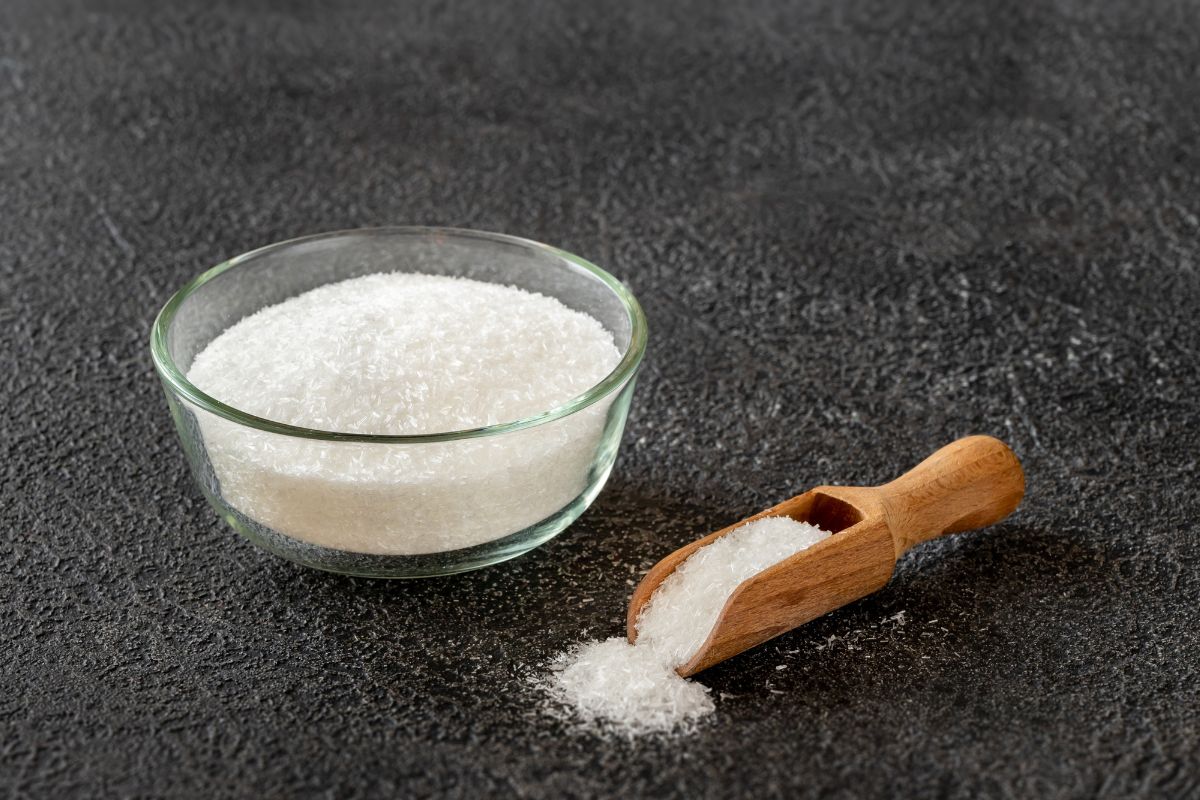
Monosodium glutamate better known in Indian kitchens as Ajinomoto is one of the most debated food additives on the planet. Some cooks swear by its ability to make food taste dramatically better; others avoid it entirely, convinced it’s a hidden health hazard. With claims ranging from headaches to long-term metabolic disease, it’s worth separating what the evidence actually says from what’s simply stuck around as reputation.
What Is MSG, Exactly?
MSG is the sodium salt of glutamic acid an amino acid that occurs naturally in foods like cheese, tomatoes, mushrooms, and seaweed. Chemically, it’s a white crystalline substance that looks a lot like table salt or sugar, and it works by activating specific glutamate receptors on the tongue that are responsible for umami the fifth basic taste, alongside sweet, sour, salty, and bitter, often described as “savoury” or “meaty.”
Where MSG Actually Came From
MSG isn’t a modern industrial invention. It was first isolated in 1908 by Japanese chemist Kikunae Ikeda, who extracted glutamic acid from kombu seaweed while trying to identify what made dashi broth taste so distinctly savoury. That discovery led directly to the commercial production of MSG as a calorie-free flavour enhancer — a product line that eventually became the “Ajinomoto” brand still recognised across Indian kitchens today.
How It’s Made
Industrially, MSG is produced through fermentation of carbohydrate sources like sugar beet, sugarcane, or molasses a process conceptually similar to how yogurt or vinegar is made, not a synthetic chemical assembled from scratch.
How MSG Actually Works in Food
By enhancing umami taste, MSG makes food taste richer and more satisfying without meaningfully increasing calorieswhich is why it’s used so widely in soups, sauces, seasonings, processed snacks, instant noodles, and restaurant cooking. It’s especially prevalent in Asian cuisines, where it boosts the depth of broths and sauces.
A detail worth knowing: MSG contains roughly one-third the sodium of table salt by weight, and food manufacturers have found that using it can cut a recipe’s total sodium content by 35–40% while maintaining or even improving the perceived saltiness and flavour. For anyone actively trying to reduce sodium intake, this makes MSG a genuinely useful tool rather than purely a flavour gimmick.
The Controversy: Where the Fear Came From
Origins of “Chinese Restaurant Syndrome”
The scare traces back to 1968, when Dr. Robert Ho Man Kwok wrote a letter to the New England Journal of Medicine describing symptoms headaches, flushing, numbness he experienced after eating at Chinese restaurants, coining the term “Chinese Restaurant Syndrome.” The letter triggered global concern, and for decades, restaurants advertised “No MSG” on their menus to reassure customers.
What the Research Actually Found
Decades of investigation have largely failed to support the original claim. A notable double-blind, placebo-controlled trial published in the Journal of Nutrition in 2000 considered the gold-standard design for this kind of research found no consistent evidence linking MSG consumption to the symptoms described as Chinese Restaurant Syndrome. A small subset of participants did report mild symptoms after consuming very large MSG doses, but these cases were rare and short-lived.
Short-Term Effects
Some individuals may experience mild, temporary symptoms headaches, nausea, sweating after consuming large amounts of MSG, particularly on an empty stomach. These reactions don’t involve the immune system, so they aren’t a true allergy; they’re generally described as MSG sensitivity or intolerance.
Long-Term Effects What’s Actually Been Studied
- Obesity and insulin resistance: Animal studies suggest a possible link between excessive MSG intake and weight gain or insulin resistance, but human research remains inconclusive. Some research also points to MSG potentially influencing hunger hormones, which could affect appetite regulation again, not conclusively established in humans.
- Neurological effects — “excitotoxicity”: Glutamate functions as a neurotransmitter, and there were concerns that MSG might overstimulate neurons, a phenomenon called excitotoxicity. However, research confirms that dietary MSG does not cross the blood-brain barrier in significant amounts, which is why this concern hasn’t translated into confirmed harm from normal dietary intake.
- Hypertension: Excess sodium from any source not MSG specifically can raise blood pressure. Since MSG itself is lower in sodium than table salt, this concern applies more to the overall sodium load of a dish than to MSG as an ingredient.
Natural Glutamate vs. Added MSG Is There Really a Difference?
A common belief is that “natural” glutamate in food is safe while “added” MSG is somehow harmful. Chemically, this distinction doesn’t hold — both forms are identical, and the human body cannot tell them apart. Natural sources of glutamate include tomatoes, mushrooms, Parmesan cheese, seaweed, soy sauce, and fermented foods generally. What actually varies is the quantity consumed and the overall quality of the surrounding diet not the molecular source of the glutamate itself.
Global Regulatory Status
- The FDA classifies MSG as GRAS (Generally Recognized as Safe) when consumed in typical amounts
- The WHO/FAO Expert Committee on Food Additives (JECFA) and the European Food Safety Authority (EFSA) have both independently reached the same conclusion
- The established Acceptable Daily Intake (ADI) is 30 mg/kg of body weight for context, the average person’s actual daily MSG intake from food is estimated at only around 0.3–1.0 grams, well under this threshold for most adults
MSG and Pregnancy: Is It Safe?
Pregnant women can generally consume MSG safely within moderate limits. The concern isn’t MSG itself but the sodium load it can contribute to in large quantities overconsumption may worsen water retention or raise blood pressure risk. As a general precaution, pregnant women are usually advised to limit heavily processed foods overall (which is where most dietary MSG comes from), rather than avoiding MSG as an isolated ingredient.
A Notable Everyday Use: MSG and Appetite in Older Adults
One underappreciated application: MSG’s flavour-enhancing effect can genuinely help people with reduced appetite older adults being a common example — eat enough by making food more palatable without adding extra salt or fat. This is worth knowing if you’re managing meals for an elderly family member with a declining appetite, though it should complement, not replace, addressing the underlying cause of reduced appetite.
Safety Guidelines for MSG Consumption
- Stick to safe limits: An average adult can safely consume up to roughly 3 grams of MSG per day well above typical real-world intake.
- Balance your diet: Pair MSG-containing foods with fresh, whole foods to keep your overall sodium intake in check.
- Recognise sensitivity: If headaches or flushing follow MSG consumption specifically, it’s reasonable to reduce intake even without a formal allergy diagnosis.
- Read labels carefully: MSG isn’t always listed by its full name.
How to Spot MSG on a Food Label
MSG doesn’t always appear as “Monosodium Glutamate.” Look for:
- Monosodium Glutamate (MSG)
- E621 / INS 621
- Hydrolysed Vegetable Protein (HVP)
- Hydrolysed Protein
- Yeast Extract
- Autolysed Yeast
- Flavour Enhancer (621)
Common Foods That May Contain MSG
Instant noodles • potato chips • flavoured snacks • ready-to-eat soups • frozen meals • seasoning powders • stock cubes • soy sauce • Chinese-style dishes • fast food • processed meat products • salad dressings • flavoured popcorn
Signs of MSG Sensitivity
A small subset of people report temporary symptoms after consuming large amounts of MSG, particularly on an empty stomach:
Headache • flushing • sweating • nausea • facial pressure • tingling sensation • chest discomfort • mild weakness
These symptoms are generally short-lived, resolve on their own, and don’t indicate a true food allergy no immune response is involved.
Common Myths About MSG Busted
Myth 1: “MSG is toxic.”
Fact: Regulatory authorities including the FDA, WHO, EFSA, and JECFA all classify MSG as safe within recommended intake levels.
Myth 2: “MSG causes cancer.”
Fact: There’s no reliable scientific evidence linking normal dietary MSG intake to cancer.
Myth 3: “Everyone reacts badly to MSG.”
Fact: True MSG sensitivity is uncommon; most people show no reaction even at typical or elevated intake levels.
Myth 4: “Natural MSG is safer than added MSG.”
Fact: Both are chemically identical and metabolised by the body in exactly the same way.
Myth 5: “Avoiding MSG alone makes a diet healthy.”
Fact: Overall dietary quality not the presence or absence of one additive is what actually drives health outcomes.
The Real Problem Isn’t MSG It’s the Diet Around It
MSG by itself isn’t the health risk it’s often made out to be. The larger issue is that MSG-containing foods tend to cluster in the ultra-processed category instant noodles, packaged snacks, fast food which also carry excess unhealthy fats, refined carbohydrates, and sodium from sources unrelated to MSG. Those broader dietary patterns, not the additive itself, are what actually drive obesity, diabetes, and cardiovascular risk over time.
When to See a Doctor
For most people, MSG requires no special caution. Consider speaking with a doctor if:
- You consistently notice symptoms headaches, flushing, chest discomfort after eating MSG-containing food, and want to confirm sensitivity rather than assume it
- Symptoms after eating are severe, involve swelling or breathing difficulty (which would suggest a true allergy rather than MSG sensitivity, and needs prompt medical attention)
- You have hypertension or kidney disease and want personalised guidance on sodium sources, including but not limited to MSG
- You’re pregnant and want to confirm safe intake levels specific to your situation
- You’re caring for an elderly family member with reduced appetite and want a broader nutritional plan, not just a flavour fix
If visiting a clinic isn’t convenient, an online consultation is often the simpler route you can describe your symptoms or dietary concerns and get a doctor’s read on whether it’s genuine MSG sensitivity or something else entirely. HealthPil connects you with expert doctors for online consultations, so you can get clarity on MSG, diet, and related symptoms from home.
Summary
Monosodium glutamate (MSG), also known as Ajinomoto, is a flavour enhancer that has been widely studied for decades. Scientific evidence shows that MSG is safe for most people when consumed in moderation, and regulatory authorities such as the FDA, WHO/JECFA, and EFSA classify it as safe for normal dietary use. While a small number of individuals may experience temporary sensitivity, there is no strong evidence linking MSG to cancer, brain damage, or other serious long-term health conditions. The greater health concern is the frequent consumption of ultra-processed foods that contain excessive sodium, unhealthy fats, and added sugars. Reading food labels, limiting processed foods, and following a balanced diet are the best strategies for maintaining overall health.
FAQs:
What is the Acceptable Daily Intake (ADI) for MSG?
The ADI for MSG is 30 mg/kg body weight, which translates to about 2-3 grams per day for an average adult.
Can MSG cause cancer?
No evidence supports the claim that MSG causes cancer. Regulatory agencies worldwide have deemed it safe.
Why do some people feel sick after eating MSG?
A small group of people may experience mild symptoms like headaches or nausea, often referred to as MSG Symptom Complex. These effects are temporary and not dangerous.
Is MSG safe for children?
Yes, MSG is safe for children when consumed in moderate amounts. However, it’s better to limit processed foods overall for better nutrition.
Does MSG lead to high blood pressure?
Consuming too much MSG might raise blood pressure because it includes sodium. It’s important to consume salt at the prescribed levels.
References
- Zanfirescu A, Ungurianu A, Tsatsakis AM, et al. A Review of the Alleged Health Hazards of Monosodium Glutamate. Available at:
PubMed - Zanfirescu A, Ungurianu A, Tsatsakis AM, et al. A Review of the Alleged Health Hazards of Monosodium Glutamate. Available at:
PMC
Disclaimer:
This article is for informational purposes only and does not replace professional medical advice. Always consult a doctor for personalised health concerns.

Read our editorial policy