
Close Menu

    Subscribe to Updates

    Get the latest creative news from FooBar about art, design and business.

    Consent(Required)

    What's Hot

    Food Poisoning and Gastroenteritis Symptoms, Treatment & Prevention Guide

    May 6, 2026

    Hyperhidrosis (Excessive Sweating): Causes, Types, and Treatment Options

    May 1, 2026

    Muscle Cramps: Causes, Treatment, and When to See a Neurologist

    April 20, 2026
    Facebook X (Twitter) Instagram
    Facebook X (Twitter) Instagram YouTube
    Healthpil
    +91 962 596 0259 Book Appointment
    • Home
    • Ask Doubts
    • About
    • Consult Doctors
    • Medicine A to Z
      • Drugs A to Z
      • Diagnostics A to Z
    • Explore
      1. Healthpil Originals
      2. Health Gatha
      3. White Coat Chronicles
      4. Myth vs. Medicine
      5. Teen Talk Unfiltered
      6. Medical Specialities
      7. Hindi
      8. View All
      9. View All

      Are Herbal Supplements Hurting Your Kidneys? What You Need to Know

      September 18, 2025

      Is Your Herbal Medicine Bad for Your Heart?

      September 18, 2025

      Are Herbal Supplements Messing Up Your Digestive Health?

      September 17, 2025

      Can Ayurvedic and TCM herbs Harm Your Lungs? The Respiratory Risks of Traditional Medicine

      September 17, 2025

      Are Herbal Supplements Hurting Your Kidneys? What You Need to Know

      September 18, 2025

      Is Your Herbal Medicine Bad for Your Heart?

      September 18, 2025

      Are Herbal Supplements Messing Up Your Digestive Health?

      September 17, 2025

      Can Ayurvedic and TCM herbs Harm Your Lungs? The Respiratory Risks of Traditional Medicine

      September 17, 2025

      Are Herbal Supplements Hurting Your Kidneys? What You Need to Know

      September 18, 2025

      Is Your Herbal Medicine Bad for Your Heart?

      September 18, 2025

      Are Herbal Supplements Messing Up Your Digestive Health?

      September 17, 2025

      Can Ayurvedic and TCM herbs Harm Your Lungs? The Respiratory Risks of Traditional Medicine

      September 17, 2025

      Are Herbal Supplements Hurting Your Kidneys? What You Need to Know

      September 18, 2025

      Is Your Herbal Medicine Bad for Your Heart?

      September 18, 2025

      Are Herbal Supplements Messing Up Your Digestive Health?

      September 17, 2025

      Can Ayurvedic and TCM herbs Harm Your Lungs? The Respiratory Risks of Traditional Medicine

      September 17, 2025

      Are Herbal Supplements Hurting Your Kidneys? What You Need to Know

      September 18, 2025

      Is Your Herbal Medicine Bad for Your Heart?

      September 18, 2025

      Are Herbal Supplements Messing Up Your Digestive Health?

      September 17, 2025

      Can Ayurvedic and TCM herbs Harm Your Lungs? The Respiratory Risks of Traditional Medicine

      September 17, 2025

      Are Herbal Supplements Hurting Your Kidneys? What You Need to Know

      September 18, 2025

      Is Your Herbal Medicine Bad for Your Heart?

      September 18, 2025

      Are Herbal Supplements Messing Up Your Digestive Health?

      September 17, 2025

      Can Ayurvedic and TCM herbs Harm Your Lungs? The Respiratory Risks of Traditional Medicine

      September 17, 2025

      Are Herbal Supplements Hurting Your Kidneys? What You Need to Know

      September 18, 2025

      Is Your Herbal Medicine Bad for Your Heart?

      September 18, 2025

      Are Herbal Supplements Messing Up Your Digestive Health?

      September 17, 2025

      Can Ayurvedic and TCM herbs Harm Your Lungs? The Respiratory Risks of Traditional Medicine

      September 17, 2025

      Are Herbal Supplements Hurting Your Kidneys? What You Need to Know

      September 18, 2025

      Is Your Herbal Medicine Bad for Your Heart?

      September 18, 2025

      Are Herbal Supplements Messing Up Your Digestive Health?

      September 17, 2025

      Can Ayurvedic and TCM herbs Harm Your Lungs? The Respiratory Risks of Traditional Medicine

      September 17, 2025

      Are Herbal Supplements Hurting Your Kidneys? What You Need to Know

      September 18, 2025

      Is Your Herbal Medicine Bad for Your Heart?

      September 18, 2025

      Are Herbal Supplements Messing Up Your Digestive Health?

      September 17, 2025

      Can Ayurvedic and TCM herbs Harm Your Lungs? The Respiratory Risks of Traditional Medicine

      September 17, 2025
    • Contact Us
    Healthpil
    Home»Editorial»How to make Indian Parents Lose Weight: Why Most Diets Fail and What Actually Works?
    Editorial

    How to make Indian Parents Lose Weight: Why Most Diets Fail and What Actually Works?

    Why Indian Parents Are Not Able to Lose Weight Despite Eating “Ghar ka Khana”? Know how to make your parents lose weight while eating their comfort food
    Team HealthpilBy Team HealthpilJanuary 15, 2026Updated:January 16, 2026No Comments9 Mins Read
    Facebook Twitter WhatsApp Email
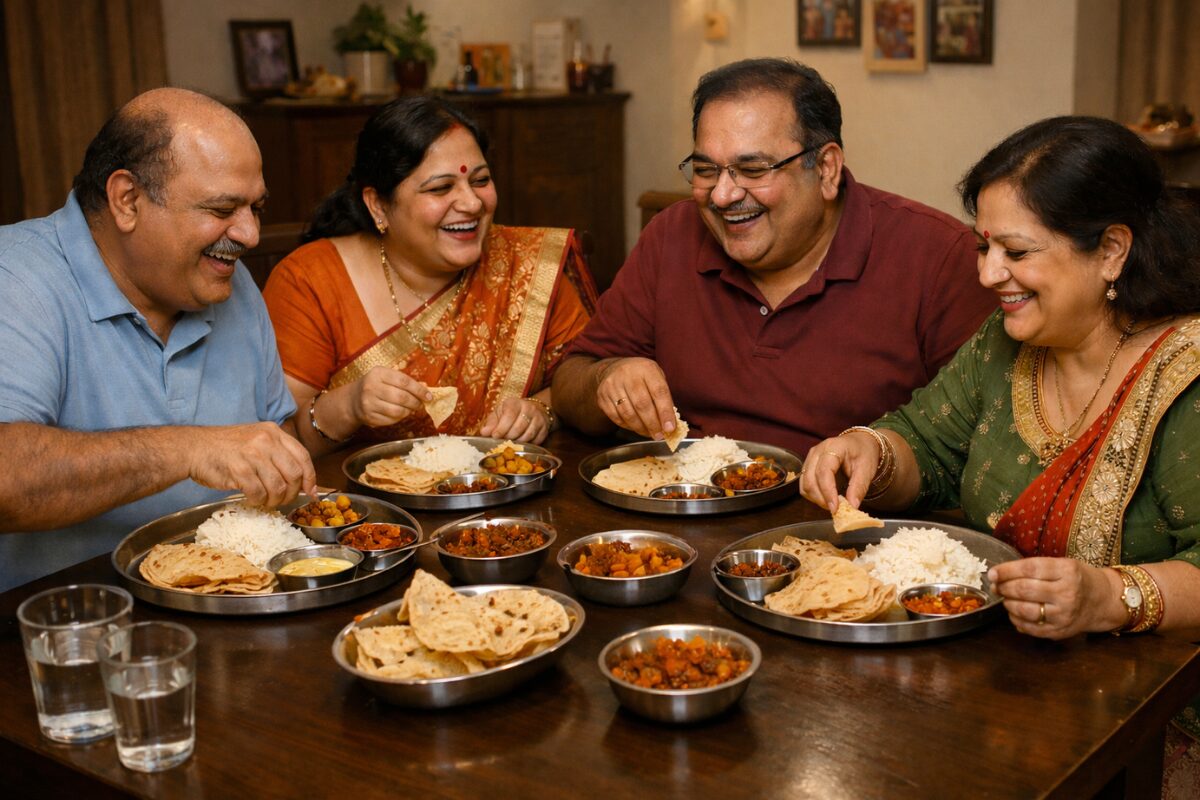
    poor indian diet
    Indian diet is full of carbohydrates and fats. Know how to improve dietary habits of Indian parents and lose weight
    Share
    Facebook Twitter Email

    Most Indian parents eat far more carbohydrates than they realise, because this is how meals have been structured for decades. Breakfast usually begins with paratha, bread, poha, or upma. Lunch is roti with sabzi, and dal, while dinner is described as “light”, which again means one roti or a small bowl of rice. Throughout the day, protein disappears from the plate, replaced by carbohydrates that feel filling but do very little to preserve muscle or regulate hunger. 

    Over time, this pattern creates a situation where calorie intake remains high, protein intake is low, and physical activity anyway reduces with age. The body adapts by losing muscle and storing fat, particularly around the abdomen. This is why many parents say they eat “simple food” and “ghar ka khana” and yet continue to gain weight year after year.

    Even though our parents have been eating in a calorie deficit, they fail to lose weight because this diet lacks balance, structure, and enough protein to support a calorie deficit without hunger or fatigue.

    So, would a simple Indian diet without any fancy ingredients help provide wholesome nutrition, while keeping a calorie deficit and helping with weight loss? Yes, it’s totally possible with just everyday food. We’ll see how, stay with us.

    Table of Content hide
    Why Protein Intake Matters More Than Ever With Age
    Calorie Deficit Works Only When Nutrition Is Wholesome
    What Indian Parents Can Actually Eat in a Day (Realistic guide)
    Morning (Breakfast)
    Mid-morning
    Evening Snacks (Most Neglected Meal)
    Dinner
    Simple Healthy Switches Indian Parents Can Make (Without Changing Their Food)
    1. Make Protein a Proper Part of Every Meal
    2. Reduce Oil Not just Carbs
    3. Let Vegetables Take Up More Space on the Plate
    4. Improve Roti Instead of Removing It
    5. Make Dinner Lighter
    Common Mistakes Indian Parents Often Make While Trying to Lose Weight
    Why Walking Alone Is Not Enough to Lose Weight
    Why Extreme Diets Fail for Indians
    We Are Conducting a HealthPil Webinar for Indian Parents
    Diet and Lifestyle for Indian Parents to prevent Obesity, Diabetes and other metabolic diseases
    Frequently Asked Questions (FAQs)
    Disclaimer

    Why Protein Intake Matters More Than Ever With Age

    According to dietary recommendations issued by the Indian Council of Medical Research, a healthy adult requires roughly 0.8 grams of protein per kilogram of body weight per day, and this requirement increases to around 1–1.2 g/kg when weight loss is the goal or when muscle preservation becomes important with ageing.

    In reality, most Indian parents consume barely 40–50 percent of this requirement. When protein intake remains low, the body loses muscle instead of fat during calorie restriction, metabolism slows further, hunger increases, and weight loss becomes difficult to sustain, so instead of actually losing weight, they end up gaining more!

    Calorie Deficit Works Only When Nutrition Is Wholesome

    Weight loss requires a calorie deficit, but creating this deficit by simply eating less roti or skipping meals often backfires. When calories are reduced without adequate protein and fibre, you feel weak, irritable, and constantly hungry, leading to snacking and eventual weight regain.

    A sustainable calorie deficit works best when:

    • Protein intake is adequate


    • Meals are structured


    • Hunger is controlled naturally


    This is why focusing only on calories without looking at what those calories are made of doesn’t work in Indian households.

    What Indian Parents Can Actually Eat in a Day (Realistic guide)

    This is not a “diet plan.” This is a guide with examples on how meals can be rebalanced, and to give you an idea on how to eat mindfully. 

    Morning (Breakfast)

    Instead of a carb-only breakfast, protein should be taken early in the day.

    Examples:
    Egg bhurji or omelette with vegetables and one small roti.
    Paneer bhurji with whole wheat toast or roti.
    Besan chilla with curd.
    Add a protein with your paratha, instead of paratha with achaar/chutney alone, like egg, paneer bhurji, curd. 

    Starting the day with protein reduces mid-morning hunger significantly.

    Mid-morning

    This is where many parents either skip eating or eat fruit alone, leading to hunger soon after.

    Better options include:
    Fruit with a handful of roasted chana or peanuts.
    Guava with a small bowl of curd.
    Apple with soaked almonds or walnuts.

    The idea is not to avoid fruit, but to avoid taking fruit in isolation.

    Lunch

    A well-structured Indian lunch plate can be planned like this:

    • ¼ plate – Protein:
      Dal, rajma, chole, curd-based dishes, paneer, eggs, chicken, or fish.
      For example: one medium bowl of dal, rajma or chole, paneer, or a bowl of chicken or fish curry


    • ½  plate – Vegetables:
      One vegetable sabzi made from seasonal vegetables like lauki, tori, bhindi, cabbage, cauliflower, carrots, beans, or mixed vegetables.
      Aim for one medium bowl, cooked with minimal oil.


    • ¼ plate – Carbohydrates:
      One to two rotis made from whole wheat, jowar, bajra, or ragi, or a small bowl of rice.


    • A portion of Dairy / Gut support:
      Plain curd or buttermilk, if tolerated. Avoid adding sugar; a pinch of roasted jeera or salt is enough.

    This kind of lunch uses everyday Indian foods, keeps portions in check, and helps you feel full while staying in a calorie deficit.

    Evening Snacks (Most Neglected Meal)

    This is where the biggest improvement can happen.

    Instead of biscuits, namkeen, or fried snacks, parents can rotate between:
    Boiled eggs with salt and pepper.
    Sprouts chaat with onion, lemon, and chaat masala.
    Roasted makhana.
    Paneer cubes with vegetables.
    Vegetable sandwich with paneer filling.

    Dinner

    Dinner should be lighter on carbohydrates but nutritionally complete.

    Examples:

    • Grilled paneer with a generous portion of seasonal vegetables


    • Paneer bhurji or egg bhurji with one small roti


    • Chicken or fish curry with one roti


    • Fish fry (shallow cooked) with vegetable sabzi


    • One bowl of vegetable sabzi with a bowl of dal, without adding extra roti or rice


    • Mixed vegetable curry with curd on the side


    • Khichdi with adequate dal and vegetables, eaten in moderation


    • Curd with roasted vegetables or a light vegetable stir-fry

    Eating dinner earlier, rather than late at night, further helps maintain a calorie deficit.

    Simple Healthy Switches Indian Parents Can Make (Without Changing Their Food)

    Weight loss does not mean eating different food. It means eating the same food, only making it slightly better.

    1. Make Protein a Proper Part of Every Meal

    In most Indian homes, meals are planned around roti or rice. That needs to change.

    A simple switch is to decide the protein first.
    Ask one question before every meal: “What is my protein today?”

    It could be dal, curd, paneer, eggs, chicken, fish, or sprouts.
    Once protein is fixed, rotis and rice automatically reduce.

    When protein is treated as a main item and not a side bowl, hunger reduces and meals feel more satisfying.

    2. Reduce Oil Not just Carbs

    Most Indians don’t realise how much oil goes into daily cooking. A little oil here and there across meals adds up quickly.

    Simple switches help, such as:

    • Use less oil while cooking and add flavour with spices


    • Sauté vegetables with a little water, then add oil later


    • Finish food with lemon, vinegar, or roasted spices instead of extra oil


    3. Let Vegetables Take Up More Space on the Plate

    In many meals, vegetables are just a small side, while roti or rice takes most of the plate. 

    A better approach is to increase vegetables slowly:

    • One full bowl of sabzi at lunch


    • Vegetables added to dal, paneer, eggs, or curries


    • Cooked vegetables count, not just salads


    4. Improve Roti Instead of Removing It

    Asking parents to completely stop rotis is not going to work practically. So, instead, small improvements make a big difference:

    • Add methi leaves to atta


    • Mix a little besan or bran


    • Use jowar or bajra or other millets to atta once in a while.


    5. Make Dinner Lighter

    Dinner is often heavy because earlier meals were skipped or unbalanced. A good dinner does not mean no food at all. 

    Protein, vegetables, and smaller portions of roti or rice work best at night. Also, eating earlier helps with digestion and sleep.

    Common Mistakes Indian Parents Often Make While Trying to Lose Weight

    Even when parents eat “ghar ka khana,” these habits slow down weight loss.

    • Very light breakfasts and very heavy dinners
      • Believing dal alone is enough protein
      • Using too much oil while cooking healthy food
      • Completely cutting roti or rice and then overeating later
      • Focusing only on walking and ignoring muscle strength

    Why Walking Alone Is Not Enough to Lose Weight

    Most parents rely only on walking for exercise, which is helpful but insufficient for long-term fat loss. With age, muscle loss accelerates unless resistance training is added. Strength training twice a week helps preserve muscle, improve insulin sensitivity, and makes dietary changes more effective.

    This does not require heavy gym workouts. Simple body-weight exercises, resistance bands, or light dumbbells at home are enough.

    Why Extreme Diets Fail for Indians

    Completely cutting out roti or rice, skipping meals, or jumping from one influencer-driven diet trend to another might show some quick weight loss in the beginning, but it almost never works in the long run. These approaches don’t take into account how we actually eat as families, the cultural role food plays in our lives, or whether the body is even getting proper nutrition.

    Sustainable weight loss doesn’t come from extreme restriction or fear of food, it comes from correcting everyday habits, portions, and choices in a way that can be followed consistently for years, not just a few weeks.

    We Are Conducting a HealthPil Webinar for Indian Parents

    To help parents understand and implement these changes correctly, HealthPil is conducting a dedicated webinar on diet and lifestyle changes for Indian parents.

    In this session, we will cover:

    • How to structure Indian meals for weight loss with exciting recipes


    • Protein planning using vegetarian and non-vegetarian options


    • Common myths around Indian diets

    Diet and Lifestyle for Indian Parents to prevent Obesity, Diabetes and other metabolic diseases

    Online Session on Diet and Lifestyle for Indian Parents is scheduledin 2nd week of February. Webinar fees is Rs 500 (only for first 10 applicants). You will recieve link to join webinar one day before. Please WhatsApp on 9625960259, if any issues with joining webinar. You can prebook your slot here.

    Name(Required)
    Please mention your weight (in Kg) and height (in cm)
    This field is hidden when viewing the form
    Max. file size: 2 GB.
    Drop files here or
    Max. file size: 2 GB, Max. files: 3.
      Fees shall be Rs 500 for first 10 applicants, therafter Rs 1000.

      Slots are limited. So, if you want to be a part of it, fill up the registration form on HealthPil to book your slot.

      Frequently Asked Questions (FAQs)

      How much protein does an Indian parent really need?

      Most parents benefit from 60–90 grams per day, depending on body weight, activity, and health conditions.

      Is dal enough as a protein source?

      Dal is helpful but often insufficient alone. Combining dal with curd, paneer, eggs, or legumes improves protein quality and quantity.


      Are eggs safe for cholesterol?

      For most people, eggs consumed in moderation are safe and provide high-quality protein.

      When Diet and Lifestyle workshop for Indian parents will be conducted?

      The online session on diet for Indian parents will be conducted in 2nd week of February ( weekend) . The details would be shared on our social media handles. 

      Disclaimer

      This article is for general awareness only and does not replace medical advice, diagnosis, or treatment. Dietary and exercise changes should always be discussed with a qualified healthcare professional, especially in the presence of medical conditions.

      Team Healthpil
      Written By Team Healthpil MBBS, MD Medicine, DM Neurology (AIIMS Delhi)
      Last Updated 16 Jan 2026
      We provide you with authentic, trustworthy and relevant information.
      Read our editorial policy
      best diet for weight loss healthy diet nutrition weight loss diet
      Share. Facebook Twitter WhatsApp Email
      Previous ArticleOnline Workshop on Migraine Treatment by Neurologist Dr Rahul Chawla
      Next Article Deepinder Goyal’s New Temple Device: Cerebral Blood Flow, Ageing, and Longevity

      Related Articles

      Private Hospitals Do Caesarean Section Unnecessarily? Know About Indications, Risks, and the Controversy Around This Life-Saving Operation

      October 3, 2025 Editorial

      Oil and Sugar Boards on all processed food, not just Samosa and Jalebi : But is it really going to help curb obesity?

      July 15, 2025 Editorial

      The hidden truth behind MSG: Is Ajinomoto really safe?

      April 30, 2025 Wellness & Nutrition

      Stop Killing Your Nutrients: Healthy Cooking Practices You Must Adopt

      April 30, 2025 Wellness & Nutrition
      Leave A Reply Cancel Reply

      20 − 12 =

      I agree to the terms and privacy policy.

      Disclaimer: Please avoid sharing personal health details in comments. Comments are public and moderated. For private health queries, use the Ask A Doubt section. By commenting, you agree to our Privacy Policy.

      Health and Wellness

      Child Safety and Online Predators: Why parents should think twice before posting children’s photos and videos on social media!

      November 11, 2025

      Fake ORS Banned by FSSAI: Why a Pediatrician Fought an 8-Year Battle to Stop Sugary Drinks Mislabelled as “ORS”?

      October 24, 2025

      Are Herbal Supplements Hurting Your Kidneys? What You Need to Know

      September 18, 2025

      Is Your Herbal Medicine Bad for Your Heart?

      September 18, 2025
      Connect with Us
      • Facebook
      • Instagram
      • YouTube
      • Twitter
      Don't Miss

      Child Safety and Online Predators: Why parents should think twice before posting children’s photos and videos on social media!

      Every parent loves to capture those little moments — the first step, the first day…

      Fake ORS Banned by FSSAI: Why a Pediatrician Fought an 8-Year Battle to Stop Sugary Drinks Mislabelled as “ORS”?

      October 24, 2025

      Why Asthma Attacks are on the Rise: Unseen Influence of Air Pollution!

      May 26, 2025

      Stroke and Air Pollution: Is Your Environment Putting You at Risk?

      May 26, 2025

      Subscribe to Updates

      Get the latest creative news from SmartMag about art & design.

      Consent(Required)

      About Us
      About Us

      HealthPil: Get Your Daily Dose of Trusted Health Advice– Consult a Doctor Anytime, Anywhere!
      We're accepting new partnerships right now.

      Facebook X (Twitter) Instagram YouTube
      Contact Us
      EmailEmail Us:
      contact@healthpil.com
      whatsappContact:
      +91 962 596 0259
      Specialties
      • Neurology
      • Cardiology
      • Psychiatry
      • Orthopedics
      • Gynaecology
      • Pediatrics
      • Neurosurgery
      • Neurosurgery
      • Ophthalmology
      • ENT
      • Oncology
      Quick Links
      • Home
      • About
      • Blog
      • Ask Doubts
      • Consult Doctors
      • Contact Us
      • Disclaimer
      • Privacy Policy
      • Terms and Conditions

      Type above and press Enter to search. Press Esc to cancel.

      Book Appointment
      Copyright © 2026 HealthPil. All Rights Reserved.