

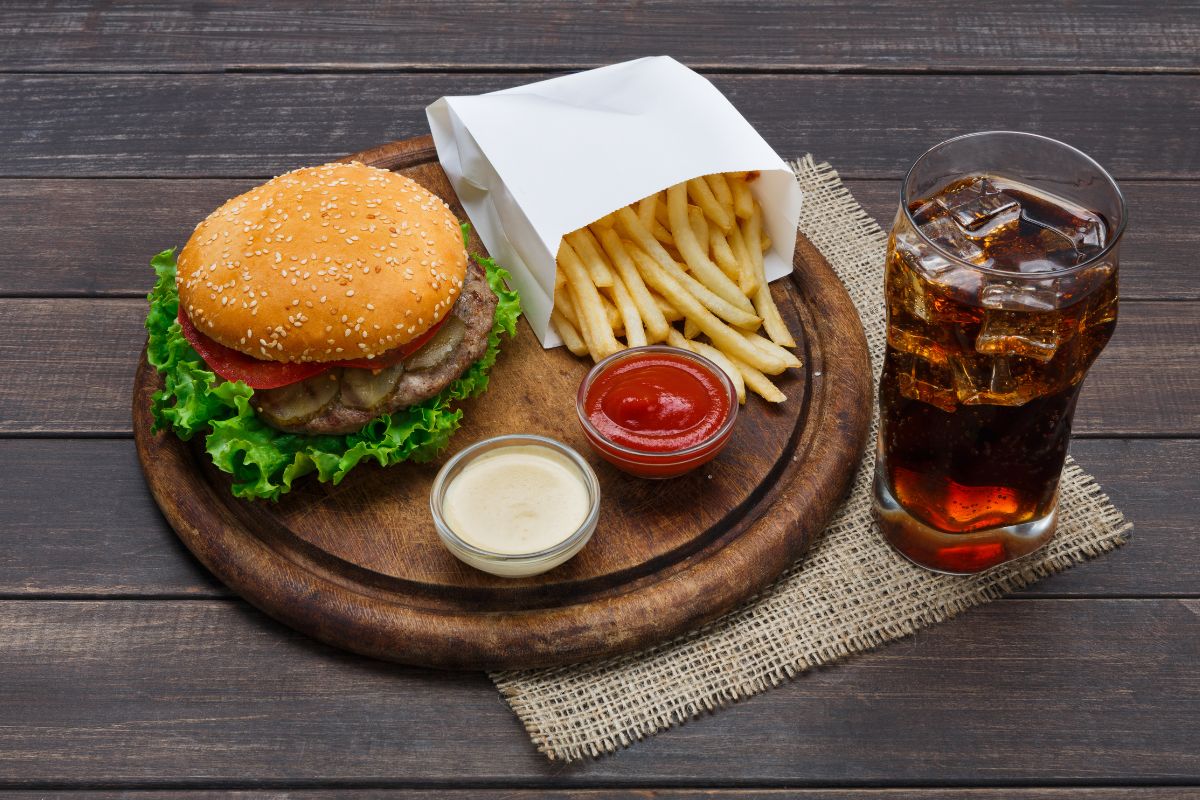
Walk into any Indian kitchen or grocery store today and you’ll find packaged food has quietly become the default, not the exception. Global public health researchers point to two overlapping categories driving this shift: HFSS foods (high in fat, sugar, and salt) and ultra-processed foods (UPFs). The 2024 Dietary Guidelines for Indians are direct about it these items need to be consumed in moderation to reduce the risk of chronic disease. This guide covers what these categories actually mean, why they’re harder to avoid than they should be, and what you can practically do about it.
What Are HFSS Foods?
HFSS foods are energy-dense items loaded with added fat, sugar, or salt and typically low in the nutrients that actually matter: vitamins, minerals, and fibre. They’re popular precisely because they’re engineered to be craveable, not because they’re nutritious.
Common Examples
- Fat-rich foods: ghee, butter, vanaspati
- Fried foods: samosas, kachori, puri, French fries
- Sweet treats: cakes, biscuits, pastries, desserts
- Savouries: packaged snacks, chips
The Three Levels of HFSS Foods
- Level 1: A small quantity of just one HFSS ingredient (e.g., lightly buttered popcorn)
- Level 2: Moderate quantities of two HFSS ingredients (e.g., cookies made with butter and sugar)
- Level 3: High quantities of all three — fat, sugar, and salt together (e.g., deep-fried desserts)
How HFSS Foods Are Actually Scored
This isn’t just a loose label several countries use a formal Nutrient Profiling Model (NPM) to classify a product as HFSS. The scoring logic (as used in the UK’s system) awards points for “negative” nutrients energy, saturated fat, total sugar, and sodium and subtracts points for “positive” ones fruit, vegetable and nut content, fibre, and protein. Cross a set threshold, and a product is officially classified as “less healthy.” India doesn’t yet have an identical mandatory scoring system, but the same underlying logic is what regulators are pushing toward.
What Are Ultra-Processed Foods (UPFs)?
UPFs go through extensive industrial processing that fundamentally alters them from their natural state — typically involving preservatives, sweeteners, colourings, flavour enhancers, and emulsifiers rarely found in a home kitchen.
Common Examples
Instant noodles • soft drinks and energy drinks • flavoured yoghurts with added sugar • packaged breakfast cereals • frozen pizzas • chicken nuggets • processed meats (sausages, salami) • packaged cookies and cakes • ice creams • sweetened fruit drinks • ready-to-eat meals • flavoured chips and snacks
These are typically calorie-dense while offering very little fibre, vitamins, or minerals in return.
HFSS vs. Ultra-Processed: They’re Not the Same Thing
This is where most people get confused. HFSS describes nutrient content how much fat, sugar, or salt a food has. Ultra-processed describes manufacturing method how industrially altered a food is, regardless of its exact nutrient numbers.
Some foods land in both categories packaged chips, sugary cereals, instant noodles, soft drinks, cookies, and frozen ready meals all qualify as HFSS and UPF. But not every UPF is HFSS (some diet sodas and artificially sweetened products are ultra-processed but not nutrient-dense in fat/sugar/salt), and not every HFSS food is ultra-processed (a plate of home-fried puris is HFSS but not industrially manufactured).
ICMR-NIN Food Categorization by Processing Level
- Group A: Unprocessed or minimally processed (fresh fruits, vegetables)
- Group B: Moderately processed, most nutrients retained (pasteurised milk)
- Group C: Extensively processed, additive-heavy, low in essential nutrients (soft drinks, instant noodles)
UPFs fall squarely into Group C which is exactly why they’re flagged for limited, not regular, consumption.
Why Are These Foods Everywhere? The Marketing Behind the Craving
It’s worth understanding why HFSS and UPF consumption keeps climbing, because it’s not simply a matter of personal willpower.
The “Bliss Point”
Food scientists engineer a precise combination of sugar, salt, and fat calibrated to maximise pleasure and drive repeat consumption often referred to as the bliss point. This isn’t incidental; it’s a deliberate formulation target.
How Packaging and Advertising Mislead
- Selective disclosure: Front-of-pack claims like “baked,” “no maida,” “12 grains,” or “natural” get highlighted while high sugar, fat, sodium, or additive content stays buried in the nutrition panel.
- Health-washing: Genuinely unhealthy products get dressed up with attractive claims and imagery that imply a health benefit that isn’t really there.
- Celebrity and influencer endorsement: Trust transfers from the person to the product, making misleading health claims easier to swallow literally and figuratively.
- Targeting children specifically: Cartoons, jingles, colourful packaging, and gaming tie-ins exploit the fact that children lack the nutritional judgement to see through marketing.
- Digital amplification: Algorithm-driven ads on social media and short-video platforms mean the same targeted promotions reach children and families repeatedly, reinforcing cravings over time.
Recognising these tactics is, in itself, a form of protection once you know a “high fibre” claim on a sugary cereal box is a selective disclosure, it’s harder for it to work on you.
Why Minimising HFSS and UPF Consumption Matters
Health Risks of HFSS Foods
- Nutritional deficiencies — high in empty calories, poor in vitamins, minerals, and fibre
- Weight gain — contributing directly to obesity and related complications
- Chronic disease — regular intake raises diabetes, hypertension, and heart disease risk
- Cognitive impairment — micronutrient deficiencies can affect learning, memory, and concentration
Health Risks of UPFs
- Low nutrient density — lacking bioactive compounds like antioxidants and polyphenols
- High trans fats — contributing to heart disease and systemic inflammation
- Kidney and blood pressure strain — excess salt burdens kidney function and raises blood pressure
- Cancer risk — some research links regular UPF consumption to increased risk for certain cancers
How HFSS and UPF Foods Affect Different Organs
- Brain: Increased cravings from the highly rewarding combination of fat, sugar, and salt
- Heart: Higher LDL cholesterol and elevated cardiovascular risk
- Liver: Fat accumulation that can contribute to fatty liver disease
- Kidneys: Excess sodium adds ongoing strain to kidney function
- Gut: Additives and low fibre intake may disrupt the gut microbiome
- Pancreas: Frequent blood sugar spikes increase insulin demand and diabetes risk
Over time, these effects compound into obesity, metabolic syndrome, hypertension, and other non-communicable diseases (NCDs) a category responsible for a large majority of deaths worldwide, and one where dietary risk alone is estimated to contribute to over a million deaths in India annually.
The Bigger Picture: Why This Is Also a Policy Issue
This isn’t purely a matter of individual choice it’s increasingly treated as a public health and regulatory issue in India:
- Economic cost: The impact of overweight and obesity in India was estimated at billions of dollars in lost productivity and healthcare costs, with projections showing that figure could grow dramatically over the coming decades if unaddressed.
- Regulatory gaps: India currently relies heavily on voluntary disclosure rather than mandatory front-of-pack warning labels, unlike countries such as Chile, Mexico, and Brazil, which use clear warning labels (similar in spirit to tobacco warnings) to flag products high in sugar, salt, or fat.
- Taxation as a lever: Kerala introduced a “fat tax” on select HFSS items in 2016 (later absorbed into India’s GST structure), and policy discussions continue around using taxation to discourage HFSS consumption while funding public health measures — a model already used by several countries globally.
- School and child-focused restrictions: There’s an ongoing push toward restricting HFSS advertising near schools and other child-centric spaces, given how effectively this marketing targets children.
Knowing this context doesn’t change what’s on your plate today, but it does explain why “just make better choices” undersells how deliberately engineered the current food environment actually is and why nutrition literacy is being treated as a policy priority, not just a personal one.
Tips to Minimize HFSS and UPF Foods
- Prioritize whole foods — fresh fruits, vegetables, whole grains, and minimally processed items over packaged snacks
- Cook at home — this is the single biggest lever for controlling how much fat, sugar, and salt actually ends up in your food
- Read food labels — actively avoid products high in sodium, saturated fat, or added sugar rather than trusting front-of-pack claims
- Snack wisely — nuts, seeds, roasted chickpeas, or fruit salads instead of packaged options
- Limit fast food — treat it as an occasional indulgence, not a routine meal
- Choose healthier cooking methods — bake, grill, or steam instead of deep-frying
- Stay hydrated the right way — replace sugary drinks with water, coconut water, or herbal teas
How to Spot HFSS/UPF Foods While Shopping
Look out for:
- High amounts of added sugar
- More than 400mg sodium per serving
- Hydrogenated or partially hydrogenated oils
- Artificial colours and preservatives
- Long ingredient lists with unfamiliar additive names
- High saturated fat and trans fat content
Whenever there’s a choice, favour the product with fewer ingredients and less processing.
Healthy Swaps That Actually Work
Instead of… | Try… |
Packaged chips | Roasted makhana or roasted chickpeas |
Sugary soft drinks | Water, coconut water, lemon water, or unsweetened buttermilk |
Packaged cookies/pastries | Fresh fruit or a handful of nuts |
Flavoured packaged popcorn | Homemade popcorn |
Instant noodles | Vegetable poha, upma, whole wheat pasta, or millet-based dishes |
Common Myths About HFSS and UPFs Busted
Myth 1: “All packaged foods are unhealthy.”
Fact: Moderately processed foods like pasteurised milk or whole-grain bread retain most of their nutrients packaging alone doesn’t determine healthfulness.
Myth 2: “Homemade fried snacks are healthy because they’re not packaged.”
Fact: Homemade samosas or puris still involve excessive oil, making them high in fat and calories regardless of where they were made.
Myth 3: “Sugar-free products are always the better choice.”
Fact: Sugar substitutes consumed in excess can carry their own negative effects “sugar-free” isn’t automatic permission to overconsume.
Myth 4: “Fast food is fine as long as it’s occasional.”
Fact: Even small, frequent quantities accumulate harmful effects over time frequency matters as much as portion size.
Myth 5: “Only people who are overweight need to worry about HFSS foods.”
Fact: HFSS and UPF consumption affects long-term health regardless of current body weight.
Who Should Especially Limit HFSS and UPF Foods?
Everyone benefits from cutting back, but these groups should be particularly cautious:
- Children and adolescents
- Pregnant women
- People living with obesity
- Individuals with diabetes
- Patients with hypertension
- People with heart disease
- Older adults
- Individuals with fatty liver disease
For these groups, reducing processed food intake can produce a genuinely meaningful improvement in long-term health outcomes.
When to See a Doctor or Dietitian
Reducing HFSS and UPF intake is largely something you can act on yourself but certain situations call for professional guidance rather than self-management:
- You regularly consume packaged or fast food and haven’t been able to shift that pattern despite trying
- You’re overweight or obese and want a structured, medically sound plan rather than trial and error
- You have diabetes, hypertension, high cholesterol, or fatty liver disease and need intake targets tailored to your specific condition
- You experience frequent, hard-to-control cravings for processed or sugary foods
- You’re pregnant and need dietary guidance specific to that stage
- You notice symptoms like persistent fatigue, unexplained weight change, digestive issues, or elevated blood pressure readings that could be diet-related
- You want to lose weight safely and sustainably, rather than through restrictive or unproven approaches
A qualified dietitian can build a nutrition plan around your actual health conditions, preferences, and lifestyle something a general guide like this one isn’t positioned to do.
If visiting a clinic isn’t practical, an online consultation is often the quickest way to get this sorted you can speak to a dietitian from home, share your current eating pattern, and walk away with a plan tailored to your condition instead of generic advice. HealthPil’s online consultation service connects you with expert guidance without needing an in-person visit.
How HealthPil Can Help:
At HealthPil, we support your journey to better health by offering:
● Dietary Guidance: Personalised nutrition plans to reduce HFSS and UPF consumption.
● Educational Resources: Tips and tools to identify healthier food options.
● Consultation Services: Expert advice to address dietary challenges and promote a balanced lifestyle.
Summary
HFSS (High Fat, Sugar, and Salt) foods and ultra-processed foods (UPFs) have become a regular part of modern diets, but frequent consumption can increase the risk of obesity, diabetes, heart disease, hypertension, fatty liver disease, and other chronic conditions. While HFSS foods are classified based on their nutrient content, ultra-processed foods are defined by the extent of industrial processing, and many products fall into both categories.
Reducing your intake doesn’t require eliminating all packaged foods overnight. Small changes—such as choosing whole foods, reading nutrition labels, cooking more meals at home, limiting sugary drinks, and replacing processed snacks with healthier alternatives—can significantly improve your overall health. Following the ICMR Dietary Guidelines 2024 and making informed food choices can help you build a balanced, sustainable diet and lower your long-term disease risk.
FAQs:-
Can I eat HFSS foods occasionally?
Yes. Occasional consumption is acceptable as part of a balanced diet, but these foods should not become a daily habit.
Are all packaged foods unhealthy?
No. Some packaged foods such as plain oats, milk, frozen vegetables, and whole-grain products are minimally processed and nutritious.
Are homemade fried foods healthier?
Although homemade foods may contain fewer additives, deep-fried foods are still high in fat and should be eaten in moderation.
Can children eat ultra-processed foods?
Children should consume ultra-processed foods only occasionally because frequent intake may increase the risk of obesity, poor nutrition, and unhealthy eating habits.
How can I reduce my intake of processed foods?
Plan meals in advance, cook at home, choose whole foods, read nutrition labels, and replace packaged snacks with fruits, nuts, and seeds.
References
- Roche M, Zhu J, Olney J, et al. Taxation of Foods High in Fat, Sugar, and Sodium in India: A Modelling Study of Health and Economic Impacts. Available at:
PubMed - Wang Y, et al. A Comprehensive Review of High Fat, Sugar and Salt (HFSS) Foods: Health Effects and Public Health Strategies. Available at:
PMC
Disclaimer:
This article is for informational purposes only and does not replace professional medical advice. Consult a healthcare provider for personalised dietary recommendations.

Read our editorial policy