

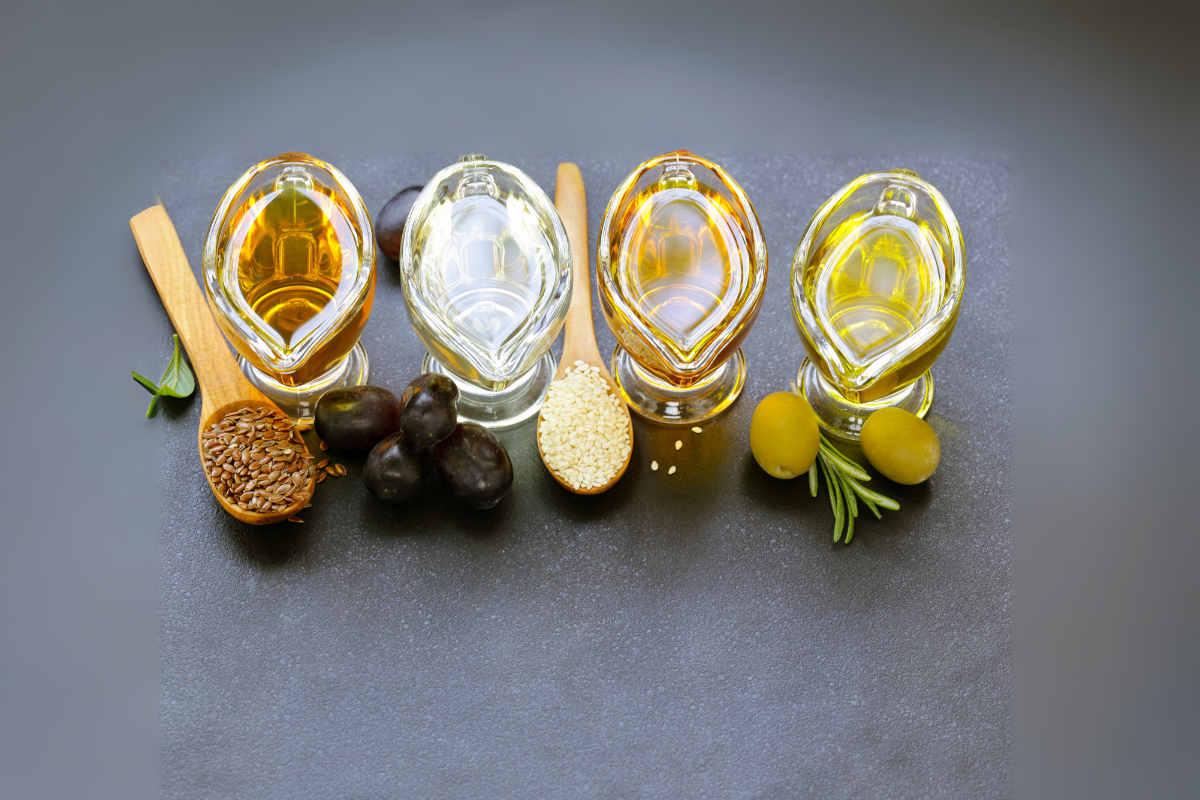
Cooking oil is something almost every Indian household reaches for daily — yet very few of us can confidently answer a simple question: which fat is actually good for me? Mustard oil, olive oil, coconut oil, sunflower oil, ghee, vanaspati the choices (and the conflicting advice around them) can be overwhelming.
The good news: according to the ICMR 2024 Dietary Guidelines, the goal was never to eliminate fat. It’s to choose the right types of fat, keep quantities in check, and maintain a healthy balance of essential fatty acids. This guide walks through the science, the traditional wisdom, and the practical, everyday decisions that go into making that balance work in a real Indian kitchen.
What Are Fats, and Why Does the Body Need Them?
Fats (or lipids) aren’t the enemy — they’re structural. Every cell membrane in your body is built partly from fat. Beyond that, fats:
- Support hormone production and cell function
- Carry fat-soluble vitamins A, D, E, and K through the bloodstream, some of which get stored in the liver or fat tissue for later use
- Supply essential fatty acids (omega-3 and omega-6) that the human body cannot manufacture on its own
- Deliver concentrated energy — 9 kcal per gram, more than double what carbohydrates or protein provide
Here’s a detail most people miss: oils and fats are technically the same thing. The only real difference is the degree of hydrogen saturation in their fatty acid chains this is what determines whether a fat is solid at room temperature (like ghee or butter) or liquid (like mustard or sunflower oil), and how it behaves under heat. No naturally occurring fat is “purely” saturated or unsaturated every oil is a mixture of different fatty acids in different proportions.
How Much Fat Do You Actually Need Per Day?
This is where most people either overdo it or panic and cut fat entirely. ICMR’s benchmark is specific:
- Visible fat (oil/ghee added while cooking): 25–30 g per day for most healthy adults
- Total fat (including fat hidden in food): should make up roughly 20–30% of total daily calories
These numbers shift depending on your age, activity level, pregnancy status, or existing medical conditions — they’re a starting reference, not a rigid rule for everyone.
The Four Types of Dietary Fat, Explained
1. Saturated Fatty Acids (SFA)
Found in ghee, butter, coconut oil, palm oil, and fatty cuts of meat. These are solid at room temperature and among the most heat-stable fats, which is why they resist rancidity well. The trade-off: excess SFA intake raises LDL (“bad”) cholesterol, increasing long-term heart disease and stroke risk.
2. Monounsaturated Fatty Acids (MUFA)
Found in olive oil, mustard oil, groundnut (peanut) oil, and avocados. MUFA-rich diets are consistently linked to lower LDL cholesterol, reduced inflammation, and better clotting profiles making this category the closest thing to a “default good choice” for everyday cooking.
3. Polyunsaturated Fatty Acids (PUFA)
Found in sunflower oil, soybean oil, flaxseeds, walnuts, and fatty fish. PUFA is essential for brain development and vision and helps lower cardiovascular risk but it’s also the most chemically fragile fat type, meaning it oxidizes fastest when exposed to heat, light, or air.
4. Trans Fatty Acids (TFA)
Found in vanaspati (hydrogenated vegetable oil), margarine, and most commercial bakery items. Industrial trans fats are produced through hydrogenation a process that turns liquid oil solid and shelf-stable. This category has the clearest scientific consensus against it: TFA raises LDL, lowers HDL (“good” cholesterol), and significantly increases heart disease and diabetes risk.
A lesser-known fact: not all trans fats are industrial. Conjugated Linoleic Acid (CLA) is a naturally occurring trans fat found in the meat and dairy of grass-fed animals, and researchers have studied it for a range of distinct biological effects it should not be lumped in with hydrogenated vanaspati.
What Happens If You Eat Too Much (or the Wrong Kind of) Fat?
Excess saturated and trans fat intake is associated with elevated LDL cholesterol, obesity, fatty liver, insulin resistance, and higher cardiovascular risk. But there’s a subtler trap: even “healthy” fats are calorie-dense at 9 kcal/g, so pouring extra olive oil on everything because “it’s healthy” can still contribute to weight gain if your total intake isn’t in check.
Oxidation and Free Radicals Why Reused Oil Is Genuinely Risky
When oils especially PUFA-rich ones are repeatedly heated (think: the same kadhai oil used for three rounds of frying), their fatty acid structure breaks down. This produces oxidation byproducts, including free radicals: unstable molecules that can damage cell membranes over time. This is the real, mechanistic reason behind the age-old advice to never reuse frying oil.
Essential Fatty Acids: Omega-3 and Omega-6
The body cannot synthesize EFAs they must come from food.
- Omega-3 (ALA, EPA, DHA): flaxseeds, walnuts, marine fish (salmon, mackerel), soybeans
- Omega-6 (Linoleic Acid): sunflower, safflower, corn, soybean, and cottonseed oils
ICMR recommends maintaining an omega-6 to omega-3 ratio between 5:1 and 10:1, and including around 200g of fatty fish weekly for long-chain omega-3s. Most modern Indian diets, heavy on refined vegetable oils, skew well past this ratio toward omega-6 which is one reason nutritionists push for oil rotation rather than relying on a single omega-6-heavy oil for everything.
Which Oil Is Best for Indian Cooking? A Practical Breakdown
Cooking Oil | Best For | Fat Profile |
Mustard Oil | Everyday Indian cooking, tempering | High MUFA, pungent, high smoke point |
Groundnut Oil | Deep frying | MUFA-rich, mild flavour, high smoke point |
Sesame Oil | South Indian cooking | Antioxidant-rich, nutty, high smoke point |
Rice Bran Oil | Heart health, daily cooking | Balanced MUFA/PUFA |
Soybean Oil | Everyday cooking, frying | PUFA + Vitamin E, neutral flavour, high smoke point |
Olive Oil (Extra Virgin) | Salads, light sautéing only | High MUFA, low smoke point |
Olive Oil (Refined) | Medium-heat cooking | High MUFA, medium smoke point |
Coconut Oil | Kerala cuisine, moderate use | High SFA, medium smoke point |
Palm/Palmolein Oil | Commercial bulk frying | Heat-stable, common in large kitchens |
Vanaspati (Ghee substitute) | Occasional festive use only | Hydrogenated — minimise use |
Smoke Point at a Glance
Oil | Smoke Point |
Mustard, Groundnut, Rice Bran, Soybean | High |
Ghee (properly clarified) | Very High (~485°F / 250°C) |
Olive Oil (Refined) | Medium |
Coconut Oil | Medium |
Olive Oil (Extra Virgin) | Low |
Interesting side note: ghee, despite being highly saturated, has one of the highest smoke points of any common cooking fat because clarifying it removes the milk solids and water that would otherwise burn first. That’s why it tolerates high-heat Indian cooking (tadka, deep frying) better than butter.
The One Oil Mistake Almost Everyone Makes
A high smoke point doesn’t automatically mean an oil is “safer” or “healthier” for every dish it just means it resists breaking down at higher temperatures. A refined, heavily processed oil can have a high smoke point and still be nutritionally inferior to a cold-pressed oil used within its appropriate heat range. Match the oil to the cooking method, not just the number on a smoke-point chart.
Why Oil Rotation Matters
No single oil delivers a perfect fatty-acid balance. Rotating between mustard, groundnut, sesame, and rice bran oil instead of relying on one oil year-round naturally balances your MUFA, PUFA, and omega-3/omega-6 intake without you having to calculate anything.
How to Choose a Genuinely Good Cooking Oil
When you’re standing in the aisle comparing bottles, look for:
- High in MUFA — better heart-health profile
- Meaningful omega-3 content (or a diet that separately covers it via fish, flax, or walnuts)
- Low in saturated fat, if you already have cardiovascular risk factors
- Minimal processing — heavy refining, bleaching, and chemical solvent extraction can strip natural nutrients
- Cold-pressed / Kachi Ghani where possible — extracted without heat or chemical solvents, retaining more natural antioxidants and phytochemicals
- FSSAI approval, manufacturing date, and “no hydrogenated oil” on the label
Is Cold-Pressed Always Better?
Cold-pressed oils are genuinely more versatile than most people assume groundnut and coconut suit medium-heat cooking, while cold-pressed sesame and mustard hold up well even at higher temperatures. That said, cold-pressed extra virgin olive oil is the exception: it’s still best reserved for salads and light finishing, not deep frying, regardless of how it’s pressed.
How to Use Oils and Fats Safely: 5 Practical Rules
- Rotate oils — mustard, olive, groundnut, sesame to balance MUFA/PUFA intake naturally.
- Limit saturated fats — treat ghee, butter, and palm oil as occasional additions, not the daily base.
- Avoid trans fats entirely — cut out vanaspati and minimise bakery/processed snack consumption.
- Never reuse oil — repeated heating generates harmful compounds linked to heart disease and cancer risk.
- Stay within 25–30 g/day — this is the ICMR benchmark for visible oil intake for most healthy adults.
Cooking Methods That Protect Fat Quality
Where possible, favour baking, grilling, steaming, or stir-frying over repeated deep-frying. Avoid overheating any oil until it smokes that’s the point at which trans fats and other harmful compounds start forming, regardless of which oil you’re using.
Foods Rich in Healthy Fats (Beyond the Bottle)
Walnuts • Almonds • Pistachios • Flaxseeds • Chia Seeds • Pumpkin Seeds • Sunflower Seeds • Soybeans • Avocados • Fatty Fish (salmon, mackerel) • Eggs
Signs You Might Not Be Getting Enough Healthy Fat
Dry skin, brittle hair, persistent fatigue, poor concentration, frequent hunger soon after eating, low energy, and unexplained mood changes can all point to inadequate healthy fat intake — though these symptoms overlap with many other conditions too, so don’t self-diagnose off this list alone.
Who Should Limit Fat Intake?
People managing high cholesterol, heart disease, fatty liver, obesity, or pancreatitis should be more cautious with fat intake and consult a healthcare professional before making major dietary changes.
Who Typically Needs More Healthy Fat?
Children in active growth phases, pregnant women, athletes with high energy demands, and older adults (who often under-eat fat-soluble-vitamin-rich foods) generally benefit from ensuring adequate healthy fat intake.
A Sample ICMR-Aligned Indian Meal Plan
Meal | Example |
Breakfast | Vegetable poha + flaxseeds |
Lunch | Dal + roti + sabzi + curd |
Snack | Walnuts + a piece of fruit |
Dinner | Brown rice + fish or paneer + vegetables |
Storage Tips That Actually Preserve Oil Quality
- Store in dark or opaque bottles, away from direct sunlight
- Keep containers tightly closed to limit oxygen exposure
- Never top up old oil with fresh oil in the same container
- Avoid repeated reheating check for a sticky residue on your kadhai or a change in smell/colour as early warning signs the oil has degraded
How to Read a Cooking Oil Label (In 30 Seconds)
✔ Low or zero trans fat
✔ “Not hydrogenated” or “No partially hydrogenated oil”
✔ Recent manufacturing date
✔ Cold-pressed / Kachi Ghani, if that’s your preference
✔ FSSAI approval mark
Common Myths About Fats and Oils Busted
Myth 1: “All fat is unhealthy.”
Fact: Fat is essential for hormone function, vitamin absorption, and cell structure. The issue is type and quantity, not fat itself.
Myth 2: “Coconut oil is the healthiest option available.”
Fact: Coconut oil is high in saturated fat. It has specific culinary and skincare uses, but it isn’t a universal “healthiest oil” — it’s best used in moderation, not as your primary daily cooking oil.
Myth 3: “Olive oil works for every cooking method.”
Fact: Extra virgin olive oil has a low smoke point and isn’t suited to deep frying — save it for salads, dips, and light sautéing.
Myth 4: “Reusing leftover frying oil is fine if you strain it.”
Fact: Straining removes food particles, not the oxidation byproducts and free radicals already formed by repeated heating.
Myth 5: “Vegetarian diets can’t get enough essential fatty acids.”
Fact: Flaxseeds, walnuts, chia seeds, and soybeans provide ample omega-3 and omega-6 without any animal source.
Myth 6: “Mustard oil causes skin itching and rashes for everyone.”
Fact: This is largely anecdotal and not supported as a general rule genuine mustard oil allergy exists but is uncommon; most reported irritation traces back to oil quality or adulteration rather than mustard oil itself.
Myth 7: “A high smoke point means an oil is automatically the healthiest choice.”
Fact: Smoke point tells you about heat tolerance, not nutritional quality. A highly refined oil can have a high smoke point and still offer less nutritional value than a properly used cold-pressed oil.
Healthy Sources of Fat, at a Glance
Plant-based: flaxseeds, chia seeds, fenugreek seeds, soybeans, walnuts, mustard seeds Animal-based: fatty fish (salmon, mackerel), eggs, milk Cold-pressed oils (Kachi Ghani): retain more natural phytochemicals and antioxidants than heavily refined oils Nuts and seeds: almonds, peanuts, sunflower seeds healthy fats plus protein and micronutrients
How HealthPil Can Help
At HealthPil, we offer:
● Personalised diet plans: Made to fit your health objectives and way of life.
● Expert Consultations: Guidance on selecting healthy oils and fats for your diet.
● Cooking Tips: Practical advice to retain nutrient quality while cooking.
Summary
Fat isn’t something to fear or eliminate — it’s something to choose thoughtfully. Rotate your oils, respect smoke points, avoid reheating, watch your total quantity, and lean on ICMR’s 25–30 g/day benchmark as your anchor. Get those five things right, and the rest of the “which oil is best” debate matters a lot less than the marketing around it suggests.
FAQs About Fats and Oils
Q1. Which cooking oil is best for daily Indian cooking?
There’s no single “best” oil mustard oil, groundnut oil, rice bran oil, and soybean oil are all solid everyday choices. The healthiest approach is rotating between 2–3 of them rather than using one oil exclusively.
Q2. Is ghee healthier than refined oil?
Ghee has a very high smoke point and contains beneficial compounds, but it’s still predominantly saturated fat. Used in moderation alongside unsaturated oils, it fits well into a balanced diet — it isn’t a full replacement for cooking oil.
Q3. How much oil should an Indian adult consume per day?
ICMR recommends around 25–30 g of visible fat/oil per day for most healthy adults, adjusted for individual factors like age and activity level.
Q4. Can I reuse cooking oil after frying?
It’s best avoided. Repeated heating generates oxidation byproducts and free radicals linked to increased heart disease and cancer risk.
Q5. Is coconut oil good or bad for health?
Neither extreme is accurate coconut oil is high in saturated fat and best used in moderation rather than as a primary daily cooking oil, despite its popularity in certain regional cuisines.
Q6. What is the healthiest omega-6 to omega-3 ratio?
ICMR recommends a ratio between 5:1 and 10:1. Most urban Indian diets, being heavy in refined vegetable oil, tend to skew higher than this.
References
- Gulati S, Misra A, Sharma M. Dietary Fats and Oils in India. Available at:
PubMed - Rosqvist F, Niinistö S. Fats and Oils – A Scoping Review for Nordic Nutrition Recommendations 2023. Available at:
PubMed
Disclaimer:
This article is for informational purposes only and is not a substitute for medical advice. Consult a healthcare professional for personalised dietary recommendations.

Read our editorial policy