

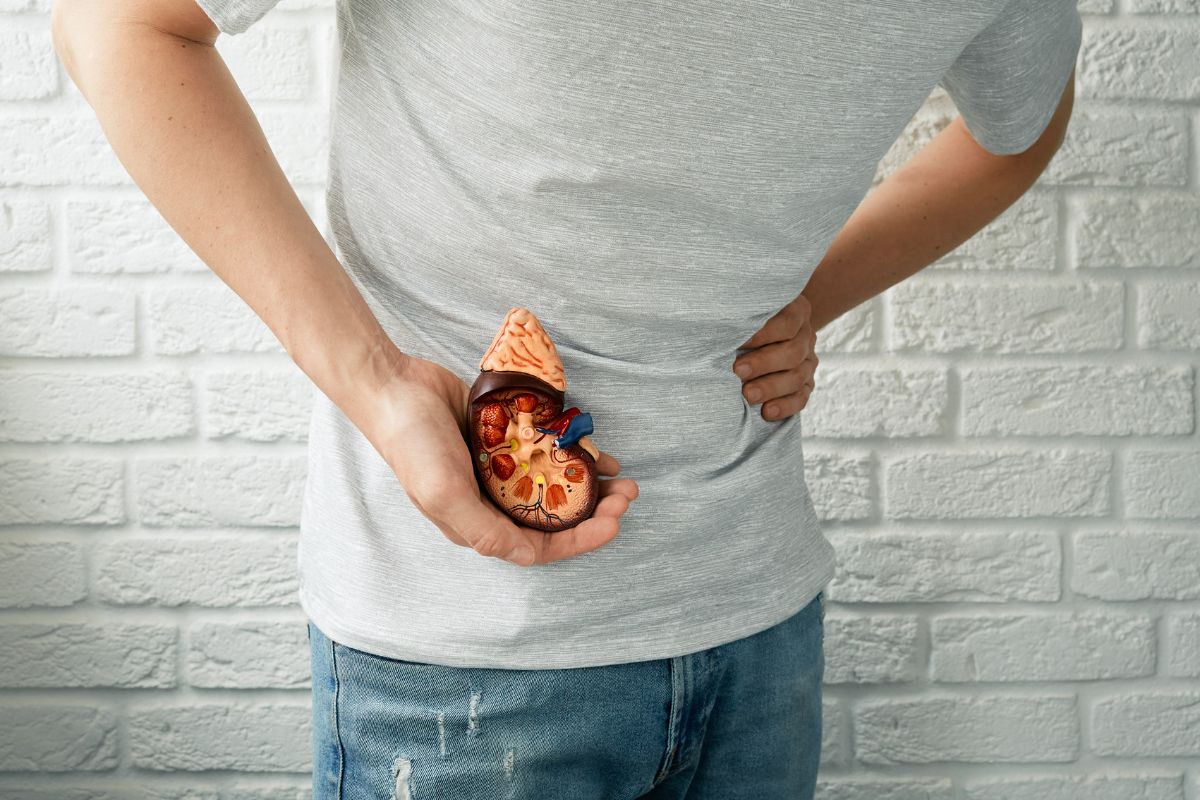
Have you ever felt a sudden, sharp pain in your back or side that just wouldn’t go away? It could be a kidney stone. Kidney stones, also called renal calculi or nephrolithiasis, are hard lumps that form inside your kidneys. They are made of minerals and salts. If they are not treated, they can hurt your kidneys and cause a lot of pain.
This guide will explain what kidney stones are, why they form, how to spot them early, and the best ways to treat and prevent them.
What Are Kidney Stones?
Kidney stones are hard, crystal-like lumps that form inside your kidneys. They can be as small as a grain of sand, or as large as a golf ball in rare cases. Small stones often pass out of your body on their own. Larger stones can block the flow of urine. This can cause serious pain and problems.
Your kidneys clean your blood and make urine to flush out waste. But if certain substances in your urine become too concentrated, they can stick together and form a stone.
Types of Kidney Stones
Not all kidney stones are the same. Doctors group them by what they are made of. Knowing the type helps your doctor pick the best kidney stone treatment and prevention plan for you.
- Calcium stones (calcium oxalate stones): These are the most common type of kidney stone, making up most cases doctors see. They usually form when calcium combines with oxalate, a substance found in many everyday foods like spinach, nuts, and chocolate. Some calcium stones can also form from calcium phosphate instead of oxalate. Eating fewer high-oxalate foods, and staying well hydrated, can help lower your risk of this specific type.
- Uric acid stones: These form when your urine stays too acidic for too long, which allows uric acid to crystallize instead of staying dissolved. They’re closely linked to gout, diabetes, obesity, and diets high in purines — a substance found in red meat, organ meats, and shellfish. People who don’t drink enough water, or who lose a lot of fluid through chronic diarrhea, are also more likely to develop this type.
- Struvite stones: These form as a direct result of certain urinary tract infections, particularly ones caused by bacteria that make your urine less acidic. What makes struvite stones especially concerning is how quickly they can grow sometimes reaching a large size in just weeks with very little warning. Because they’re tied to infection, treating the underlying UTI is a key part of preventing them from coming back.
- Cystine stones: These are rare, affecting a small number of people worldwide. They happen because of an inherited condition called cystinuria, which causes the kidneys to leak too much cystine — a naturally occurring amino acid — into the urine. Since this is a genetic condition, cystine stones tend to run in families and often start appearing earlier in life than other stone types.
- Mixed stones: Some kidney stones aren’t made of just one substance — they contain a combination, most often calcium along with uric acid. Mixed stones are more common in people who’ve had kidney stones more than once, and they can sometimes be trickier to prevent, since more than one underlying cause needs to be addressed at the same time.
Knowing exactly which type of stone you have matters more than it might seem it changes what your doctor recommends for both treatment and long-term prevention, since a diet that helps with one stone type can sometimes do very little for another.
What Causes Kidney Stones?
There is no single kidney stone cause. Usually, it’s a mix of habits, health conditions, and genetics. Here are the biggest risk factors:
- Not drinking enough water: This is one of the single biggest, and most fixable, causes. When you don’t drink enough fluids, your body makes less urine, and that smaller amount of urine carries the same amount of waste so everything becomes more concentrated. Over time, that concentration makes it much easier for tiny mineral crystals to find each other and stick together into a stone. This is why doctors so often start with one simple piece of advice: drink more water.
- Your diet: What you eat plays a bigger role than most people realize. A diet high in salt makes your kidneys release more calcium into your urine, directly feeding calcium stone formation. Too much animal protein raises uric acid levels. And oxalate-rich foods, like spinach, nuts, and chocolate, add more raw material for calcium oxalate stones to form, especially in people who are already prone to them.
- Health conditions: Certain conditions change your body chemistry in ways that make stones more likely. Diabetes and obesity both alter how your kidneys handle calcium and other minerals. Gout raises uric acid levels in the blood, which can spill over into urine. Hyperparathyroidism a condition where small glands in your neck make too much of a hormone that controls calcium can push calcium levels up in both your blood and urine, directly feeding stone formation.
- Family history: Genetics matter here more than people expect. If a parent or sibling has had kidney stones, your own risk goes up, even if your diet and habits look completely normal. This is partly because some families share similar patterns in how their kidneys handle calcium, oxalate, or uric acid.
- Urinary tract infections: Certain bacteria that cause UTIs change the chemistry of your urine, making it less acidic. This shift creates the perfect environment for struvite stones to form, sometimes quite quickly.
- Certain medicines: A handful of medications, including some diuretics (water pills), antacids containing calcium, and certain anti-seizure drugs, can tip the balance of minerals in your urine over time, especially with long-term use.
- Structural problems: If your urinary tract has an unusual shape or a narrowing somewhere along the way, urine can pool instead of flowing freely. That standing urine gives minerals more time to crystallize and stick together.
- A history of kidney stones: Once you’ve formed one stone, your kidneys have already shown they’re prone to it under your current habits and body chemistry — which is exactly why the same conditions can easily produce another stone if nothing changes.
It’s also worth knowing that kidney stones are most common in people between 20 and 50 years old, and they tend to affect men slightly more often than women, though this gap is shrinking as diets and lifestyles change. In hotter climates, where people lose more fluid through sweat, dehydration becomes an even bigger driver of stone formation, which is part of why some regions see noticeably higher rates than others.
Symptoms of Kidney Stones
A small stone might cause no pain at all as it passes. But once a stone starts moving into the tube that connects your kidney to your bladder (called the ureter), it can cause a type of severe pain known as renal colic. This pain often comes in waves, and it can be intense.
Common kidney stone symptoms include:
- Sharp pain in your lower back, side, or abdomen
- Painful urination, or a burning feeling when you pee
- Blood in the urine (called hematuria) — your urine might look pink, red, or brown
- Frequent urination, or feeling like you need to go often
- Nausea or vomiting
- Pain that spreads to the groin as the stone moves down the urinary tract
- Cloudy or foul-smelling urine, especially if an infection is also present
- Fever and chills, which can be a sign of infection
- Trouble passing urine, if a larger stone is blocking the flow
If you notice sudden, severe pain along with fever, chills, or trouble urinating, don’t wait it out this needs medical care right away.
How Are Kidney Stones Diagnosed?
Your doctor will use a mix of tools to find out if you have a kidney stone, and what type it is:
- Urine tests: A basic urine test can quickly reveal blood, signs of infection, or crystals that hint at stone formation. In some cases, your doctor may ask for a 24-hour urine collection, where you save all your urine for a full day. This gives a much more detailed picture of exactly which substances are running high in your body, which is especially useful if you keep getting stones.
- Blood tests: These measure how well your kidneys are working, and check levels of calcium, uric acid, and other minerals in your blood. High calcium in the blood, for example, can point toward a condition like hyperparathyroidism as the real cause behind recurring stones.
- CT scan (non-contrast): This is generally considered the most accurate test available for kidney stones. It can find even tiny stones that other tests might miss, and it shows exactly where the stone is sitting and how large it actually is, which helps your doctor decide on the right next step.
- Ultrasound: This is often the very first test doctors reach for, since it’s safe, fast, doesn’t use any radiation, and can be done in almost any clinic. It’s especially useful for people who need repeated monitoring over time, or for those who should avoid radiation exposure, such as pregnant women.
- X-ray (KUB scan): This stands for Kidney, Ureter, and Bladder, and it captures an image of your entire urinary tract in one shot. It’s useful and low-cost, but it doesn’t catch every stone — some types, like uric acid stones, often don’t show up clearly on a plain X-ray the way calcium stones do.
- Stone analysis: If you do pass a stone, your doctor may ask you to strain your urine and save it. Sending that stone to a lab tells them exactly what it’s made of — which is genuinely one of the most useful pieces of information for figuring out how to stop the next one from forming.
The Stages of Passing a Kidney Stone
Passing a kidney stone doesn’t happen all at once it usually moves through a few stages over days or weeks:
- Stage 1: The stone starts to move inside the kidney. This can cause waves of pain in your back or side.
- Stage 2: The stone enters the ureter, the tube connecting your kidney to your bladder. This stage often brings the most intense pain and pressure.
- Stage 3: The stone reaches your bladder. Pain usually eases here, but you may feel more pressure and a stronger urge to urinate.
- Stage 4: The stone reaches the urethra, the final tube, and passes out of your body with urine.
How long does it take to pass a kidney stone? Small stones (under 5mm) often pass on their own within 1 to 2 weeks. Larger stones can take 2 to 3 weeks or longer. If a stone hasn’t passed within about 4 weeks, or if it’s causing a blockage, infection, or severe pain, your doctor will usually recommend treatment to remove it.
Kidney Stone Treatment Options
The right kidney stone treatment depends on the size, type, and location of your stone, as well as your symptoms.
Treatment Without Surgery
Many small stones don’t need surgery at all. This is often called conservative management, and it usually includes:
- Drinking plenty of water to help flush the stone out naturally
- Pain relief medication, such as over-the-counter or prescription options
- Alpha blockers, a type of medication that relaxes the muscles in your ureter, making it easier for the stone to pass
- Regular monitoring with imaging and urine tests, to track the stone’s progress
Procedures for Larger or Stuck Stones
If a stone is too large to pass on its own, or if it’s causing serious problems, your doctor may recommend a procedure:
- Extracorporeal Shock Wave Lithotripsy (ESWL): This uses sound waves from outside your body to break the stone into smaller pieces that can pass more easily. It’s non-invasive and usually done with light anesthesia.
- Ureteroscopy (URS): A thin scope is passed through the urethra and bladder up into the ureter. The stone is removed, or broken up with a laser, then taken out.
- Percutaneous Nephrolithotomy (PCNL): This is used for larger or more complex stones. A small cut is made in your back to reach the kidney directly and remove the stone.
- Kidney stone laser treatment: Laser energy is often used during ureteroscopy to break up bigger stones into smaller, more passable pieces.
Easing Pain While You Wait
If your doctor says it’s safe to let a small stone pass on its own, a few things can help you feel more comfortable in the meantime:
- Take pain relievers as recommended by your doctor
- Apply a warm heating pad to your back or side
- Take a warm bath to help ease muscle tension
- Keep drinking water steadily throughout the day
How to Prevent Kidney Stones
The good news is that how to prevent kidney stones often comes down to a few consistent daily habits:
- Drink plenty of water. Aim to drink enough fluid to produce at least 2 to 2.5 liters of urine a day. This dilutes your urine and makes it harder for stones to form.
- Cut back on salt. A high-sodium diet raises the amount of calcium in your urine, which can lead to stones.
- Watch your animal protein intake. Eating too much meat, poultry, and seafood can raise uric acid levels and your risk of stones.
- Moderate oxalate-rich foods, if you’re prone to calcium oxalate stones. This includes spinach, beets, nuts, and chocolate.
- Get enough calcium from food, not less. It sounds surprising, but eating too little calcium can actually raise your risk of stones — your body needs a balanced amount from your diet.
- Eat more fruits and vegetables. These add potassium and citrate to your diet, both of which can help prevent stones from forming.
- Maintain a healthy weight, since obesity is linked to a higher risk of stone formation.
Kidney Stone Diet: Foods to Watch
If you’ve had a kidney stone before, or you’re at higher risk, it can help to be mindful of certain foods:
- High-oxalate foods: spinach, beets, nuts, and chocolate
- High-sodium foods: processed meats, fast food, salty snacks, and frozen meals
- High-animal-protein foods, in large amounts: beef, pork, organ meats, and shellfish
- Sugary drinks and sodas, which have been linked to a higher risk of stones
A doctor or dietitian can help tailor this list based on the exact type of stone you’ve had.
Possible Complications of Untreated Kidney Stones
If a kidney stone is left untreated, it can lead to more serious problems, including:
- Urinary tract obstruction: When a stone gets stuck and blocks the normal flow of urine, pressure builds up behind it inside the kidney, causing it to swell — a condition called hydronephrosis. Left unchecked, this ongoing pressure can quietly damage kidney tissue, sometimes without much obvious pain, which is exactly why blockages need timely medical attention.
- Urinary tract infections: A stuck stone gives bacteria a place to gather and multiply, since urine can’t flow through normally to flush them out. This can lead to repeated or stubborn infections that keep coming back until the stone itself is dealt with.
- Sepsis: This is the most serious possible outcome when an infection tied to a blocked stone spreads beyond the kidney and into the bloodstream, it can become a life-threatening, whole-body emergency that needs immediate hospital treatment.
- Chronic kidney disease: Kidneys are remarkably resilient, but repeated blockages or infections, especially if they go untreated again and again, can gradually wear down kidney function over months or years, sometimes permanently.
- Bleeding: As a stone moves through the urinary tract, its rough edges can scrape against the delicate lining, causing bleeding that shows up as blood in the urine. This is usually not dangerous on its own, but it’s still worth mentioning to your doctor.
Can Kidney Stones Come Back?
Yes, kidney stone recurrence is common. If you’ve had one stone, your risk of getting another rises significantly over the following years. The good news is that identifying what type of stone you had, and making the right diet and lifestyle changes, can meaningfully lower your risk of it happening again. People with recurrent kidney stones usually benefit from regular check-ups and a personalized prevention plan from their doctor.
Common Myths About Kidney Stones
Myth: Only men get kidney stones. Fact: Men have a slightly higher risk, but women get kidney stones too, and rates in women have been rising.
Myth: Drinking beer helps pass a kidney stone.
Fact: There’s no real evidence for this, and alcohol actually causes dehydration, which can make things worse.
Myth: Once you get a kidney stone, you’ll always get more.
Fact: With the right hydration, diet, and medical follow-up, many people successfully lower their risk of recurrence.
Myth: All kidney stones need surgery.
Fact: Most small stones pass on their own with fluids and pain relief. Surgery is only needed for larger or complicated stones.
When to See a Doctor for Kidney Stones
Book a consultation with a doctor if you experience:
- Severe pain in your back, side, or abdomen that doesn’t ease up
- Blood in your urine
- Fever or chills, which could mean an infection
- Nausea or vomiting along with pain
- Trouble urinating, or being unable to urinate at all
- Kidney stones that keep coming back
If you have any of these signs, don’t wait getting checked early can prevent serious complications and protect your kidney health long term.
How HealthPil Can Help
HealthPil connects you with experienced nephrologists and urologists who can help diagnose kidney stones, guide you through treatment, and build a personalized plan to prevent them from coming back. Book an online consultation today to get expert guidance for your kidney health.
Summary
Kidney stones are hard mineral deposits that form inside the kidneys, and they can be made of calcium, uric acid, struvite, or cystine, depending on the underlying cause. They often develop from a mix of dehydration, diet, family history, and certain health conditions like diabetes, gout, or obesity. Common symptoms include sharp back or side pain, blood in the urine, and painful or frequent urination.
Small stones usually pass on their own with fluids and pain relief, while larger or stuck stones may need procedures like ESWL, ureteroscopy, or PCNL. Staying well hydrated, eating a balanced diet, and managing related health conditions are the most effective ways to prevent kidney stones and reduce the risk of them coming back.
FAQs
1. What are the common symptoms of kidney stones?
Common kidney stone symptoms include severe pain in the back, side, lower abdomen, or groin, painful urination, frequent urination, blood in the urine, nausea, and vomiting.
2. How long does it take to pass a kidney stone?
The time required to pass a kidney stone varies depending on its size, location, and the individual’s condition. Smaller stones are generally more likely to pass naturally, while larger stones may require medical treatment
3. Can kidney stones be treated without surgery?
Some small kidney stones may pass naturally with adequate fluid intake and appropriate medical management. Larger or obstructing stones may require procedures such as ESWL, ureteroscopy, or PCNL.
4. When should I see a doctor for kidney stones?
Seek medical attention if you experience severe or persistent pain, blood in the urine, difficulty passing urine, fever, chills, or repeated kidney stone symptoms. Prompt medical evaluation is particularly important when a urinary obstruction or infection is suspected.
5. Can kidney stones be treated without surgery?
Some small kidney stones may pass naturally with adequate fluid intake and appropriate medical management. Larger or obstructing stones may require procedures such as ESWL, ureteroscopy, or PCNL.
References
- Moe OW. Kidney Stones. StatPearls Publishing. Available at:
NCBI Bookshelf - Kidney Stones – Clinical Review. Available at:
PubMed
Disclaimer:
This information is for educational purposes and should not replace professional medical advice. Always consult your healthcare provider for personalised recommendations.

Read our editorial policy