

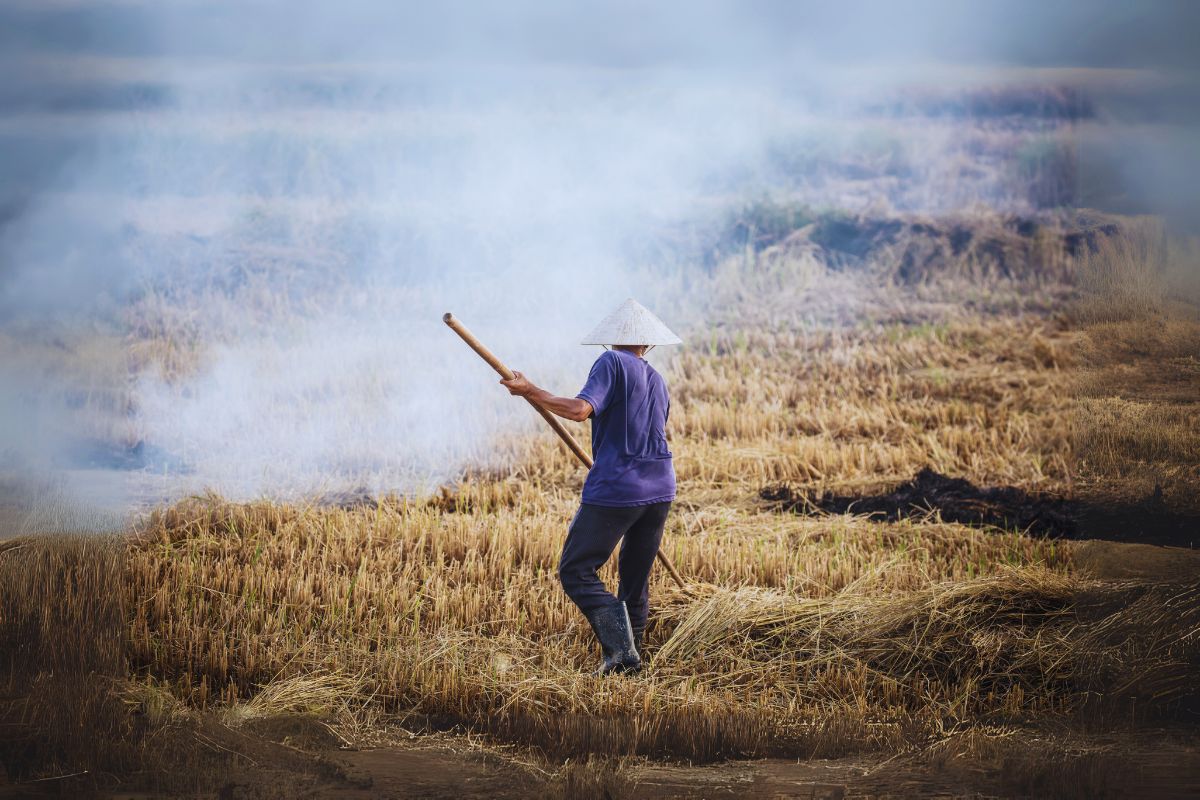
fEvery year after the paddy harvest, thousands of farmers in North India burn leftover crop waste. This is called crop burning, or stubble burning. It helps clear fields fast for the next crop. But it also fills the air with harmful smoke. This smoke makes air pollution worse. It also raises the risk of breathing problems, heart problems, and other health issues.
Why Does Crop Burning Happen?
Crop burning is common in North India. It happens most in Punjab and Haryana. After farmers harvest paddy, they have very little time before they must plant wheat. Burning the leftover crop is the fastest and cheapest way to clear the field.
There are other reasons too. Paddy stubble takes about six weeks to break down on its own. Farmers simply don’t have that much time. The stubble also has very little use as animal feed, since it has low nutrition and high silica content. On top of that, burning is one of the few ways farmers know to kill weeds in the field before the next crop.
It’s worth knowing that crop burning is actually against the law. It’s banned under Section 188 of the Indian Penal Code and the Air Act of 1981. Farmers can face fines for it. But because the practice is so cheap and fast, many farmers still choose it, especially when other options feel too expensive or hard to access.
Harmful Pollutants Released During Crop Burning
Crop burning sends many harmful substances into the air, including:
- PM2.5 and PM10 (fine particles that are too small to see)
- Carbon monoxide (CO)
- Nitrogen dioxide (NO₂)
- Sulphur dioxide (SO₂)
- Volatile Organic Compounds (VOCs)
- Ground-level ozone (O₃)
- Black carbon
These pollutants don’t stay in one place. Wind can carry them far away. That’s why both village areas and big cities like Delhi feel the effects.
Health Risks Linked to Crop Burning
The smoke from crop burning is full of harmful chemicals. Research by Sharma et al. (2021), published in Environmental Research, links this smoke directly to breathing problems, heart issues, and worse asthma symptoms.
Who Is Most at Risk?
Some people are affected more than others by crop burning smoke. This includes:
- Infants and young children
- Pregnant women
- Older adults
- People with asthma or COPD
- People with heart disease
- People with weak immunity
- Outdoor workers and farmers
These groups should be extra careful when the air is bad.
The Numbers Behind Crop Burning
The Ministry of Earth Sciences says that in October 2020, about 40% of Delhi’s air pollution came from stubble burning alone. During that time, hospital visits for breathing problems went up by 20%. The Central Pollution Control Board (CPCB) also reports a sharp rise in respiratory illness during peak burning season. Crop burning is one of the biggest seasonal causes of bad air in North India, mostly during October and November.
What Crop Burning Does to Your Body
1. Respiratory Health
Breathing in fine particles from burning crops can lead to asthma, bronchitis, and chronic obstructive pulmonary disease (COPD). A 2022 study in the International Journal of Environmental Health Research found that people exposed to high PM2.5 levels are far more likely to develop breathing problems.
2. Heart Health
Breathing polluted air for a long time can hurt your heart too. A 2023 study in Circulation found that PM2.5 exposure raises the risk of high blood pressure, heart attacks, and strokes. The pollution causes inflammation in the body, which can damage blood vessels over time.
3. Brain and Nervous System Effects
Children’s brains are especially sensitive to pollution. A 2023 study by Calderón-Garcidueñas and team, published in Environmental Health Perspectives, links crop-burning pollution to cognitive problems and unusual brain development in children. Breathing in harmful particles can trigger inflammation in the brain, which may add to several disorders over time.
4. Skin Health
Pollution doesn’t just affect the lungs. A 2022 paper in the American Journal of Dermatology found that fine particles can also irritate the skin, leading to conditions like dermatitis and eczema. These particles can pass through the skin barrier and cause redness and swelling.
5. Damage to Soil and Farmland
Crop burning doesn’t just hurt people it hurts the land too. Burning one tonne of stubble destroys around 5.5 kg of nitrogen, 2.3 kg of phosphorus, 25 kg of potassium, and 1.2 kg of sulfur from the soil. It also raises the soil’s temperature, killing helpful microorganisms that keep the land fertile. Ironically, this means farmers often have to spend more money later to restore soil health making burning less “cost-effective” than it first appears.
Symptoms: Red Flags to Watch For
Watch for these signs if you’ve been exposed to crop-burning smoke:
- Breathing: shortness of breath, wheezing, ongoing cough, or chest pain
- Heart: chest pain, a racing heartbeat, or unusual tiredness, especially if you already have heart trouble
- Brain and focus: trouble concentrating, confusion, or memory problems
- Skin: rashes, irritation, or new skin problems
- Eyes and throat: burning eyes, watery eyes, or a sore, scratchy throat that doesn’t go away
Long-Term Health Effects
Breathing in crop-burning smoke over many years may raise your risk of:
- Chronic asthma
- Chronic bronchitis
- COPD
- Weaker lung function
- High blood pressure
- Heart attack and stroke
- Lung cancer
- Weaker immunity
- Pregnancy complications
How to Protect Yourself
- Stay indoors when air quality is poor. Keep windows closed, especially after Diwali, when smog tends to peak alongside crop burning season.
- Use air purifiers. HEPA filters can meaningfully cut down indoor pollution. Clean and maintain them regularly so they keep working well.
- Wear a proper mask outdoors. A mask that filters fine particles helps protect your lungs when you must go out.
- Support cleaner farming methods. Backing local efforts that help farmers move away from burning — and using technology to manage crop waste — helps everyone breathe easier over time.
How Can Crop Burning Be Reduced?
Burning is fast, but there are real alternatives that protect both health and soil:
- Happy Seeder and Super Seeder machines — these machines cut and lift the stubble, plant the next crop, and lay the leftover straw down as natural mulch, all in one pass
- Pusa Decomposer — a low-cost bio-decomposer capsule, developed by IARI Pusa, that’s sprayed on fields to break down stubble naturally in about three weeks, without any burning at all
- Converting stubble into compost or biofuel — turning waste into something genuinely useful
- Mulching crop residue instead of setting it on fire
- Government-backed residue management programs, including subsidised machines and custom hiring centres for smaller farmers
- Switching to less water- and residue-heavy crops, supported in some states through direct farmer incentives
These methods protect the environment, improve long-term soil quality, and in many cases save farmers money that would otherwise go toward restoring damaged soil.
When Should You Book an Online Consultation?
Book an online consultation if you notice:
- A cough that lasts more than two weeks
- Shortness of breath or wheezing
- Chest pain or a tight feeling in your chest
- Asthma symptoms getting worse
- Trouble breathing after being around smoke
- Eye or throat irritation that won’t go away
HealthPil lets you speak with experienced pulmonologists and general physicians online, so you can get expert advice and a personal treatment plan right from home.
Summary
Crop burning is a major seasonal source of air pollution in North India, especially during October and November. It releases harmful pollutants such as PM2.5, carbon monoxide, and nitrogen dioxide, increasing the risk of respiratory diseases, heart problems, skin irritation, and other health complications. Children, pregnant women, older adults, and people with existing lung or heart conditions are most vulnerable. Taking preventive measures, adopting sustainable farming alternatives, and seeking timely medical care can help reduce health risks.
FAQ
1. Why do farmers burn crop residue?
Farmers often burn crop residue because it is the quickest and least expensive way to clear fields before planting the next crop.
2. How does crop burning affect health?
Crop burning releases harmful pollutants that can increase the risk of asthma, bronchitis, COPD, heart disease, skin irritation, and other pollution-related health problems.
3. Who is most affected by crop-burning smoke?
Children, pregnant women, older adults, people with asthma or COPD, heart disease patients, and outdoor workers are at the highest risk.
4. How can I protect myself from crop-burning pollution?
Stay indoors when air quality is poor, use a HEPA air purifier, wear a well-fitted mask outdoors, and monitor the Air Quality Index (AQI)
5. When should I book an online consultation?
Book an online consultation if you experience persistent cough, breathing difficulty, wheezing, chest tightness, worsening asthma symptoms, or ongoing eye and throat irritation after exposure to crop-burning smoke.
Disclaimer:
This article is for informational purposes only and should not be considered medical advice. Always consult a healthcare professional for a proper diagnosis and personalised treatment plan.

Read our editorial policy