

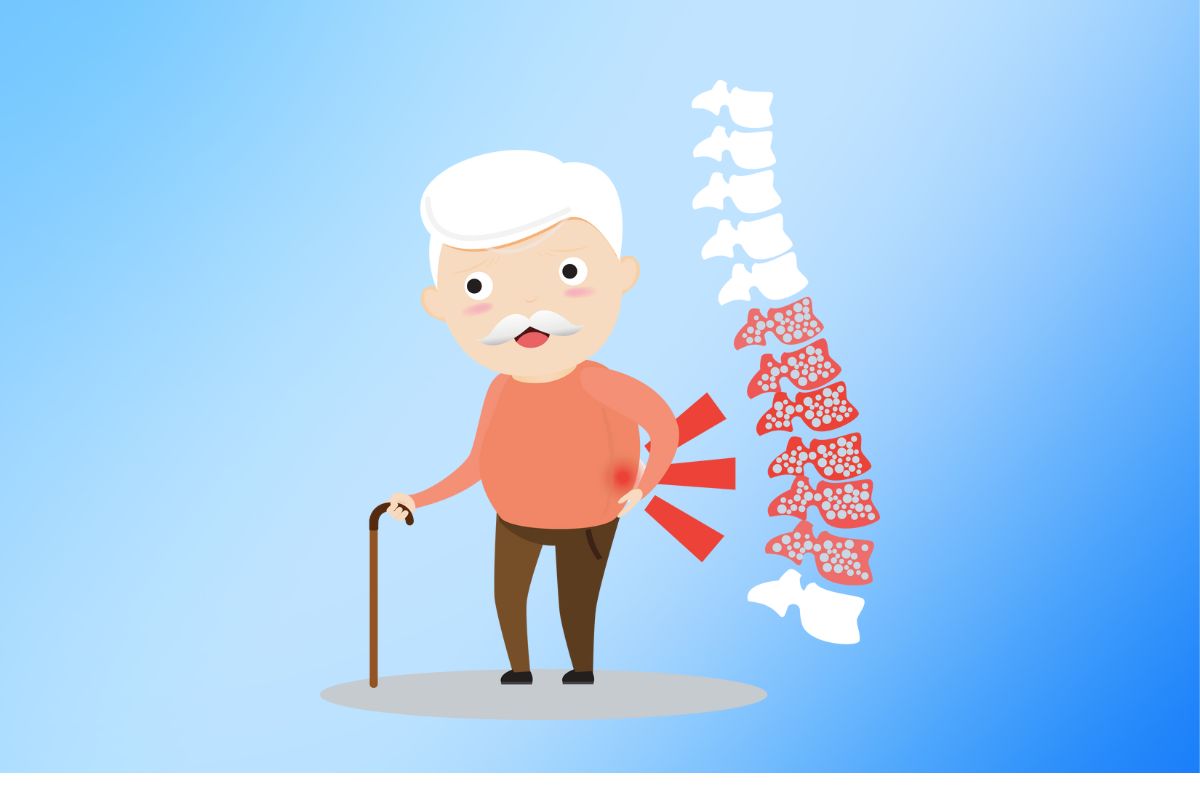
Osteoporosis has earned the nickname “silent disease” for a reason it doesn’t announce itself. There’s no ache, no warning cramp, no early red flag most people notice. Often, the first sign someone gets is a fracture from something as small as a sneeze, a stumble, or lifting a grocery bag. By then, bone density has already been quietly eroding for years.
It’s most common in older adults, especially postmenopausal women, but osteoporosis isn’t exclusively an “old age” or “women’s” condition. Men develop it too, and younger people with certain medical conditions or medication histories aren’t immune either. The good news: with the right screening, diet, and lifestyle shifts, you can catch it early and meaningfully lower your fracture risk.
What Is Osteoporosis?
Osteoporosis literally means “porous bones.” Your skeleton isn’t static it’s living tissue that’s constantly being broken down and rebuilt in a cycle called bone remodeling. Cells called osteoclasts clear out old bone, while osteoblasts lay down new bone to replace it.
Up until your late 20s, bone formation outpaces bone loss, so your skeleton keeps getting denser. Around age 30, you hit peak bone mass — the strongest your bones will ever be. After that, the balance gradually tips: breakdown starts outpacing formation. In osteoporosis, this shift becomes extreme, leaving bones porous, brittle, and prone to fracture, most often in the spine, hip, and wrist.
Globally, osteoporosis affects an estimated 200+ million people, and roughly 1 in 3 women and 1 in 5 men over 50 will experience an osteoporosis-related fracture in their lifetime numbers that make routine bone density testing far more relevant than most people realize.
Osteoporosis vs. Osteopenia What’s the Difference?
This is a distinction most people never hear until a doctor mentions it, so it’s worth clearing up early.
Bone density is measured using a T-score, which compares your bone density to that of a healthy young adult of the same sex:
- Normal bone density: T-score of -1.0 or above
- Osteopenia (low bone mass): T-score between -1.0 and -2.5
- Osteoporosis: T-score of -2.5 or below
Osteopenia is essentially the warning stage before osteoporosis bone loss has started, but hasn’t crossed the diagnostic threshold yet. It doesn’t always need medication, but if it’s paired with other risk factors like smoking, steroid use, or a family history of fractures, doctors may still recommend treatment to prevent progression. Catching things at the osteopenia stage is one of the best windows for prevention.
What Causes Osteoporosis?
At its core, osteoporosis happens when bone resorption outpaces bone formation. But several risk factors some you can control, some you can’t determine how fast that imbalance develops.
Non-Modifiable Risk Factors
Age — Risk climbs steadily after 50, as the remodeling process naturally slows down.
Gender — Women face a much higher risk than men, largely because estrogen a hormone that protects bone density — drops sharply during menopause. This is why postmenopausal osteoporosis is such a heavily studied and common form of the condition.
Family history — A parent or sibling with osteoporosis or a history of fractures raises your own risk, partly through genetics and partly through shared peak bone density potential.
Ethnicity — Caucasian and Asian women carry a higher statistical risk, though people of every ethnic background — including African American and Hispanic populations can and do develop osteoporosis.
Body frame and weight — People under roughly 58 kg (128 lbs) or with a naturally small, thin frame tend to have less bone mass to begin with, leaving less of a buffer as bone loss progresses.
Medical Conditions Linked to Bone Loss
A number of health conditions interfere with bone metabolism or calcium absorption, quietly accelerating bone loss:
- Hyperthyroidism and hyperparathyroidism
- Rheumatoid arthritis
- Celiac disease and other malabsorption disorders
- Chronic kidney disease
- Cushing syndrome
- Type 1 diabetes
- Inflammatory bowel disease
- Multiple myeloma
- Anorexia and other eating disorders
- Hormonal disorders causing low estrogen or testosterone
If you’re living with any of these, it’s worth asking your doctor whether a bone density test should be part of your regular checkups.
Medications That May Weaken Bones
Long-term use of certain drugs can chip away at bone density over time:
- Corticosteroids (like prednisone)
- Anti-seizure medications
- Chemotherapy drugs
- Proton pump inhibitors (PPIs)
- Blood thinners such as heparin
- Certain antidepressants
- Aromatase inhibitors used in breast cancer treatment
Never stop a prescribed medication on your own but do talk to your doctor about protecting your bone health if you’re on any of these long-term.
Modifiable Risk Factors
Diet — Low calcium and vitamin D intake directly undermines bone strength, since your body needs vitamin D to actually absorb the calcium you’re eating.
Physical inactivity — Bone responds to load. Skip weight-bearing movement for long enough, and bone density starts to drop.
Smoking — Smoking lowers estrogen levels and blocks calcium absorption, a double hit to bone health.
Alcohol — Heavy drinking interferes with calcium absorption and slows down new bone formation.
Osteoporosis Symptoms: Early vs. Late
Here’s the tricky part — in its early stages, osteoporosis usually causes zero noticeable symptoms. There’s no pain signaling that your bones are thinning. A few subtle clues sometimes show up, though they’re not diagnostic on their own:
- Weaker grip strength, which some research links to lower bone mineral density, especially in postmenopausal women
- Brittle or weak nails, sometimes reflecting broader mineral deficiency
- Receding gums or looser teeth, since bone loss and periodontal disease share some risk factors like vitamin D deficiency and smoking
As the disease advances, more obvious signs of weak bones start to appear:
- Fractures from minimal trauma a fall that wouldn’t normally cause harm, or a fracture with no fall at all
- Persistent back pain, often from small spinal compression fractures
- Loss of height over time, as weakened vertebrae gradually compress
- Stooped or hunched posture (sometimes called a “dowager’s hump”), caused by spinal changes
- Sudden fractures triggered by everyday movements like coughing, bending, or lifting
If you notice any of these especially a fracture that seems disproportionate to the injury it’s time to talk to a doctor.
Complications of Untreated Osteoporosis
Left unmanaged, osteoporosis can lead to serious, life-altering complications:
- Fragility fractures from minor falls
- Recurrent fractures
- Hip fractures that often require surgery
- Spinal compression fractures
- Chronic back pain
- Permanent stooped posture
- Loss of independence and mobility
- A rare jaw complication (osteonecrosis of the jaw) linked to some osteoporosis medications, particularly relevant if you’re planning dental surgery always tell your dentist about any osteoporosis treatment history
- Increased mortality risk following severe hip fractures in older adults
Hip and spine fractures are considered the most serious, since they’re the ones most likely to cause lasting disability.
How Is Osteoporosis Diagnosed?
The standard diagnostic tool is a DEXA scan (Dual-Energy X-ray Absorptiometry) a quick, painless, low-radiation scan that measures bone mineral density, usually at the hip and spine.
A DEXA scan can:
- Detect bone loss before a fracture happens
- Distinguish between normal bone density, osteopenia, and osteoporosis
- Estimate your 10-year fracture risk
- Track how well treatment is working over time
Doctors generally recommend osteoporosis screening for women 65 and older, and earlier for anyone with major risk factors — early menopause, long-term steroid use, a strong family history, or a previous fragility fracture.
Can Osteoporosis Be Reversed?
Not completely but it can absolutely be slowed, and in many cases, bone density can improve meaningfully with the right combination of treatment and lifestyle change. The goal of treatment isn’t to “cure” osteoporosis; it’s to stop further bone loss and cut your fracture risk as much as possible.
Osteoporosis Treatment Options
Treatment is usually built around a few pillars, often used together:
Medications
- Bisphosphonates (alendronate, risedronate) the most commonly prescribed first-line drugs, which slow bone breakdown
- Denosumab a monoclonal antibody injection given twice a year to help protect bone density
- Teriparatide a synthetic form of parathyroid hormone (PTH) used in more severe cases to actively stimulate new bone growth
- Raloxifene (a SERM) mimics some of estrogen’s bone-protective effects
- Calcitonin a hormone-based option that helps slow bone loss
Hormone Replacement Therapy (HRT)
Sometimes used short-term in postmenopausal women to restore estrogen levels and slow bone loss, though it’s typically not a long-term solution due to other health risks.
Calcium and Vitamin D Supplements
Often prescribed alongside other treatments if dietary intake alone isn’t enough.
How to Prevent Osteoporosis
Prevention is realistic, and a lot of it comes down to consistency rather than intensity.
- Get enough calcium and vitamin D — aim for around 1,000 mg of calcium daily if you’re 19–50, and 1,200 mg if you’re over 50. Vitamin D targets usually fall between 800–1,000 IU daily, though your doctor may recommend more based on blood levels.
- Do weight-bearing and strength training exercises — walking, jogging, trekking, and resistance training all help build and maintain bone density. Balance-focused movement (like yoga or tai chi) also helps prevent the falls that lead to fractures in the first place.
- Limit alcohol — capping intake at one drink a day protects bone density over time.
- Quit smoking — one of the most impactful single changes you can make for long-term bone health.
- Prioritize fall prevention — secure loose rugs, improve lighting, and use grab bars where needed, especially for older adults living alone.
- Get screened if you’re at risk — a bone density test can catch bone loss years before a fracture forces the issue.
Bone-Friendly Foods to Add to Your Diet
- Milk, yogurt, and cheese
- Leafy greens like spinach and kale
- Broccoli
- Almonds and sesame seeds
- Tofu
- Salmon and sardines (with bones, for calcium and vitamin D)
- Eggs
- Fortified cereals
One thing worth flagging for anyone in a tropical, sun-rich country: vitamin D deficiency is still extremely common even in places that get plenty of sunlight. Indoor lifestyles, pollution, and cultural clothing habits often mean people aren’t getting the sun exposure their skin would suggest so don’t assume you’re covered on vitamin D just because you live somewhere sunny. A simple blood test settles the question either way.
How HealthPil Can Help
If you have symptoms or risk factors for osteoporosis, you can consult a qualified orthopedic specialist or endocrinologist through HealthPil for personalized evaluation, diagnosis, and treatment guidance.
When Should You See a Doctor?
You should consult a doctor if you experience:
- A fracture after a minor fall or injury
- Persistent or unexplained back pain
- Noticeable loss of height or a stooped posture
- Frequent fractures or weak bones
- Early menopause
- Long-term use of corticosteroids or other medications that weaken bones
- A family history of osteoporosis or hip fractures
- Vitamin D deficiency or other conditions that increase osteoporosis risk
Book an online consultation with an orthopedic specialist or endocrinologist through HealthPil if you notice any of these warning signs. Early diagnosis and timely treatment can help strengthen your bones and significantly reduce the risk of future fractures.
Summary
Osteoporosis is a silent bone disease that gradually weakens bones by reducing bone density, often without causing noticeable symptoms until a fracture occurs. Although it is more common in older adults and postmenopausal women, men and younger individuals with certain medical conditions or long-term medication use can also develop osteoporosis. The condition most commonly affects the spine, hips, and wrists, increasing the risk of fractures even after minor falls or everyday activities.
FAQ Section:
1. What is the first sign of osteoporosis?
Osteoporosis usually has no early symptoms. For many people, the first sign is a fracture after a minor fall or injury. Some may also notice back pain, loss of height, or a stooped posture.
2. Who is most at risk of developing osteoporosis?
Postmenopausal women, adults over 50, people with a family history of osteoporosis, smokers, individuals with low calcium or vitamin D intake, and those taking long-term corticosteroids have a higher risk.
3. How is osteoporosis diagnosed?
The most common test is a DEXA (Dual-Energy X-ray Absorptiometry) scan, which measures bone mineral density and helps detect osteoporosis before fractures occur
4. Can osteoporosis be prevented?
Yes. Eating a calcium- and vitamin D-rich diet, performing regular weight-bearing exercises, avoiding smoking and excessive alcohol, and getting screened if you’re at risk can help prevent osteoporosis.
5. Can osteoporosis be treated?
Yes. Although osteoporosis cannot always be completely reversed, medications, calcium and vitamin D supplements, regular exercise, and healthy lifestyle changes can slow bone loss, improve bone strength, and reduce the risk of fractures.
References
- Keen MU, Barnett MJ, Anastasopoulou C. Osteoporosis in Females. StatPearls Publishing. Available at:
NCBI Bookshelf - Morin SN, Leslie WD, Schousboe JT. Osteoporosis: A Review. Available at:
PubMed
Disclaimer:
The information provided in this article is for educational purposes only and is not intended to serve as medical advice. Always consult a qualified doctor for proper diagnosis and treatment. HealthPil can help in connecting you to specialists for your condition.

Read our editorial policy