

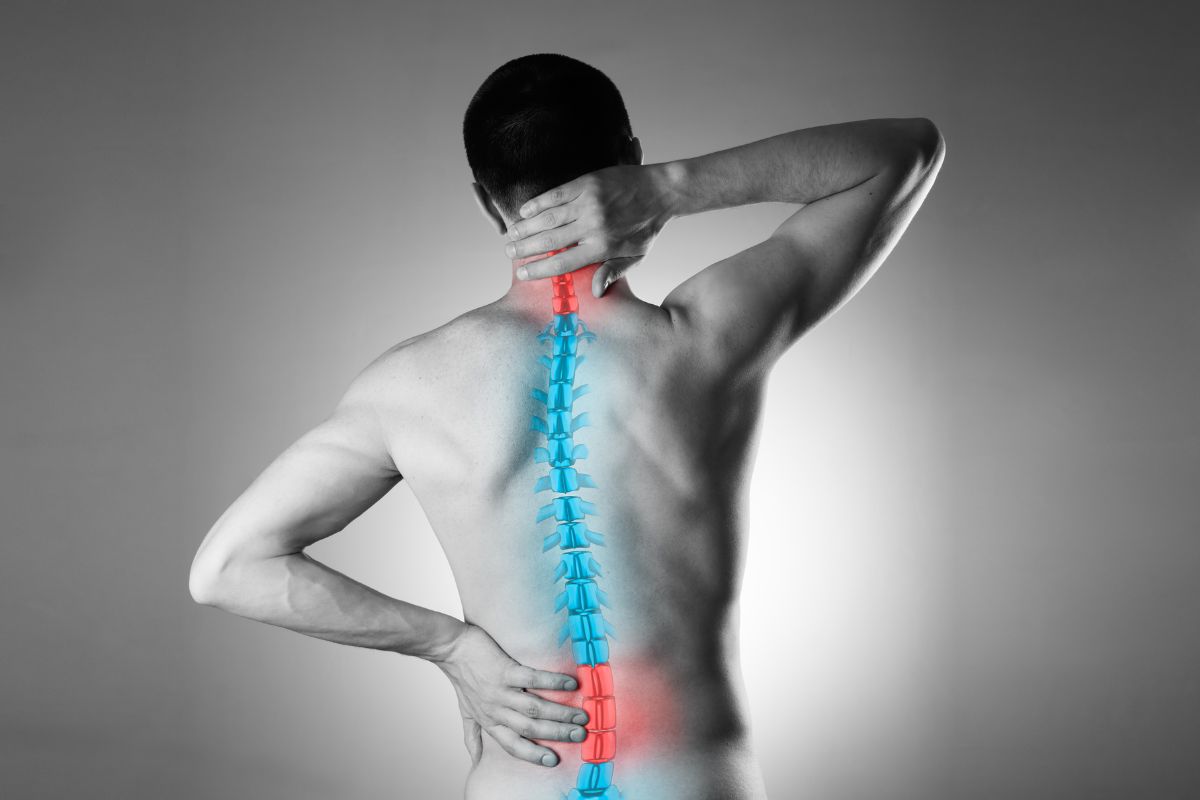
Scoliosis is a condition in which the spine curves sideways instead of running straight. Depending on the direction and degree of the curve, the spine may take on a C-shape or S-shape when viewed on an X-ray. It can develop at any age, but it is most commonly detected during childhood and the teenage years.
Most cases are mild and manageable, but early detection plays a key role in preventing the condition from getting worse. In this article, you will learn what scoliosis is, what causes it, how to recognise the early signs, how it is diagnosed, what the different severity levels mean, and what treatment options are available including exercises, bracing, and surgery.
What Is Scoliosis?
Scoliosis is defined as an abnormal lateral curvature of the spine. The degree of curvature can range from mild to severe and is measured using an angle called the Cobb angle, which is calculated from an X-ray. A curve of 10 degrees or more is generally required for a formal scoliosis diagnosis.
In India, scoliosis affects approximately 2–3% of children, making it important for parents and caregivers to recognise its early signs. A mild curve may cause no noticeable symptoms, while a more significant curve can affect posture, movement, and in some cases, breathing. This is why routine screening and regular monitoring are important.
Types of Scoliosis
Scoliosis is not a single condition it has several forms depending on its underlying cause:
Idiopathic scoliosis— The most common type. No clear cause is identified. It most often develops during adolescence and is sometimes called adolescent idiopathic scoliosis.
Congenital scoliosis— Present from birth, caused by a defect in how the spine formed during fetal development.
Neuromuscular scoliosis— Linked to nerve and muscle conditions such as cerebral palsy or muscular dystrophy.
Degenerative scoliosis— Develops in adults, typically due to age-related wear and breakdown of the spinal discs and joints. This is also referred to as adult scoliosis or de novo scoliosis.
Causes of Scoliosis
In most cases, the exact cause of scoliosis is not fully understood. However, several known factors can contribute to its development:
Genetics— Scoliosis tends to run in families, though it does not always follow a predictable pattern.
Nerve and muscle disorders— Conditions that affect how muscles support the spine can allow abnormal curvature to develop.
Birth defects— Abnormal vertebral formation before birth can result in congenital scoliosis.
Age-related spinal degeneration— As the spine ages, discs and joints weaken and may shift out of alignment.
One important point: poor posture, carrying a heavy school bag, or sleeping in a particular position does not cause scoliosis. These are widespread myths with no medical basis.
Risk Factors for Scoliosis
Certain factors can increase the likelihood of developing scoliosis:
Age— The condition is most commonly detected during growth spurts in early adolescence, typically between ages 10 and 15.
Sex— Girls are significantly more likely than boys to develop curves that worsen over time and require treatment.
Family history— Having a parent or sibling with scoliosis increases the risk.
Neuromuscular conditions— Conditions such as cerebral palsy or spina bifida are associated with a higher risk of scoliosis.
Spinal degeneration— In adults, gradual breakdown of spinal structures is a leading cause of adult-onset scoliosis.
Symptoms of Scoliosis
Scoliosis does not always cause pain, especially in its early stages. Knowing what to look for can help with early identification. Common symptoms include:
Uneven shoulders or hips— One shoulder blade may appear more prominent, or one hip may sit noticeably higher than the other. A teenager may notice that one shoulder looks raised when standing in front of a mirror.
A visible back bulge— As the spine rotates, the muscles or ribcage on one side may appear more raised than the other, particularly when bending forward.
Clothing fitting unevenly— Shirt hems or trouser legs may hang at different lengths because one hip or shoulder sits higher.
Changes in posture— The overall posture may appear tilted or asymmetrical even when the person is standing naturally.
Back pain— More common in adults with scoliosis than in children. It results from the muscles working harder to compensate for an uneven spine.
Reduced flexibility— Some people notice it becomes harder to bend or twist comfortably.
Many people with mild scoliosis experience no pain at all, which is why routine screening matters for early detection.
Scoliosis Severity: Mild, Moderate, and Severe
Understanding the degree of curvature helps determine the right course of treatment. Doctors measure the Cobb angle — the angle of spinal curvature on an X-ray to classify scoliosis severity.
Severity | Cobb Angle | What It Means |
Mild scoliosis | 10° – 24° | Usually monitored with regular check-ups. May not require active treatment. |
Moderate scoliosis | 25° – 44° | Bracing is commonly recommended for growing children to prevent the curve from worsening. |
Severe scoliosis | 45° and above | Surgery may be required, especially if the curve is affecting breathing or daily function. |
Knowing whether you have mild, moderate, or severe scoliosis helps you and your doctor choose the most appropriate treatment plan.
Scoliosis in Children vs Adults
While scoliosis can affect people of all ages, the experience and treatment approach differ between children and adults.
Scoliosis in children and teenagers:
Idiopathic scoliosis is the most common form in this age group. Because children are still growing, curves have a higher chance of progressing. Treatment often involves monitoring and bracing during the growth years. Surgery is reserved for significant curves that are advancing quickly. Early detection through school health checks or paediatric consultations is key.
Scoliosis in adults:
In adults, scoliosis either continues from a curve that was present since childhood or develops due to age-related spinal degeneration. Adult scoliosis may cause more noticeable back pain and stiffness than the childhood form. Treatment focuses on managing symptoms, maintaining mobility, and in some cases, surgical correction when the curve is severe or causing neurological problems.
Diagnosis of Scoliosis
If scoliosis is suspected, a doctor will carry out a physical examination and may recommend imaging tests to confirm the diagnosis.
- Physical examination — The doctor checks for visible asymmetry in the shoulders, waist, and hips.
- Adam’s Forward Bend Test — The patient bends forward at the waist while the doctor examines the spine from behind. Any asymmetry in the back — such as one side of the ribcage appearing higher becomes more visible in this position.
- X-ray — The standard imaging method used to measure the Cobb angle and confirm a scoliosis diagnosis.
- MRI scan — Recommended when an underlying spinal abnormality, nerve issue, or tumour is suspected as the cause of the curve.
- CT scan — Used when more detailed imaging of the bone structure is needed, often in preparation for surgery.
Scoliosis screening during routine childhood health checks particularly around the ages of 10 to 15 can help identify the condition before it progresses significantly.
Treatment for Scoliosis
Treatment depends on the severity of the curvature, the patient’s age, and how quickly the curve is progressing. The goal is either to prevent the curve from worsening or, in more severe cases, to correct it.
1. Observation and Monitoring
For mild scoliosis with a Cobb angle below 25 degrees, the doctor may recommend regular monitoring without active treatment. Follow-up appointments and periodic X-rays help track whether the curve is stable or worsening. This is a commonly used approach for young patients with small curves that show no signs of rapid progression.
2. Bracing for Scoliosis
A scoliosis brace is commonly recommended for children and adolescents with moderate curves (25–44 degrees) who are still growing. The brace does not correct the existing curve but is designed to prevent it from becoming worse. Common types include the Boston brace and the TLSO (thoracolumbosacral orthosis). The brace is usually worn for 16–23 hours a day, and the recommended duration depends on how much skeletal growth the child has remaining.
3. Scoliosis Exercises and Physiotherapy
Targeted exercises for scoliosis can help strengthen the muscles that support the spine, improve posture, and reduce discomfort. While exercise alone does not correct a structural spinal curve, it plays a meaningful role in overall spinal health and quality of life.
Commonly recommended approaches include:
- Schroth Method — A specialised physiotherapy technique designed specifically for scoliosis. It uses breathing exercises and posture training to help reduce the curve’s impact on the body.
- Core strengthening — Exercises that target the abdominal and back muscles help provide better support to the spine.
- Stretching and flexibility exercises — Help maintain range of motion and reduce stiffness.
A physiotherapist with experience in scoliosis management can design a personalised exercise programme. These exercises are most effective when combined with bracing or monitoring, particularly in children and adolescents.
4. Surgery for Scoliosis
Surgery is considered when the curve is severe (typically above 45–50 degrees) or when it continues to progress rapidly despite other treatments. It may also be recommended if scoliosis is causing breathing difficulties, significant pain, or neurological symptoms.
The most common surgical procedure is spinal fusion, in which the curved vertebrae are joined together using bone graft and metal rods or screws. This stabilises the spine and corrects much of the curve. Recovery involves a hospital stay followed by a structured physiotherapy programme over several months.
In some cases, particularly in young children whose spines are still growing, surgeons may use growing rods an adjustable device that supports the spine while allowing continued growth.
Can Scoliosis Be Cured?
This is one of the most common questions asked by patients and parents. The answer depends on the type and severity of the condition.
Mild scoliosis often remains stable throughout a person’s life and may not require treatment beyond monitoring. It does not always worsen with age.
Moderate scoliosis managed with bracing during the growth years can be effectively controlled, with many patients going on to live without significant limitations.
Severe scoliosis treated with spinal fusion surgery can be corrected significantly most patients see a major reduction in the curve and a meaningful improvement in posture and quality of life.
While scoliosis does not always have a complete cure in the traditional sense, it can be very effectively managed with the right treatment at the right time. This is why early diagnosis matters.
Complications of Scoliosis
When scoliosis is left untreated or goes undetected for a long time, it can lead to complications — particularly if the curve continues to progress:
- Chronic back pain — Ongoing muscle strain from a misaligned spine can cause persistent discomfort, especially in adults.
- Breathing difficulties — In severe cases, a significantly curved spine can reduce the space available for the lungs to expand fully.
- Reduced mobility — Stiffness and postural changes can make everyday activities more difficult over time.
- Visible postural changes — Significant asymmetry in posture can become more pronounced without treatment.
- Psychological impact — In some adolescents, noticeable postural changes can affect body confidence and self-esteem, though this is rarely discussed.
Early diagnosis and appropriate management significantly reduce the risk of these complications.
Prevention of Scoliosis
There is no reliable way to completely prevent scoliosis, particularly the idiopathic form where the cause is unknown. However, these steps can help limit its impact:
- Regular screening — Routine spine checks, particularly during adolescent growth spurts, allow for early detection before curves become significant.
- Staying physically active — General physical activity and exercises that strengthen the core and back muscles support overall spinal health.
- Prompt medical attention — If you or your child shows any signs of uneven posture or a possible spinal curve, consulting a doctor early improves the chances of effective management.
It is also worth repeating: carrying a heavy school bag, poor posture, and physical activity do not cause scoliosis. These myths often prevent families from understanding the real risk factors.
When to See a Doctor for Scoliosis
You should consult a doctor if you or your child notices:
- One shoulder or hip appearing higher than the other
- A visible curve or asymmetry in the back
- A back bulge that becomes more obvious when bending forward
- Persistent or worsening back pain
- Clothing consistently fitting unevenly at the shoulders or hips
- Breathing that feels more effortful than usual
If these symptoms are worsening or beginning to affect daily life, do not delay seeking advice. You can also book an online spine consultation to discuss symptoms, share medical reports, and get guidance from an experienced spine specialist without visiting a clinic in person.
Common Myths About Scoliosis
Myth 1: “Scoliosis is always visible.”
Fact: Many people with scoliosis have mild curves that are not visible to the naked eye. A physical examination and X-ray are needed for an accurate diagnosis.
Myth 2: “Only children get scoliosis.”
Fact: Adults can develop scoliosis too either as a continuation from childhood or due to age-related spinal degeneration.
Myth 3: “Poor posture or carrying a heavy bag causes scoliosis.”
Fact: There is no medical evidence that posture habits or bag weight cause scoliosis. These are common myths.
Myth 4: “A scoliosis brace will correct the curve.”
Fact: Bracing is designed to prevent further progression, not to reverse or straighten an existing curve.
Myth 5: “Exercise makes scoliosis worse.”
Fact: Appropriate exercise, especially under the guidance of a physiotherapist, is beneficial for most people with scoliosis. It will not make a structural spinal curve worse.
How HealthPil Can Help
HealthPil connects you with experienced spine specialists for scoliosis diagnosis, treatment planning, and long-term monitoring. Whether you are concerned about a child’s posture or managing adult scoliosis, you can book an online spine consultation from the comfort of your home. Share your symptoms, upload medical reports or X-rays, and get professional guidance without having to travel.
Summary
Scoliosis is a sideways curvature of the spine that can affect both children and adults. While it may not always cause pain in its early stages, identifying it early makes a meaningful difference in how well it can be managed. With the right approach whether that means monitoring, bracing, physiotherapy exercises, or surgery most people with scoliosis can live active, healthy lives. If you notice any signs of uneven posture or back changes in yourself or your child, consulting a spine specialist is always the right first step.
