

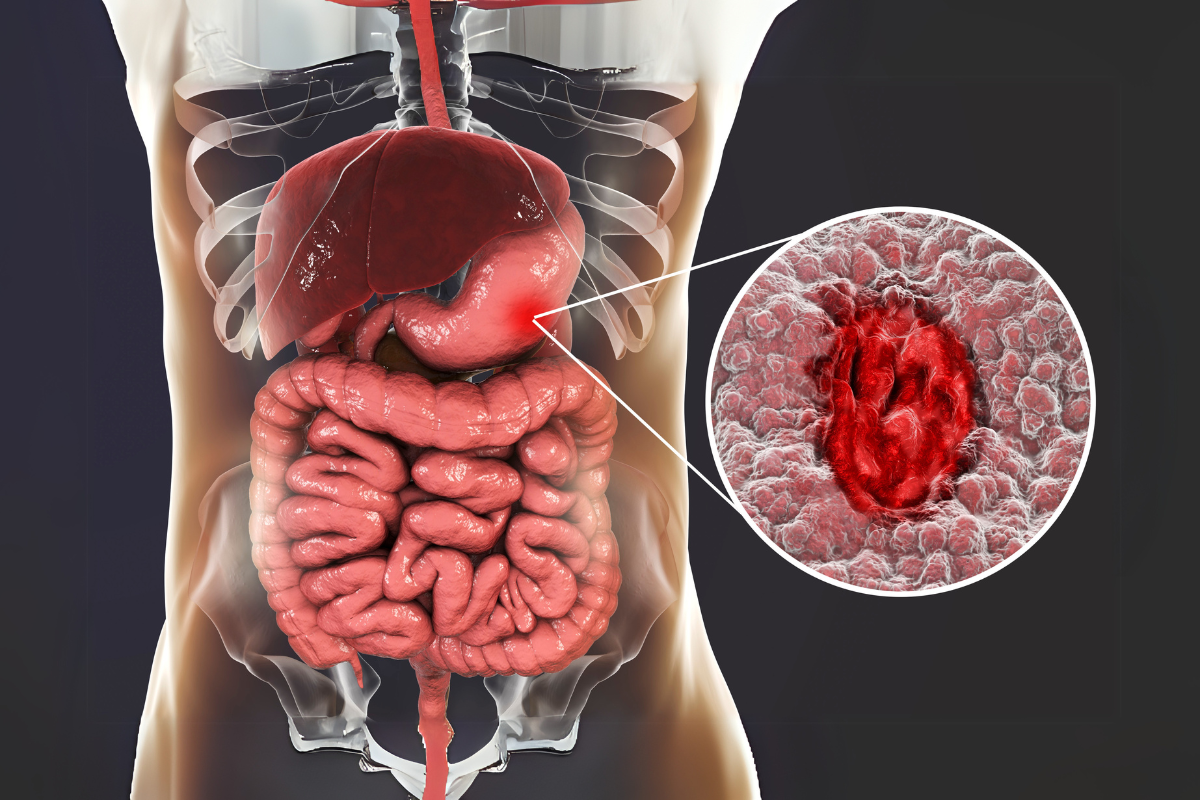
Peptic ulcer disease is more common than most people realise. Millions of Indians live with stomach ulcers that go undiagnosed for months or years, managing symptoms with over-the-counter antacids while the underlying problem continues. By the time they see a specialist, some have developed complications that were entirely preventable.
Understanding what causes peptic ulcers, how they’re diagnosed, and what actually treats them not just masks the symptoms is what this article covers.
What is a Peptic Ulcer?
The stomach lining is protected by a thick layer of mucus that shields it from the acid it produces. A peptic ulcer forms when this protective barrier breaks down and acid damages the tissue underneath creating an open sore.
These ulcers can form in the stomach itself, in the duodenum the first part of the small intestine or occasionally in the lower oesophagus. Each type has slightly different symptoms and triggers, but the underlying mechanism is the same: acid winning over the stomach’s defences.
Types of Peptic Ulcers
Gastric ulcer Forms in the lining of the stomach. Pain typically occurs during or shortly after eating when acid is being produced actively. More common in older adults and those on long-term NSAIDs.
Duodenal ulcer The most common type. Forms in the duodenum, just beyond the stomach. Pain characteristically comes on between meals and at night, when stomach acid is present without food to buffer it. Eating temporarily relieves the pain a classic distinguishing feature.
Oesophageal ulcer Forms in the lower oesophagus, usually as a complication of severe acid reflux or GERD. Less common but associated with significant discomfort while swallowing.
Symptoms of Peptic Ulcer Disease
The symptoms of peptic ulcers range from the classic to the easily missed:
- Burning stomach pain — the most characteristic symptom. A burning or gnawing upper abdominal pain, typically felt between the navel and breastbone
- Night-time stomach pain — waking up with upper abdominal pain between midnight and 3 AM is strongly suggestive of a duodenal ulcer
- Pain between meals — stomach acid without food present irritates the exposed ulcer surface
- Bloating and indigestion — a sensation of fullness or pressure after small amounts of food
- Feeling full quickly — even after eating very little, due to gastric irritation
- Nausea and vomiting — particularly in active disease or with complications
- Unexplained weight loss — from reduced appetite and avoiding food that triggers pain
- Black stools — dark, tarry stools are a sign of bleeding from the ulcer. This is an urgent symptom
- Blood in vomit or vomiting blood — indicates significant bleeding from the ulcer. Requires immediate emergency care
- Blood in stool — can be dark and tarry (upper GI bleeding) or bright red (lower GI source)
Causes and Risk Factors
pylori infection Helicobacter pylori is the most common cause of peptic ulcer disease globally responsible for the majority of duodenal ulcers and a significant proportion of gastric ulcers. H. pylori is a bacterium that burrows into the stomach’s mucous lining, weakening its protective barrier and allowing acid to damage the tissue underneath.
It spreads through contaminated food, water, and close contact and is extremely common in India due to water quality and sanitation factors. Many people carry H. pylori for years without symptoms. For others, it triggers ulcers, chronic gastritis, or in rare cases, contributes to stomach cancer.
NSAIDs and aspirin The second major cause. Ibuprofen, diclofenac, naproxen, and aspirin taken regularly for pain, arthritis, or heart conditions inhibit prostaglandins, which are the molecules that help maintain the stomach’s protective lining. Painkiller-induced ulcers are increasingly common, particularly in older patients taking NSAIDs long-term for joint pain.
Smoking and ulcers Smoking impairs the stomach’s ability to repair its lining, increases acid production, and reduces the effectiveness of ulcer treatment. Smokers with ulcers heal more slowly and have higher recurrence rates.
Alcohol and ulcers Alcohol directly irritates the stomach lining and stimulates excess acid production. Heavy alcohol use combined with H. pylori infection significantly increases ulcer risk.
Spicy food and ulcers Spicy food doesn’t cause ulcers but it does irritate an already-damaged stomach lining and worsens symptoms in people who already have ulcers.
Family history of ulcers A family history of peptic ulcer disease is a recognised risk factor, suggesting a genetic component in susceptibility.
Stress Stress doesn’t directly cause peptic ulcers, but it increases acid production, impairs healing, and makes symptoms worse. Severe physical stress from major surgery, burns, or critical illness can cause acute stress ulcers.
Diagnosis of Peptic Ulcer Disease
Upper GI endoscopy (gastroscopy) The definitive diagnostic test. A flexible camera is passed through the mouth into the stomach and duodenum, allowing direct visualisation of the ulcer its size, location, and whether it’s bleeding. Also allows a biopsy to be taken to test for H. pylori and rule out stomach cancer in gastric ulcers. Endoscopy for ulcers is recommended whenever symptoms are significant or don’t respond to initial treatment.
Urea breath test A non-invasive test for H. pylori. The patient drinks a solution containing urea if H. pylori is present, it breaks down the urea and releases carbon dioxide that is detected in the breath. Highly accurate and widely used.
Stool antigen test Detects H. pylori proteins in the stool. Accurate, non-invasive, and useful for both diagnosis and confirming eradication after treatment.
Pylori blood test Detects antibodies against H. pylori. Less useful than urea breath test or stool antigen test because antibodies remain positive for months after the infection is cleared making it hard to confirm current active infection.
Biopsy for ulcers Tissue taken during endoscopy can be tested for H. pylori and examined for signs of malignancy particularly important for gastric ulcers, which have a small but real risk of being cancerous.
Treatment of Peptic Ulcer Disease
Proton pump inhibitors (PPIs) The cornerstone of peptic ulcer treatment. PPIs omeprazole, pantoprazole, rabeprazole block the stomach’s acid-producing pumps, dramatically reducing acid levels and allowing the ulcer to heal. Taken 30-60 minutes before meals for maximum effect. Most ulcers heal within 4-8 weeks of PPI therapy.
Antibiotics for H. pylori When H. pylori is the cause, eradicating the infection is essential otherwise ulcers recur in over 80% of cases after stopping acid suppression. Standard triple therapy combines two antibiotics typically amoxicillin with clarithromycin or metronidazole with a PPI for 10-14 days. Quadruple therapy including tetracycline and bismuth is used in areas of high antibiotic resistance.
H2 receptor antagonists Reduce acid production through a different mechanism than PPIs. Less potent but useful in mild cases or as maintenance therapy.
Antacids Neutralise acid already in the stomach, providing quick but short-lived symptom relief. Useful for symptom management but don’t treat the underlying ulcer or eradicate H. pylori.
Stopping NSAIDs In painkiller-induced ulcers, stopping the offending NSAID is as important as any medication. Where NSAIDs are medically necessary, a PPI should be co-prescribed to protect the stomach.
Surgery for peptic ulcers Rarely needed in the modern era of effective acid suppression and H. pylori eradication. Surgery becomes necessary for complications a perforated ulcer that has created a hole in the stomach wall, gastric outlet obstruction where scarring blocks the stomach’s outlet, or bleeding that can’t be controlled endoscopically.
Can a Peptic Ulcer Heal on Its Own?
Most peptic ulcers do not heal permanently on their own. While the pain or burning sensation may improve for a few days with antacids or acid-reducing medicines, the underlying cause often remains untreated. If the ulcer is caused by H. pylori infection or long-term use of NSAID painkillers, it is likely to return or worsen without proper treatment.
Small ulcers may heal with appropriate lifestyle changes and prescribed medications, but ulcers caused by H. pylori require antibiotics to completely eliminate the infection. Delaying treatment increases the risk of serious complications such as internal bleeding, perforation, and gastric outlet obstruction. If you have persistent stomach pain, frequent acidity, or black stools, consult a gastroenterologist instead of relying only on over-the-counter antacids.
How Long Does a Peptic Ulcer Take to Heal?
The healing time depends on the size of the ulcer, its cause, and how early treatment begins. In most cases:
Most peptic ulcers heal within 4–8 weeks with proper treatment and prescribed medications.
Symptoms usually improve within a few days, but you should continue the full course of treatment to allow the ulcer to heal completely.
Ulcers caused by H. pylori infection require antibiotics along with acid-reducing medicines to prevent the ulcer from returning.
Healing may take longer if the ulcer is large, bleeding, or if you continue smoking or taking NSAID painkillers.
Following your doctor’s advice, avoiding alcohol and smoking, and completing all prescribed medicines can help speed up recovery and reduce the risk of recurrence.
Complications of Peptic Ulcer Disease
- Internal bleeding — the most common complication. Can present as black stools or vomiting blood. Requires urgent endoscopy and treatment
- Perforated ulcer — the ulcer erodes completely through the stomach or duodenal wall. Surgical emergency with severe abdominal pain and signs of peritonitis
- Gastric outlet obstruction — scarring from repeated ulcers can narrow the outlet of the stomach, causing vomiting of undigested food
- Anaemia — from chronic slow bleeding that isn’t dramatic enough to notice but depletes iron stores over time
- Stomach cancer — long-standing H. pylori infection and chronic gastric ulcers are associated with a small but real increased risk
Home Remedies and Lifestyle for Peptic Ulcers
Home remedies cannot cure a peptic ulcer. They may help reduce symptoms but medical treatment is necessary to heal the ulcer and eradicate H. pylori infection.
Healthy diet for ulcers
Regular meals, smaller portions, avoiding foods that trigger symptoms. No miracle food cures an ulcer, but consistent nutrition supports mucosal healing
Avoid spicy foods
During active disease, they worsen symptoms
Quit smoking
One of the most impactful changes for ulcer healing and preventing recurrence
Limit alcohol consumption
Reduces direct mucosal irritation
Avoid unnecessary painkillers
Use paracetamol instead of ibuprofen where possible. When NSAIDs are needed, always take with food and a PPI
Regular meal timings
An empty stomach for long periods allows acid to irritate the ulcer surface
Prevention of Peptic Ulcer Disease
- Test and treat H. pylori in anyone with recurrent dyspepsia or a family history of ulcers
- Use NSAIDs only when necessary and always with gastroprotection
- Quit smoking
- Limit alcohol
- Manage stress not because it causes ulcers, but because it worsens them
- Maintain regular meal timings and avoid prolonged fasting
When Should You See a Doctor?
Most peptic ulcers are manageable with medication. But see a gastroenterologist immediately if you have:
- Vomiting blood or blood in vomit
- Black, tarry stools
- Severe sudden abdominal pain possible perforation
- Unexplained weight loss alongside digestive symptoms
- Difficulty swallowing
- Persistent acidity that doesn’t improve with antacids after two weeks
These are red flag symptoms that need urgent endoscopy and specialist evaluation not more antacids.
Book an online gastroenterologist consultation through HealthPil for diagnosis, H. pylori testing guidance, and personalised treatment without waiting weeks for a hospital appointment.
How HealthPil Can Help
HealthPil connects you with experienced gastroenterologists and digestive health specialists who manage peptic ulcer disease regularly. Whether you need a proper diagnosis, guidance on H. pylori eradication therapy, a second opinion on persistent symptoms, or ongoing management expert help is available through an online consultation from home.
Summary
Peptic ulcer disease is commonly caused by H. pylori infection or long-term use of NSAID painkillers. Common symptoms include burning stomach pain, bloating, nausea, and black stools. Early diagnosis and treatment with medications, lifestyle changes, and H. pylori eradication can help prevent serious complications such as bleeding and perforation. If your symptoms persist or worsen, consult a gastroenterologist for timely diagnosis and treatment.
FAQs
1. What are the early symptoms of peptic ulcer disease?
Early symptoms of peptic ulcer disease may include burning stomach pain, bloating, acidity, heartburn, nausea, indigestion, and pain between meals or at night.
2. What causes peptic ulcers?
Peptic ulcers are mainly caused by H. pylori infection and long-term use of NSAIDs like ibuprofen or aspirin. Smoking, alcohol, and stress can worsen ulcer symptoms.
3. Can peptic ulcers heal without surgery?
Yes, most peptic ulcers heal with medications such as proton pump inhibitors (PPIs), antibiotics for H. pylori, and lifestyle modifications. Surgery is usually needed only for severe complications.
4. Which foods should be avoided in peptic ulcer disease?
People with peptic ulcers should avoid spicy foods, excessive caffeine, alcohol, acidic foods, fried foods, and unnecessary painkiller use, as these may irritate the stomach lining.
5. Can I book an online consultation for peptic ulcer disease?
Yes, you can book an online gastroenterologist consultation through HealthPil for peptic ulcer diagnosis, H. pylori testing guidance, treatment plans, and long-term digestive health management.
References
- Malik TF, Gnanapandithan K, Singh K. Peptic Ulcer Disease. StatPearls Publishing. Available at:
NCBI Bookshelf - Lanas A, Chan FKL. Peptic Ulcer Disease. Available at:
PubMed
Disclaimer:
This information is for educational purposes and should not replace professional medical advice. Always consult a healthcare provider for personalised recommendations.

Read our editorial policy