

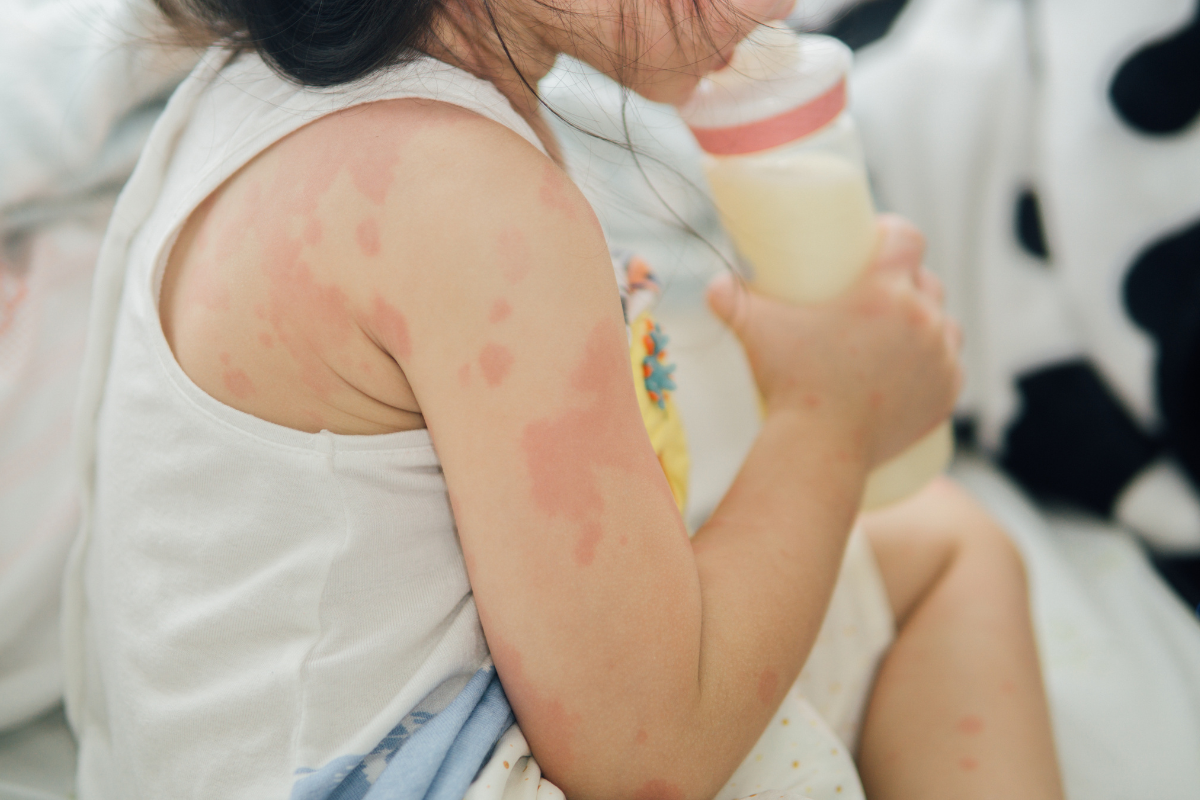
If you’ve ever watched your child scratch themselves raw in the middle of the night, unable to sleep, unable to stop you already know how helpless that feels. You’ve probably tried every lotion on the shelf. You’ve googled it at 2 AM. You’ve wondered if something you’re doing is making it worse.
You’re not alone. Millions of parents go through this every single year. And more often than not, what their child has is eczema.
Take Ayaan, for example. He’s five years old, full of energy, loves running around in the park. But every winter, his parents would notice the same thing angry red patches spreading across his elbows and knees, flaring up at night, stealing his sleep and their peace of mind. They didn’t know what was causing it. They didn’t know if it would get worse. They just knew their child was uncomfortable, and they needed answers.
If that story sounds familiar, this article is for you.
What Is Eczema?
Eczema medically called atopic dermatitis is a chronic skin condition that causes the skin to become dry, inflamed, and intensely itchy. It’s not a one-time rash that fades in a few days. It’s an ongoing condition that flares up, calms down, and flares up again often triggered by things as ordinary as the weather, a soap, or a particular fabric.
It usually begins in infancy or early childhood, and it’s especially common in kids who have a family history of allergies, asthma, or hay fever. If a parent or sibling has any of these, the chances of a child developing eczema go up significantly.
One thing worth saying clearly: eczema is not contagious. Your child didn’t catch it from someone. And they can’t pass it on. But left unmanaged, flare-ups can be really uncomfortable and in young children who can’t stop themselves from scratching, the skin can break, bleed, and even get infected.
Types of Eczema
Not all eczema looks the same. There are a few different types, and knowing which one your child has can help with treatment:
- Atopic dermatitis is the most common type in children the classic itchy, inflamed patches that come and go.
- Contact dermatitis happens when the skin reacts to something it’s touched directly a metal, a detergent, a plant.
- Seborrheic dermatitis tends to affect oily areas like the scalp, nose, and eyebrows in babies, it’s commonly called cradle cap.
- Dyshidrotic eczema causes small, itchy blisters, usually on the hands and feet less common in very young children but worth knowing about.
Nummular eczema shows up as round, coin-shaped patches that can be scaly or crusted. It often appears after a cut, burn, or insect bite, and it’s more common in older children and adults than in very young kids.
Neurodermatitis causes thick, scaly patches usually on the wrists, ankles, or back of the neck areas a child has scratched repeatedly because of a single itchy spot, like an old bug bite.
Eczema or Something Else?
Parents sometimes confuse eczema with psoriasis. Here’s a quick way to tell them apart: eczema usually itches a lot and can ooze or weep during a flare. Psoriasis is less itchy, rarely oozes, and often shows up on the scalp something eczema rarely does. If you’re not sure which one you’re looking at, a doctor can tell within a single examination.
What Does Eczema Actually Look Like?
This is where parents often get confused because eczema doesn’t always look the same on every child, or even on the same child at different times.
The most common signs to watch for are dry, intensely itchy patches of skin the kind your child just cannot leave alone, no matter how many times you tell them to stop scratching. These patches are often red or brownish-grey, and they tend to show up in specific spots: the inner elbows, behind the knees, the neck, inner wrists and ankles.
Over time, repeated scratching causes the skin to thicken and crack which makes it even more uncomfortable, and more vulnerable to infection.
For Ayaan, it was always the elbows and knees that suffered most. Every winter, like clockwork.
What Causes Eczema in Children?
Here’s the honest answer: there’s no single cause. Eczema develops from a mix of genetics, how a child’s immune system is wired, and environmental triggers that vary from child to child.
Some children’s skin simply doesn’t hold moisture as well as it should. Their skin barrier is weaker, which means irritants and allergens get in more easily and moisture escapes faster. The immune system then overreacts, and inflammation follows.
Common triggers that parents notice include:
- Dust and pollen — especially during season changes
- Harsh soaps and detergents — even “gentle” ones can be too much for sensitive skin
- Fragrances — in lotions, washing powders, even certain wipes
- Pet dander — a tough one for animal-loving families
- Weather changes — cold, dry air is a classic culprit (Ayaan’s flare-ups every winter make complete sense)
- Sweating — heat and humidity can irritate already-sensitive skin
- Certain foods — dairy, eggs, and nuts are common offenders, though this varies widely
No two children have exactly the same set of triggers. That’s part of what makes eczema so frustrating and why a personalised approach matters.
How Is Eczema Diagnosed?
There’s no specific blood test or scan for eczema. Diagnosis is based on what the doctor sees and what you tell them.
A good paediatrician or dermatologist will ask about your child’s medical history when the symptoms started, whether allergies or eczema run in the family, what treatments you’ve already tried, and what seems to make things better or worse.
They’ll also do a physical examination looking at where the patches are, how severe the inflammation is, and whether there are any signs of infection.
For Ayaan, this process led to a clear diagnosis. His doctor could see the pattern immediately the location, the seasonal timing, the severity of the itch. From there, a treatment plan could begin.
Treatment Options for Eczema
The good news is that eczema is very manageable. It may not disappear permanently, but with the right routine, flare-ups become less frequent, less severe, and much easier to handle.
- Moisturisers are the foundation of eczema care and they’re more important than most parents realise. The key is choosing one with high oil content and low water content. Thicker creams and ointments work better than light lotions, which can actually dry the skin out further. Apply them generously, especially right after a bath when the skin is still slightly damp.
- Topical corticosteroids are the most common prescription treatment for flare-ups. They reduce inflammation and itching quickly and are generally safe when used correctly and for the recommended duration. Ayaan’s doctor prescribed one for his flare-ups, and his parents saw a clear difference within days.
- Avoiding triggers sounds simple, but it takes observation and patience. This is where keeping a diary noting what your child ate, what they wore, what the weather was like can genuinely help you connect the dots over time.
How to Prevent Eczema Flare-Ups
Prevention isn’t about eliminating eczema forever. It’s about reducing how often it flares and how bad it gets when it does.
A few things that genuinely help:
- Keep your child’s skin moisturised every single day, not just during flare-ups
- Switch to fragrance-free soaps, shampoos, and laundry detergents
- Avoid hot showers or baths lukewarm water is much kinder to eczema-prone skin
- Dress your child in soft cotton clothing avoid synthetic fabrics and wool, which can scratch and irritate
- Watch for food triggers and discuss elimination with your doctor before cutting anything out permanently
- Keep nails short and clean to minimise skin damage from scratching
Small changes, done consistently, add up to a real difference.
Complications of Untreated Eczema
Left unmanaged, eczema doesn’t just stay on the skin. Constant scratching can break the skin and lead to infection sometimes bacterial, occasionally something more serious like eczema herpeticum.
There’s another side to this too, especially as children grow older. Visible, ongoing skin flares can affect a child’s confidence. Some kids face teasing or questions from classmates, and that can quietly turn into anxiety around school or social situations. It’s worth paying attention to your child’s mood around their skin, not just the skin itself.
Eczema is also linked to a higher chance of developing asthma or hay fever later not guaranteed, but worth knowing if either runs in the family already.
Eczema Management Plan
Children with eczema do better when there’s a clear, consistent plan in place not just treatment during flare-ups, but daily habits that protect the skin year-round.
A good management plan includes:
Daily skincare routine — moisturiser every morning and evening, no exceptions, even on good skin days.
Trigger identification — keep a simple diary of symptoms, foods, activities, and weather. Over a few weeks, patterns usually emerge.
Emergency instructions — know in advance what you’ll do if there’s a severe flare: which cream to apply, when to call the doctor, and when to head to a clinic.
Ayaan’s parents started keeping a diary after his diagnosis. Within a month, they’d figured out that synthetic fabrics and cold air were his two biggest triggers. That knowledge alone made a huge difference.
When Should You See a Doctor?
Most mild eczema can be managed at home with the right routine. But there are times when you need professional help and it’s important to know when.
Reach out to a doctor if your child has:
- Severe, relentless itching that disrupts sleep night after night
- Skin that’s bleeding from scratching
- Pus-filled rashes or oozing patches — signs of infection
- Fever alongside a skin flare
- No improvement despite consistent home care
You don’t always have to go to a clinic in person. If you’re not sure whether what you’re seeing is serious, or you just want a quick second opinion, an online consultation with a dermatologist can be a practical first step especially during busy school weeks when getting to a clinic feels impossible. Numerous small, fluid-filled blisters appearing suddenly over the eczema patches this can signal a rare but serious viral infection called eczema herpeticum, and needs same-day medical attention
How HealthPil Can Help
HealthPil connects you with experienced dermatologists and paediatricians who understand childhood eczema inside out. Whether you need help identifying your child’s triggers, a treatment plan for a stubborn flare, or reassurance at 2 AM when nothing seems to be working expert support is available through an online consultation from wherever you are. Book your dermatology consultation with HealthPil today.
Book an online consultation with HealthPil today from the comfort of home.
Summary
Eczema in children is common, chronic, and completely manageable with the right approach. Understanding your child’s triggers, sticking to a daily moisturising routine, and knowing when to seek help are the three things that make the biggest difference. You don’t have to wait for a bad flare to reach out. Early, consistent care is always better than damage control.
FAQs
Can I consult a doctor online for my child's eczema?
Yes, absolutely. Many dermatologists and paediatricians offer online consultations where they can assess your child’s skin through photos and video, discuss symptoms, and prescribe treatment all without you having to leave home.The exact cause is unknown, but it is often believed to result from genetic and environmental factors.
Is eczema the same as a regular rash?
Not quite. A regular rash often clears up on its own within a few days. Eczema is a chronic condition it comes and goes over time, and it needs ongoing management rather than a one-time fix.
Can my child outgrow eczema?
Many children do see improvement as they get older, and some outgrow it entirely. But it’s unpredictable some children carry it into adulthood. The goal is to manage it well in the meantime.Regularly apply moisturisers, avoid known irritants, and consult a healthcare provider about appropriate medications.
Are steroid creams safe for children?
When prescribed by a doctor and used as directed, topical corticosteroids are considered safe for children. The key is using the right strength for the right duration which is exactly why a prescription matters more than buying something off the shelf.
What's the best moisturiser for a child with eczema?
Look for fragrance-free, dye-free, thick creams or ointments rather than light lotions. Your doctor can also recommend specific medical-grade emollients based on your child’s skin type.

Read our editorial policy