

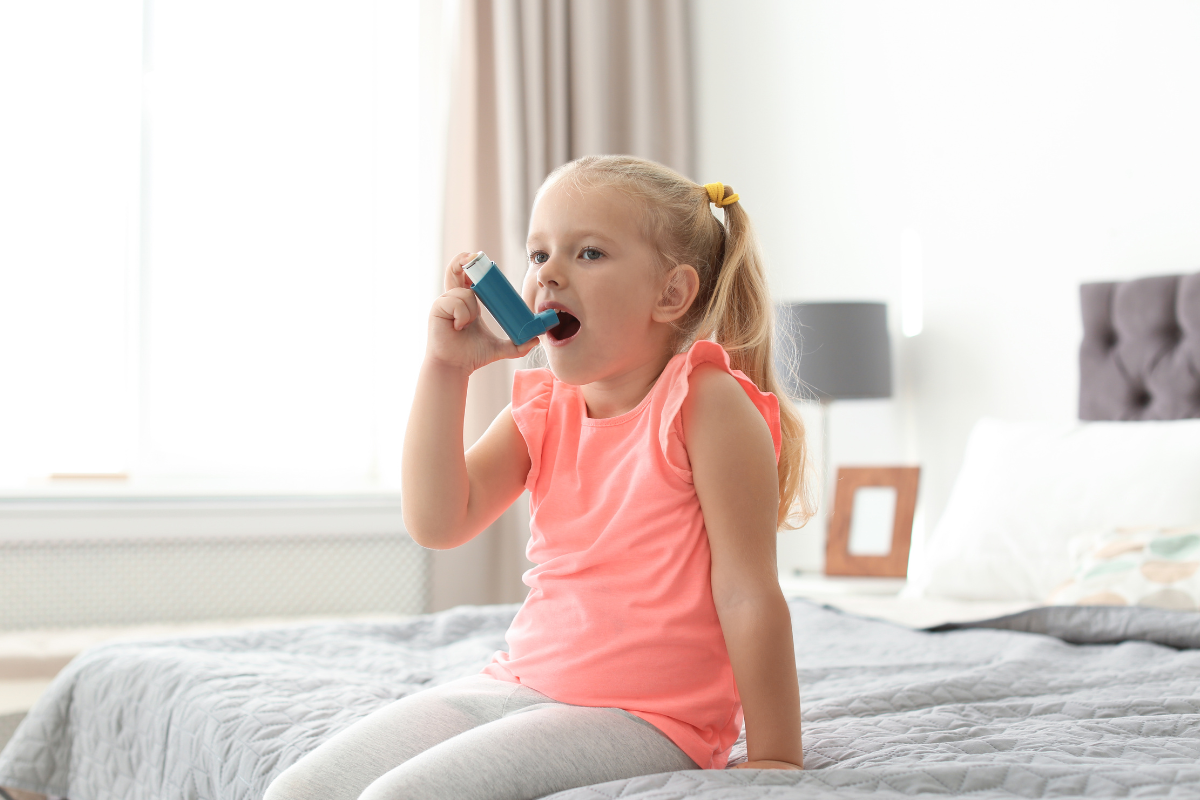
Many parents mistake childhood asthma for something ordinary a repeated cold, low immunity, or just sensitivity to weather. Coughing at night, wheezing during weather changes, breathlessness while running these get dismissed until they keep coming back.
Aarav loved football. Every winter, the coughing would start. His parents assumed it was the cold. Then one day during a match, he became so breathless he couldn’t continue. That visit to the doctor finally gave them an answer childhood asthma.
With the right treatment and trigger management, Aarav was back on the field within weeks.
What Is Childhood Asthma?
Childhood asthma is a chronic condition where the airways become inflamed and narrow, making breathing difficult. During flare-ups, the airways react strongly to triggers like dust, pollen, cold air, smoke, or infections causing wheezing, coughing, chest tightness, and breathlessness that keep coming back.
It is one of the most common chronic conditions in children. And with early diagnosis and proper management, most children live full, active lives.
Signs and Symptoms of Asthma in Children
Asthma symptoms in children do not always look the same. Some children have mild symptoms that appear only occasionally. Others deal with more frequent flare-ups that affect sleep, school, and play.
Wheezing in Children
Wheezing in children is one of the most recognisable signs of asthma a whistling or squeaky sound while breathing, especially when breathing out. It can be soft or loud, and parents sometimes notice it before the child does.
Persistent Cough
A persistent cough that keeps coming back, especially at night, early in the morning, after running, or during seasonal changes, is a very common asthma symptom in children. A night cough that disturbs sleep regularly is worth investigating.

Shortness of Breath
Children with asthma may feel breathless during play, exercise, or any kind of physical activity. Breathing problems in children that appear during movement and settle when they rest are a pattern parents should pay attention to.
Chest Tightness
Some children describe this as a heaviness or pressure in the chest. Younger children may not be able to explain it clearly and may just say their chest hurts or feels funny.
Fatigue During Play
Children with poorly controlled asthma may get tired quickly and start avoiding physical activity without being able to explain why. Fatigue during play, or consistently sitting out while others are active, can be an easy sign to miss.
If these symptoms keep recurring, a medical evaluation with a child asthma specialist or pediatric pulmonologist is worth arranging.
Common Causes and Triggers of Childhood Asthma
Asthma usually develops because of a mix of genetic factors and the environment the child grows up in. But what makes symptoms flare up is usually a specific triggerand knowing those triggers is a big part of managing the condition well.
Dust Allergy
Dust mites are among the most common asthma triggers in children. They collect in mattresses, pillows, carpets, and curtains and are almost impossible to see. Children with a dust allergy may wheeze more at home, especially in bedrooms, or wake up coughing at night.
Pollen Allergy
Seasonal pollen from trees, plants, and grass can worsen asthma significantly. Children with a pollen allergy often notice their breathing problems in children are worse during spring or when spending time outdoors near gardens or fields.
Pet Allergies
Pet dander allergy is a common but often overlooked asthma trigger. The reaction is not caused by fur itself but by proteins found in pet dander, saliva, and urine. Some children only develop symptoms after prolonged exposure, which makes the connection easy to miss.
Mold Allergy
Damp walls, poorly ventilated rooms, and humid spaces increase mold spore exposure, which irritates the airways. Mold allergy-related asthma symptoms often peak during the monsoon season in India.
Smoke Exposure
Cigarette smoke is one of the most damaging asthma triggers for children. Even passive exposure being in a room where someone smokes can significantly worsen asthma symptoms. Air pollution works similarly and is a growing concern in urban areas.
Cold Air
Cold air asthma is real. Cold weather and sudden temperature drops can cause the airways to tighten, triggering wheezing or coughing. Some children only experience symptoms during winter or when entering an air-conditioned room.
Exercise-Induced Asthma
Exercise-induced asthma causes wheezing or shortness of breath during or after physical activity. This does not mean children with asthma should avoid exercise it means their asthma needs to be better controlled first. With proper treatment, most children can participate in sports and physical activity without difficulty.
Respiratory Infections
Viral respiratory infections like the common cold and flu are among the most frequent triggers for asthma flare-ups in children. A mild cold that would pass quickly in other children can trigger days of breathing difficulty in a child with asthma.
How Is Childhood Asthma Diagnosed?
Asthma diagnosis involves putting together a clear picture of the child’s symptoms, history, and breathing pattern.
Medical History
The doctor will ask how often symptoms occur, whether they get worse at night or during exercise, whether there is a family history of asthma or allergies, how symptoms change with seasons, and whether the child has regular exposure to smoke, pets, or dust at home.
Physical Examination
The doctor listens carefully to the lungs and checks breathing patterns. Certain sounds during breathing, along with symptom history, can point strongly toward a diagnosis of asthma in children.
Lung Function Test
For older children, a spirometry test or lung function test measures how well air moves in and out of the lungs. This is one of the most reliable tools for confirming asthma diagnosis and tracking how well asthma management is working over time.
Allergy Testing
When specific triggers are suspected, allergy testing helps identify exactly what is setting off the child’s symptoms. This is especially useful when dust allergy, pollen allergy, or pet dander allergy may be involved.
If you are unsure whether your child’s symptoms point to asthma, an online pediatric consultation can be a helpful first step before an in-person visit.
Treatment for Childhood Asthma
Child asthma treatment aims to control symptoms, reduce flare-ups, and let children go about their daily lives without asthma constantly getting in the way.
Rescue Inhalers
A rescue inhaler also called a quick-relief inhaler or bronchodilator relaxes the airway muscles quickly during an asthma attack and provides fast relief from symptoms. Every child with asthma should have one accessible at all times. During more severe episodes, nebulizer treatment may also be used to deliver medication more effectively.
Long-Term Controller Medicines
Inhaled corticosteroids are the most commonly prescribed asthma medications for ongoing control. They reduce airway inflammation and help prevent symptoms from flaring up in the first place. These are taken regularly, not just when symptoms appear, and they form the backbone of long-term asthma management.
Avoiding Asthma Triggers
Asthma medications work best when trigger exposure is also reduced. This means managing dust at home, avoiding cigarette smoke completely, treating allergies, protecting against cold air, and keeping indoor spaces well ventilated and free of dampness.
Once Aarav’s family understood his specific asthma triggers and followed his treatment plan properly, his symptoms improved significantly and he was back on the football field within weeks.
Peak flow meter
A peak flow meter is a small handheld device that measures how fast air comes out of the lungs. In older children, using one daily helps parents and doctors track whether asthma is well controlled or getting worse before symptoms become obvious. Green zone means all clear. Yellow zone means caution. Red zone means act immediately. Many paediatricians recommend one as part of home monitoring for children with moderate or severe asthma.
Leukotriene modifiers
For some children who cannot tolerate inhaled corticosteroids or need additional control, leukotriene modifiers tablets like montelukast are prescribed. They reduce airway inflammation and are particularly useful when allergies are a major trigger. Always prescribed by a doctor based on the child’s specific situation.
Complications of Poorly Controlled Childhood Asthma
Frequent night coughing disrupts sleep affecting concentration, behaviour, and school performance.
Repeated flare-ups cause airway remodelling over time permanent structural narrowing that daily controller medication prevents.
School absenteeism increases significantly. So does exercise avoidance children withdraw from sport and play without being able to explain why.
The right treatment plan prevents all of this.
Creating an Asthma Action Plan
A written asthma action plan is one of the most practical tools a family can have. It takes away the confusion during a flare-up and helps everyone parents, teachers, coaches, and caregivers know exactly what to do.
A good plan includes the child’s daily medications and dosage, known asthma triggers, warning signs that symptoms are getting worse, when to use the rescue inhaler, and emergency contact details.
Schools and caregivers should always have a copy. A child’s asthma should never come as a surprise to the people looking after them.
When Should Parents Seek Emergency Medical Help?
Some asthma symptoms are a medical emergency and need immediate attention.
Go to the emergency room right away if the child has severe breathing difficulty, blue lips or fingernails, trouble speaking because of breathlessness, no improvement after using the rescue inhaler, very fast breathing, or the chest pulling inward visibly with each breath.
Blue lips are a sign the child is not getting enough oxygen. Do not wait. These are signs of a severe asthma attack that needs urgent treatment.
How to Prevent Asthma Attacks in Children
Asthma cannot always be completely prevented, but flare-ups can be reduced significantly with the right habits in place.
Keep the home as dust-free as possible. Avoid smoke exposure entirely. Use asthma medications regularly as prescribed not just when symptoms appear. Identify and avoid known asthma triggers. Keep up with regular follow-ups with the doctor or pediatric pulmonologist. Get the flu vaccination if advised. Maintain good indoor ventilation. And keep a closer eye on symptoms when seasons change.
The goal of asthma prevention and management is not just fewer bad days. It is giving children the confidence to run, play, go to school, and do everything other children do without asthma holding them back.
With early diagnosis, consistent treatment, and a family that understands the triggers, most children with childhood asthma thrive. Aarav did. Most do.

When Should You See a Doctor?
You don’t need to wait for a frightening episode to seek help. Consult a paediatrician or pediatric pulmonologist if:
- Your child has a persistent cough especially a night cough or cough after exercise that keeps coming back
- Wheezing in children or shortness of breath is recurring
- Breathing problems in children are affecting sleep, school attendance, or physical activity
- The rescue inhaler is being used more than twice a week this signals asthma is not well controlled and treatment needs reviewing
- You’re unsure whether what you’re seeing is asthma or something else
If getting to a clinic is difficult, an online pediatric consultation through HealthPil gives you access to a qualified child asthma specialist from home. You can describe symptoms, share reports, and get a clear, personalised management plan without the wait or the commute. Early guidance always leads to better outcomes.
Common Asthma Myths Cleared Up
“Children with asthma cannot play sports.” This is one of the most damaging misconceptions around childhood asthma. Most children with well-controlled asthma can participate fully in sports and physical activity. Aarav returned to football. Exercise-induced symptoms are a sign that asthma needs better control — not that sport should stop.
“Inhalers are addictive or harmful.” Inhalers are the safest and most effective way to deliver asthma medication directly to the lungs. They are not addictive. Inhaled corticosteroids at prescribed doses have a strong safety record in children and are far safer than repeated oral steroids taken during uncontrolled flare-ups.
“Children outgrow asthma so treatment is not urgent.” Some children do see symptoms reduce as they grow older. But waiting on this assumption means months or years of poorly controlled asthma affecting sleep, school, confidence, and physical development. Treatment now protects quality of life now not just in the future.
“Asthma is only serious when there is an attack.” Between visible episodes, the airways in children with asthma are still inflamed. Poorly controlled asthma causes ongoing damage even when symptoms are not obvious which is why controller medication is taken daily, not just during flare-ups.
How HealthPil Can Help
Managing pediatric asthma well requires more than a prescription it requires the right specialist, ongoing support, and a plan that fits your child’s actual life.
HealthPil connects you with experienced pediatric pulmonologists who specialise in childhood asthma and respiratory conditions. Whether your child has just been diagnosed, their current treatment isn’t working well enough, or you simply want a second opinion expert help is just an online pediatric consultation away.
Your child deserves to run, play, and breathe freely. Let’s make that happen.
Disclaimer
This article is for informational purposes only and is not a substitute for professional medical advice. Always consult a qualified healthcare provider for diagnosis and treatment tailored to your child’s individual needs. In case of a breathing emergency, seek immediate medical attention.
Summary
Childhood asthma causes wheezing, persistent cough, chest tightness, and breathlessness. Common triggers: dust, pollen, cold air, smoke, and infections.
Treatment: rescue inhaler for immediate relief, daily inhaled corticosteroids for long-term control. Written asthma action plan essential.
Emergency signs blue lips, severe breathlessness, no relief from inhaler need immediate attention.
Book an online pediatric consultation through HealthPil today.
