

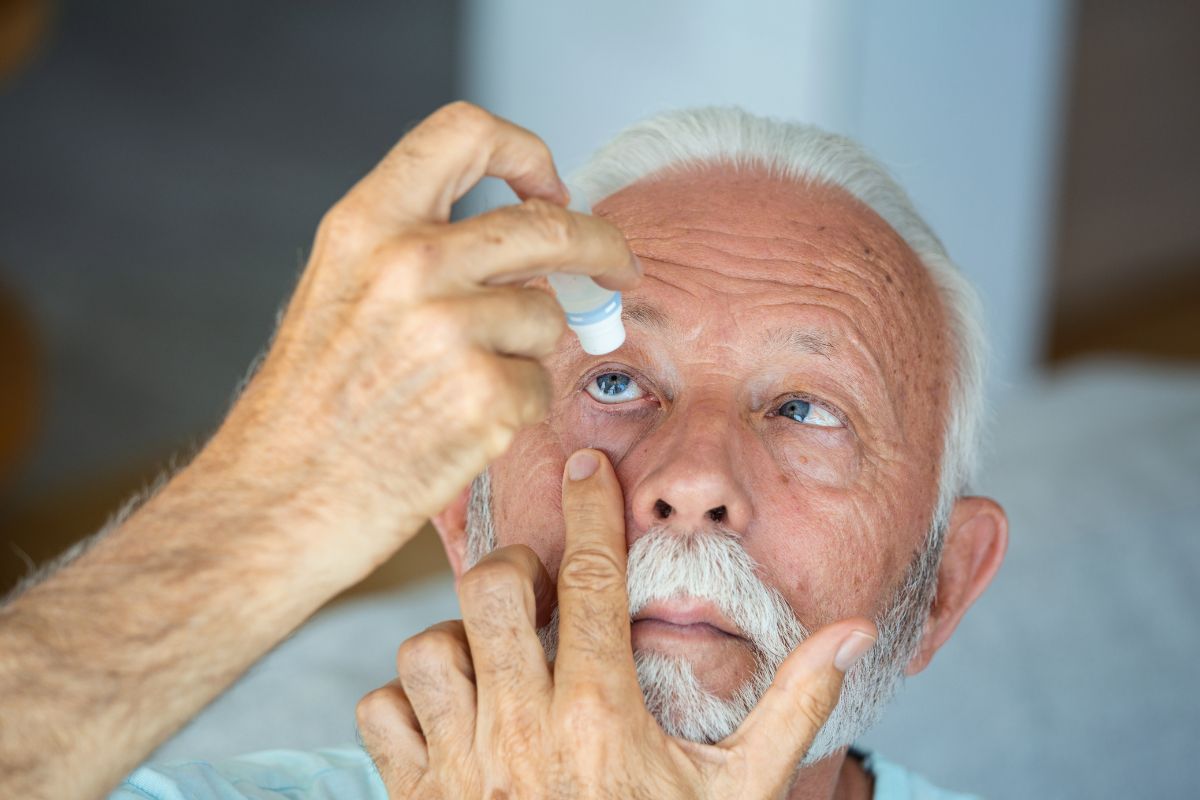
If you’re over 40 and you’ve caught yourself holding a menu at arm’s length just to read it, you already know what presbyopia feels like. And if you’ve been scrolling through ads for presbyopia eye drops promising you’ll never need reading glasses again, you’ve probably wondered is this actually true, or just clever marketing?
Short answer: it’s complicated. These drops genuinely work, but not the way the ads make it sound. Let’s break down what’s real, what’s exaggerated, and what you should actually know before you put anything in your eyes.
What Is Presbyopia, Really?
Presbyopia is age-related near vision loss the gradual decline in your eye’s ability to focus on close-up objects like books, phones, or restaurant menus. It’s not a disease and it’s not something you did wrong. It’s simply what happens to almost everyone’s eyes somewhere between the ages of 40 and 65, once the natural lens inside the eye starts losing its flexibility.
Here’s the part most people get wrong: presbyopia is often confused with hyperopia (farsightedness). They can feel similar both make close objects blurry but they’re not the same thing. Hyperopia is usually a hereditary, structural issue with how the eyeball is shaped. Presbyopia, on the other hand, is a lens-stiffening problem that has nothing to do with the shape of your eye and everything to do with age. Practically everyone develops it eventually, even people who’ve had 20/20 vision their whole lives.
What Causes Presbyopia?
Your eye’s natural lens is supposed to be flexible it changes shape to help you focus on things close up and far away. This ability is called accommodation. As you age, the proteins in the lens gradually become denser and stiffer, so it can no longer flex the way it used to. The result: close-up objects go blurry, no matter how good your distance vision is.
Common early symptoms of presbyopia include:
- Blurry near vision or difficulty reading small print
- Needing to hold books, menus, or your phone further away to focus
- Eye strain or headaches after reading, especially in dim light
- Struggling to read in low light even when your distance vision feels fine
Presbyopia risk factors and early onset While age is the biggest factor, presbyopia can show up earlier than 40 in some people. Certain health conditions diabetes, multiple sclerosis, and cardiovascular disease are linked to a higher risk of what’s called premature presbyopia. Some medications, including certain diuretics, antidepressants, and antihistamines, can also speed things up. If you’re noticing blurry near vision well before your 40s, it’s worth mentioning to your eye doctor rather than assuming it’s unrelated.
What Are Presbyopia Eye Drops, and How Do They Work?
Presbyopia eye drops are a relatively new, non-surgical treatment designed to temporarily sharpen near vision without glasses or contact lenses. Most of them work through a mechanism called pupil constriction, which creates something called the pinhole effect essentially, when your pupil shrinks, it increases your depth of focus, similar to how narrowing the aperture on a camera brings more of the frame into focus at once. That’s what lets you read small print more clearly, without your distance vision taking a hit.
There are actually two broad categories researchers are working with:
- Miotic eye drops these constrict the pupil to create the pinhole effect. This is the mechanism behind most currently available options.
- Lens-softening eye drops a newer, still-developing approach that tries to restore some flexibility to the crystalline lens itself, rather than just shrinking the pupil. These tend to work best in the earliest stages of presbyopia and may also slow its progression, though this category is still being studied more than it’s being prescribed.
Pilocarpine: The Ingredient Behind Most Presbyopia Drops
The active ingredient in most FDA-approved presbyopia eye drops is pilocarpine, a miotic drug that’s been used in eye care for decades mostly to treat glaucoma by helping fluid drain out of the eye and lower intraocular pressure. In presbyopia treatment, pilocarpine’s job is different: it stimulates the muscle around the iris to constrict the pupil, mimicking the eye’s natural near-focus response.
VUITY (pilocarpine HCl ophthalmic solution 1.25%), made by Allergan, became the first and for a while the only FDA-approved presbyopia eye drop, cleared by the FDA in October 2021. It uses a delivery technology that adjusts to the pH of your eye’s own tear film, which is part of what lets it work as quickly as it does.
How VUITY performed in clinical trials: FDA approval was based on two clinical trials, GEMINI 1 and GEMINI 2, involving roughly 750 participants aged 40 to 55, all diagnosed with age-related presbyopia. Participants were split between VUITY and a placebo.
By day 30, a statistically significant portion of the VUITY group could read three additional lines or more on a reading chart in low light, without losing more than one line of distance vision. That’s a meaningful result but it’s also worth noting these trials ran for a matter of weeks, not years, so long-term data is still limited.
Onset and duration: Most pilocarpine-based drops start working within 15 to 30 minutes and last about 6 to 8 hours (some sources report up to 10). That means one application generally won’t cover a full waking day you may need a second drop, or a backup pair of readers, if your day runs long.
The Newer Generation: Aceclidine and LNZ100
Pilocarpine isn’t the only ingredient in this space anymore. A newer compound called aceclidine used in products like LNZ100 from LENZ Therapeutics works differently. Instead of acting on both the pupil muscle and the ciliary muscle (which pilocarpine does), aceclidine selectively targets the pupil, aiming to create the same pinhole effect with less impact on focusing muscles overall.
In early studies, this selectivity was associated with fewer reports of headache, brow ache, and blurred distance vision compared to pilocarpine-based drops though “fewer” doesn’t mean “none,” and every eye responds differently. Aceclidine-based drops have continued to move through FDA review and approval processes since VUITY’s 2021 launch, so if you’re researching this space, it’s worth checking current FDA status rather than assuming only one product exists.
Presbyopia Eye Drops: Temporary Relief, Not a Cure
This is the single most important thing to understand before you buy a bottle: these drops do not cure presbyopia. They don’t reverse lens stiffening, and they don’t restore your eye’s natural ability to accommodate. What they do is create a temporary optical workaround the pinhole effect that lasts a matter of hours before your near vision returns to baseline.
Think of it less like a fix and more like a temporary patch. Useful, sometimes genuinely life-changing for a workday or a dinner out, but not a permanent replacement for glasses, contacts, or surgery.
Side Effects of Presbyopia Eye Drops
Because these drops work by physically constricting the pupil, the most common presbyopia eye drop side effects are directly tied to that mechanism:
- Headaches, often from the eye muscles working to constantly readjust pupil size
- Eye redness or irritation, a known side effect of pilocarpine specifically
- Blurred distance vision, since a smaller pupil is optimized for near focus, not far
- Increased light sensitivity (photophobia), because the pupil can’t dilate normally to manage light levels
- Reduced night vision, which is why doctors caution against night driving while the drops are active
With chronic, long-term use, there are additional concerns worth taking seriously: prolonged pupil constriction may reduce how responsive the iris muscle is over time, and there’s ongoing discussion in the ophthalmology community about whether repeated use could affect the eye’s natural fluid drainage relevant given pilocarpine’s other role in glaucoma treatment. There’s also a real risk of psychological dependency, where people start relying on the drops daily without addressing the underlying cause or getting regular eye exams to monitor for other issues.
Who Should Avoid Presbyopia Eye Drops?
These drops aren’t right for everyone. You may want to skip them, or at least have a detailed conversation with your ophthalmologist first, if you:
- Have uncontrolled glaucoma
- Have retinal disease or a history of retinal detachment
- Deal with severe dry eye
- Have active eye inflammation or infection
- Are allergic to pilocarpine or other listed ingredients
- Drive frequently at night (reduced night vision is a real safety concern here)
Who’s a Good Candidate?
On the flip side, presbyopia eye drops tend to work best for people who:
- Are between roughly 40 and 60 years old
- Have mild to moderate presbyopia
- Have otherwise healthy distance vision
- Mainly struggle with small print, phone screens, or dim-light reading
- Want occasional relief for specific activities (a meeting, a flight, a dinner) rather than an all-day, every-day solution
The Cost Question
This is where a lot of the marketing gets quiet. Presbyopia eye drops are not typically covered by insurance, since most insurers haven’t classified them as medically necessary. Out-of-pocket, a monthly supply has historically run somewhere in the $80 range, which compared to a one-time pair of drugstore reading glasses makes the drops a meaningfully more expensive habit if you’re using them daily rather than occasionally.
Marketing Concerns and What to Watch For
It’s worth being a little skeptical of how some of these products are advertised. While FDA approval is real and the underlying science is legitimate, there have been ongoing concerns including regulatory scrutiny and some legal action in certain markets over advertising that blurs the line between “temporary relief” and “permanent fix.” If an ad implies you’ll never need glasses again, that’s a claim worth double-checking against the actual clinical data, not just the marketing copy.
Alternatives to Presbyopia Eye Drops
If eye drops aren’t the right fit for you or you’d simply rather not deal with a daily prescription routine — there’s no shortage of proven alternatives:
- Reading glasses (still the cheapest, most reliable option)
- Bifocal glasses
- Progressive or multifocal lenses
- Multifocal contact lenses
- Monovision contact lenses
- LASIK for presbyopia (in selected candidates)
- Refractive Lens Exchange (RLE)
- Lens implants
For anyone looking at a truly long-term solution rather than something they’ll reapply every morning, surgical options like RLE or lens implants are generally the closest thing to a permanent fix, since they replace the aging lens entirely rather than working around it.
Managing Presbyopia Day to Day
Whether or not you end up using eye drops, a few habits can make daily life with presbyopia noticeably easier:
- Read and work under adequate, even lighting
- Take regular breaks during screen time
- Follow the 20-20-20 rule (every 20 minutes, look at something 20 feet away for 20 seconds)
- Wear your prescribed glasses consistently rather than only when it’s inconvenient not to
- Get comprehensive eye exams on a regular schedule, ideally starting around age 40
- Eat foods rich in vitamin A, C, E, lutein, and omega-3 fatty acids
- Avoid smoking
- Keep diabetes and blood pressure under control, since both are linked to eye health more broadly
When Should You See an Eye Specialist?
Book a comprehensive eye exam or online consultation if you notice any of the following:
- Difficulty reading even with your current glasses
- New blurry near vision after age 40
- Frequent headaches or eye strain while reading
- Sudden changes in vision of any kind
- Eye pain, redness, or persistent blurring
- Uncertainty about whether presbyopia eye drops are safe for your specific eyes
Catching these changes early gives your doctor a much better shot at recommending the right long-term treatment for you, rather than reacting after the problem has already progressed.
Myth vs. Fact
Myth: Presbyopia eye drops permanently cure presbyopia.
Fact: They provide temporary near vision improvement only, and don’t reverse age-related lens stiffening.
Myth: Anyone with presbyopia can use these drops.
Fact: Not everyone qualifies. Certain eye conditions rule people out, which is exactly why an eye exam comes first.
Myth: These drops completely replace reading glasses.
Fact: Most users still need glasses in low light or once the drops wear off, typically after 6 to 8 hours.
Myth: Eye drops are automatically safer than other options because they’re non-surgical.
Fact: Like any medication, they carry real side effects and should only be used under medical supervision.
How HealthPil Can Help:
At HealthPil, we connect you with experienced ophthalmologists who can guide you on the most effective, long-term solutions for presbyopia. Our expert doctors can provide you with the knowledge and guidance you need to make the right decision, whether you’re thinking about reading glasses, contact lenses, or surgical procedures like LASIK. We can help you explore other options that prioritise your long-term eye health if you’ve been thinking about presbyopia eye drops.
Summary
Presbyopia is a natural age-related condition in which the eye gradually loses its ability to focus on nearby objects because the eye’s natural lens becomes less flexible. Presbyopia eye drops, mainly containing pilocarpine, provide temporary improvement in near vision by constricting the pupil (pinhole effect), but they do not cure presbyopia or reverse lens stiffness.
Their effects usually last 6–8 hours and may cause side effects such as headaches, eye redness, reduced night vision, light sensitivity, and blurred distance vision. Other options like reading glasses, multifocal lenses, contact lenses, LASIK, or lens replacement surgery may offer more suitable long-term solutions depending on the individual’s needs. Consulting an ophthalmologist is essential before choosing any treatment.
FAQ
1. Do presbyopia eye drops permanently cure presbyopia?
No. Presbyopia eye drops only provide temporary improvement in near vision by creating a pinhole effect. They do not reverse the age-related stiffening of the eye’s natural lens.
2. How long do presbyopia eye drops work?
Most presbyopia eye drops start working within 15–30 minutes and typically provide clearer near vision for 6–8 hours, after which their effects gradually wear off.
3. What are the common side effects of presbyopia eye drops?
Common side effects include headache, eye redness, light sensitivity, reduced night vision, blurred distance vision, and eye irritation. These effects are usually related to pupil constriction caused by the medication.
4. Who is a good candidate for presbyopia eye drops?
These eye drops generally work best for adults aged 40–60 years with mild to moderate presbyopia who have good distance vision but want temporary relief from reading glasses for near tasks.
5. What are the alternatives to presbyopia eye drops?
Alternatives include reading glasses, bifocal or progressive lenses, multifocal contact lenses, monovision contact lenses, LASIK (selected cases), refractive lens exchange (RLE), and lens implant surgery. An ophthalmologist can recommend the most appropriate option based on your eye health and lifestyle.
References
- Abdel-Aty AM, Patel S, Chaudhry IA. Presbyopia. Available at:
PubMed - Singh P, Zeppieri M, Tripathy K. Presbyopia. StatPearls Publishing. Available at:
NCBI Bookshelf
Disclaimer:
This article is for educational purposes only and should not replace professional medical advice. Always consult with an ophthalmologist for a proper diagnosis and treatment of presbyopia.

Read our editorial policy