

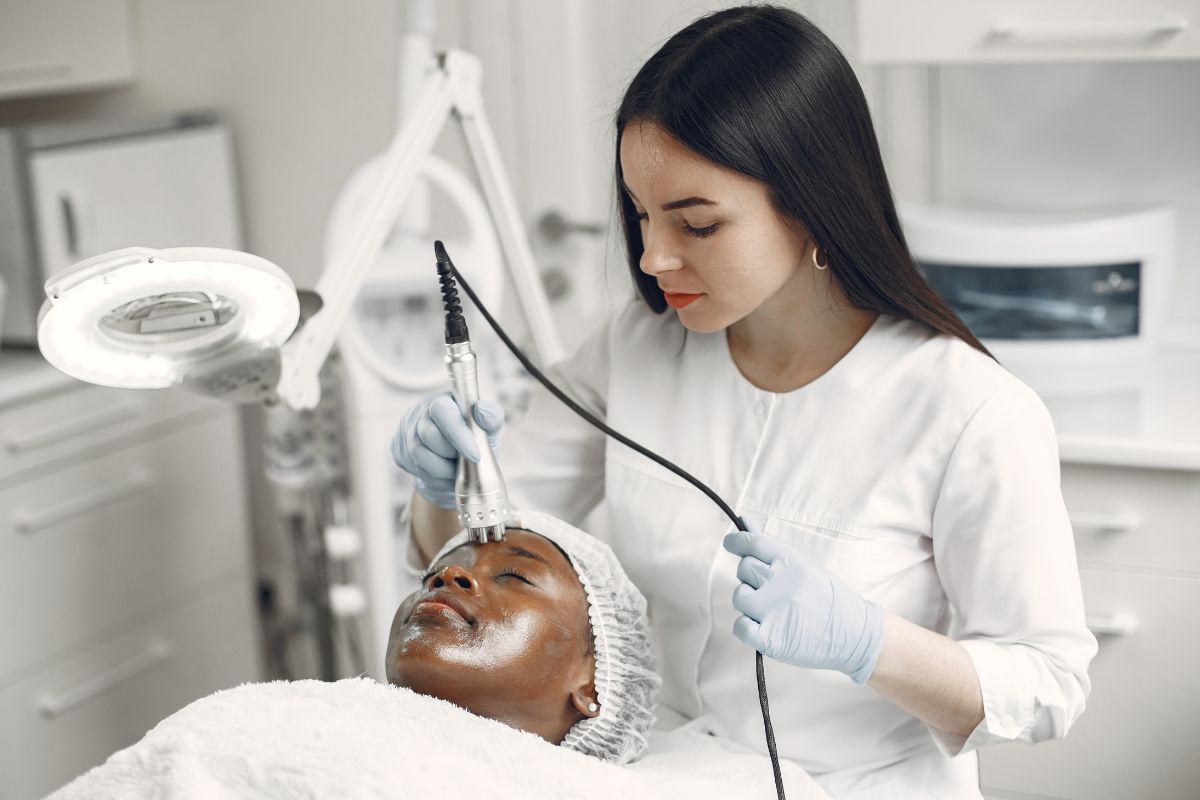
Has an aesthetician ever treated your acne or rosacea? Many spas and skin clinics promise big results. But are these workers trained to prescribe medicine? Let’s look at the facts.
What Is an Aesthetician?
An aesthetician is a skin care worker. They are trained in things like facials, hair removal, and general skin care. They often work in spas, salons, or skin clinics.
Aestheticians are skilled at beauty treatments. But they do not have medical training. They cannot diagnose or treat medical skin problems.
What Is an Esthetician? Is It the Same Thing?
“Esthetician” and “aesthetician” sound alike. In many places, the words mean the same job. But sometimes, “aesthetician” refers to a medical aesthetician a skin worker who works inside a clinic under a doctor’s watch. An esthetician often works in spas and salons and focuses more on beauty, not medical care.
Either way, neither one is a licensed dermatologist. Neither can act as a full skin doctor.
What Can an Aesthetician Do?
An aesthetician helps make healthy skin look better. They often offer:
- Facials
- Skin cleansing
- Hair removal
- Microdermabrasion
- Light chemical peels
- HydraFacial treatments
- Skincare tips
- Suggestions for over-the-counter skincare products
But an aesthetician cannot:
- Diagnose skin diseases
- Prescribe medicine
- Do medical skin procedures, like laser surgery or Botox
Why This Difference Matters
Many people mix up aestheticians and dermatologists. Both work with skin. But their training is very different. Their allowed treatments are different too.
If you pick the wrong expert, you could miss a real problem. Conditions like acne, rosacea, eczema, psoriasis, skin infections, or even skin cancer need a real doctor. Knowing who can legally diagnose and treat skin helps keep you safe.
Why Can’t Aestheticians Prescribe Dermatology Treatments?
1. No Medical Degree
Aestheticians learn beauty skills. They do not go to medical school. They are not trained to find or treat skin diseases.
2. Prescribing Rules
Only a doctor can give out prescription skin medications. This includes retinoids, antibiotics, and steroids. These drugs need a real diagnosis first.
3. Limited Medical Knowledge
Aestheticians may not know how to spot serious problems. Things like melanoma, eczema, or psoriasis need a trained eye. Can aestheticians diagnose skin conditions? No — that job belongs to a doctor.
What Can a Dermatologist Do?
A dermatologist is a real medical doctor. They study skin, hair, and nails. A dermatologist can:
- Diagnose skin conditions
- Prescribe medicine
- Treat acne, eczema, rosacea, and psoriasis
- Do skin biopsies
- Remove strange moles
- Treat skin infections
- Do laser treatments and other medical skin work
How Does Someone Become a Dermatologist?
Becoming a board-certified dermatologist takes many years. First, they finish medical school. Then, they train for several more years just in skin, hair, and nail care. After all this, they earn the right to diagnose, prescribe, and treat skin diseases. Some go on to learn even more, like advanced skin cancer surgery.
This long training is why a licensed dermatologist can do things an aesthetician cannot.
Aesthetician vs Dermatologist: Quick Comparison
Feature | Aesthetician | Dermatologist |
Medical doctor | No | Yes |
Diagnose skin diseases | No | Yes |
Prescribe medicines | No | Yes |
Treat acne medically | No | Yes |
Perform facials | Yes | Sometimes |
Chemical peels | Yes | Yes |
Skin biopsy | No | Yes |
Skin cancer diagnosis | No | Yes |
Prescription skincare | No | Yes |
When Should You Consult a Dermatologist?
Psoriasis, rosacea, and bad acne need real medical care. See a dermatologist, not an aesthetician, for these. Dermatologists know how to manage long-term skin problems. They can give you the right drugs. They can suggest medical-grade skincare too.
When Can You Visit an Aesthetician?
You can see an aesthetician for:
- Routine facials
- Skin cleansing
- Mild pigmentation care
- Basic anti-aging skin treatment
- Hydrating treatments
- Cosmetic skin upkeep
But if you have painful acne, eczema, psoriasis, rosacea, a skin infection, a strange mole, or any lasting skin problem — see a dermatologist instead.
Warning Signs You Should Not Ignore
Book a dermatologist consultation if you notice:
- Severe or lasting acne
- Frequent breakouts
- A mole that is changing
- A rash that will not go away
- Redness lasting many weeks
- A skin infection
- A skin lesion that bleeds
- Hair loss
- Nail changes
- Itching that will not stop
Myth vs Fact
Myth: Aestheticians are doctors.
Fact: Aestheticians are skin care workers. They are not licensed medical doctors.
Myth: An aesthetician can prescribe acne medicine.
Fact: Only a licensed dermatologist or doctor can prescribe medicine.
Myth: Facials can cure bad acne.
Fact: Bad acne often needs a real diagnosis and prescription treatment.
Skin Specialist vs Dermatologist: What’s the Real Difference?
The term “skin specialist” is used loosely. It can mean an aesthetician, a cosmetic therapist, or even a dermatologist who focuses on beauty work. But only a dermatologist has a full medical license. Only a dermatologist can safely treat both the medical and cosmetic sides of skin health.
A simple rule: if your skin problem might be a disease, start with a dermatologist. If it’s just routine upkeep, an aesthetician or cosmetic aesthetician can help.
How to Choose the Right Skin Expert
Before you book an appointment, check a few things:
- Check their license. A real dermatologist has a medical degree and medical council registration. An aesthetician has a cosmetology or beauty license.
- Ask about their experience. How many times have they treated your specific problem?
- Ask about the treatment plan. What are your options? What are the risks?
- Set fair expectations. How many visits will you need? How long will results last?
When Should You Book an Online Consultation?
Book an online consultation with a dermatologist if you experience:
- Persistent or severe acne that does not improve with skincare
- Red, itchy, or painful skin rashes
- Rosacea, eczema, or psoriasis flare-ups
- A mole that changes in size, shape, or colour
- A skin infection with swelling, pus, or fever
- Unexplained skin growths or sores that do not heal
- Hair loss or unusual nail changes
- Any skin condition that worsens or does not improve with over-the-counter treatments
HealthPil allows you to book an online consultation with experienced dermatologists for an accurate diagnosis, prescription treatments, and personalised skincare advice all from the comfort of your home.
How HealthPil Can Help
HealthPil connects you with qualified dermatologists. They can give you a real medical diagnosis and prescription for skin problems. Not sure if you need a dermatologist or an aesthetician? We can help guide you to the right expert for your skin.
Whether you need an online dermatologist consultation for acne treatment, rosacea treatment, psoriasis treatment, or eczema treatment, HealthPil helps you find the best dermatologist for skin problems without the guesswork.
Summary
Aestheticians provide cosmetic skincare services but cannot diagnose skin diseases or prescribe medications. Dermatologists are licensed medical doctors who diagnose and treat skin, hair, and nail conditions. For medical skin problems like acne, rosacea, eczema, psoriasis, or suspicious moles, consult a dermatologist, while aestheticians are best suited for routine skincare and cosmetic treatments.
Frequently Asked Questions
1. Can an aesthetician prescribe dermatology treatments?
No. Aestheticians cannot prescribe prescription medications or medical dermatology treatments. Only licensed dermatologists and qualified medical doctors can do so.
2. What is the difference between an aesthetician and a dermatologist?
An aesthetician provides cosmetic skincare services such as facials and chemical peels, while a dermatologist is a medical doctor who diagnoses and treats skin, hair, and nail conditions.
3. Should I see an aesthetician or a dermatologist for acne?
If you have mild skincare concerns, an aesthetician may help with cosmetic treatments. However, persistent, moderate, or severe acne should be treated by a dermatologist.
4. Can an aesthetician diagnose skin diseases?
No. Aestheticians are not licensed to diagnose skin diseases such as eczema, psoriasis, rosacea, skin infections, or skin cancer.
5. When should I book an online consultation with a dermatologist?
Book an online consultation if you have persistent acne, unusual rashes, changing moles, skin infections, eczema, psoriasis, rosacea, or any skin condition that does not improve with over-the-counter skincare products.
References
- Alam M, et al. Aesthetician Role in Facial Plastic Surgery and Systemic Therapy for Healthy Skin. Available at:
PubMed - Arora G, Arora S. Medical Aesthetics – Current Trends and a Review of Its Applications. Available at:
PMC
Disclaimer:
This article is for informational purposes only. Always consult a licensed healthcare provider for diagnosis and treatment of skin conditions.

Read our editorial policy