

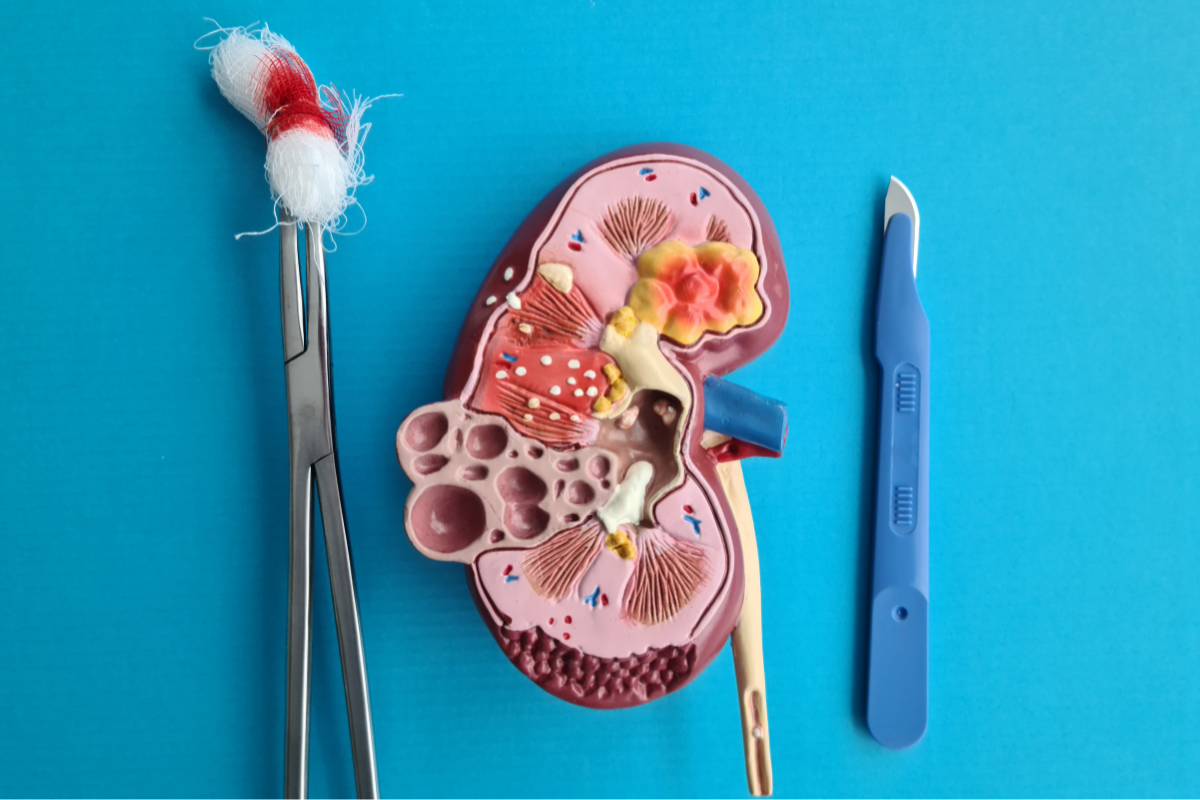
For patients with chronic kidney disease (CKD) whose kidneys have severely lost their ability to filter waste and maintain fluid balance, kidney transplantation can be an important treatment option. A kidney transplant replaces the function of failed kidneys with a healthy kidney from a living or deceased donor and may provide greater independence from dialysis and an improved quality of life.
However, many patients and families have questions about when a kidney transplant is needed, who is eligible, whether dialysis is required before transplantation, how donors are matched, what the surgery involves, and what recovery and long-term care look like. This guide explains the kidney transplant process, eligibility, donor options, risks, recovery, benefits, and common myths in simple terms.
What Is a Kidney Transplant?
Your kidneys are two small organs. They clean your blood. They remove waste and extra water from your body. When kidneys stop working well, waste builds up and makes you sick.
A kidney transplant (also called kidney transplantation or renal transplant) is a surgery. In this surgery, doctors place a healthy kidney from a donor into your body. This new kidney does the job your own kidneys can no longer do.
The old kidneys usually stay inside your body. Doctors only remove them if there is a special medical reason. The new kidney is placed lower in your belly, and it is joined to your blood vessels and bladder.
This kind of kidney transplant surgery is one of the main treatments for kidney transplant for kidney failure, alongside dialysis.
Why Do People Need a Kidney Transplant? Common Causes
Kidney failure does not happen overnight for most people. It builds up slowly, often because of another health problem. The most common causes are:
- Diabetes – High blood sugar over many years damages the tiny filters inside the kidney.
- High blood pressure – Constant pressure wears down kidney tissue.
- Glomerulonephritis – Swelling in the kidney’s filtering parts.
- Polycystic kidney disease – A condition passed down in families that causes fluid-filled sacs on the kidneys.
- Repeated kidney infections – These slowly damage kidney tissue over time.
- Birth defects or structural problems – Some people are born with kidneys that don’t work as they should.
When any of these problems lead to chronic kidney disease and kidney transplant becomes the long-term answer, doctors call it CKD and kidney transplant planning. This simply means the doctor is tracking your CKD and getting you ready in case a transplant is needed later.
When Should Kidney Transplantation Be Considered?
This is one of the most common questions families ask: when is kidney transplant needed? Here are the clearest signs.
- Your kidney function has dropped a lot (doctors often use a number called eGFR, and a value under 15 is a strong signal).
- Dialysis is no longer working well, or it’s becoming hard to manage.
- You have ongoing tiredness, swelling, high blood pressure, or other problems that pills and diet can’t fix anymore.
- You are healthy enough for surgery and don’t have an active infection or uncontrolled cancer.
So, when should kidney transplant be considered? The short answer: once your kidneys fall below about 10-15% of normal function, and your doctor feels transplant is a safe and useful option for you.
If you’re asking when is kidney transplantation recommended, know this it’s never a single test result. It’s a full picture of your kidney health, your general health, and your ability to handle surgery and lifelong care.
Kidney Transplant for End-Stage Kidney Disease (ESRD)
When kidney disease reaches its final and most serious stage, doctors call it end-stage renal disease (ESRD), also known as end stage kidney disease. At this point, the kidneys can no longer keep the body safe on their own.
Kidney transplant for end stage kidney disease is often the best long-term choice for people who are fit for surgery. So is kidney transplant for ESRD the two terms mean the same thing, just written in different ways.
Compared to staying on dialysis forever, a transplant for advanced CKD kidney transplant cases can give:
- More energy and better day-to-day life
- Fewer trips to the hospital
- A more normal diet and daily routine
- Often, a longer life
Who Needs a Kidney Transplant? Eligibility Explained
Not every person with kidney disease needs a transplant right away. Doctors look closely before deciding who needs a kidney transplant.
Kidney Transplant Eligibility Criteria
To understand kidney transplant eligibility, think of it as a checklist your transplant team goes through:
- How far your kidney disease has progressed
- Your heart and blood vessel health
- Your general fitness for major surgery
- No active infection at the time of surgery
- No cancer, or cancer that has been fully treated
- Ability to take daily medicines and attend regular check-ups
- A donor kidney that is available and a good match
Being older does not automatically stop someone from being a good candidate. Many older adults who are otherwise healthy do very well as kidney transplant candidates.
Kidney Transplant Contraindications
On the other hand, some things may delay or rule out a transplant for now. These kidney transplant contraindications can include an active infection, uncontrolled cancer, or a heart condition that makes surgery too risky. Your transplant team will explain your specific situation clearly.
Kidney Transplant Before Dialysis vs After Dialysis
Many people believe dialysis must always come first. That’s actually a myth.
Kidney transplant before dialysis, called a preemptive transplant, is possible for some patients. If you have a willing and matching living donor, and your CKD is caught early enough, you may be able to skip dialysis completely and go straight to transplant.
For others, a kidney transplant after dialysis is the more common path especially if there is no living donor ready and the patient must wait for a matched deceased donor kidney.
Both paths are normal. Your nephrologist decides which one fits your health and your donor situation. This is also why doctors recommend kidney transplant for dialysis patients be discussed early, not left for the last moment.
Kidney Transplant vs Dialysis: Which Is Better?
This is one of the biggest questions families face: kidney transplant vs dialysis, or in other words, kidney transplant or dialysis what’s the right pick?
Dialysis | Kidney Transplant | |
What it does | Machine filters your blood | New kidney filters your blood naturally |
Time needed | Several hours, several times a week | One surgery, then daily pills |
Diet | Often strict | Usually more relaxed after recovery |
Long-term outlook | Ongoing, life-sustaining | Can offer better quality of life for many years |
Dialysis is not a lesser option it saves lives every single day and is right for many people, including those waiting for a donor. But for patients who are fit for surgery and have a matching donor, a transplant usually gives more freedom and a better quality of life.
Living Donor vs Deceased Donor Kidney Transplant
A donor kidney can come from two places.
Living Donor Kidney Transplant
A living kidney donor can be a parent, sibling, spouse, friend, or any healthy adult who is a good match. The biggest plus of a living donor kidney transplant? It can be planned ahead of time, which often means a shorter wait and even a chance at a kidney transplant before dialysis.
Deceased Donor Kidney Transplant
A deceased donor kidney transplant uses a kidney from someone who has passed away and chosen to donate their organs. If you don’t have a living donor, you’ll be added to a kidney transplant waiting list after your evaluation is complete.
Your kidney transplant donor, whether living or deceased, must go through careful testing to make sure the kidney is healthy and safe to use.
How Is a Kidney Donor Matched?
Kidney donor matching is not random. The transplant team checks several things:
- Blood group – Donor and patient blood types need to work together.
- Tissue typing – This checks how close the donor and patient are on a genetic level.
- Cross-matching – A lab test that checks if your immune system might attack the donor kidney.
- Overall donor health – Full check-up of the donor’s kidneys, heart, and general fitness.
This whole process is often called kidney transplant organ matching. A close match lowers (but does not remove) the risk of rejection later.
Kidney Transplant Waiting List and Waiting Time
If you don’t have a living donor, you’ll join a kidney transplant waiting list for a deceased donor kidney. The kidney transplant waiting time is different for everyone. It depends on:
- Your blood type (some types are rarer and take longer)
- How sick you are right now
- How many donor kidneys are available in your area
- The rules of the transplant centre you’re registered with
While waiting, your care team keeps monitoring your health and may recommend dialysis to keep you stable.
Getting Ready: Kidney Transplant Preparation
Kidney transplant preparation starts long before the surgery date. This step is often called the pre-transplant evaluation, and it includes:
- Blood tests to check kidney and overall health
- Heart and lung tests
- Screening for infections
- Cancer screening, when needed
- A look at your nutrition and physical fitness
- A talk with a counsellor or social worker, if needed
- A full review of your current medicines
If you have a living donor, they go through their own separate set of tests to make sure donating is safe for them too.
How Is a Kidney Transplant Performed? The Procedure
Here’s what actually happens during kidney transplant surgery, in simple steps:
- You are given anesthesia so you feel no pain during surgery.
- The surgeon makes a cut, usually in the lower belly.
- The donor kidney is placed inside your body.
- The kidney’s blood vessels are joined to your blood vessels.
- The tube from the kidney (called the ureter) is connected to your bladder, so urine can flow out normally.
- The cut is closed, and you’re moved to recovery.
In most cases, your own kidneys are left in place. The new kidney often starts making urine right away. Sometimes it takes a little longer to wake up and start working if that happens, short-term dialysis may be used while it recovers.
This entire process, called kidney transplant treatment, usually takes a few hours in the operating room.
Risks and Complications of Kidney Transplant
Like any big surgery, there are kidney transplant risks to know about:
- Infection
- Bleeding or blood clots
- The new kidney taking time to start working
- Rejection (the body attacking the new kidney)
- Side effects from anti-rejection medicine
- High blood pressure
- Higher chance of catching infections, since the medicine that stops rejection also weakens your immune system
These kidney transplant complications don’t happen to everyone. Regular check-ups and blood tests help your doctor catch problems early, before they turn serious.
Kidney Transplant Rejection and Anti-Rejection Medicine
Kidney transplant rejection happens when your body’s immune system sees the new kidney as an outsider and tries to fight it. It doesn’t always show clear signs early on, which is why regular blood tests matter so much.
Watch out for:
- Higher blood pressure than usual
- Swelling in your legs, feet, or hands
- Less urine than normal
- Fever or feeling unwell
To lower the risk of organ rejection after kidney transplant, you’ll be given daily immunosuppressive medications after kidney transplant. These medicines calm down your immune system so it doesn’t attack the new kidney. You must take them exactly as told never skip a dose or stop on your own.
Kidney Transplant Recovery and Aftercare
Kidney transplant recovery time is different for each person, but here’s a general picture:
- Hospital stay: usually about 1-2 weeks
- Light activity: most people can walk and do small tasks within a few weeks
- Full recovery: often 6-8 weeks, though full return to normal life can take a few months
Kidney transplant aftercare means staying close to your care team even after you feel fine. This includes:
- Daily anti-rejection pills, for as long as the new kidney works
- Regular blood tests
- Watching your blood pressure
- Eating a healthy, balanced diet
- Slowly getting back to exercise
- Reporting any new symptoms right away
Life After Kidney Transplant
Life after kidney transplant can feel like getting a fresh start. Many people feel stronger, sleep better, and can go back to work, travel, and family life without the strict schedule that dialysis needs.
The biggest kidney transplant benefits people talk about are:
- Freedom from regular dialysis sessions
- More energy for daily life
- A more normal diet
- Better long-term kidney transplant quality of life
But a transplant is not a one-time fix and forget. Lifelong medicine and check-ups are part of the deal. Skipping them can put the new kidney at risk.
Kidney Transplant Success Rate
The good news? The kidney transplant success rate has improved a lot over the years, thanks to better matching, better surgery methods, and better anti-rejection medicine. Many transplanted kidneys work well for 10 to 20 years or even longer, especially when patients take their medicine correctly and attend all follow-ups.
Success also depends on things like the patient’s age, other health conditions, and whether the donor was living or deceased (living donor kidneys often last a bit longer on average).
Kidney Transplant Cost in India
India is known worldwide for good, affordable transplant care. Costs vary by city, hospital, and whether the kidney comes from a living or deceased donor, but here’s a general idea of kidney transplant cost in India:
- The total cost, including tests, surgery, and hospital stay, usually falls somewhere between ₹5 lakh and ₹15 lakh.
- Pre-transplant tests (blood work, tissue typing, cross-matching) generally add ₹50,000 to ₹1 lakh.
- Anti-rejection medicine after surgery is a monthly, lifelong cost plan for this in your budget.
- Government hospitals and certain health schemes may lower the cost significantly for those who qualify.
Because of costs like these, kidney transplant in India remains one of the most sought-after options for both local and international patients. Always ask your chosen hospital for a written, detailed cost estimate before you begin.
Busting Common Myths About Kidney Transplant
Myth 1: Only older people need kidney transplants.
Not true. People of all ages, from children to seniors, can need and benefit from a transplant. What matters most is overall health, not just age.
Myth 2: A transplanted kidney always fails eventually.
Many transplants last 10-20 years or longer with good care. Medicine and surgery methods keep improving success rates.
Myth 3: Dialysis is always safer, so transplant should be a last resort.
For most eligible patients, a transplant gives a better quality of life and fewer long-term problems than staying on dialysis forever.
Myth 4: Recovery takes many months in bed.
Modern surgery and care have shortened recovery. Many people are back to light daily activity within weeks.
Myth 5: Finding a donor is nearly impossible.
Living donors from family or friends are common, and deceased donor programs are growing steadily across India.
Myth 6: You must be on dialysis before you can get a transplant.
False. A preemptive kidney transplant done before dialysis starts is possible for suitable patients with a ready living donor.
When to See a Doctor
If you or someone with CKD is experiencing worsening kidney function or symptoms of kidney failure, it is important to speak with a nephrologist or transplant specialist early. You should seek medical advice if you have:
- eGFR below 15 mL/min or a significant decline in kidney function.
- Persistent fatigue, swelling, high blood pressure, or other symptoms that are no longer controlled with medicines and diet.
- Increasing difficulty managing or tolerating dialysis.
- Symptoms such as less urine than usual, swelling of the legs or hands, fever, or feeling unwell, particularly after a kidney transplant, as these can require prompt evaluation.
- Any new or worsening symptoms after transplantation; regular follow-ups and blood tests are important for detecting complications early.
Early consultation with a nephrologist and transplant team can help determine whether transplantation, dialysis, or another treatment approach is appropriate for your condition.
How HealthPil Can Help
Choosing the right path for kidney care is a big decision, and you don’t have to figure it out alone. At HealthPil, we connect you with skilled nephrologists and transplant specialists who can walk you through every option from managing early CKD to guiding you step by step through the transplant process. Our team is here to support you before, during, and after your transplant, so you can focus on feeling better.
Summary
Kidney transplantation is an important treatment for patients with advanced CKD or kidney failure. A healthy kidney from a living or deceased donor can restore kidney function and improve quality of life.
Transplantation may be considered when kidney function is severely reduced, including eGFR below 15, depending on the patient’s overall health and suitability for surgery. Dialysis is not always required before transplantation if a suitable living donor is available.
Before transplant, patients undergo medical evaluation and donor matching. After surgery, lifelong anti-rejection medicines, regular follow-ups, and blood tests are required to protect the transplanted kidney.
FAQs
1. When is a kidney transplant needed for CKD?
A kidney transplant may be considered when CKD progresses to kidney failure, particularly when kidney function becomes severely reduced and the patient is medically suitable for transplantation. The decision is based on overall health and not on eGFR alone.
2. Can I get a kidney transplant before dialysis?
Yes. A preemptive kidney transplant can be performed before dialysis for some suitable patients, particularly when a compatible living donor is available.
3. Who can donate a kidney?
A kidney may come from a living donor, such as a parent, sibling, spouse, or friend, or from a deceased donor. Donors undergo medical testing to determine whether donation is safe and whether the kidney is suitable for transplantation.
4. What happens after a kidney transplant?
Patients require regular follow-up, blood tests, blood-pressure monitoring, healthy lifestyle habits, and daily anti-rejection medicines for as long as the transplanted kidney functions.
5. Can a transplanted kidney be rejected?
Yes. Kidney transplant rejection occurs when the body’s immune system attacks the transplanted kidney. Anti-rejection medicines are prescribed to reduce this risk, and regular blood tests help doctors detect problems early.
References
- Abramyan S, Hanlon M. Kidney Transplantation. StatPearls Publishing. Available at:
PubMed - Abramyan S, Hanlon M. Kidney Transplantation. StatPearls Publishing. Available at:
NCBI Bookshelf
Disclaimer:
This article is for educational purposes and should not be considered medical advice. Always consult your healthcare provider for personalised medical recommendations.

Read our editorial policy