

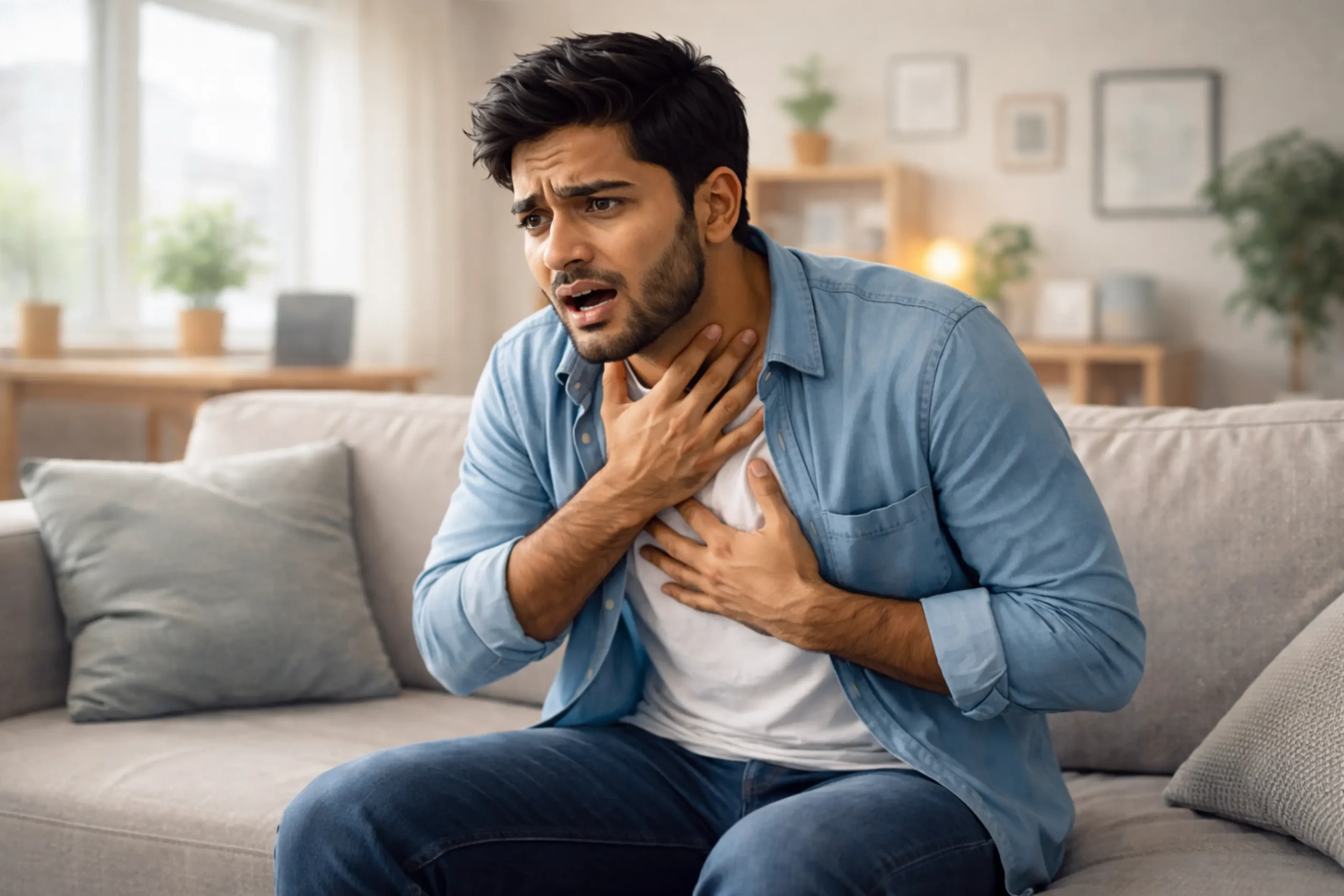
Panic attacks and anxiety attacks can feel frightening, but they are not dangerous. Knowing what happens in your body during a panic attack can help you manage it better. This understanding may also reduce how often panic attacks occur.
This guide explains panic attacks: what they are, why they happen, and how to stop them effectively.
What Is a Panic Attack?
A panic attack is a sudden episode of intense fear or discomfort that peaks within minutes. It appears to come out of nowhere; sometimes even while you are asleep or relaxed.
A panic attack can be very uncomfortable, but it’s not life-threatening. It is an overreaction of your body’s internal alarm system. Understanding this is one of the most important steps in managing it.
Common symptoms of a panic attack
Symptoms often appear without warning and can last from 5 to 30 minutes. You may experience some or many of the following symptoms:
- Racing or pounding heartbeat
- Shortness of breath
- Chest tightness or pain
- Dizziness or lightheadedness
- Sweating or chills
- Trembling or shaking
- Nausea or stomach upset
- Numbness or tingling
- Fear of losing control
- Feeling detached from reality
- Fear of dying
The Science Behind a Panic Attack
A panic attack occurs when the body’s stress response activates in an instant. This is the same system the body uses when it senses danger. The brain sends signals that start the fight or flight response. This triggers the release of adrenaline.
Adrenaline causes several changes in the body. The heart beats faster to pump blood to muscles. Breathing quickens, and muscles tense up. These changes aim to help the body respond to a threat with efficiency.
A panic attack triggers this response, even without real danger. The brain can misread signals. Stress, emotional overload, fatigue, caffeine, and heart rate changes can all affect us.
When adrenaline kicks in, you may feel:
- fast heartbeat
- breathlessness
- dizziness
- chest pain
These feelings can seem dangerous. This can make you more anxious, which further increases the body’s stress response for a short period.
Why does a panic attack feel so dangerous?
During a panic attack, the symptoms can feel very intense. Many people feel chest tightness, a fast heartbeat, or shortness of breath. They may also feel dizzy or sense that something is wrong. Panic attacks can feel like heart problems. That’s why they can be so scary.
This happens because the body is in a stress response. Adrenaline causes real physical changes. The brain might see these signs as a serious health issue. This reaction is a biological response, not a sign of weakness or drama.
Panic attacks do not cause heart attacks. They won’t lead to brain damage or loss of consciousness, either. This is true in a medical setting. The symptoms feel strong, but the episode usually goes away on its own after a bit. Knowing this can help you stay calmer while the attack passes.
Effective ways to stop a panic attack
You can’t stop a panic attack right away. However, a few simple steps can help. They can make it feel less intense and help it to calm down faster.
1. Slow your breathing
Try to slow your breathing with intention. Breathe in for about 4 seconds, take a short pause, and then breathe out for about 6 seconds. A longer exhale helps calm the body. It reduces the adrenaline response in a progressive manner. Continue this for a few minutes.
2. Use grounding techniques
Bring your attention back to the present moment. A simple method is the 5-4-3-2-1 technique
- things you can see
- things you can touch
- things you can hear
- things you can smell
- things you can taste
This helps shift your focus away from anxious thoughts and back to your surroundings.
3. Relax your muscles with intention.
During panic, the body becomes tense without us noticing. Try to relax your muscles by focusing your mind on each muscle group. Use these tips: unclench your jaw, relax your hands, drop your shoulders. A full scan of your body, from head to toe, helps relieve tension. This lets your brain know you are safe.
4. Remind yourself what is happening
Tell yourself: “This is a panic attack. It feels uncomfortable, but it is not dangerous. It will pass.” Understanding what is happening in your body can reduce the fear that keeps the cycle going.
5. Stay where you are if it is safe
If the environment is safe, try not to immediately leave the situation. When people often escape from places of panic, their brains link those spots to danger. Staying until the symptoms fade can help retrain your brain. It shows that the situation isn’t harmful.
How to Reduce the Chances of Future Panic Attacks
Certain daily habits can make panic attacks less frequent over time. If you’re looking for professional guidance, you can online doctor consultation services to connect with experienced doctors and mental health experts.
Sleep well
Poor sleep increases stress hormones and makes the brain more sensitive to anxiety. Aim for around 7–8 hours of sleep each night.
Reduce caffeine
Caffeine is a stimulant and can cause symptoms like a fast heartbeat or restlessness. In people prone to panic attacks, cutting down on coffee, tea, and energy drinks can help.
Engage in exercise on a regular basis
Exercise gets rid of adrenaline; it also helps with stress
Practice Regular Stress Management
Simple practices can help manage stress. Breathing exercises, meditation, and yoga are great options. Taking quiet breaks during the day also helps
Limit alcohol
Alcohol can disrupt sleep and raise anxiety as it wears off; this can lead to panic symptoms
Consider Psychological Therapy
If panic attacks occur often, Cognitive Behavioural Therapy (CBT) can provide significant help. It aims to understand panic attacks. It also seeks to change the thoughts and reactions that cause them.
When Panic Attacks May Signal a Panic Disorder
Occasional panic attacks from stress are common. They don’t always mean there is a deeper issue. However, you may be dealing with panic disorder or an anxiety disorder if:
- You have had four or more panic attacks in a month
- You spend significant time worrying about when the next one will happen
- You have started avoiding places or situations because of the fear of having an attack
- The attacks are affecting your work, relationships, or daily life
In these situations, it’s important to talk to a doctor or a mental health expert. Most people find therapy, medication, or a mix of both effective.
If this is your first panic attack, see a doctor right away. Also, seek help if you have:
- Chest pain
- Severe shortness of breath
- Pain in your arm or jaw
- Any neurological symptoms
Panic attack symptoms can resemble heart attack symptoms in a striking way. A doctor must check for these conditions before linking symptoms to panic alone.
This is key for people over 40. It also matters for those with heart disease. Anyone whose symptoms feel different or worse should pay attention too.
When panic attack symptoms may be a sign of another medical condition
Panic attacks are common and usually not harmful. However, some medical conditions can cause symptoms that seem similar. Some symptoms can happen for reasons other than panic. These include chest pain, a fast heartbeat, dizziness, and breathlessness. They can come from other issues too. So, your doctor needs to examine your symptoms with great attention. This helps rule out other medical conditions.
Certain heart conditions can sometimes mimic panic attacks. These include abnormal heart rhythms, angina, or in rare cases, a heart attack.
Heart symptoms can include:
- Ongoing chest pressure
- Pain spreading to the arm, jaw, or back
- Symptoms that get worse with physical activity
Some neurological conditions can cause sudden fear. They may also lead to confusion or strange sensations. Certain focal seizures or migraine types can look like panic episodes. If you have panic like symptoms, confusion, or weakness, see a doctor. Speech problems or strange feelings are also reasons to get help.
Several hormonal or metabolic conditions can also trigger symptoms like panic attacks.
These include:
- Thyroid disorders, especially hyperthyroidism
- Low blood sugar
- Severe anemia
- Certain adrenal gland conditions
Stimulant medications, recreational drugs, or excessive caffeine intake can also produce similar symptoms.
When You Should See a Doctor
You should seek medical evaluation if:
- This is your first panic attack
- You have chest pain, severe breathlessness, or fainting
- Pain radiates to the arm, jaw, neck, or back
- Symptoms occur during physical exertion
- You experience confusion, weakness, numbness, or speech difficulties
- Episodes are new, worsening, or different from previous attacks
- Panic attacks occur often and disrupt daily life.
Your doctor might do a clinical exam. They may also order tests like an ECG, blood tests, or thyroid function tests. This helps rule out any underlying medical issues.
After ruling out serious medical conditions, focus on managing panic attacks. Use lifestyle changes, therapy, and medication if necessary. Many people see big changes when they know what is going on and get the right help.
If panic attacks are affecting your daily life, speaking with a mental health professional can make a difference. Therapy and the right guidance can help you understand your triggers and learn ways to manage anxiety more effectively.
If you’d like to speak with a qualified psychologist or psychiatrist online, you can connect with experienced mental health professionals and book a consultation with a qualified expert to get the support you need.
