

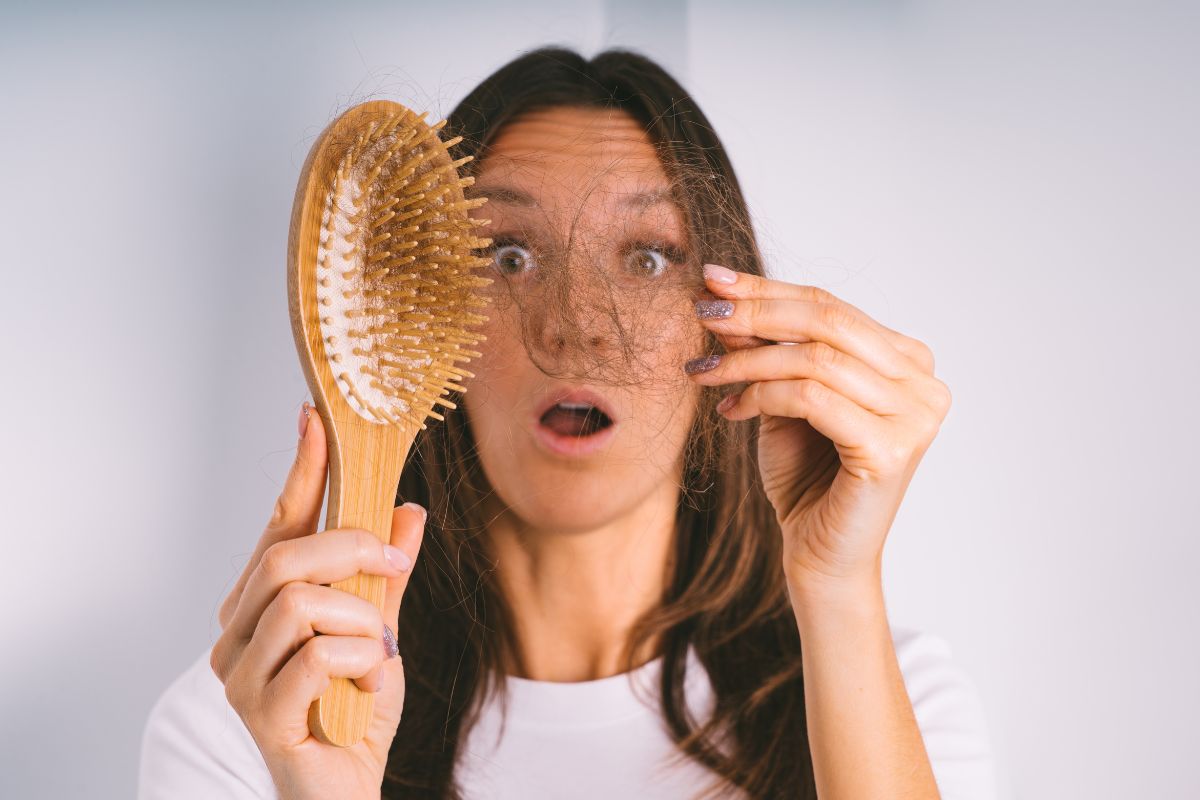
You notice it first in the shower drain. Then on the pillow. Then in the brush more than usual, more than what feels normal.
You start wondering if you’re imagining it. You’re not.
Hair loss in women is far more common than most people assume and far more talked-about among men than women, even though it affects a significant number of women too. The good news is that understanding what’s actually causing it is the real first step toward fixing it, rather than trying random shampoos and hoping for the best.
What Is Hair Loss in Women?
Hair loss in women is most commonly known as female pattern hair loss, or androgenetic alopecia in medical terms. It’s a gradual thinning of hair on the scalp, and it’s the most frequent cause of hair loss in women overall.
Unlike male pattern baldness which usually shows up as a receding hairline and bald patches female pattern hair loss tends to look different. Thinning typically happens across the top and crown of the scalp, while the hairline itself usually stays intact. It’s more of a diffuse thinning than a specific bald spot.
That said, “hair loss” isn’t always this one condition. Several different things can cause hair to thin or shed which is exactly why identifying the real cause matters so much.
How Common Is Hair Loss in Women?
Hair loss in women is often overlooked, but it’s genuinely widespread. Studies suggest that up to 40% of Indian women notice visible hair loss by the time they turn 40.
It’s easy to assume hair loss is “more of a men’s issue” — but that’s simply not accurate. Many women experience it at some point, and the earlier it’s addressed, the more manageable it tends to be.
Understanding the Hair Growth Cycle
To understand hair loss, it helps to know how hair normally grows. Every strand goes through three phases:
Anagen (Growth Phase) — The active phase where hair follicles produce hair that keeps growing, sometimes for years.
Catagen (Transition Phase) — A short phase, lasting two to three weeks, where the hair follicle shrinks and detaches from its blood supply.
Telogen (Resting Phase) — Lasting around three months, this is when hair rests before eventually shedding, and the follicle starts the cycle again.
Normally, only a small percentage of hairs are in the resting/shedding phase at any given time which is why some daily hair loss is completely normal. Problems arise when something pushes too many hairs into the resting phase at once, or disrupts the cycle altogether. This is exactly what happens in several of the conditions below.
Types of Hair Loss in Women
Not all hair loss looks or behaves the same way. Here are the most common types:
Female Pattern Hair Loss (Androgenetic Alopecia) — The most common type. Gradual thinning at the top and crown, hairline usually intact. Often hereditary, influenced by hormones and age.
Telogen Effluvium — A sudden disruption to the hair cycle that pushes large numbers of hairs into the resting (telogen) phase prematurely. Triggered by things like childbirth, illness, surgery, major stress, or certain medications. It usually causes diffuse shedding rather than specific bald spots — and is often temporary.
Alopecia Areata — An autoimmune condition where the immune system mistakenly attacks hair follicles, causing sudden, patchy hair loss. In rarer cases, it can progress to total scalp hair loss or loss of all body hair.
Traction Alopecia — Caused by repeated pulling or tension on hair, often from tight hairstyles like braids, ponytails, or extensions. Common around the hairline or wherever the tension is greatest.
Trichotillomania — A psychological condition involving the compulsive urge to pull out one’s own hair, leading to noticeable patchy loss.
Cicatricial (Scarring) Alopecia — A rarer group of conditions where inflammation permanently destroys hair follicles, leading to scarring and irreversible hair loss in the affected area.
Signs of Hair Loss in Women
- Increased shedding — more hair in your brush, shower drain, or on your pillow
- Thinning hair, especially around the crown or the parting
- A visibly widening hair part
- A receding hairline (less common in women than men, but possible)
- Bald patches or areas of visibly sparse hair
- Hair becoming finer or more brittle
- More visible scalp than usual
- Slower hair growth, or difficulty growing hair past a certain length
- An itchy or tender scalp alongside shedding
Noticing more than one of these together is a stronger signal than any single sign on its own.
What Causes Hair Loss in Women?
Genetics — Just as in men, genetics play a major role in female pattern hair loss. It can be inherited from either side of the family and sometimes starts as early as puberty.
Hormonal Imbalances — Pregnancy, childbirth, menopause, and PCOS (polycystic ovary syndrome) can all disrupt hormone levels enough to affect hair growth and shedding.
Medical Conditions — Thyroid disorders (both hypothyroidism and hyperthyroidism), autoimmune diseases, and scalp infections can all interfere with normal hair follicle function.
Nutritional Deficiencies — Low levels of iron, zinc, biotin, protein, or vitamins A, D, and E can weaken hair and disrupt the growth cycle.
Stress — Significant physical or emotional stress can trigger telogen effluvium, pushing hair into the shedding phase all at once.
Over-Styling and Hair Care Practices — Tight hairstyles, harsh chemical treatments, and frequent heat styling can stress hair follicles, causing breakage or traction alopecia over time.
Medications — Certain drugs, including chemotherapy, some antidepressants, blood thinners, and hormonal contraceptives, list hair loss as a possible side effect.
Age — As women age, hair growth naturally slows and follicles can shrink, leading to thinner, less dense hair over time.
Sudden Weight Loss — Rapid, significant weight loss can shock the body’s system enough to trigger temporary telogen effluvium.
How Is Hair Loss in Women Diagnosed?
A dermatologist typically starts by asking about your hair loss pattern, timeline, family history, diet, stress levels, and any recent illnesses, medications, or hormonal changes.
From there, they may:
- Examine the scalp and hair pattern closely to identify which type of hair loss is likely
- Recommend blood tests to check thyroid function, iron levels, and hormone levels — especially if PCOS or a thyroid condition is suspected
- In some cases, perform a small scalp biopsy if the cause isn’t clear from examination and blood work alone
Getting an accurate diagnosis matters because treatment for genetic hair loss looks very different from treatment for stress-related shedding or a thyroid-driven cause.
Effective Solutions for Hair Loss in Women
Minoxidil — The only topical treatment FDA-approved specifically for female pattern hair loss. Applied directly to the scalp, typically twice daily, it helps prolong the hair growth phase. Available over-the-counter in various strengths.
Oral Medications — Finasteride is commonly used for male pattern baldness but isn’t typically prescribed for women due to potential side effects. Some women may instead benefit from spironolactone or hormonal treatments to help regulate the hormonal drivers of hair loss — always under medical guidance.
Nutritional Supplements — If deficiency is the underlying cause, supplements with biotin, vitamin D, vitamin E, iron, or zinc may help — but should be taken under a healthcare professional’s guidance rather than self-prescribed.
Platelet-Rich Plasma (PRP) Therapy — A treatment where a concentrated solution of platelets from your own blood is injected into the scalp to stimulate hair follicles. Usually requires multiple sessions for visible results.
Low-Level Laser Therapy (LLLT) — Uses low-level laser light on the scalp, believed to stimulate follicles and improve density. Available as in-clinic treatment or handheld home devices, generally considered safe but needs consistent use over months.
Hair Transplantation — For more advanced hair loss, follicles are moved from a donor area (often the back of the scalp) to thinning areas. Offers permanent, natural-looking results but requires consultation with a qualified surgeon to assess candidacy.
Scalp Micropigmentation (SMP) — A non-surgical technique that tattoos tiny dots on the scalp to mimic the look of hair follicles, often used to create the illusion of thicker hair.
Stress Management — Yoga, meditation, and deep breathing genuinely help reduce stress-triggered shedding, particularly for telogen effluvium.
Lifestyle Adjustments — A balanced diet, regular exercise, and gentle hair care practices support overall hair health alongside any medical treatment.
Can Hair Loss in Women Be Prevented?
Not always genetic and certain medical causes can’t be fully prevented. But these steps genuinely reduce risk and support healthier hair:
- Maintain a balanced diet with adequate protein, iron, zinc, biotin, and vitamins D and E
- Manage stress through activities that genuinely work for you meditation, exercise, hobbies
- Avoid harsh chemical treatments and excessive heat styling
- Choose looser hairstyles instead of consistently tight ponytails, braids, or buns
- Be gentle with wet hair — it’s more prone to breakage, so avoid vigorous towel-drying or brushing
- Protect hair from prolonged sun exposure and environmental pollutants
- Manage underlying conditions like thyroid disorders with your doctor’s guidance
- Keep the scalp clean with regular, gentle washing, and consider scalp massage to support blood flow
- Avoid smoking, which has been linked to both hair loss and premature greying
When Should You See a Doctor?
Occasional shedding while combing isn’t usually a concern. See a dermatologist if:
- Hair loss is sudden or significantly more than usual over a short period
- Shedding comes with scalp itching, redness, pain, or tenderness
- You notice visible bald patches or distinct areas of thinning
- Hair loss continues or worsens several months after pregnancy or childbirth
- You have an underlying condition like thyroid disease, an autoimmune disorder, or are undergoing treatments like chemotherapy
- There’s a strong family history of hair loss and you want to understand your own risk
- Hair thinning or slow growth persists despite trying general hair care improvements
An online dermatologist consultation through HealthPil can help you understand exactly what’s driving your hair loss and which treatment path actually fits your situation rather than guessing your way through products.
How HealthPil Can Help
HealthPil connects you with experienced dermatologists who specialise in women’s hair health. Whether you need help identifying the cause of your hair loss, guidance on Minoxidil or other treatments, or information on options like PRP therapy or hair transplants expert, personalised support is available through an online consultation from wherever you are. Book your online dermatologist consultation with HealthPil today..
Summary
Hair loss in women most commonly female pattern hair loss affects a significant number of women, with studies suggesting up to 40% of Indian women notice it by age 40. It can stem from genetics, hormonal changes, thyroid or autoimmune conditions, nutritional deficiencies, stress, over-styling, or certain medications, and shows up in different forms: female pattern hair loss, telogen effluvium, alopecia areata, and traction alopecia among them.
Treatment options range from Minoxidil and nutritional support to PRP therapy, laser therapy, and hair transplantation, depending on the underlying cause. Since treatment differs significantly based on what’s actually driving the hair loss, getting an accurate diagnosis from a dermatologist rather than trying products at random is the most effective place to start.
Frequently Asked Questions
1. What are the most common causes of hair loss in women?
Hair loss in women can occur due to several reasons, including genetics, hormonal changes, stress, nutritional deficiencies, thyroid disorders, autoimmune diseases, certain medications, and excessive hairstyling. Identifying the underlying cause is essential for choosing the right treatment.
2. Can hormonal changes such as PCOS, pregnancy, or menopause cause hair loss?
Yes. Hormonal fluctuations caused by pregnancy, childbirth, menopause, and polycystic ovary syndrome (PCOS) can disrupt the normal hair growth cycle, leading to excessive hair shedding or gradual hair thinning. Treating the hormonal imbalance often helps improve hair growth.
3. How do I know if my hair loss is temporary or permanent?
Temporary hair loss is commonly caused by stress, illness, nutritional deficiencies, or hormonal changes and often improves once the underlying cause is treated. Permanent hair loss, such as female pattern hair loss (androgenetic alopecia), develops gradually over time and usually requires long-term treatment. A dermatologist can help determine the exact cause.
4. What is the best treatment for hair loss in women?
The best treatment depends on the underlying cause. Common treatment options include Minoxidil, nutritional supplements, stress management, Platelet-Rich Plasma (PRP) therapy, Low-Level Laser Therapy (LLLT), medications for hormonal hair loss, and hair transplantation for advanced cases. A dermatologist can recommend the most suitable treatment plan.
5. Can vitamin deficiencies and stress lead to excessive hair fall?
Yes. Deficiencies in essential nutrients such as iron, zinc, biotin, vitamin D, and protein can weaken hair follicles and increase hair shedding. Physical or emotional stress can also trigger telogen effluvium, a condition that causes sudden and excessive hair loss. Correcting nutritional deficiencies and managing stress can help restore healthy hair growth.
6. When should I consult a dermatologist for hair loss?
You should consult a dermatologist if you notice sudden or excessive hair loss, widening of the hair part, bald patches, persistent hair thinning, scalp itching or redness, or if hair loss continues despite proper hair care. Early diagnosis and treatment improve the chances of successful hair regrowth.
7. Can female hair loss be prevented or reversed?
Not all types of female hair loss can be prevented, especially those caused by genetics. However, maintaining a balanced diet, reducing stress, avoiding harsh hair treatments, managing underlying medical conditions, and seeking early medical treatment can slow hair loss and, in many cases, promote healthy hair regrowth.
References
- Ramos PM, Melo DF, Radwanski H, de Almeida RFC, Miot HA. Female-Pattern Hair Loss: Therapeutic Update. Available at:
PubMed - Ramos PM, Melo DF, Radwanski H, de Almeida RFC, Miot HA. Female-Pattern Hair Loss: Therapeutic Update. Available at:
PMC
Disclaimer:
This article is for informational purposes only. Always consult a healthcare provider before starting any treatment for hair loss.

Read our editorial policy