

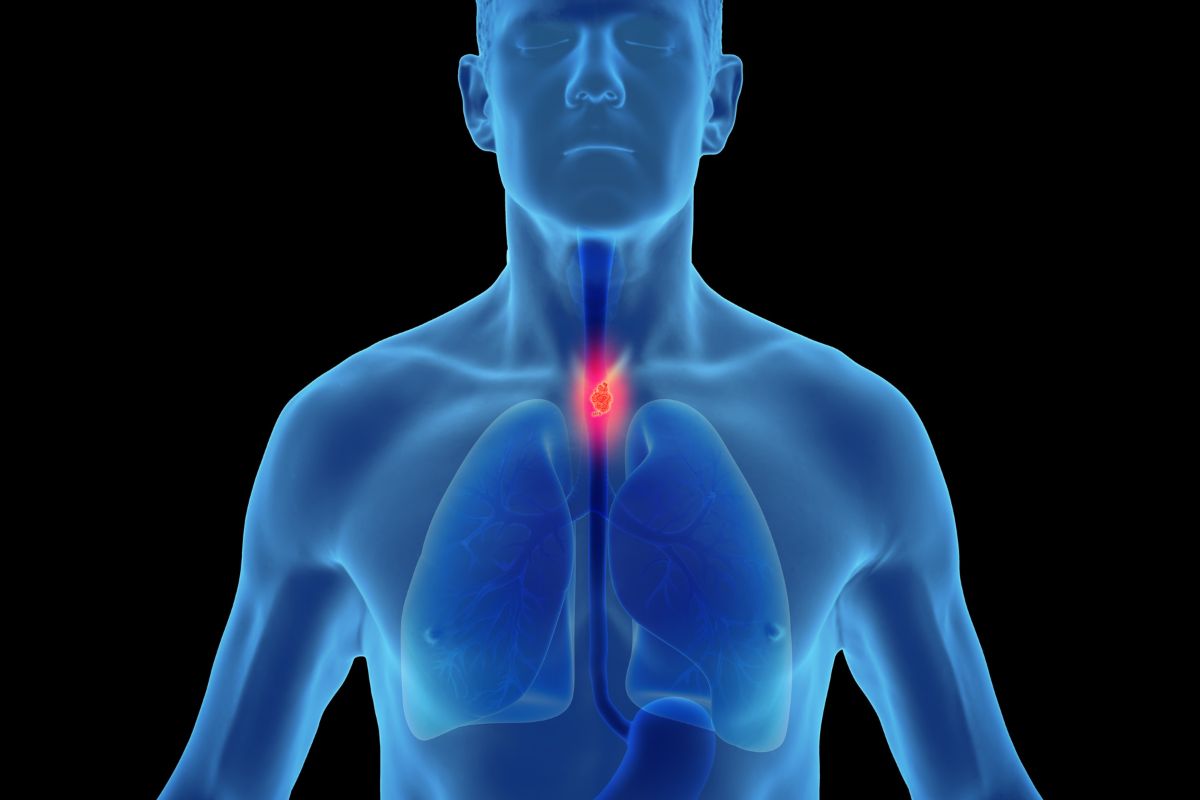
Esophageal cancer sometimes spelled oesophageal cancer is one of those diagnoses that tends to arrive late, because its early warning signs are easy to dismiss. A little difficulty swallowing. Some persistent heartburn. Feeling like food is getting “stuck.” These things happen to everyone occasionally, right?
Sometimes. But when they keep happening when they persist and gradually worsen they need to be taken seriously. Because food pipe cancer caught early is treatable. Caught late, it becomes significantly harder to manage.
This article covers everything you need to know symptoms, risk factors, screening, diagnosis, and treatment in plain language, without the panic.
What Is Esophageal Cancer?
Esophageal cancer develops in the esophagus the muscular tube that moves food and liquids from the mouth to the stomach during swallowing. It occurs when abnormal cells begin growing uncontrollably in the lining of this tube, eventually forming an esophageal tumour that can block the passage and spread to other organs.
It is not among the most common cancers, but it is among the more serious ones primarily because it tends to be diagnosed late, when treatment options are more limited.
Types of Esophageal Cancer
Not all esophageal carcinoma is the same. There are two main types, and they behave differently:
Squamous cell carcinoma of the esophagus — develops in the flat cells lining the upper and middle parts of the esophagus. It’s strongly linked to smoking and alcohol use, and is more common in India and other parts of Asia.
Esophageal adenocarcinoma — develops in the lower esophagus, in glandular cells. It’s closely associated with chronic acid reflux, GERD, and Barrett’s esophagus — a condition where the lining of the lower esophagus changes due to repeated acid exposure.
Small cell carcinoma of the esophagus — rare but aggressive. It behaves similarly to small cell lung cancer and requires a different treatment approach.
Understanding which type is present matters enormously for treatment planning.
Early Signs of Esophageal Cancer You Shouldn’t Ignore
The most frustrating thing about esophageal cancer symptoms is how ordinary they feel at first. Here’s what to watch for and when to stop waiting:
Difficulty swallowing (dysphagia) is the most common and most telling early sign. It usually starts with solid foods a sense that food is moving slowly or getting stuck and gradually progresses to softer foods and eventually liquids. If swallowing has been getting harder over weeks or months, this is not something to manage with antacids and hope.
Persistent heartburn and chronic indigestion — occasional heartburn is normal. But heartburn that happens frequently, doesn’t respond to medication, or is getting worse over time is a different matter. Chronic acid reflux and GERD are known risk factors for esophageal adenocarcinoma, particularly when they’ve been present for years without proper management.
Unexplained weight loss — losing weight without trying, particularly in the context of difficulty swallowing, is a significant red flag. The body isn’t getting enough nutrition, and something is interfering with eating.
Chest pain while swallowing — a burning or pressure sensation in the chest when food passes through can indicate that a tumour is growing and affecting surrounding tissue.
Hoarseness of voice and chronic cough — when cancer begins affecting the nerves or structures near the esophagus, the voice can become rough or raspy, and a persistent cough may develop. These are later signs, but they’re sometimes the ones that finally bring a patient to the doctor.
Vomiting blood or black stools — these are serious symptoms indicating bleeding in the digestive tract. They require immediate medical attention, not a wait-and-see approach.
What Causes Esophageal Cancer?
Esophageal cancer rarely develops from a single cause. It builds over years from a combination of risk factors:
Smoking and esophageal cancer — tobacco damages the cells lining the esophagus directly. Smokers have significantly higher rates of squamous cell carcinoma of the esophagus.
Alcohol and esophageal cancer — heavy alcohol use, particularly in combination with smoking, dramatically increases risk. The two together are more dangerous than either alone.
Acid reflux and esophageal cancer / GERD and esophageal cancer — chronic acid exposure to the lower esophagus causes cellular changes over time. When these changes reach a certain point, the condition is called Barrett’s esophagus which itself is a precancerous condition that requires monitoring and sometimes treatment.
Obesity and esophageal cancer — excess weight increases abdominal pressure, worsening acid reflux and raising the risk of adenocarcinoma specifically.
HPV and esophageal cancer — certain strains of human papillomavirus have been associated with esophageal squamous cell carcinoma, particularly in regions where the virus is more prevalent.
Achalasia and esophageal cancer — this condition, where the esophagus doesn’t push food down properly, increases long-term cancer risk due to food stagnation and chronic irritation.
Tylosis disease — a rare inherited skin condition that carries a very high lifetime risk of esophageal squamous cell carcinoma.
Poor dietary habits — diets consistently low in fruits and vegetables and high in processed or very hot foods are associated with increased risk.
Esophageal Cancer Screening: Who Should Get Tested
Unlike breast or cervical cancer, esophageal cancer screening is not recommended for the general population. But for high-risk individuals, proactive monitoring makes a real difference.
Upper GI endoscopy is the most important tool. For anyone with a long history of acid reflux, confirmed Barrett’s esophagus, or significant smoking and alcohol use, regular endoscopy for esophageal cancer allows doctors to visualise the esophagus directly and take biopsies of any suspicious areas before cancer develops or while it’s still early stage.
Barium swallow test — a specialised X-ray taken after drinking a barium contrast liquid, which coats the esophagus and makes abnormalities visible. Particularly useful when dysphagia is present and an endoscopy isn’t immediately available.
CT scan for esophageal cancer and MRI for esophageal cancer imaging tests that show the extent of any tumour and whether cancer has spread to nearby lymph nodes or other organs.
If you have Barrett’s esophagus, your doctor will typically recommend surveillance endoscopy every one to three years, depending on what the previous biopsy showed.
Diagnosing Esophageal Cancer: What the Tests Actually Involve
Endoscopy and esophageal biopsy — during an upper GI endoscopy, a thin flexible tube with a camera is passed through the mouth into the esophagus. The doctor can see abnormal areas directly and take a tissue sample an esophageal biopsy for laboratory analysis. This is the definitive way to confirm cancer.
PET-CT scan — combines metabolic and structural imaging to identify whether esophageal cancer has spread to distant organs, helping with accurate staging.
Endoscopic ultrasound (EUS) for esophageal cancer — a specialised endoscopy that uses sound waves to assess how deeply the tumour has penetrated the esophageal wall and whether nearby lymph nodes are involved. Essential for staging before surgery.
Bronchoscopy — used when upper esophagus cancer is suspected of involving the airway, to check whether the tumour has grown toward the trachea.
Biomarker testing — increasingly used to identify specific molecular characteristics of the tumour, which can guide the selection of targeted therapy or immunotherapy.
Stages of Esophageal Cancer
Stage 1 esophageal cancer — cancer is limited to the inner lining of the esophagus. Highly treatable, often without the need for major surgery.
Stage 2 esophageal cancer — cancer has grown deeper into the esophageal wall or spread to one or two nearby lymph nodes. Treatable with combined approaches.
Stage 3 esophageal cancer — cancer has spread to nearby tissues or multiple lymph nodes. Treatment is more intensive and outcomes more variable.
Stage 4 esophageal cancer / metastatic esophageal cancer — cancer has spread to distant organs such as the liver or lungs. At this stage, treatment focuses on controlling the disease, managing symptoms, and maintaining quality of life.
Metastatic esophageal cancer is significantly harder to treat than early-stage disease which is why acting on symptoms early, rather than waiting, changes outcomes.
Esophageal Cancer Treatment Options
Esophagectomy surgery — removal of part or all of the esophagus is the primary surgical treatment for localised esophageal cancer. Minimally invasive esophageal surgery, including laparoscopic and robotic-assisted approaches, has reduced recovery time and complications significantly compared to traditional open surgery.
Endoscopic mucosal resection (EMR) and endoscopic submucosal dissection (ESD) — for very early-stage cancers confined to the inner lining, these endoscopic treatments can remove cancerous tissue without open surgery. They’re highly effective at this stage and represent a major advance in managing early esophageal cancer.
Chemotherapy for esophageal cancer — used to shrink tumours before surgery, eliminate remaining cancer cells after surgery, or control advanced disease. Often combined with radiation for greater effect.
Radiation therapy — targeted radiation delivered externally or, in some cases, internally, to kill cancer cells in the esophagus and surrounding lymph nodes. Usually used in combination with chemotherapy.
Targeted therapy for esophageal cancer — drugs that target specific molecules involved in cancer cell growth, particularly useful in adenocarcinoma with certain molecular markers.
Immunotherapy for esophageal cancer — checkpoint inhibitors have shown meaningful results in advanced esophageal cancer, helping the immune system recognise and attack cancer cells. This is one of the most actively developing areas of esophageal cancer treatment.
Esophageal Cancer Myths Set Straight
“Only older adults get esophageal cancer.” Risk increases with age, but younger people with significant risk factors chronic acid reflux, heavy alcohol use, smoking, Barrett’s esophagus can and do develop it.
“All heartburn leads to esophageal cancer.” It doesn’t. Most people with heartburn will never develop esophageal cancer. But chronic, untreated GERD that leads to Barrett’s esophagus does carry a meaningfully elevated risk which is why persistent heartburn deserves proper medical assessment, not just long-term antacid use.
“Esophageal cancer is always fatal.” It isn’t particularly when caught early. Stage 1 esophageal cancer has a very different prognosis from metastatic esophageal cancer. Early detection genuinely saves lives.
When Should You See a Doctor?
See a doctor if you have any of the following lasting more than two to three weeks: persistent difficulty swallowing or dysphagia that is getting worse, chronic heartburn that isn’t responding to medication, unexplained weight loss, chest pain while swallowing, hoarseness of voice, a cough that won’t go away, vomiting blood, or black stools.
If you have known risk factors Barrett’s esophagus, long-standing acid reflux and esophageal cancer concerns, a significant smoking history, or heavy alcohol use don’t wait for symptoms. Speak to a doctor about appropriate screening.
An online oncologist consultation is now available for swallowing concerns, endoscopy review, second opinions on diagnosis, and treatment planning from home, without waiting weeks for an appointment.
How HealthPil Can Help
HealthPil connects you with experienced oncologists and gastroenterologists who specialise in esophageal cancer from advising on screening for high-risk individuals, to interpreting endoscopy results, planning treatment, and providing second opinions before major decisions are made.
Whether you have a concerning symptom, an abnormal test result, or simply want to understand your risk the right specialist is available on HealthPil, online, from wherever you are.
Book your oncologist consultation with HealthPil today.
Summary
Esophageal cancer develops quietly often without significant symptoms until it has already progressed. Knowing the early signs, understanding your personal risk factors, and seeking medical evaluation promptly rather than managing symptoms on your own are what make the difference between early and late diagnosis. Food pipe cancer caught at Stage 1 is a very different situation from metastatic esophageal cancer. Pay attention to your body.
FAQs:-
1. What are the first signs of ovarian cancer?
Early signs may include persistent bloating, pelvic or abdominal pain, feeling full quickly, frequent urination, fatigue, and changes in bowel habits. If these symptoms last for more than 2–3 weeks, consult a doctor.
2. Is persistent bloating always a sign of ovarian cancer?
- No. Bloating is commonly caused by digestive problems such as gas or IBS. However, bloating that is persistent, occurs almost daily, or is accompanied by pelvic pain or early fullness should be medically evaluated.
3. Who is at a higher risk of developing ovarian cancer?
Women with BRCA1 or BRCA2 gene mutations, a family history of ovarian or breast cancer, increasing age, obesity, or endometriosis have a higher risk of developing ovarian cancer.
4. Who is at a higher risk of developing ovarian cancer?
Women with BRCA1 or BRCA2 gene mutations, a family history of ovarian or breast cancer, increasing age, obesity, or endometriosis have a higher risk of developing ovarian cancer.
5. How is ovarian cancer diagnosed?
Doctors may use a combination of a pelvic examination, transvaginal ultrasound, CA-125 blood test, CT scan, MRI, and biopsy to confirm ovarian cancer and determine its stage.
6. Can ovarian cancer be prevented?
There is no guaranteed way to prevent ovarian cancer. However, maintaining a healthy lifestyle, knowing your family history, seeking BRCA genetic counselling if recommended, and considering risk-reducing surgery for high-risk women can help lower the risk.
7.Can I book an online consultation for ovarian cancer symptoms?
There is no guaranteed way to prevent ovarian cancer. However, maintaining a healthy lifestyle, knowing your family history, seeking BRCA genetic counselling if recommended, and considering risk-reducing surgery for high-risk women can help lower the risk.
References
- Wang Y, et al. Esophageal Cancer. StatPearls Publishing. Available at:
NCBI Bookshelf - Pennathur A, Gibson MK, Jobe BA, Luketich JD. Esophageal Carcinoma. Available at:
PubMed
Disclaimer:
The information provided here is solely intended for educational purposes and should not be used in place of professional medical advice, diagnosis, or treatment. Always consult your doctor for medical advice tailored to your specific condition.

Read our editorial policy