

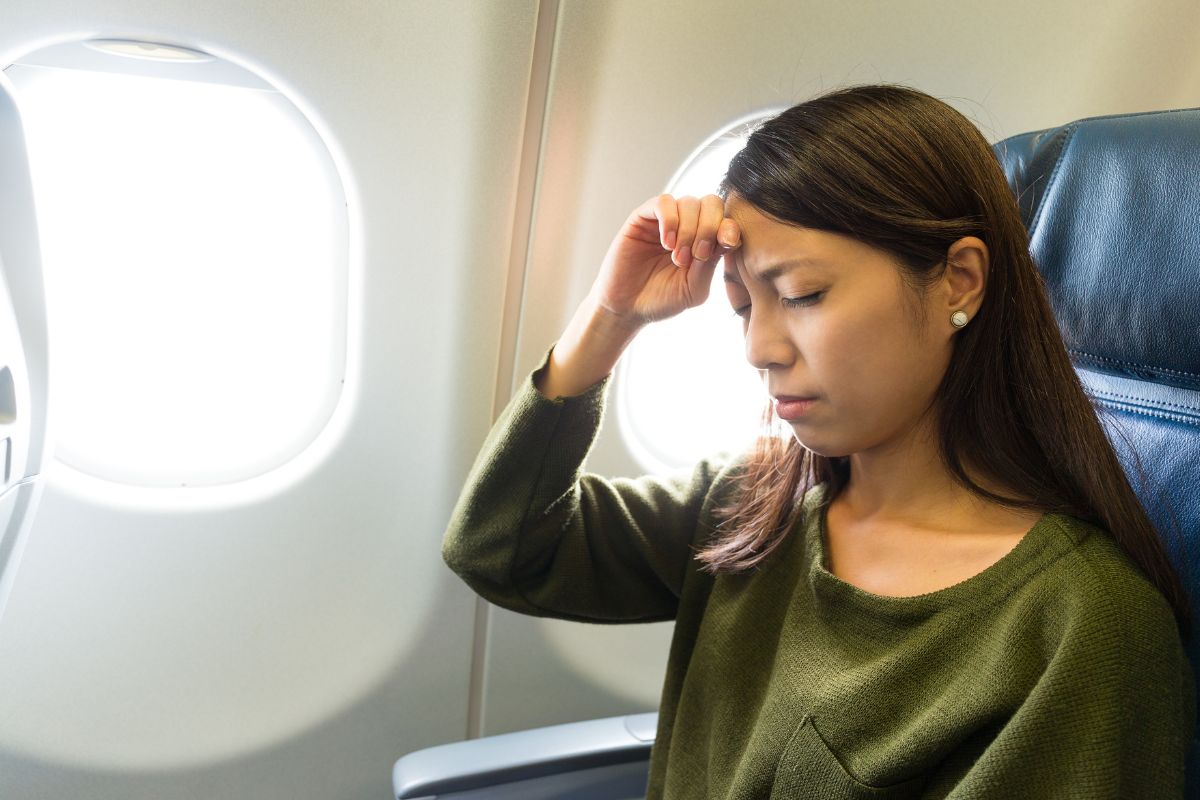
Have you ever boarded a plane and suddenly felt a severe headache that just wouldn’t go away? It could be more than just a simple headache; it could be a sign of a condition that’s worsened by the pressure changes during a flight. If you’ve been experiencing these headaches frequently, it’s time to understand the cause, potential risks, and how to prevent future episodes.
What is an Airplane Headache?
An airplane headache is a type of headache that occurs during air travel, most commonly during takeoff or landing when cabin pressure changes rapidly. It is usually felt as a sharp or throbbing pain around the forehead, eyes, or sinuses. While many cases are related to pressure changes affecting the sinuses and ears, recurrent airplane headaches may sometimes be associated with underlying conditions such as sinusitis, allergies, migraine disorders, or Eustachian tube dysfunction. Understanding the cause is important for preventing future episodes and ensuring safe travel.
Is Airplane Headache an Official Medical Condition?
Here’s something most people don’t know. Airplane headache is actually recognised as its own primary headache disorder by the International Classification of Headache Disorders (ICHD-3). It’s not just “a headache that happens to occur on a plane.” It has its own specific diagnostic pattern.
Doctors generally look for a few things. At least two episodes matching the pattern. Pain located mainly in the frontal region, behind the forehead. Onset specifically during ascent or descent, not randomly mid-flight. The pain resolving within 30 minutes after landing or once the pressure change settles. And no other headache disorder explaining it better.
So if your headache checks these boxes, there’s a real, named condition behind it. It’s not just stress, and it’s not something to dismiss.
What Causes Airplane Headaches?
Airplane headaches are usually triggered by rapid changes in cabin pressure during takeoff and landing. Several factors may increase the risk, including:
- Sinus congestion or sinus infections
- Allergies causing blocked nasal passages
- Eustachian tube dysfunction
- Migraine disorders
- Dehydration during flights
- Stress and anxiety related to travel
- Lack of sleep before travelling
- Changes in oxygen levels at high altitudes
People with existing sinus or ear conditions are often more likely to experience severe headaches while flying.
Symptoms of Aeroplane Headaches
If you’re prone to headaches while flying, watch for these common symptoms:
Throbbing headache pain that worsens with altitude changes, especially during take-off or landing.
Pressure in the head or sinuses, causing a feeling of fullness or blocked sinuses, particularly in the forehead or cheeks.
Nausea or dizziness, which may occur along with the headache due to pressure changes.
Ear pain or popping, as changes in cabin pressure can affect the ears and sinuses.
Common Pattern of Aeroplane Headaches
A study published in the journal Cephalalgia, involving 75 people with aeroplane headaches, identified several common characteristics:
The pain is usually one-sided, affecting either the left or right side of the head.
It is often described as sharp or stabbing rather than a dull ache.
Aeroplane headaches are reported more frequently in men.
In most cases, the pain resolves within about 30 minutes after the pressure change ends.
The study also found that more than half of the participants already had another headache disorder, such as migraine or tension headaches. This suggests that people who experience headaches regularly may be more likely to develop aeroplane headaches because their pain pathways are already more sensitive.
Red Flags
Seek medical advice if you experience:
Frequent headaches that occur only while flying
Headaches accompanied by visual disturbances or nausea
Headache pain that persists even after the flight is over
How Doctors Will Approach Aeroplane Headache
An ENT specialist will start by reviewing your medical history and asking about the frequency and intensity of your headaches. They may then perform a sinus exam to check for any blockages or inflammation in the sinuses. They can ask you to get a CT scan or MRI if they observe something serious, such as Sinusitis or vascular issue.
Diagnostic Tests for Airplane Headaches
- Nasal Endoscopy – To evaluate sinus blockage, inflammation, or nasal polyps.
- CT Scan of the Sinuses – To identify chronic sinusitis or structural abnormalities.
- MRI Scan – Recommended if neurological or vascular causes are suspected.
- Hearing Tests – To assess Eustachian tube dysfunction or middle ear problems.
- Allergy Testing – Useful for patients with recurrent sinus congestion and headaches.
Treatment Options for Aeroplane Headache
- Decongestants — medications that help open up blocked sinuses and relieve pressure in the head.
- Painkillers — acetaminophen or ibuprofen can help reduce pain when flying. Taking them shortly before takeoff or descent, rather than waiting for the pain to start, often works better for people who get this on nearly every flight. If migraines are the underlying trigger, a doctor may recommend taking your usual migraine medication preemptively before the flight.
- Nasal sprays — saline or steroid-based sprays can help relieve pressure and lessen sinus inflammation.
- Hydration — drink plenty of water before and during the flight to avoid dehydration-related headaches.
How to Prevent Airplane Headaches
The following measures may help reduce the risk of headaches during air travel:Try the pressure-equalising technique during descent close your mouth, gently pinch your nose, and exhale slowly through your nose while it’s pinched shut. This helps equalise pressure in your sinuses and ears faster. Do it gently though forcing it too hard can actually cause discomfort instead of relief.
- Stay well hydrated before and during the flight
- Avoid alcohol and excessive caffeine
- Use saline nasal sprays before takeoff and landing
- Treat allergies and sinus infections before travelling
- Get adequate sleep before your journey
- Chew gum or swallow frequently during descent
- Use prescribed decongestants if recommended by your doctor
- Avoid flying when experiencing severe sinus congestion
If you can, avoid seats right over the wings. That part of the plane tends to feel turbulence and pressure shifts more intensely, which can make headache symptoms worse for sensitive individuals.
When Should You See a Doctor?
Headaches occur during every flight. Pain continues for hours or days after landing a true airplane headache should settle within 30 minutes. You have hearing loss or persistent ear blockage. Severe dizziness comes with the headache. Visual disturbances occur during episodes. Over-the-counter medications give no relief. Symptoms are getting more frequent or severe. If this is happening for the first time, or doesn’t fit the usual pattern, get it checked rather than brushing it off as travel stress.
An online consultation with an ENT specialist through HealthPil is a simple first step no need to wait for your next trip to figure out what’s going on. Early evaluation helps catch sinus, ear, or neurological causes before they become a bigger problem.
How HealthPil Can Help:
Recurrent airplane headaches can be diagnosed and treated with a team of skilled ENT doctors that HealthPil connects you with. If you regularly have headaches when flying, schedule a consultation with HealthPil to receive tailored guidance on managing and avoiding the issue.
Summary
Airplane headaches are commonly triggered by pressure changes during air travel and are often associated with sinus, ear, or migraine-related conditions. While many cases are temporary, recurrent or severe headaches should not be ignored. Identifying the underlying cause and receiving timely treatment can help prevent future episodes and make flying more comfortable. If you experience frequent headaches during flights, consult an ENT specialist for a comprehensive evaluation and personalised treatment plan.
FAQ :
Q1. What causes airplane headaches?
Airplane headaches are mainly caused by rapid cabin pressure changes during takeoff or landing, especially in people with sinus congestion, allergies, or migraine.
Q2. How long does an airplane headache last?
Most airplane headaches start during ascent or descent and usually resolve within 30 minutes after landing.
Q3. Who is more likely to get airplane headaches?
People with sinusitis, allergies, Eustachian tube dysfunction, migraines, or frequent nasal congestion are at higher risk.
Q4. How can I prevent headaches while flying?
Stay well hydrated, use saline nasal sprays, chew gum during descent, avoid flying with severe sinus congestion, and take prescribed medicines if recommended by your doctor.
Q5. Can sinus problems cause headaches during flights?
Yes. Blocked or inflamed sinuses can make pressure changes during a flight more painful, leading to severe headaches.
Q6. When should I see a doctor for airplane headaches?
See a doctor if headaches occur on every flight, last for hours after landing, become severe, or are associated with vision changes, dizziness, or hearing problems.
Q7. Which doctor should I consult for airplane headaches?
An ENT specialist is the best doctor to evaluate airplane headaches related to sinus or ear problems. A neurologist may be consulted if migraine or another neurological condition is suspected.
References
- Bui SBD, Petersen T, Poulsen JN, Gazerani P. Risk Factors for Airplane Headache: A Multivariable Logistic Regression Study. Available at:
PubMed - Konrad F, Bui SBD, Gazerani P. The Epidemiology of Airplane Headache: A Cross-Sectional Study. Available at:
PubMed
Disclaimer:
This article here is solely for informational purposes and should not replace professional medical advice. Always consult an ENT specialist for a proper diagnosis and treatment plan if you experience recurrent headaches or other symptoms. HealthPil connects you with trusted doctors for consultations and treatments.

Read our editorial policy