

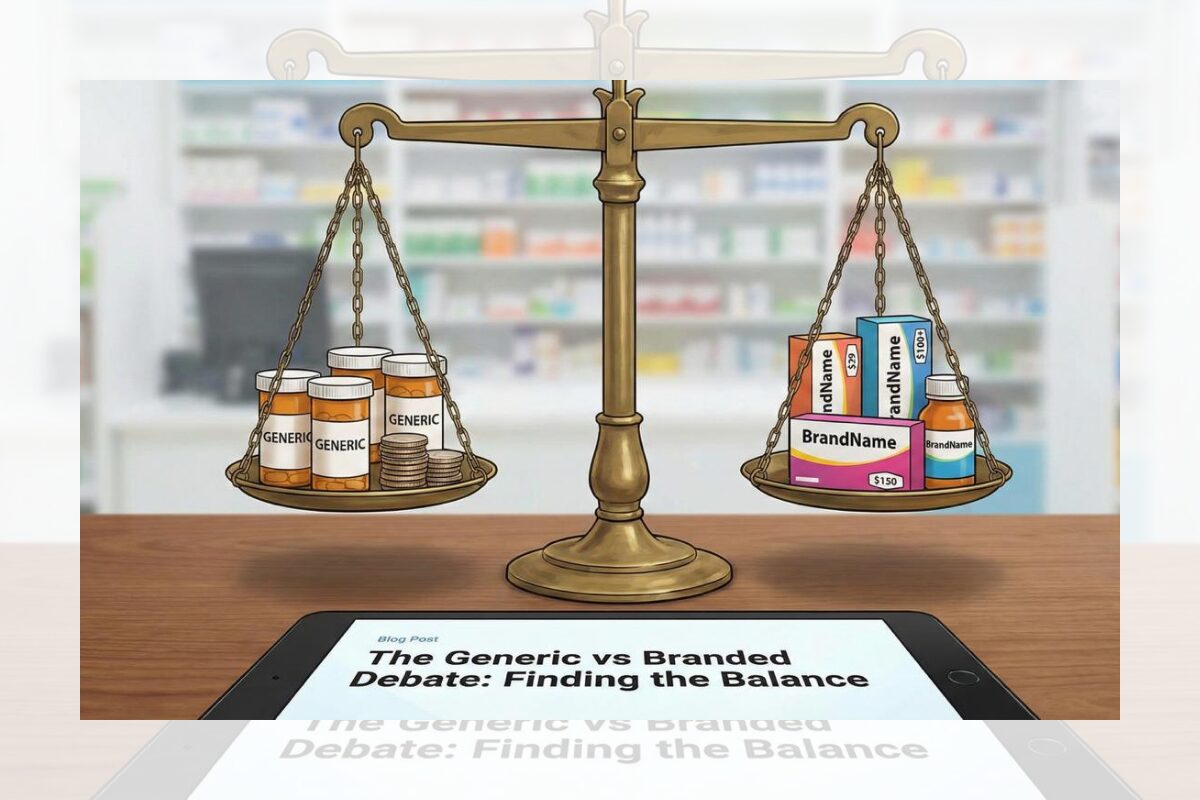
For years, one question has bothered both patients and doctors in India. Do generic medicines really work the same as branded ones, or are we compromising on quality just to save money?
In the past and also recently there have been serious quality issues reported with some medicines, including contamination in syrups and antibiotics. These incidents shook public trust and made people cautious about anything labelled “generic.”
To address these doubts, a recent study called the Citizens’ Generic vs Branded Drugs Quality Project, conducted by the Kerala-based non-profit Mission for Ethics and Science in Healthcare and led by Dr. Abby Philips (commonly known as The Liver Doc), tested 131 samples of 22 commonly used medicines. These included drugs for heart disease, diabetes, liver disorders, infections, pain, acidity, allergies, and thyroid conditions. The findings have brought some much-needed clarity to this long-standing debate.
What Are Branded Medicines?
Branded medicines are drugs sold under a specific trade name by a pharmaceutical company and these are usually the medicines doctors prescribe by name. In many cases, these medicines are not new discoveries. They are often older molecules that multiple companies are legally allowed to manufacture. The difference is in the branding, marketing, and the trust that company has built over time.
So, doctors tend to prescribe these brands because they know where they come from, how consistently they are manufactured, and whether they would use the same medicine for themselves or their family.
What Are Generic Medicines?
Generic medicines are medicines made by different companies using the same active drug, once the original product is no longer under patent protection. They often contain the same active ingredient as branded medicines and are meant to work in the same way.
In India, generics exist in two main forms:
- True generics: These are sold by the salt name only, without a brand name. They are commonly available at Jan Aushadhi stores and some generic pharmacies.
- Branded generics: These are the same medicines sold under different trade names by different companies. Most medicines prescribed in India fall into this category.
So in reality, India already runs on generics. Whether it is a well-known brand or a lesser-known one, most medicines contain the same basic molecule.
How Generics Work in the US vs India
In the United States, generic medicines are allowed only after the patent of a branded drug expires. These generics must be bioequivalent to the original medicine, meaning they work the same way in the body and the manufacturing happens under very strict regulatory supervision.
Since the regulation and system is strong, studies from the US consistently show no difference in safety or effectiveness between branded and generic medicines.
Also, interestingly, 40–45% of generics used in the US are manufactured by Indian companies and many of these same companies also sell branded generics within India.
The problem, therefore, is not capability, it is regulation and quality enforcement of drug manufacturing.
Why the Confusion and Mistrust Between Branded and Generic Drugs Exists in India
India is the world’s third-largest producer of medicines, yet we have also seen serious quality failures, including life-threatening chemicals found in cough syrups meant for children. These incidents created trust issues within the general public.
Many small pharmaceutical companies avoid the regular supply chain because of the cost of marketing and distribution. Instead, they sell medicines through generic stores at very low prices. In theory, if regulation were strong and consistently enforced, this should not be a problem. But, in practice, the quality definitely varies. This is why many doctors hesitate to write prescriptions using only the salt name. When a doctor writes a generic prescription, the pharmacist decides which brand the patient gets, and sometimes this decision is driven by profit margins and not always based on the quality of the drug.
This is also another reason why doctors often recommend brands they personally trust, not because generics do not work, but because all manufacturers are NOT equally reliable.
What the recent Study by Liverdoc Showed
In this recent Generic vs Branded Drugs project, both generic and branded medicines were tested against Indian Pharmacopoeia 2022 standards. Under the study, each medicine was evaluated using five key parameters that define drug quality:
- Drug content (assay) looks at whether the pill actually contains the exact amount of medicine written on the label. This matters because too little can make the treatment ineffective, and too much can increase the risk of side effects or overdose.
- Dissolution checks how well the pill breaks down and dissolves in the stomach. If a medicine does not dissolve properly, it cannot enter the bloodstream and may pass through the body without working.
- Uniformity makes sure that every pill in the strip has the same strength. This prevents a “lucky dip” situation and ensures that the first pill works exactly the same way as the last one.
- Impurities are checked to see if there are any unwanted chemicals or contaminants present. This helps ensure the medicine is clean, safe, and free from harmful manufacturing leftovers.
- Physical appearance is a simple visual check for broken, discoloured, or crumbling pills. Changes in appearance can point to damage from heat, moisture, or poor manufacturing, and may mean the medicine is compromised.
The analysis confirmed that all tested samples met these strict quality standards. There were no hazardous impurities or toxic contamination detected. The medicines also showed similar dissolution patterns, meaning they break down and work in the body in the same way.
Despite these identical quality parameters, the study found that branded medicines often cost nearly five times more than generic versions and government-backed initiatives like Jan Aushadhi emerged as the most economical option, offering savings of up to 85% for certain medicines.
As Dr. Abby Philips put it:
“Our analysis confirms that generic medicines provide the same therapeutic quality as their expensive branded counterparts… Switching to generics can drastically reduce medical expenses without sacrificing health outcomes.”
In simple terms, both generic and branded medicines were at par and doing exactly what they were supposed to do.
Is There Any Real Difference Between Generic and Branded Drugs?
Based on this study, there was no major difference in quality or effectiveness between the tested generic and branded medicines. The only main difference was price.
A simple way to understand this is through an analogy. Think of medicines like drinking water. A well-known brand is like a sealed bottle from a company you trust. A Jan Aushadhi generic is like clean, filtered water sold without fancy packaging. A lesser-known brand, however, may charge a high price without offering the same confidence in quality.
What This Means for Doctors and Patients
This study is reassuring, but it is not the final word, as it involved only a limited number of medicines. Larger studies covering more drugs and multiple batches are still needed to confirm these findings more conclusively.
That said, for patients, this means that generic medicines can and do work, especially for long-term conditions like blood pressure and diabetes. Many patients manage their conditions well using medicines from generic stores.
This is also good news for patients who cannot afford branded medicines and rely on low-cost generics. They can be reassured that these medicines are effective and work in the same way.
For doctors, this may mean feeling more confident about prescribing generic medicines, particularly those that are known and proven to be effective, especially for patients who can afford only lower-cost options.
Should You Switch to Generic Medicines?
If cost is your number one concern, buying medicines from Jan Aushadhi centres or trusted generic stores is a reasonable option. Also, if you are buying from a regular pharmacy, do not blindly accept substitutions. If a pharmacist suggests a lesser-known brand, you can check whether it is from an established company.
If you are spending money anyway, it is advisable to spend it on a trustworthy brand rather than an unknown one.
How HealthPil Helps You Choose Safe and Affordable Medicines
At HealthPil, we help patients make informed and guided healthcare decisions.
We offer:
- Evidence-based health education in simple language
- Expert insights on medicine safety and rational drug use
- Help in understanding prescriptions and treatment choice
Online video consultations with expert doctors in all specialities, from the comfort of your home
Frequently Asked Questions (FAQs)
Do generic medicines actually work?
Yes, when manufactured properly, generic medicines work just as well as branded ones.
Why are generic medicines cheaper?
They cost less because there is little to no spending on branding and marketing.
Are all generics safe?
No, not all. The quality depends on the manufacturer and regulation.
Why don’t doctors always prescribe generics?
Doctors usually worry about who controls the final brand selection and whether the quality can be trusted
Disclaimer
This article is for general awareness only and does not replace medical advice, diagnosis, or treatment. Dietary and exercise changes should always be discussed with a qualified healthcare professional, especially in the presence of medical conditions.

