
Close Menu

    Subscribe to Updates

    Get the latest creative news from FooBar about art, design and business.

    Consent(Required)

    What's Hot

    Food Poisoning and Gastroenteritis Symptoms, Treatment & Prevention Guide

    May 6, 2026

    Hyperhidrosis (Excessive Sweating): Causes, Types, and Treatment Options

    May 1, 2026

    Muscle Cramps: Causes, Treatment, and When to See a Neurologist

    April 20, 2026
    Facebook X (Twitter) Instagram
    Facebook X (Twitter) Instagram YouTube
    Healthpil
    +91 962 596 0259 Book Appointment
    • Home
    • Ask Doubts
    • About
    • Consult Doctors
    • Medicine A to Z
      • Drugs A to Z
      • Diagnostics A to Z
    • Explore
      1. Healthpil Originals
      2. Health Gatha
      3. White Coat Chronicles
      4. Myth vs. Medicine
      5. Teen Talk Unfiltered
      6. Medical Specialities
      7. Hindi
      8. View All
      9. View All

      Are Herbal Supplements Hurting Your Kidneys? What You Need to Know

      September 18, 2025

      Is Your Herbal Medicine Bad for Your Heart?

      September 18, 2025

      Are Herbal Supplements Messing Up Your Digestive Health?

      September 17, 2025

      Can Ayurvedic and TCM herbs Harm Your Lungs? The Respiratory Risks of Traditional Medicine

      September 17, 2025

      Are Herbal Supplements Hurting Your Kidneys? What You Need to Know

      September 18, 2025

      Is Your Herbal Medicine Bad for Your Heart?

      September 18, 2025

      Are Herbal Supplements Messing Up Your Digestive Health?

      September 17, 2025

      Can Ayurvedic and TCM herbs Harm Your Lungs? The Respiratory Risks of Traditional Medicine

      September 17, 2025

      Are Herbal Supplements Hurting Your Kidneys? What You Need to Know

      September 18, 2025

      Is Your Herbal Medicine Bad for Your Heart?

      September 18, 2025

      Are Herbal Supplements Messing Up Your Digestive Health?

      September 17, 2025

      Can Ayurvedic and TCM herbs Harm Your Lungs? The Respiratory Risks of Traditional Medicine

      September 17, 2025

      Are Herbal Supplements Hurting Your Kidneys? What You Need to Know

      September 18, 2025

      Is Your Herbal Medicine Bad for Your Heart?

      September 18, 2025

      Are Herbal Supplements Messing Up Your Digestive Health?

      September 17, 2025

      Can Ayurvedic and TCM herbs Harm Your Lungs? The Respiratory Risks of Traditional Medicine

      September 17, 2025

      Are Herbal Supplements Hurting Your Kidneys? What You Need to Know

      September 18, 2025

      Is Your Herbal Medicine Bad for Your Heart?

      September 18, 2025

      Are Herbal Supplements Messing Up Your Digestive Health?

      September 17, 2025

      Can Ayurvedic and TCM herbs Harm Your Lungs? The Respiratory Risks of Traditional Medicine

      September 17, 2025

      Are Herbal Supplements Hurting Your Kidneys? What You Need to Know

      September 18, 2025

      Is Your Herbal Medicine Bad for Your Heart?

      September 18, 2025

      Are Herbal Supplements Messing Up Your Digestive Health?

      September 17, 2025

      Can Ayurvedic and TCM herbs Harm Your Lungs? The Respiratory Risks of Traditional Medicine

      September 17, 2025

      Are Herbal Supplements Hurting Your Kidneys? What You Need to Know

      September 18, 2025

      Is Your Herbal Medicine Bad for Your Heart?

      September 18, 2025

      Are Herbal Supplements Messing Up Your Digestive Health?

      September 17, 2025

      Can Ayurvedic and TCM herbs Harm Your Lungs? The Respiratory Risks of Traditional Medicine

      September 17, 2025

      Are Herbal Supplements Hurting Your Kidneys? What You Need to Know

      September 18, 2025

      Is Your Herbal Medicine Bad for Your Heart?

      September 18, 2025

      Are Herbal Supplements Messing Up Your Digestive Health?

      September 17, 2025

      Can Ayurvedic and TCM herbs Harm Your Lungs? The Respiratory Risks of Traditional Medicine

      September 17, 2025

      Are Herbal Supplements Hurting Your Kidneys? What You Need to Know

      September 18, 2025

      Is Your Herbal Medicine Bad for Your Heart?

      September 18, 2025

      Are Herbal Supplements Messing Up Your Digestive Health?

      September 17, 2025

      Can Ayurvedic and TCM herbs Harm Your Lungs? The Respiratory Risks of Traditional Medicine

      September 17, 2025
    • Contact Us
    Healthpil
    Home»Health Alerts»What If You Didn’t Need a Matching Blood Type to Get a Life-Saving Transfusion? Japan’s Artificial Blood Might Make That Possible
    Health Alerts

    What If You Didn’t Need a Matching Blood Type to Get a Life-Saving Transfusion? Japan’s Artificial Blood Might Make That Possible

    Team HealthpilBy Team HealthpilJuly 4, 2025Updated:October 8, 2025No Comments6 Mins Read
    Facebook Twitter WhatsApp Email
    What If You Didn’t Need a Matching Blood Type to Get a Life-Saving Transfusion? Japan’s Artificial Blood Might Make That Possible
    What If You Didn’t Need a Matching Blood Type to Get a Life-Saving Transfusion? Japan’s Artificial Blood Might Make That Possible
    Share
    Facebook Twitter Email

    Imagine being in a road accident, losing blood rapidly, and needing an urgent transfusion. But there’s no time to check your blood group, and the right donor blood isn’t always available. That delay could prove to be fatal.

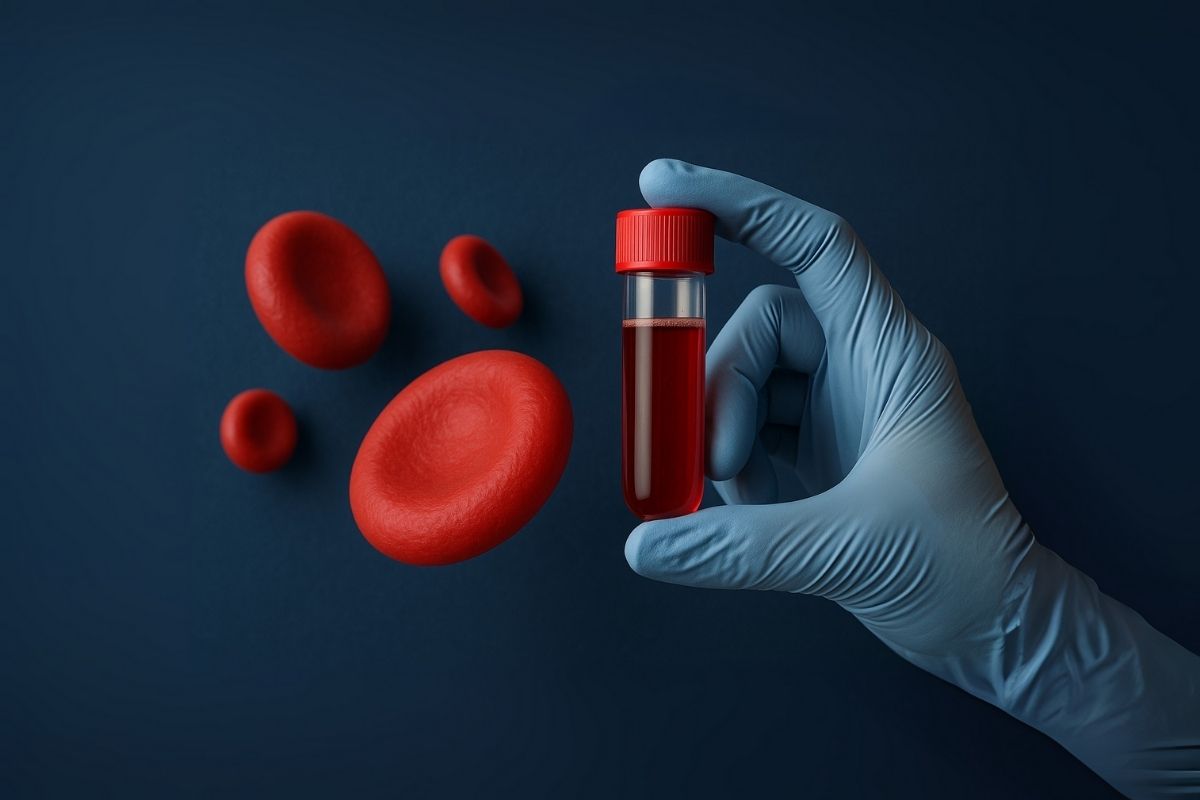
    Now, imagine a scenario where doctors can give you any blood without needing to know your blood type and it works perfectly without any delay or risk of mismatch and almost no chance of infection. That’s exactly the vision behind Japan’s groundbreaking artificial blood, currently in advanced stages of clinical trials.

    Table of Content hide
    What Makes This Artificial Blood So Special?
    Universal Compatibility
    Long Shelf Life, Easy Storage
    Virus-Free and Safer
    How Does This Artificial Blood Work?
    What Stage Are the Trials In?
    Why Is This An Important Breakthrough?
    HealthPil Supports Blood Health Awareness

    What Makes This Artificial Blood So Special?

    Researchers at Nara Medical University in Japan, led by Prof. Hiromi Sakai, have developed a new kind of synthetic blood with some revolutionary features:

    Universal Compatibility

    This artificial blood can be given to anyone, regardless of whether their blood group is A, B, AB, or O. It has no antigens or antibodies, making it truly universal.

    In a recent conversation with Zee News, Dr. Rahul Chawla explained:

    Japan’s Artificial Blood Might Make That Possible

    “In such a scenario, if blood could be developed that requires no matching and has no complications, thus allowing it to be given to anyone, then this artificial blood that has been created is universal. It contains neither antigens nor antibodies, meaning it can be administered to any patient in an emergency.”

    This kind of universal blood could save precious minutes during emergencies like trauma, stroke, or postpartum hemorrhage

    Long Shelf Life, Easy Storage

    While traditional donated blood lasts about 42 days and needs refrigeration, this artificial blood can be stored for two years at room temperature, or up to five years if refrigerated, making it ideal for disaster zones, ambulances, rural clinics, or military deployments where cold-chain storage is a major challenge.

    Virus-Free and Safer

    Since it’s created from purified components, there’s no risk of virus transmission like HIV or Hepatitis B, something that can still be a concern in traditional blood transfusion, especially in settings with limited resources. The product is also free of immune triggers, making adverse reactions far less likely.

    The World Health Organization has long raised concerns about the global shortage of safe blood, especially in low- and middle-income countries. In many parts of the world, patients in trauma, surgery, childbirth, or cancer care die simply because compatible blood isn’t available on time.

    Japan itself faces a shrinking donor base due to its aging population. This artificial blood could provide a reliable, on-demand supply, independent of how many people are donating.

    If everything goes as planned, this invention could change how the world looks at blood transfusion entirely.

    #DNAWithRahulSinha | अब ब्लड की कमी से किसी की जान नहीं जाएगी! देखिए, जापान में बना ‘आर्टिफिशियल ब्लड’ का विश्लेषण#DNA #Japan #Blood #ArtificialBlood@RahulSinhaTV pic.twitter.com/nueVfUIzWh

    — Zee News (@ZeeNews) July 3, 2025

    How Does This Artificial Blood Work?

    ● The core ingredient is hemoglobin, the protein in red blood cells that carries oxygen. This is extracted from expired donated blood.

    ● The hemoglobin is then encased in fat-based bubbles (lipid vesicles), designed to float through the bloodstream like red blood cells do, without triggering the body’s immune system.

    ● This processed form of blood has a purplish color, due to the nature of purified hemoglobin.

    ● It behaves much like natural blood, delivering oxygen where it’s needed in the body.

    ● A parallel approach by Prof. Teruyuki Komatsu of Chuo University involves enclosing hemoglobin in albumin-based shells, showing early success in animal trials for shock, stroke, and hemorrhage treatment.

    What Stage Are the Trials In?

    ● Early clinical trials have been conducted safely in healthy volunteers, with no serious side effects.

    ● By March 2025, larger trials are expected to begin at Nara Medical University, involving adults receiving doses between 100 and 400 mL.

    ● If results remain positive, Japan aims to introduce artificial blood in hospitals by 2030, possibly becoming the first country in the world to do so.

    Why Is This An Important Breakthrough?

    In natural disasters, war zones, or developing regions where access to donor blood is limited, a stable, shelf-storable, universal alternative can save thousands of lives. It also removes the logistical and ethical implications around human donors.

    In a world where maternal deaths due to postpartum hemorrhage and road traffic trauma remain leading causes of preventable mortality, this could be a game-changer.

    FAQs

    What is artificial blood made of?

    It’s based on purified hemoglobin, the protein that carries oxygen in real blood. This is enclosed in fat-based or albumin-based shells to make it safe for circulation.

    Can it replace regular donated blood?

    Not entirely—for now, it mainly helps in oxygen transport. It does not replace other components like platelets or clotting factors. But it’s immensely helpful in emergency situations.

    Is it safe?

    Early trials have shown no major side effects, and the artificial blood is virus-free. It’s designed to be less likely to cause allergic or immune reactions.

    Who will benefit most from this?

    ● Trauma and accident victims

    ● Patients in rural or remote locations

    ● War zones and military personnel

    ● Hospitals facing blood shortages

    When will it be available?

    If trials continue to be successful, deployment in Japan could begin by 2030. Global rollout will depend on further approvals and production scaling. While we still have a few years before this product becomes widely available, the concept of artificial blood brings hope to the field of medicine and it might just help create a more equitable, efficient, and safer emergency care system.

    HealthPil Supports Blood Health Awareness

    At HealthPil, we believe that innovations in medicine, like this, deserve public awareness. Whether it’s real-time updates on global health breakthroughs or connecting you with top doctors for blood-related conditions like anemia or clotting disorders, we’re here to help.

    ● Book a specialist consult on hematology or transfusion medicine

    ● Read expert blogs and research-backed guidance

    ● Learn how you can contribute to safer health systems

    Disclaimer

    This article is for general informational purposes only. The artificial blood mentioned is still under clinical trials and not yet in routine medical use. Always consult your healthcare provider for decisions regarding transfusions or critical care.

    Team Healthpil
    Written By Team Healthpil MBBS, MD Medicine, DM Neurology (AIIMS Delhi)
    Last Updated 08 Oct 2025
    We provide you with authentic, trustworthy and relevant information.
    Read our editorial policy
    artificial blood Japan hemoglobin based artificial blood no matching blood type needed synthetic blood transfusion universal blood transfusion
    Share. Facebook Twitter WhatsApp Email
    Previous ArticleCOVID-19 Vaccines Are Not Causing Sudden Deaths: ICMR and AIIMS Studies Confirm
    Next Article Can a Single Vaccine Finally End Life threatening Dengue ?

    Related Articles

    Chronic Back Pain: Causes, Precautions & Management Guide

    March 28, 2026 Health Alerts

    Cancer Screening: Who Needs It, When to Start, and Early Warning Signs

    March 19, 2026 Health Alerts

    Can Rabies Happen Even After Vaccination?

    March 14, 2026 Health Alerts

    A Family Sold Their Home to Keep Their Son Alive. Then They Asked a Court to Let Him Go

    March 12, 2026 Health Alerts
    Leave A Reply Cancel Reply

    fourteen − eleven =

    I agree to the terms and privacy policy.

    Disclaimer: Please avoid sharing personal health details in comments. Comments are public and moderated. For private health queries, use the Ask A Doubt section. By commenting, you agree to our Privacy Policy.

    Health and Wellness

    Fake ORS Banned by FSSAI: Why a Pediatrician Fought an 8-Year Battle to Stop Sugary Drinks Mislabelled as “ORS”?

    October 24, 2025

    Are Herbal Supplements Hurting Your Kidneys? What You Need to Know

    September 18, 2025

    Is Your Herbal Medicine Bad for Your Heart?

    September 18, 2025

    Are Herbal Supplements Messing Up Your Digestive Health?

    September 17, 2025
    Connect with Us
    • Facebook
    • Instagram
    • YouTube
    • Twitter
    Don't Miss

    Fake ORS Banned by FSSAI: Why a Pediatrician Fought an 8-Year Battle to Stop Sugary Drinks Mislabelled as “ORS”?

    ORS saves millions of lives every year, and yet, some companies thought it was okay to sell sugary drinks labelled as “ORS,” misleading thousands of parents into thinking they were giving their children a life-saving solution for diarrrhoea.

    Air Pollution and Asthma: Why Attacks Are on the Rise

    May 26, 2025

    Air Pollution and Stroke: Warning Signs & Prevention

    May 26, 2025

    The Heart of the Matter: How Air Pollution Silently Damages Your Cardiovascular Health

    May 26, 2025

    Subscribe to Updates

    Get the latest creative news from SmartMag about art & design.

    Consent(Required)

    About Us
    About Us

    HealthPil: Get Your Daily Dose of Trusted Health Advice– Consult a Doctor Anytime, Anywhere!
    We're accepting new partnerships right now.

    Facebook X (Twitter) Instagram YouTube
    Contact Us
    EmailEmail Us:
    contact@healthpil.com
    whatsappContact:
    +91 962 596 0259
    Specialties
    • Neurology
    • Cardiology
    • Psychiatry
    • Orthopedics
    • Gynaecology
    • Pediatrics
    • Neurosurgery
    • Neurosurgery
    • Ophthalmology
    • ENT
    • Oncology
    Quick Links
    • Home
    • About
    • Blog
    • Ask Doubts
    • Consult Doctors
    • Contact Us
    • Disclaimer
    • Privacy Policy
    • Terms and Conditions

    Type above and press Enter to search. Press Esc to cancel.

    Book Appointment
    Copyright © 2026 HealthPil. All Rights Reserved.