

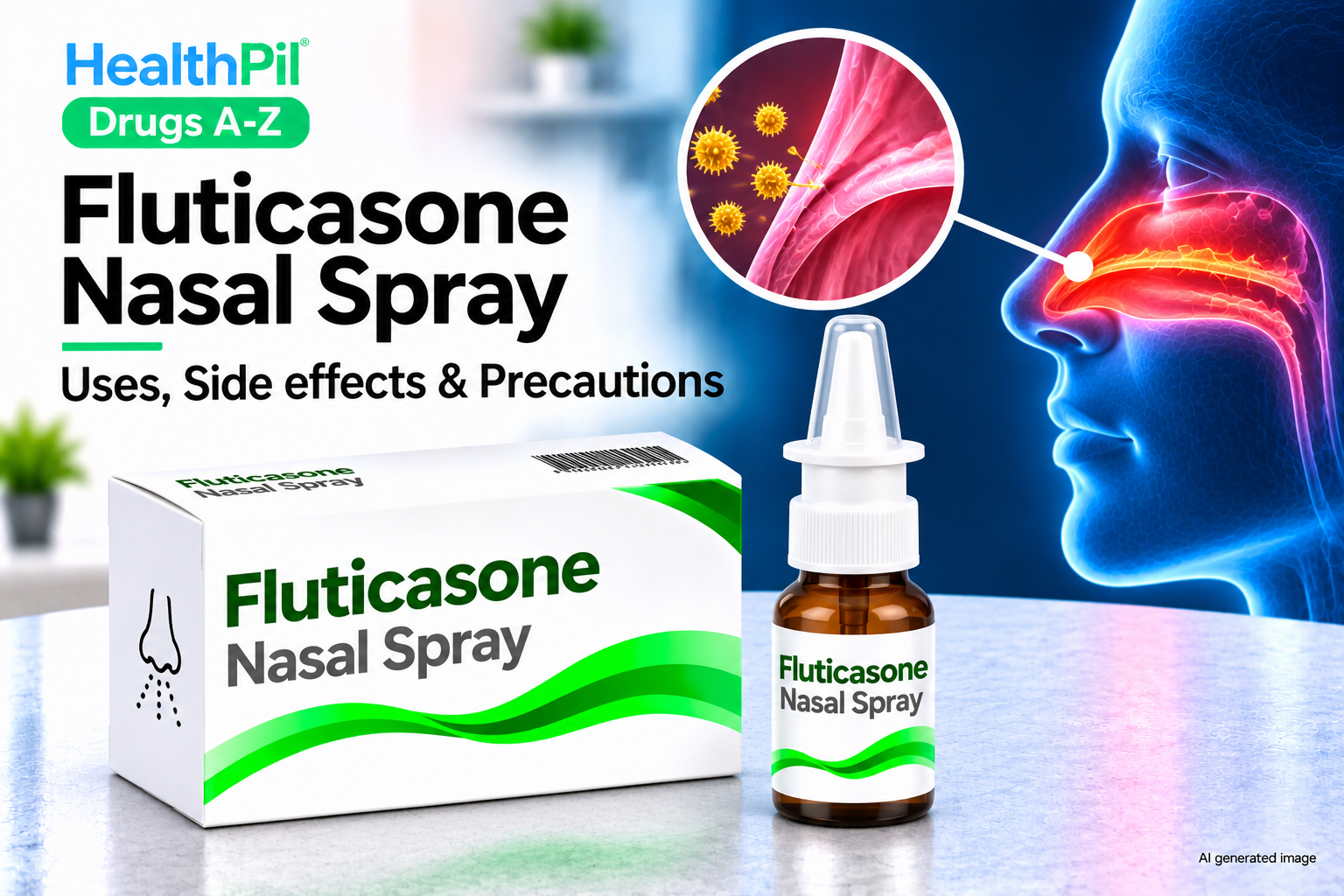
Fluticasone Propionate Nasal Spray: Uses, Dosage, Side Effects & Precautions
Fluticasone propionate nasal spray is a corticosteroid spray used to treat allergic rhinitis and, when prescribed, nasal polyps and other inflammatory nasal conditions. This guide covers fluticasone nasal spray uses, how it works, dosage, side effects, precautions, drug interactions, use in pregnancy and breastfeeding and brand names.
What Is Fluticasone Propionate?
Fluticasone propionate is a steroid (corticosteroid) nasal spray used to treat allergic rhinitis and, when prescribed by a doctor, nasal polyps and other inflammation-related nasal conditions. It helps reduce swelling and irritation in the nasal passages.
How Fluticasone Propionate Works
Fluticasone propionate reduces inflammation in the nasal lining. By decreasing the production of inflammatory substances, it helps ease the swelling, congestion, sneezing and irritation caused by allergens.
When to Use Fluticasone Propionate
- Allergic rhinitis: Treats and helps prevent nasal congestion, sneezing, and a runny or itchy nose caused by seasonal allergies (such as hay fever) or year-round allergies.
- Sinusitis: Doctors may prescribe steroid nasal sprays to reduce inflammation in chronic sinusitis.
- Nasal polyps: Steroid nasal sprays or drops are commonly used to help shrink polyps. Your doctor will decide which form suits you.
Fluticasone Nasal Spray Dosage
- Adults and adolescents (12 years and above): The usual starting dose is 2 sprays (50 mcg each) in each nostril once a day, preferably in the morning (200 mcg/day). Once symptoms are controlled, your doctor may reduce this to 1 spray in each nostril once a day.
- Children (4–11 years): The usual starting dose is 1 spray in each nostril once a day (100 mcg/day). The usual maximum is 200 mcg/day. It should not be used in children under 4 years.
Dose depends on the condition being treated, age and response to treatment. Fluticasone furoate nasal sprays (27.5 mcg per spray) are a different product with different dosing, so the two should not be used interchangeably.
Take this medicine only as advised by your doctor or healthcare professional. Do not start, stop, or change the dose on your own.
Fluticasone Nasal Spray How to Use the Nasal Spray
- Shake the bottle gently and remove the cap. A new spray, or one not used for a few days, may need priming until a fine mist appears.
- Blow your nose gently.
- Close one nostril, place the nozzle in the other and tilt your head slightly forward. Press while breathing in gently, then breathe out through your mouth.
- Repeat for the other nostril as directed, wipe the nozzle and replace the cap. Avoid contact with the eyes.
Use it every day. The effect builds over a few days, so keep using it even if you do not feel better straight away.
Side Effects of Fluticasone Nasal Spray
Common: Nosebleeds, headache, nasal irritation or dryness, throat irritation, and an unpleasant taste or smell.
Contact a doctor promptly if you notice:
- Signs of an allergic reaction, such as wheezing, difficulty breathing, or swelling of the face, mouth or tongue, which need urgent medical help
- Blurred vision or eye pain
- Sores or damage inside the nose
Rarely, long-term use at high doses can affect the body’s natural steroid production. Children on long-term treatment should have their height checked regularly.
Fluticasone Nasal Spray Precautions
Do not use it if you are allergic to fluticasone propionate or any ingredient in the spray. Tell your doctor if you have had nasal surgery, have a nasal infection, have an underactive adrenal gland, or have used steroids for a long time.
Fluticasone Nasal Spray Drug Interactions
Some antiviral medicines (such as ritonavir or cobicistat-containing products) and certain antifungals (such as ketoconazole) can increase the effects of fluticasone, and your doctor may monitor you more closely. Tell your doctor or pharmacist about all prescription medicines, OTC medicines, supplements and herbal products you take. This is not a complete list.
Fluticasone Nasal Spray in Pregnancy and Breastfeeding
Studies of fluticasone, including nasal use, have not shown an increased chance of birth defects. Only a small amount is likely to pass into breast milk, and it is not expected to affect a breastfed baby. Data are limited, so discuss it with your doctor before using it during pregnancy or while breastfeeding.
Fluticasone Nasal Spray Brands and Strength
Common brands in India include Flixonase and Flutiflo, available as a nasal spray with 50 mcg per spray.
How HealthPil Can Help
Medicines should be started, adjusted, or stopped only under the guidance of a qualified healthcare professional. If you have questions about this medicine, its side effects, or your treatment plan, you can consult a doctor through HealthPil. HealthPil provides access to specialists for allergic conditions and sinus issues.
FAQ
How long does Fluticasone take to work?
It may take a few days to notice improvement in symptoms.
Disclaimer
Always consult your doctor before using Fluticasone Propionate. HealthPil provides access to specialists for allergic conditions and sinus issues.

Read our editorial policy