

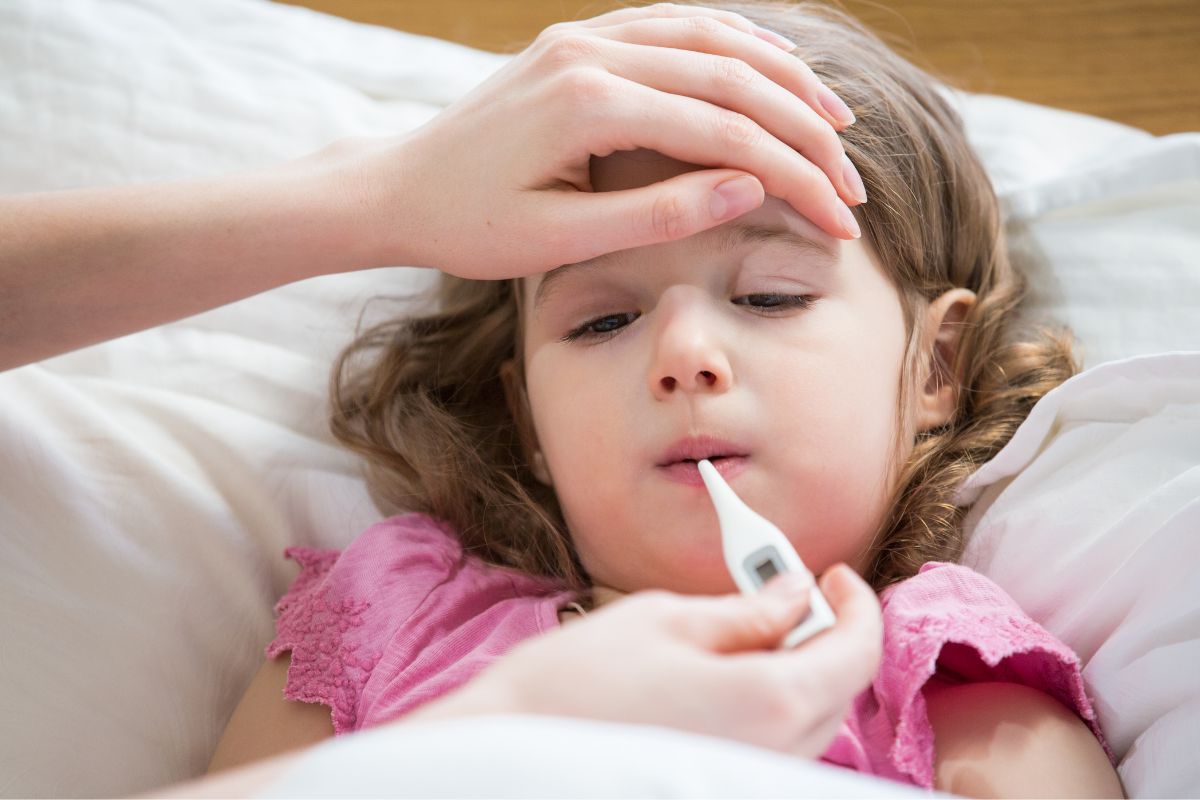
Febrile seizures are fever-triggered convulsions in young children one of the most common neurological events in early childhood. Not epilepsy. Not brain damage. A developing brain’s response to rapidly rising temperature.
This article covers what febrile seizures look like, what causes them, what to do when one happens, and when to worry.
What Are Febrile Seizures in Children?
A febrile seizure is a convulsion triggered by a rapidly rising fever without any underlying brain infection, structural problem, or metabolic disturbance.
Most common between 6 months and 5 years. Peak age: 18 months. After age 5, as the brain matures, they become significantly less common.
The young brain is more sensitive to sudden temperature changes. When fever rises quickly, the brain can respond with an electrical discharge a seizure. This is not epilepsy. It is not brain damage. It is a neurological response to fever in a developing brain.
India: Febrile seizures affect 2–5% of children worldwide. In India, prevalence is similar making them one of the most common reasons children are brought to emergency departments. Yet awareness among parents remains low.
Types of Febrile Seizures: Simple vs Complex
Simple febrile seizures
Most common. Lasts under 15 minutes. Involves the whole body. Does not repeat within 24 hours. No lasting neurological effects. Accounts for about 80% of all cases.
Complex febrile seizures
Lasts more than 15 minutes. May affect only one part of the body. May occur more than once within 24 hours. Requires more thorough investigation. Carries slightly higher epilepsy risk though still small.
Knowing which type occurred helps determine what follow-up is needed.
Febrile Seizure Symptoms What Parents Actually See
Most parents don’t recognise what’s happening until it’s over.
- Stiffening of the body — muscles suddenly become rigid. Usually comes first.
- Jerking movements — rhythmic, uncontrolled jerking of arms, legs, or whole body. The most visible and frightening part.
- Loss of consciousness — child is unresponsive. Eyes may roll back or stare blankly.
- Breathing changes — may become irregular or noisy during the episode.
- Post-seizure drowsiness — after stopping, the child is often confused, sleepy, and disoriented for 15–30 minutes. This is the postictal period. Completely normal.
The seizure itself typically lasts 1–3 minutes. It almost always stops on its own.
Causes of Febrile Seizures in Children
Any illness causing fever can trigger a febrile seizure. Most common triggers:
- Viral upper respiratory infections — the most frequent cause. Common cold, flu, roseola, and similar illnesses.
- Ear infections — otitis media is a well-recognised trigger.
- Post-vaccination fever — fever after MMR or DTP vaccination can occasionally trigger febrile seizures in susceptible children. This does not mean vaccines cause seizures.
- Urinary tract infections — particularly in young children who can’t describe symptoms clearly.
Risk factors:
Family history is the strongest. If a parent or sibling had febrile seizures, the child’s risk is significantly higher. Age between 6 months and 3 years is highest risk. Fever that rises rapidly matters more than how high it gets a quick rise from 37°C to 39°C can be more triggering than a slow rise to 40°C. Daycare attendance increases exposure to infections and overall risk.
What to Do During a Febrile Seizure Step by Step
This is the most important section. Read it. Remember it.
Do:
Stay calm it will almost certainly stop on its own.
Time the seizure check the clock immediately. This is critical information for the doctor.
Place the child on their side recovery position. Keeps the airway clear and prevents choking if they vomit.
Clear the area remove anything nearby that could cause injury. Do not restrain movements.
Stay with the child do not leave them alone.
Do not:
Put anything in the mouth not fingers, not spoons, not cloth. Children cannot swallow their tongue. Putting something in the mouth risks serious injury.
Try to stop the jerking by holding them down this does not help and can injure both child and parent.
Give food or water during or immediately after.
After the seizure:
The child will be confused and sleepy. Let them rest. Check temperature and give fever medicine if needed. Then contact a doctor even if the child seems completely fine.
When Febrile Seizures Become a Medical Emergency
Most febrile seizures do not need emergency treatment. But call an ambulance immediately if:
- The seizure lasts more than 5 minutes — this is febrile status epilepticus, a medical emergency
- The child does not regain consciousness within 30 minutes
- Breathing is difficult after the seizure stops
- A second seizure happens within 24 hours
- The child has a stiff neck, severe headache, or extreme sensitivity to light — possible meningitis
- The child is under 6 months old
- This is the first ever seizure and you are unsure what happened
When in doubt go to emergency. Always better to be checked and reassured.
How Are Febrile Seizures Diagnosed?
After a febrile seizure, the doctor’s priority is identifying the source of the fever not investigating the seizure itself, in most simple cases.
Clinical examination — full check of throat, ears, chest, abdomen, skin for the cause of fever.
Lumbar puncture — spinal tap to rule out meningitis or encephalitis. Not done routinely only when signs suggest central nervous system infection, or in children under 12 months.
Blood tests — infection markers, electrolytes, blood sugar, and other possible triggers.
EEG — measures brain electrical activity. Not routinely recommended after simple febrile seizures because it does not predict future epilepsy. May be done after complex febrile seizures.
MRI or CT scan — not routine. Considered when the seizure was prolonged, focal, or came with neurological signs.
Febrile Seizure Treatment During and After
During the seizure:
Most stop on their own and need no medication. For a seizure lasting more than 5 minutes emergency diazepam (given rectally) or midazolam (into the cheek) is used to stop it. Parents of children with recurrent or prolonged seizures are sometimes given rescue medication to use at home.
After the seizure:
Paracetamol or ibuprofen to reduce fever and improve comfort. Treat the underlying infection antibiotics for bacterial infections, antivirals where indicated.
Preventive medication:
Routine anti-seizure medication is not recommended for simple febrile seizures. Side effect risk outweighs benefit in most children. For very frequent or complex febrile seizures, a specialist may consider intermittent diazepam during fever episodes but this is not standard practice.
Can Febrile Seizures Come Back?
Approximately one-third of children who have one febrile seizure will have another.
Risk is highest in the first year. Higher recurrence risk if:
- First seizure happened before 18 months
- Family history of febrile seizures
- Fever was low at the time of the first seizure
- Short gap between fever onset and seizure
Recurrent febrile seizures do not mean epilepsy. Most children outgrow them by age 5.
Do Febrile Seizures Lead to Epilepsy?
The question every parent asks. The honest answer: risk is real but small.
Children with simple febrile seizures have a 1–2% epilepsy risk compared to 1% in the general population. The difference is minimal.
Complex febrile seizures prolonged, focal, or repeated within 24 hours carry slightly higher risk, particularly with family history of epilepsy or other neurological conditions.
The vast majority of children with febrile seizures even multiple ones never develop epilepsy.
Common Febrile Seizure Myths Cleared Up
Myth 1: Febrile seizures cause brain damage.
Not supported by evidence. Simple febrile seizures do not cause brain damage, intellectual disability, or behavioural problems. Studies following children into adulthood show no difference in cognitive outcomes.
Myth 2: Children swallow their tongue during a seizure.
Anatomically impossible. The tongue is attached to the floor of the mouth. Putting fingers or objects in the mouth during a seizure risks serious injury to the child and to the person helping.
Myth 3: Febrile seizures are epilepsy.
They are not. Epilepsy involves recurrent unprovoked seizures without a trigger like fever. Febrile seizures are provoked by fever in a developing brain. Different cause, different management, different prognosis.
Myth 4: Giving fever medicine prevents febrile seizures.
Paracetamol and ibuprofen reduce fever and discomfort but they do not prevent febrile seizures. Studies consistently show that aggressive fever management does not reduce seizure recurrence. The seizure is triggered by the rapid rise in temperature which often happens before the fever is even noticed.
When to See a Doctor
See a paediatrician or child neurologist after any febrile seizure even if the child seems completely recovered. See them urgently if seizures are becoming more frequent, lasting longer, or changing in character.
Book an online pediatric consultation through HealthPil expert guidance from home, without a long wait.
How HealthPil Can Help
HealthPil connects you with experienced paediatricians and child neurologists who can assess febrile seizures properly explaining what happened, what to watch for, whether further investigation is needed, and what to do if it happens again.
Whether this is a first episode or a recurring concern expert support is available through an online consultation from wherever you are.
Summary
Febrile seizures are fever-triggered convulsions in young children common, frightening to witness, and usually harmless. Simple febrile seizures last under 15 minutes, involve the whole body, and cause no lasting damage. Complex febrile seizures are longer, focal, or repeated and need closer follow-up.
Most common triggers: viral infections, ear infections, post-vaccination fever. Strongest risk factor: family history.Treatment: manage the fever, treat the underlying infection. Preventive anti-seizure medication is not routinely recommended. One-third of children will have a recurrence. Most outgrow febrile seizures by age 5. Epilepsy risk remains low.
FAQs
Q1. Are febrile seizures dangerous?
Most are not. Simple febrile seizures lasting under 15 minutes cause no brain damage and have no lasting effects. Complex febrile seizures need more thorough assessment but are still rarely dangerous in themselves.
Q2. Will my child have another febrile seizure?
Approximately one-third will. Risk is highest in the first year, in children under 18 months at first seizure, and those with family history. Most outgrow febrile seizures by age 5.
Q3. Do febrile seizures cause epilepsy?
Risk is small. Simple febrile seizures raise epilepsy risk from 1% to 1–2%. Complex febrile seizures carry slightly higher risk still a minority. The vast majority never develop epilepsy.
Q4. What is febrile status epilepticus?
A febrile seizure lasting more than 30 minutes or repeated seizures within 24 hours without full recovery between them. A medical emergency requiring immediate hospital treatment.
Q5. Can vaccination cause febrile seizures?
MMR and DTP vaccines can cause fever as an immune response. In susceptible children, this fever can trigger a febrile seizure. This is rare. The risk from the diseases these vaccines prevent is far greater than the risk of a vaccine-related febrile seizure.
Q6. How is a febrile seizure different from meningitis?
Meningitis causes stiff neck, severe headache, sensitivity to light, and a rash that doesn’t fade under pressure. These are absent in a typical febrile seizure. If any of these signs are present go to emergency immediately.
Q7. When can my child return to normal activity?
Once the illness resolves and the child is back to their normal self usually within a day or two. No recovery period is needed specifically for the seizure in simple cases. Follow up with your paediatrician before returning to school or daycare.
References
- Xixis KL, Keenaghan M. Febrile Seizure. StatPearls Publishing. Available at:
NCBI Bookshelf - Xixis KL, Keenaghan M. Febrile Seizure. Available at:
PubMed
Disclaimer
This article is for informational purposes only. Always consult a qualified healthcare provider for diagnosis and treatment tailored to your child’s individual needs. In case of a seizure emergency, call for medical help immediately.

Read our editorial policy