

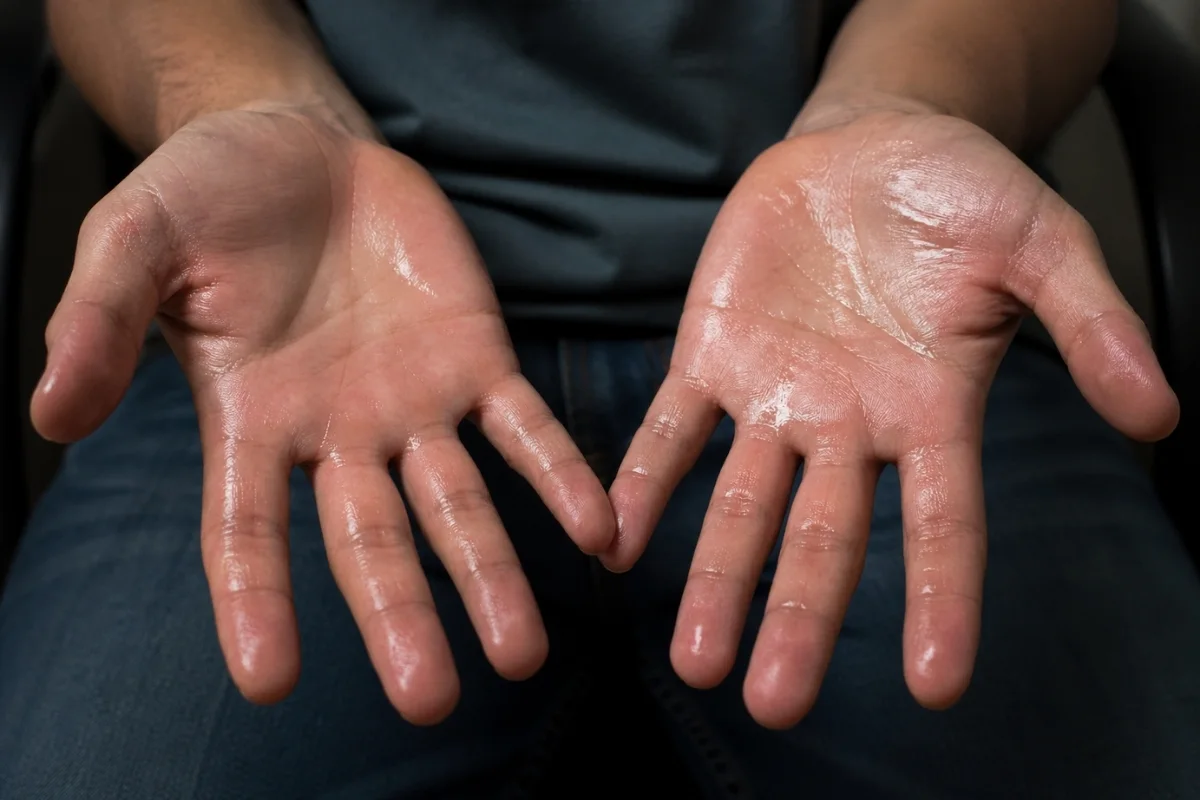
Do you find yourself sweating excessively even when it’s not hot or you’re not physically active? If your palms stay wet, clothes get soaked easily, or sweating starts without a clear reason, it could be a condition called hyperhidrosis.
What is Hyperhidrosis?
Hyperhidrosis is a medical condition in which a person experiences excessive sweating beyond what the body actually needs. It can occur even when there is no heat, no physical activity, and sometimes without any clear reason.
If your palms are constantly wet, your clothes get soaked quickly even in a normal environment, or you find yourself avoiding handshakes or social situations because of sweating, it may be hyperhidrosis.
Hyperhidrosis affects roughly 2–5% of the population and is often underreported because many people assume it is a hygiene issue or just a normal body trait. However, it is a manageable medical condition when addressed properly.
How is Hyperhidrosis Different from Normal Sweating?
Sweating is a natural process that helps the body cool itself down. It usually happens during exercise, in hot weather, or when you are anxious, which is completely normal.
However, in hyperhidrosis, sweating goes beyond this normal need. The body produces excessive sweat even without triggers like heat or physical activity. This difference makes hyperhidrosis a condition that may require proper evaluation and management.

Why does hyperhidrosis (excessive sweating) happen?
Normally, sweating is part of thermoregulation, which means the body increases sweat production to cool itself when internal temperature rises. This process is controlled by the sympathetic nervous system, where specific nerve fibres release a chemical called acetylcholine that signals the sweat glands to start working. But, in hyperhidrosis, this system becomes overactive, so there is increased sympathetic outflow and more frequent acetylcholine signalling.
As a result, the sweat glands get activated even when the body does not actually need cooling, leading to excessive sweating without obvious triggers like heat or physical activity. This is also called primary hyperhidrosis.
In secondary hyperhidrosis, there is usually an underlying cause. Some common ones include:
- Thyroid problems, especially hyperthyroidism
- Diabetes
- Certain infections
- Neurological conditions
- Hormonal changes like menopause
- Medications such as antidepressants or some blood pressure drugs
- Increased stress or anxiety, which can make the sweating worse
Excess weight can also contribute, as the body tends to generate and retain more heat.
Types of hyperhidrosis
Hyperhidrosis is broadly divided into two types, and understanding is important to know how it is treated.
Primary (focal) hyperhidrosis
This is the more common type. It usually affects specific areas like the palms, soles, underarms, or face. But, the rest of the body sweats normally.
It often starts early, sometimes in childhood or teenage years, and many times there is a family history. There is no underlying disease causing it, but the sweat glands are more active than they should be. One typical feature is that sweating usually reduces or stops during sleep.
Secondary (generalised) hyperhidrosis
This type involves sweating over larger areas or the entire body. It is usually triggered by something else, like a medical condition or certain medications.
It can start later in life and may even occur during sleep. If someone develops sudden, unexplained sweating as an adult, especially along with other symptoms, this needs proper medical evaluation.
Areas where people notice excessive sweating (hyperhidrosis) the most
Not everyone sweats everywhere. In many cases, it is very localized!
- Palms can stay constantly wet, making it difficult to hold things or even shake hands comfortably
- Soles can cause slipping in footwear and sometimes skin problems
- Underarms often lead to visible sweat patches and frequent outfit changes
- Face and scalp sweating can feel very noticeable in social or professional situations
Over time, this can start affecting confidence, work, and even daily interactions. It is not a small issue for people dealing with it regularly.
“Normally sweating is meant to regulate body temperature, but in hyperhidrosis the nerve signals that trigger sweating become overactive, so people end up sweating even without heat or exertion. It can affect simple things like holding objects or shaking hands, but the important thing is that it is a treatable condition if addressed properly,” says Dr. Rahul Chawla, AIIMS-trained Neurologist and founder of HealthPil.
When should you actually see a doctor for hyperhidrosis (excessive sweating)?
Many people ignore it for years, but there are some situations where you should not delay:
- If sweating is interfering with your daily life or confidence
- If it has started suddenly in adulthood
- If you are experiencing night sweats
- If it comes along with weight loss, fever, or a fast heartbeat
These signs may point towards a secondary cause that needs to be identified!
How is hyperhidrosis diagnosed?
Most of the time, diagnosis is based on your history and symptoms. A doctor will ask when it started, which areas are involved, and whether there are any triggers or associated symptoms.
Basic tests may be advised to rule out conditions like thyroid disorders or diabetes if secondary hyperhidrosis is suspected.
There are also simple tests like the starch-iodine test to map sweating areas, but in many cases, they are not even necessary if the history is clear.
Treatment options for hyperhidrosis (excessive sweating)
Treatment depends on how severe the sweating is and which areas are affected. It is not one size fits all.
Topical treatments
These are usually the first step. Strong antiperspirants containing aluminium salts are applied at night to help block sweat glands. They work well for mild to moderate cases.
Oral medications
Certain medicines reduce the signals that stimulate sweat glands. They can be helpful, especially in more widespread sweating, but they may come with side effects like dry mouth or constipation, so they should be used carefully and only with your doctor’s advice .
Iontophoresis
This is commonly used for palms and soles. The hands or feet are placed in water, and a mild current is passed through it. It reduces sweat production over time with regular sessions.
Botox injections
Botox blocks the nerve signals that trigger sweating. It is especially effective for underarms and is also used for palms and soles in some cases. The results can last several months.
Advanced treatment options
For severe cases that do not respond to other treatments, procedures like laser-based treatments or surgeries may be considered. These are usually last options and need proper discussion with a specialist.
Simple things that can help with excessive sweating (hyperhidrosis) in day to day life
While treatment is important, small changes can also make a noticeable difference:
- Wear breathable fabrics like cotton
- Apply antiperspirants at night on dry skin
- Use absorbent insoles if foot sweating is an issue
- Keep tissues or cloth handy for palms or face
- Try to identify and reduce triggers like caffeine or spicy food
- Work on stress management, because stress can worsen symptoms
These will not cure hyperhidrosis, but they can make your daily life easier.
Common myths about hyperhidrosis (excessive sweating)
A lot of confusion around sweating comes from misinformation.
“It means I am unhygienic.”
No. Hyperhidrosis has nothing to do with cleanliness. It is about how the sweat glands are functioning.
“More sweating means toxins are leaving the body.”
Sweat is mostly water and salt. Your liver and kidneys handle detoxification, not your sweat glands. So, it’s not ‘toxins’ leaving your body.
“It will go away on its own.”
In most cases, especially primary hyperhidrosis, it does not just disappear on its own. It may improve slightly over time, but proper treatment makes a huge difference.
You do not have to just live with hyperhidrosis
A lot of people adjust their lives around hyperhidrosis instead of treating it, mostly because they are not aware that we now have effective options to manage the condition.
Whether it is a simple topical treatment or something more advanced like Botox, there are ways to control it depending on how severe your hyperhidrosis is. The first step is to stop ignoring it and speak to a doctor who can guide you properly and make your daily life much easier.
How HealthPil can help
HealthPil makes it easier to take that first step. You can find qualified doctors, understand your symptoms better, and get the right guidance without confusion. Instead of trying random solutions, you can connect with the right specialist and start a proper treatment plan based on your condition.
Summary Hyperhidrosis
Hyperhidrosis is a condition of excessive sweating that goes beyond the body’s normal need to regulate temperature. Unlike typical sweating caused by heat or physical activity, it can occur without any clear trigger and commonly affects areas like the palms, soles, underarms, or face. It is broadly classified into primary hyperhidrosis, caused by overactive nerve signals, and secondary hyperhidrosis, which may be linked to underlying conditions such as thyroid disorders, diabetes, infections, or certain medications.
Symptoms of hyperhidrosis can interfere with daily life, causing discomfort, social anxiety, and difficulty in routine activities. Treatment options include topical antiperspirants, medications, iontophoresis, and advanced therapies like Botox, along with lifestyle changes to manage triggers. If excessive sweating is persistent or sudden, it is important to consult a doctor for proper diagnosis and effective hyperhidrosis treatment to improve overall quality of life
