

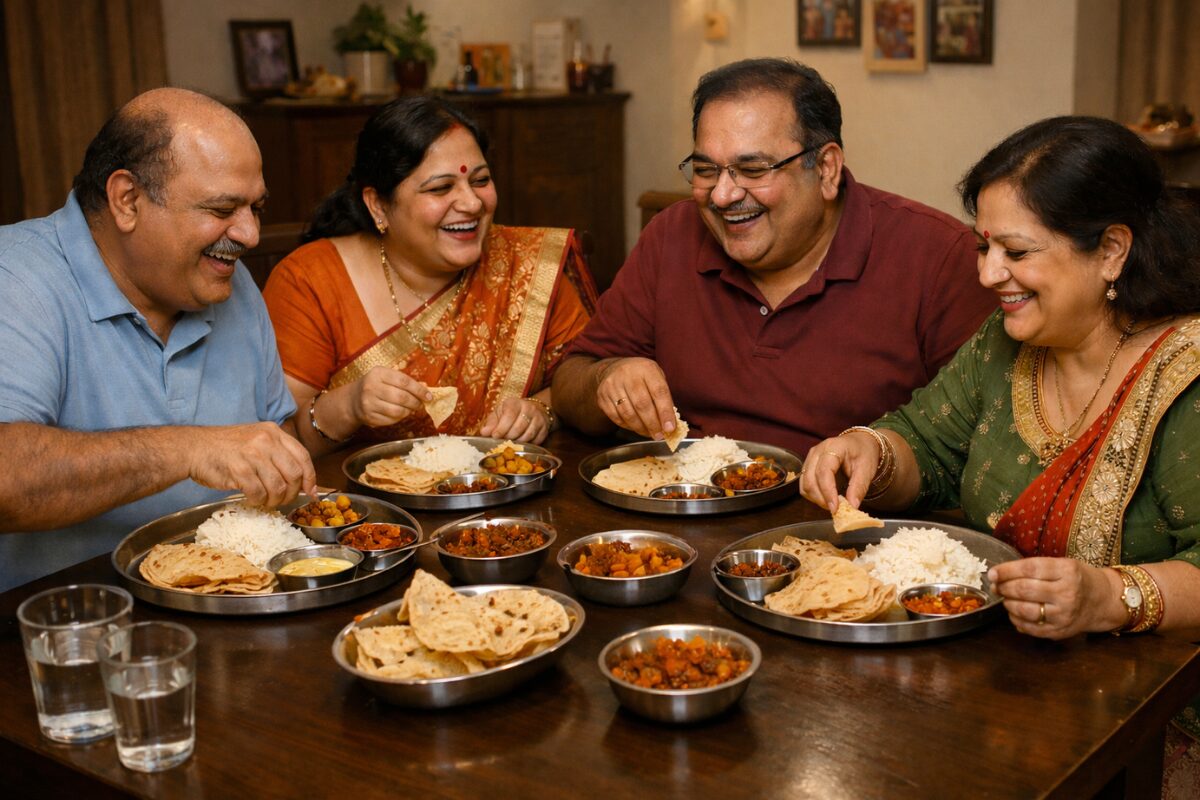
Most Indian parents eat far more carbohydrates than they realise, because this is how meals have been structured for decades. Breakfast usually begins with paratha, bread, poha, or upma. Lunch is roti with sabzi, and dal, while dinner is described as “light”, which again means one roti or a small bowl of rice. Throughout the day, protein disappears from the plate, replaced by carbohydrates that feel filling but do very little to preserve muscle or regulate hunger.
Over time, this pattern creates a situation where calorie intake remains high, protein intake is low, and physical activity anyway reduces with age. The body adapts by losing muscle and storing fat, particularly around the abdomen. This is why many parents say they eat “simple food” and “ghar ka khana” and yet continue to gain weight year after year.
Even though our parents have been eating in a calorie deficit, they fail to lose weight because this diet lacks balance, structure, and enough protein to support a calorie deficit without hunger or fatigue.
So, would a simple Indian diet without any fancy ingredients help provide wholesome nutrition, while keeping a calorie deficit and helping with weight loss? Yes, it’s totally possible with just everyday food. We’ll see how, stay with us.
Why Protein Intake Matters More Than Ever With Age
According to dietary recommendations issued by the Indian Council of Medical Research, a healthy adult requires roughly 0.8 grams of protein per kilogram of body weight per day, and this requirement increases to around 1–1.2 g/kg when weight loss is the goal or when muscle preservation becomes important with ageing.
In reality, most Indian parents consume barely 40–50 percent of this requirement. When protein intake remains low, the body loses muscle instead of fat during calorie restriction, metabolism slows further, hunger increases, and weight loss becomes difficult to sustain, so instead of actually losing weight, they end up gaining more!
Calorie Deficit Works Only When Nutrition Is Wholesome
Weight loss requires a calorie deficit, but creating this deficit by simply eating less roti or skipping meals often backfires. When calories are reduced without adequate protein and fibre, you feel weak, irritable, and constantly hungry, leading to snacking and eventual weight regain.
A sustainable calorie deficit works best when:
- Protein intake is adequate
- Meals are structured
- Hunger is controlled naturally
This is why focusing only on calories without looking at what those calories are made of doesn’t work in Indian households.
What Indian Parents Can Actually Eat in a Day (Realistic guide)
This is not a “diet plan.” This is a guide with examples on how meals can be rebalanced, and to give you an idea on how to eat mindfully.
Morning (Breakfast)
Instead of a carb-only breakfast, protein should be taken early in the day.
Examples:
Egg bhurji or omelette with vegetables and one small roti.
Paneer bhurji with whole wheat toast or roti.
Besan chilla with curd.
Add a protein with your paratha, instead of paratha with achaar/chutney alone, like egg, paneer bhurji, curd.
Starting the day with protein reduces mid-morning hunger significantly.
Mid-morning
This is where many parents either skip eating or eat fruit alone, leading to hunger soon after.
Better options include:
Fruit with a handful of roasted chana or peanuts.
Guava with a small bowl of curd.
Apple with soaked almonds or walnuts.
The idea is not to avoid fruit, but to avoid taking fruit in isolation.
Lunch
A well-structured Indian lunch plate can be planned like this:
- ¼ plate – Protein:
Dal, rajma, chole, curd-based dishes, paneer, eggs, chicken, or fish.
For example: one medium bowl of dal, rajma or chole, paneer, or a bowl of chicken or fish curry - ½ plate – Vegetables:
One vegetable sabzi made from seasonal vegetables like lauki, tori, bhindi, cabbage, cauliflower, carrots, beans, or mixed vegetables.
Aim for one medium bowl, cooked with minimal oil. - ¼ plate – Carbohydrates:
One to two rotis made from whole wheat, jowar, bajra, or ragi, or a small bowl of rice. - A portion of Dairy / Gut support:
Plain curd or buttermilk, if tolerated. Avoid adding sugar; a pinch of roasted jeera or salt is enough.
This kind of lunch uses everyday Indian foods, keeps portions in check, and helps you feel full while staying in a calorie deficit.
Evening Snacks (Most Neglected Meal)
This is where the biggest improvement can happen.
Instead of biscuits, namkeen, or fried snacks, parents can rotate between:
Boiled eggs with salt and pepper.
Sprouts chaat with onion, lemon, and chaat masala.
Roasted makhana.
Paneer cubes with vegetables.
Vegetable sandwich with paneer filling.
Dinner
Dinner should be lighter on carbohydrates but nutritionally complete.
Examples:
- Grilled paneer with a generous portion of seasonal vegetables
- Paneer bhurji or egg bhurji with one small roti
- Chicken or fish curry with one roti
- Fish fry (shallow cooked) with vegetable sabzi
- One bowl of vegetable sabzi with a bowl of dal, without adding extra roti or rice
- Mixed vegetable curry with curd on the side
- Khichdi with adequate dal and vegetables, eaten in moderation
- Curd with roasted vegetables or a light vegetable stir-fry
Eating dinner earlier, rather than late at night, further helps maintain a calorie deficit.
Simple Healthy Switches Indian Parents Can Make (Without Changing Their Food)
Weight loss does not mean eating different food. It means eating the same food, only making it slightly better.
1. Make Protein a Proper Part of Every Meal
In most Indian homes, meals are planned around roti or rice. That needs to change.
A simple switch is to decide the protein first.
Ask one question before every meal: “What is my protein today?”
It could be dal, curd, paneer, eggs, chicken, fish, or sprouts.
Once protein is fixed, rotis and rice automatically reduce.
When protein is treated as a main item and not a side bowl, hunger reduces and meals feel more satisfying.
2. Reduce Oil Not just Carbs
Most Indians don’t realise how much oil goes into daily cooking. A little oil here and there across meals adds up quickly.
Simple switches help, such as:
- Use less oil while cooking and add flavour with spices
- Sauté vegetables with a little water, then add oil later
- Finish food with lemon, vinegar, or roasted spices instead of extra oil
3. Let Vegetables Take Up More Space on the Plate
In many meals, vegetables are just a small side, while roti or rice takes most of the plate.
A better approach is to increase vegetables slowly:
- One full bowl of sabzi at lunch
- Vegetables added to dal, paneer, eggs, or curries
- Cooked vegetables count, not just salads
4. Improve Roti Instead of Removing It
Asking parents to completely stop rotis is not going to work practically. So, instead, small improvements make a big difference:
- Add methi leaves to atta
- Mix a little besan or bran
- Use jowar or bajra or other millets to atta once in a while.
5. Make Dinner Lighter
Dinner is often heavy because earlier meals were skipped or unbalanced. A good dinner does not mean no food at all.
Protein, vegetables, and smaller portions of roti or rice work best at night. Also, eating earlier helps with digestion and sleep.
Common Mistakes Indian Parents Often Make While Trying to Lose Weight
Even when parents eat “ghar ka khana,” these habits slow down weight loss.
- Very light breakfasts and very heavy dinners
• Believing dal alone is enough protein
• Using too much oil while cooking healthy food
• Completely cutting roti or rice and then overeating later
• Focusing only on walking and ignoring muscle strength
Why Walking Alone Is Not Enough to Lose Weight
Most parents rely only on walking for exercise, which is helpful but insufficient for long-term fat loss. With age, muscle loss accelerates unless resistance training is added. Strength training twice a week helps preserve muscle, improve insulin sensitivity, and makes dietary changes more effective.
This does not require heavy gym workouts. Simple body-weight exercises, resistance bands, or light dumbbells at home are enough.
Why Extreme Diets Fail for Indians
Completely cutting out roti or rice, skipping meals, or jumping from one influencer-driven diet trend to another might show some quick weight loss in the beginning, but it almost never works in the long run. These approaches don’t take into account how we actually eat as families, the cultural role food plays in our lives, or whether the body is even getting proper nutrition.
Sustainable weight loss doesn’t come from extreme restriction or fear of food, it comes from correcting everyday habits, portions, and choices in a way that can be followed consistently for years, not just a few weeks.
We Are Conducting a HealthPil Webinar for Indian Parents
To help parents understand and implement these changes correctly, HealthPil is conducting a dedicated webinar on diet and lifestyle changes for Indian parents.
In this session, we will cover:
- How to structure Indian meals for weight loss with exciting recipes
- Protein planning using vegetarian and non-vegetarian options
- Common myths around Indian diets
Diet and Lifestyle for Indian Parents to prevent Obesity, Diabetes and other metabolic diseases
Online Session on Diet and Lifestyle for Indian Parents is scheduledin 2nd week of February. Webinar fees is Rs 500 (only for first 10 applicants). You will recieve link to join webinar one day before. Please WhatsApp on 9625960259, if any issues with joining webinar. You can prebook your slot here.
Slots are limited. So, if you want to be a part of it, fill up the registration form on HealthPil to book your slot.
Frequently Asked Questions (FAQs)
How much protein does an Indian parent really need?
Most parents benefit from 60–90 grams per day, depending on body weight, activity, and health conditions.
Is dal enough as a protein source?
Dal is helpful but often insufficient alone. Combining dal with curd, paneer, eggs, or legumes improves protein quality and quantity.
Are eggs safe for cholesterol?
For most people, eggs consumed in moderation are safe and provide high-quality protein.
When Diet and Lifestyle workshop for Indian parents will be conducted?
The online session on diet for Indian parents will be conducted in 2nd week of February ( weekend) . The details would be shared on our social media handles.
Disclaimer
This article is for general awareness only and does not replace medical advice, diagnosis, or treatment. Dietary and exercise changes should always be discussed with a qualified healthcare professional, especially in the presence of medical conditions.

Read our editorial policy