

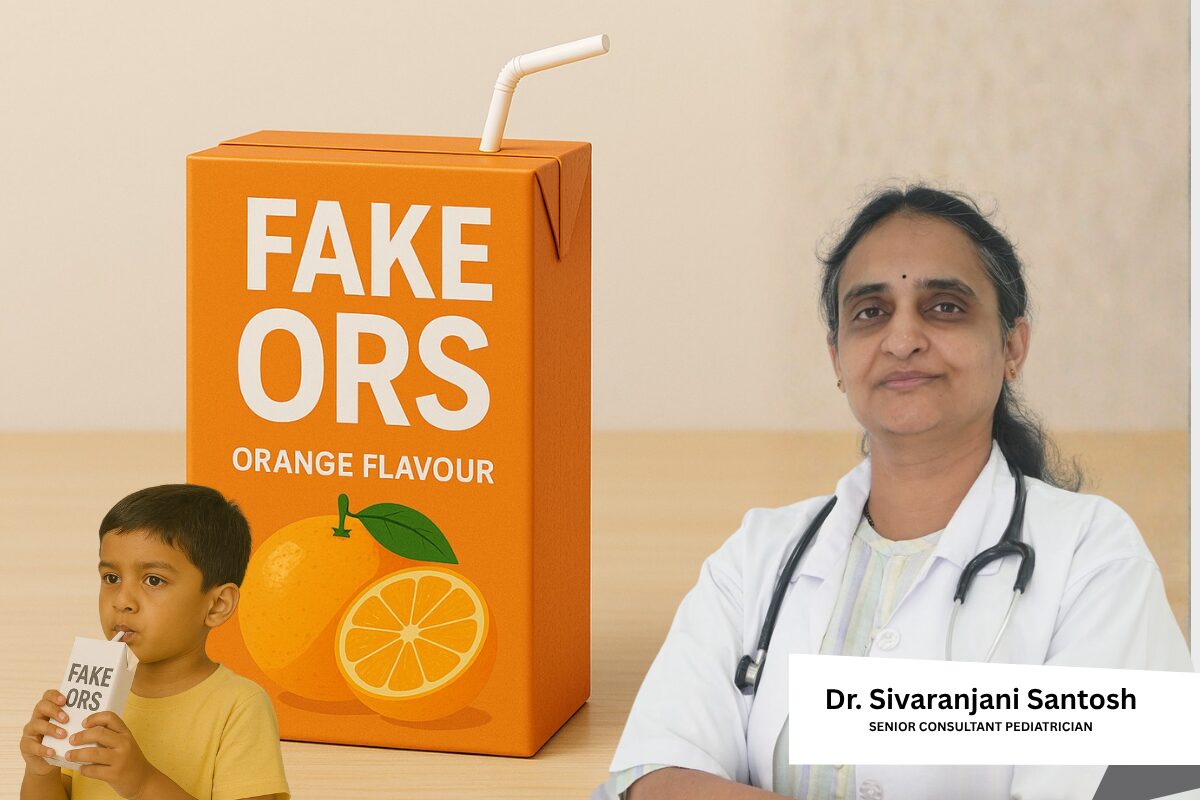
ORS saves millions of lives every year, and yet, some companies thought it was okay to sell sugary drinks labelled as “ORS,” misleading thousands of parents into thinking they were giving their children a life-saving solution for diarrrhoea. Until one hyderabad based pediatrician, Dr Sivaranjani Santosh relentlessly battled for eight long years to ban the sales of fake ORS. However, after the ban imposed by FSSAI, Delhi high court allowed the sales of Rs 180 crore stock of ORSL.
How Was ORS Made?
Before the 1970s, diarrhoea was among the leading causes of death in Indian children. In cholera outbreaks across Bengal, children often died within hours of symptom onset. IV fluids were limited, dehydration was rapid, and there was little that doctors could do once severe shock set in.
During the 1971 Bangladesh war, millions of refugees flooded camps across West Bengal. Cholera and acute watery diarrhoea spread like wildfire. Thousands of children were dying every week, not because treatment was impossible, but because it was inaccessible.
It was in these camps that Dr. Dilip Mahalanabis, a physician working with the WHO Cholera Research Unit in Calcutta, decided to try something revolutionary. He gave patients an oral solution of glucose and electrolytes sodium, chloride, potassium, and bicarbonate mixed in clean water.
The science was simple. Glucose helps sodium absorption in the intestine via the sodium–glucose cotransport mechanism, and water follows sodium into the bloodstream. Even in severe diarrhoea, this pathway remains intact.
The results were nothing short of life-changing. Mortality in refugee camps dropped from over 30% to under 5%. For the first time, lives could be saved without IV lines or hospital beds just by giving the right mix of salts and sugar in water.
This became the foundation of Oral Rehydration Therapy (ORT) hailed as one of the greatest public-health breakthroughs of the 20th century.
Over time, WHO and UNICEF standardized the formula into the ORS packets we know today — a low-osmolarity solution with a total osmolarity near 245 mOsm/L and a precise balance of sodium and glucose at 75 each, along with potassium and citrate. That exact ratio is what keeps water moving into the bloodstream, not back into the gut. So, changing it, even slightly, breaks the science that makes ORS work.
Marketing Sugary Drinks As “ORS”
Decades later, brightly coloured drinks began appearing on supermarket shelves; each proudly carrying the word “ORS” on the label. But these weren’t medical formulations. Many contained too much sugar and too little sodium, packaged and sold as refreshing “electrolyte drinks.”
Anyone who has treated a child with diarrhoea knows why that matters. Excess sugar increases the solution’s osmolarity, pulling more water into the gut instead of back into the bloodstream. This leads to worsened dehydration, more stools, and is potentially life-threatening.
That is exactly why every pediatric guideline, from the Indian Academy of Pediatrics to the American Academy of Pediatricstells parents not to use juices, sodas, sports drinks, or sweet teas for rehydration during diarrhoea. Yet, parents in India were unknowingly buying these look-alike tetra packs labelled “ORS,” thinking they were helping their child, when in reality, they were doing the opposite.
Why Fake ORS Can Be Life-Threatening
At first glance, a tetra pack labelled “ORS” may look harmless, like just another flavoured rehydration drink. But in medical terms, it can be dangerous, even fatal, especially for children or elderly patients battling dehydration.
True ORS works because of a specific physiological mechanism inside the small intestine:
- When glucose and sodium are present in a 1:1 ratio, they get absorbed together through a transporter called SGLT-1 (Sodium–Glucose Co-Transporter 1).
- Water follows this movement through osmosis, effectively pulling fluid back into the bloodstream, thus, rehydrating the body efficiently.
- This pathway stays functional even during severe diarrhoea, which is why ORS saves lives when IV fluids aren’t available.
However, when the solution has too much sugar and too little sodium, which is the case with many so-called “ORS drinks” in the market, this mechanism breaks down.
This is what happens instead:
- High sugar concentration increases osmolarity inside the intestine. Instead of drawing water into the bloodstream, it starts pulling water into the gut.
- This leads to osmotic diarrhoea worsening fluid loss and dehydration.
- As sodium levels drop (a condition called hyponatremia), cells in the brain can swell, causing confusion, seizures, or even coma in severe cases.
- In young children, whose fluid reserves are smaller, this decline can happen within hours.
That’s why every standard ORS packet the kind approved by WHO and ICMR, contains precisely:
- Sodium 75 mEq/L
- Glucose 75 mmol/L
- Potassium 20 mEq/L
- Citrate 10 mmol/L
- Total osmolarity 245 mOsm/L
Any deviation from this balance can make the solution ineffective or harmful.
To put it simply:
ORS is not a “hydration drink.” It’s a scientifically balanced medical therapy. A sugary beverage that imitates it can turn a manageable diarrhoea into a medical emergency in no time.
How to Identify Fake ORS in the Market
With so many tetra packs and pouches on pharmacy shelves, telling real ORS from a look-alike drink can be confusing. Here’s a simple way to check before you buy:
- Look for the words “based on WHO formula” printed clearly on the pack. If it’s not there, be cautious.
- Real ORS is registered and sold as a drug, not as a beverage. A genuine sachet usually comes from the pharmacy section, not the cold-drinks aisle.
- Check the ingredient list. It should closely match the WHO ratio roughly 2.6g sodium chloride, 13.5g glucose, 1.5g potassium chloride, and 2.9g trisodium citrate per litre.
- Be wary of ORS-labelled drinks that are heavily flavoured, brightly packaged, or marketed like a soft drink. Real ORS is meant to taste mildly salty-sweet, not like a fruit juice.
- When in doubt, ask your pharmacist directly whether the product meets the WHO ORS formula.
Symptoms of Dehydration to Watch For
Knowing when your child needs ORS is just as important as knowing which ORS to use. Watch for:
- Dry mouth or lips
- Fewer wet nappies, or reduced urine output
- Sunken eyes
- Unusual tiredness or irritability
- Skin that doesn’t bounce back quickly when gently pinched
- Crying with little or no tears
If diarrhoea or vomiting is ongoing, start ORS early don’t wait for these signs to become severe.
How to Prepare Real ORS at Home
Using ORS correctly matters as much as using the right one.
- Always mix one full sachet with exactly one litre of clean, boiled and cooled water not less, not more. Adding less water makes the solution too concentrated and can be harmful.
- Use a clean container and stir until the powder fully dissolves.
- Give small, frequent sips rather than large amounts at once, especially if your child is vomiting.
- Freshly prepared ORS should be used within 24 hours. Discard and make a fresh batch after that.
- Continue breastfeeding or regular feeding alongside ORS it’s a supplement to fluids, not a replacement for food.
A Long Fight Against Misleading ORS Labels
When hospitals began seeing children arriving more dehydrated after being given these so-called ORS drinks, Dr. Sivaranjani Santosh, a senior pediatrician from Hyderabad decided she had to do something to stop this.
She started filing formal complaints, sharing the physiological evidence, and petitioning regulators to act. For eight long years, she wrote to authorities, attended hearings, and urged that ORS, in India, be recognized for what it truly is: a drug, defined under the Drugs and Cosmetics Rules, not a sugary beverage. As she often said, “You can’t call something ORS just because it sounds scientific. The science behind ORS is very specific and changing that balance makes it dangerous.”
The Regulatory Battle: FSSAI, Court Orders, and the Turning Point
After years of advocacy, the Food Safety and Standards Authority of India (FSSAI) finally issued warnings in 2022, clarifying that the term “ORS” must not be used on fruit-based or ready-to-drink beverages. Only products that match the WHO formula could carry the name.
In October 2025, FSSAI ordered a ban on such misleading products, a move widely hailed by doctors and public health experts. However, one major manufacturer, JNTL Consumer Health (makers of ORSL), approached the Delhi High Court, which temporarily stayed the ban, allowing the company to continue selling its “ORSL” drink until further hearings. While the legal process continues, the scientific and ethical clarity remains clear: ORS is not a marketing term. It’s a life-saving medicine.
A simple sachet of ORS has saved millions of lives across the world. Yet, imagine the plight of a mother giving her child a costly, sugary drink mislabeled as “ORS,” believing it would help treat diarrhoea, not realising it could make the dehydration worse. Thankfully, there are doctors like Dr. Sivaranjani Santosh who refused to look away and took up the fight to protect that trust.
When to See a Doctor
ORS helps with mild to moderate dehydration, but some situations need medical attention right away:
- Diarrhoea or vomiting lasting more than 24 hours
- Blood in stool or vomit
- Signs of severe dehydration sunken eyes, no urine for 6+ hours, extreme lethargy
- High fever alongside diarrhoea
- A child who refuses to drink or keeps vomiting fluids
- Any infant under 6 months with diarrhoea or vomiting
Don’t wait it out at home if any of these appear. Early medical attention prevents a manageable situation from becoming an emergency.
How HealthPil Can Help
At HealthPil, we stand for clarity in healthcare. Our pediatricians are available for online consultations to guide you through what to do when your child has diarrhoea, vomiting, or dehydration.
We help parents understand:
- When to use ORS and how to prepare it correctly.
- What warning signs mean your child needs medical attention.
- How to avoid misleading products and unsafe “hydration” alternatives.
We also provide trusted second opinions from qualified pediatricians so you can make informed choices.
Summary
ORS is a life-saving medical solution, not a flavoured drink a fact that took Dr Sivaranjani Santosh eight years to get regulators to properly enforce. Fake ORS products with high sugar and low sodium can worsen dehydration instead of treating it, especially dangerous for young children. Always check for the WHO formula on the label, watch for dehydration symptoms early, prepare ORS correctly at home, and don’t hesitate to see a doctor if symptoms don’t improve. When used correctly, a simple sachet of ORS remains one of the most powerful tools in preventing childhood deaths from diarrhoea.

Read our editorial policy