

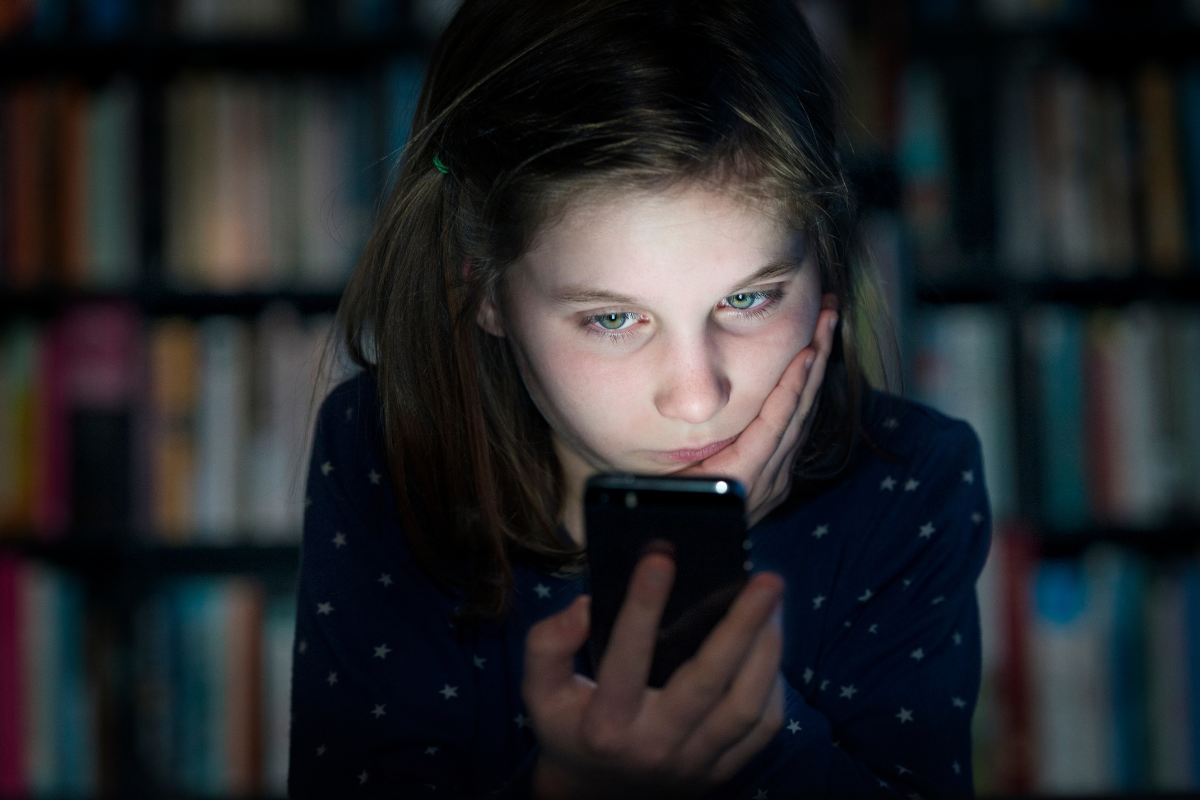
Social media has become part of everyday childhood. The question isn’t whether to allow it it’s whether you understand what it’s doing to your child and whether you’re involved enough to notice when something goes wrong.
This guide covers why children use social media, how much screen time is safe, the positive and negative effects, signs of addiction, online safety risks, mental health impact, academic consequences, and practical steps parents can take including when to seek professional help.
Why Children Use Social Media
Understanding why kids are drawn to it helps parents respond more effectively and without overreacting.
- Peer pressure. Everyone else is on it. Not being on it feels like being excluded from conversations that happen entirely online. For a child, that is a real social cost, not a small one.
- Entertainment. Videos, memes, and content built specifically by very smart engineers to keep young people engaged for as long as possible. These platforms are not neutral. They are designed to be hard to put down.
- Online gaming. Many games now have a social layer built directly into them. Children stay connected with friends through play and the line between gaming and social media has blurred significantly.
- Connecting with friends. For this generation, social media is simply how friendships are maintained day to day. Banning it doesn’t make the friendships go away it just makes the child feel cut off.
- Educational content. YouTube tutorials, study groups, and informational pages are genuinely useful when accessed thoughtfully. This side exists and is worth acknowledging.
- Easy access. The device is always within reach, which means the apps are always within reach. Boredom now has an instant solution and children are reaching for it automatically.
How Much Screen Time Is Safe for Kids?
There’s no single number that works for every child. But the guidelines exist for good reason.
For children under 2, screen time should be minimal and video calls with family don’t count the same way passive screen consumption does. For ages 2 to 5, one hour of quality content per day is the general recommendation.
For school-age children and teenagers, the question shifts. It’s less about total hours and more about what screen time is replacing. If it’s replacing sleep that’s a problem. If it’s replacing outdoor time, homework, or real face-to-face conversation that’s where the real damage begins.
The issue isn’t always how much. It’s what kind, when, and what it’s quietly pushing out of a child’s day.
Effects of Social Media on Children
The effects aren’t black and white. They depend heavily on how, when, and how much it’s being used.
Positive effects:
Children who are shy or introverted often find it easier to maintain friendships online. Social media gives them a space to communicate at their own pace. It can also be a genuine outlet for creativity art, writing, music, niche interests and a way to find communities of like-minded people that simply don’t exist in their immediate surroundings. Used thoughtfully, it supports learning and keeps children connected.
Negative effects:
Cyberbullying happens in group chats and comment sections, often completely invisible to parents. Social comparison is one of the most direct drivers of low self-esteem in children — constantly measuring their real, unfiltered life against someone else’s carefully edited highlight reel. Excessive screen time pushes out sleep, physical activity, and real-world relationships. Late-night scrolling is now a leading cause of insomnia in children, which then affects mood, concentration, and academic performance the following day.
Signs of Social Media Addiction in Children
Social media addiction in children doesn’t always announce itself. These are the signs worth watching for:
- Always on the phone — resistant to putting it down, even during meals or family time
- Sleep problems — staying up late, difficulty waking up, constantly tired during the day
- Poor academic performance — grades slipping, homework incomplete, concentration declining
- Mood swings — irritable, emotional, easily upset over things that seem minor
- Isolation — withdrawing from family and real-world friendships in favour of online interactions
- Disproportionate reaction when devices are taken away — a level of distress that doesn’t match the situation
These aren’t just teenage moodiness. They’re signals. And they’re worth taking seriously.
Online Safety Risks
Social media exposes children to risks that many parents genuinely underestimate not because parents don’t care, but because the risks aren’t always visible.
- Privacy concerns. Children routinely share personal information their school name, their area, their daily routine without any awareness of who can see it. Platforms are designed to encourage sharing. Children share.
- Online fraud. Fake giveaways, scams targeting young users, phishing attempts disguised as brand collaborations. Children are particularly vulnerable because they haven’t yet developed the habit of scepticism.
- Harmful content. Graphic material, dangerous challenges, and age-inappropriate content slips through even with parental controls in place. No filter is perfect.
- Fake news. Misinformation spreads faster on social platforms than corrections ever do. Children who haven’t been taught to question sources absorb it as fact.
- Online predators. A real and serious risk, particularly on platforms with private messaging. Predators are patient and methodical. Children don’t always recognise what is happening until it has already gone further than it should have.
- Cyberbullying. This doesn’t always look like name-calling. It shows up as exclusion from group chats. Screenshot sharing. Subtle humiliation in comment sections. And most children who experience it say nothing out of shame, out of fear of losing device access, or simply because they don’t think adults will understand.
Teach your child specifically how to block and report accounts on every platform they use. Not just “tell an adult” walk them through the actual steps on the app. Most children don’t know how to use these tools until someone shows them.
On the practical side: strong passwords, two-step authentication turned on, and never sharing login details with friends even close ones are basic digital hygiene that most children are never taught and most parents never think to cover.
Social Media and Children: What Indian Law Says
Most parents assume someone else is handling this. A platform. A law. A school policy.
Under India’s IT Rules 2021, platforms must have a grievance system and a compliance officer. That’s it. No real age verification exists. A 9-year-old can create an account in two minutes with a false date of birth.
China restricts minors’ internet use by time and age, enforced through national ID. India has nothing equivalent.
The responsibility sits almost entirely with parents. That’s not alarming — it’s clarifying.
Mental Health Impact of Social Media
This is where the damage often goes unnoticed the longest.
- Anxiety. Constant notifications, social pressure, and the fear of being left out create a low-level anxiety that many children cannot even name or describe. It just feels like being on edge all the time.
- Depression. Particularly linked to passive scrolling where children consume content without interacting, feel increasingly inadequate, and have no outlet for what they’re feeling. The connection between heavy social media use and depression in children is well-documented and consistent.
- FOMO. The fear of missing out drives compulsive checking behaviour. It makes it genuinely difficult to be present in real life at dinner, in class, during a conversation because there is always a sense that something is happening elsewhere.
- Low self-esteem. When likes, followers, and comments become measures of self-worth, children on the receiving end of silence or rejection suffer quietly and privately.
- Body image issues. Filtered photos and unrealistic standards affect how children see themselves sometimes from as young as 8 or 9. The girl in the opening of this article was 11. She wasn’t unusual.
- Identity confusion. Here’s something that happens slowly. Children start defining who they are through what they post and how people react to it. Likes become a measure of worth. Followers become a measure of popularity. But social media only shows the version of themselves they choose to present not who they actually are. Over time, this gap between the online self and the real self creates genuine confusion. Children stop asking “who am I” and start asking “who do people think I am.” That is a very different question, and it leads somewhere difficult.
- Brain stress from constant switching. Children today constantly shift between tasks a notification, a message, a reel, back to homework, another notification. Every time the brain shifts attention like this, it needs time to refocus. Do that dozens of times in an hour, and the brain begins releasing more cortisol the stress hormone. Over time, this constant low-grade switching becomes the brain’s default mode. The child feels restless, distracted, and vaguely anxious without being able to explain why. And nobody connects it to what is happening on their screen.
If several of these are showing up together, a child psychologist consultation is worth considering sooner rather than later.
Impact of Social Media on Academic Performance
Teachers notice it before parents do. A child who was engaged and focused starts drifting. Homework gets done poorly or not at all.
- Reduced concentration. A brain conditioned to constant stimulation from social media struggles to focus on slower, less immediately rewarding tasks like studying. The attention span shortens. The tolerance for boredom drops.
- Homework distraction. A phone on the desk during study time means work takes twice as long and retains half as much — even if the child isn’t actively on social media. The anticipation of checking it is enough to disrupt focus.
- Sleep deprivation affecting studies. A child getting five or six hours of broken sleep because of late-night screen time cannot perform at the level their intelligence would otherwise allow. This is one of the most direct and underappreciated academic impacts of social media and it’s almost entirely invisible to parents who assume their child is asleep.
- Lower grades. The academic impact of chronic social media distraction typically shows up in results within one or two terms. By the time parents connect it to screen habits, it has already been building for a while.
Strategies for Parents
Digital parenting doesn’t mean banning everything. It means being genuinely involved.
- Set clear boundaries. Specific screen time limits, content rules, and no-phone zones. Rules work better when children understand the reason behind them, not just the restriction itself. “Because I said so” closes the conversation. “Because your brain needs time without screens to actually rest” opens it.
- Encourage offline activities. Sports, reading, art, cooking, anything that rebuilds attention span and provides real satisfaction. Children who have full offline lives are far less dependent on online validation.
- Build open communication. Children who feel judged will hide their online lives. Children who feel heard will come to you when something goes wrong. The goal is to be the person they talk to — not the person they hide things from.
- Model the behaviour yourself. This one matters more than most parents want to admit. Children watch what parents do, not what they say. A parent who sets a two-hour screen limit but scrolls through their phone at dinner, checks messages mid-conversation, and reaches for their phone the moment there is a quiet moment that parent is teaching something. Just not what they intended. Putting your own phone away when you walk in the door, being fully present during meals, not checking messages in front of your child this models the behaviour you are trying to build more effectively than any rule you enforce.
Parental Control Tools for Safer Social Media Use
Technology can help but it is a supplement to parenting, not a replacement for it.
- App restrictions. Most smartphones allow time limits on individual apps. Use them. Children adjust to limits faster than parents expect when the limits are consistent.
- Monitor privacy settings. Check your child’s account settings regularly. Many default settings on social platforms are not appropriate for children and are not set to private by default.
- Track screen time. Built-in screen time tools on iOS and Android give a clear picture of actual usage which is almost always more than parents expect and more than children admit.
- Restrict inappropriate content. Use parental controls at the router level for whole-home filtering, not just on individual devices. A child who can’t access something on their phone will try on a laptop or a friend’s device if the habit is already formed.
- Teach safety rules directly. What not to share. How to recognise a suspicious account. What to do if someone online makes them uncomfortable. These conversations need to happen before the situation does not after.
Healthy Screen Habits for Families
Small, consistent changes that make a real difference over time.
- Screen-free meal times. Phones off, everyone present. One of the simplest and most effective habits a family can build and one of the first to disappear when things get busy.
- Keep phones out of bedrooms at night. Charging phones outside the bedroom immediately improves sleep quality in most children. The temptation to check disappears when the device isn’t within reach.
- Screen-free time during the day. Not necessarily a full day but one or two hours of genuinely device-free time where boredom is allowed to exist. Boredom is where creativity comes from. Children who are never bored never develop the ability to sit with themselves.
- Set daily screen limits and enforce them automatically. Using built-in tools removes the daily negotiation and makes limits feel like a fact of life rather than an arbitrary parental decision.
- Encourage outdoor time. Physical activity is one of the most effective natural counters to the mood and attention effects of excessive screen time. It is not a punishment. Frame it that way.
Complications of Unchecked Social Media Use
Left unaddressed, the effects of excessive social media use don’t plateau. They compound.
Anxiety becomes persistent. Depression that builds through years of social comparison is far harder to treat than depression caught early. Identity confusion during adolescence can shape how a child sees their own worth well into adulthood.
The academic impact compounds too. Fragmented attention and chronic sleep deprivation don’t just lower grades they erode the habit of sustained focus, which takes real time to rebuild.
Children who retreat into online relationships and lose practice navigating real-world situations arrive at adulthood less equipped for environments that require presence and face-to-face communication.
When Should Parents Seek Help?
Mild screen overuse can often be managed with better boundaries and more open conversation at home. But some situations need professional support.
Seek help if your child shows:
- Persistent anxiety that doesn’t improve with reduced screen time
- Signs of depression low mood, loss of interest, withdrawal lasting more than two weeks
- Severe social withdrawal from family and real-world friends
- Distress linked to cyberbullying that they are struggling to cope with
- Clear signs of social media addiction inability to reduce use despite wanting to, significant mood impact when access is restricted
These do not resolve on their own. And waiting makes them harder to address.
You can book an online child psychologist consultation through HealthPil no commute, no waiting room, expert guidance from home. For children who are already comfortable communicating through screens, an online format often feels more approachable than an in-person clinic.
How HealthPil Can Help
HealthPil connects you with experienced child psychologists who understand the real mental health impact of social media on children anxiety, depression, cyberbullying, body image issues, and social media addiction. Whether you need a first conversation, a proper assessment, or ongoing support to build a plan that actually works expert help is available through an online consultation from wherever you are. Book your child psychology consultation with HealthPil today.
Summary
Social media can benefit children by supporting learning, creativity, and communication, but excessive or unsupervised use can increase the risk of anxiety, depression, cyberbullying, poor sleep, and low self-esteem. Parents play the biggest role by setting screen time limits, encouraging open conversations, and using parental controls wisely. If your child shows signs of emotional distress or social media addiction, book an online child psychologist consultation through HealthPil.
FAQs
Q1. How much screen time is safe for children?
Children under 5 should have limited, high-quality screen time. For older children, the focus should be on ensuring screens don’t replace sleep, study, exercise, or family time.
Q2. Can social media affect a child's mental health?
Yes. Excessive social media use has been linked to anxiety, depression, low self-esteem, poor body image, and sleep problems, especially in children and teenagers.
Q3. What are the signs of social media addiction in children?
Warning signs include constant phone use, mood swings, poor sleep, falling grades, social withdrawal, and becoming upset when screen time is limited.
Q4. How can parents keep children safe on social media?
Warning signs include constant phone use, mood swings, poor sleep, falling grades, social withdrawal, and becoming upset when screen time is limited.
Q5. Can social media affect school performance?
Yes. Excessive use can reduce concentration, interrupt homework, affect sleep, and lead to lower academic performance.
Q6. What should I do if my child is being cyberbullied?
Encourage your child to tell a trusted adult, save evidence, block and report the account, and seek professional support if emotional distress continues.
Q7. When should I consult a child psychologist?
Seek help if your child shows persistent anxiety, depression, social withdrawal, severe screen addiction, or emotional distress that affects daily life or school performance.
References
Disclaimer:
This information is not intended to replace professional medical advice. Always consult a healthcare provider for diagnosis and treatment options.

Read our editorial policy