

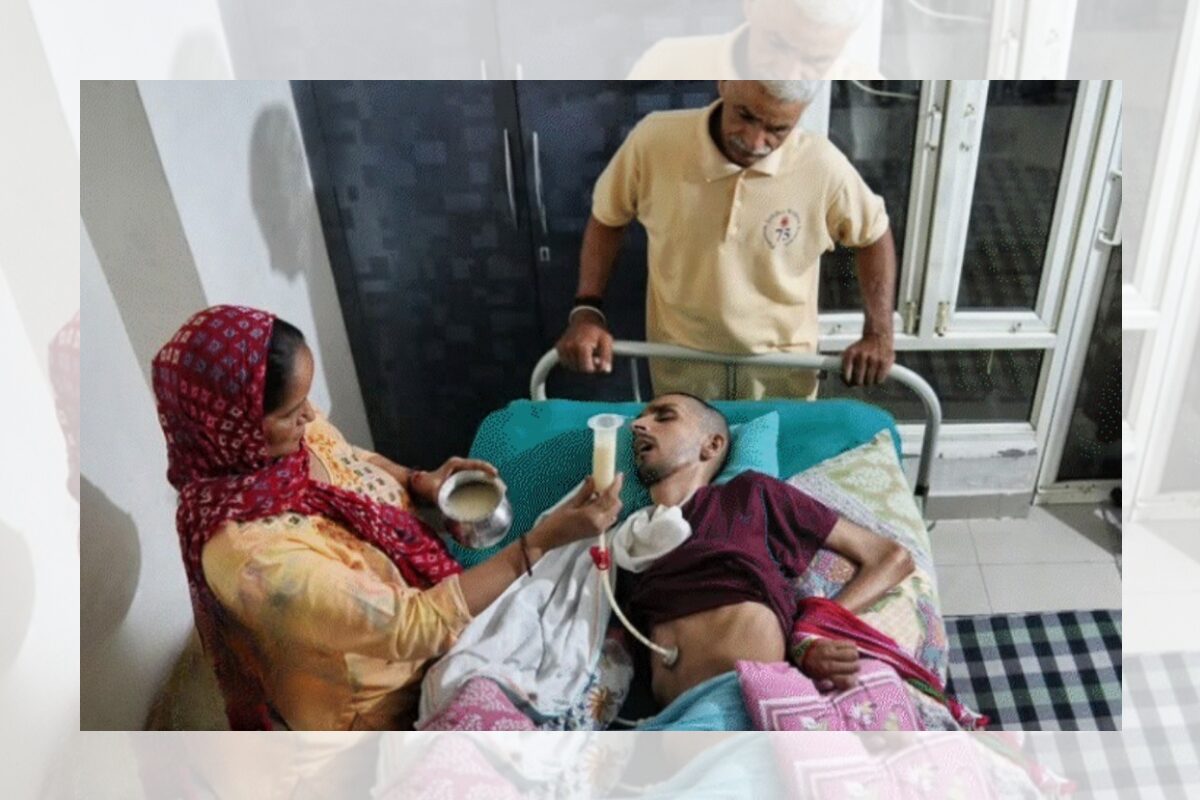
In August 2013, Harish Rana fell from the fourth floor of his paying guest accommodation in Chandigarh. He was a BTech student. He survived the fall, but the brain injury left him in a Persistent Vegetative State — quadriplegic, fed through a surgically placed stomach tube, and entirely unresponsive. His parents, who came from Uttarakhand, moved to Delhi and sold their home to pay for his care. For thirteen years, they waited for a recovery that never came.
On March 11, 2026, the Supreme Court of India did something it had never done before: it approved passive euthanasia for a living individual. The judgment ended a legal battle that had twice been rejected by courts, and it changed how India thinks about dying.
Brain Death vs Persistent Vegetative State: Why It Mattered in the Harish Rana Case
Harish was not brain dead. Brain death means the brain stem has stopped functioning entirely — the person cannot breathe, and they are legally dead. Harish’s brain stem still worked. He breathed. He had sleep-wake cycles. But he had no consciousness, no awareness, no ability to respond. This is called Persistent Vegetative State (PVS).
That distinction is what made courts say no, twice. In 2024, both the Delhi High Court and the Supreme Court held that since Harish wasn’t on a ventilator, removing his feeding tube would be an active act of killing, not a passive withdrawal of treatment. Under Indian law, that’s a meaningful difference. Passive euthanasia, withdrawing life support is permitted. Active euthanasia — doing something to cause death, is not.
The Feeding Tube Question That Changed Passive Euthanasia Law in India
Everything hinged on one question: is a feeding tube basic care or medical treatment?
If it’s basic care, the equivalent of spoon-feeding someone — you can never remove it. If it’s medical treatment, it can be assessed for proportionality, and withdrawn when it no longer serves a therapeutic purpose.
On March 11, the Supreme Court ruled that Clinically Assisted Nutrition and Hydration (CANH) — delivered through surgically placed tubes under clinical supervision, is life-sustaining medical treatment, not basic care. With that single reclassification, the legal impasse collapsed. Removing Harish’s feeding tube became, in legal terms, no different from switching off a ventilator.
The Union Government agreed. Withdrawal of CANH, the government argued, is a lawful omission, not an act of killing. The court accepted this and directed AIIMS Delhi to admit Harish to palliative care for the withdrawal to be carried out humanely.
Right to Die with Dignity in India: Article 21 and the Supreme Court
The right to die with dignity in India grows out of Article 21 — the right to life and personal liberty. In Aruna Shanbaug (2011), the Supreme Court first acknowledged passive euthanasia was not categorically banned. In Common Cause (2018), a Constitution Bench made it explicit: dying with dignity is a fundamental right. That judgment also introduced advance directives, living wills through which Indians can specify in advance that they don’t want life-sustaining treatment if they enter a vegetative state.
Harish had no living will. He was a teenager when he fell. The absence of that document forced his family through thirteen years of courts and bureaucracy that a single signed form might have shortened considerably. If this case has one practical lesson, it’s this: write an advance directive. It is the most powerful thing you can do for yourself and your family.
What the Supreme Court’s 2026 Judgment Changes for Passive Euthanasia in India
The judgment is not just about Harish Rana. It has wider implications for how such cases will be handled in the future.
The Supreme Court clarified that if both the primary and secondary medical boards agree that withdrawing life-sustaining treatment is appropriate, the family does not need to approach the court anymore. Earlier, families often had to go through long legal procedures. This judgment removes that mandatory judicial step.
The Court also directed High Courts to create systems to notify magistrates in such cases, and asked district Chief Medical Officers (CMOs) to maintain panels of doctors who can form medical boards to evaluate these decisions.
At the same time, the Court made an important point. It said that while courts can step in to fill gaps in the law, such sensitive and complex decisions ultimately need a proper law made by Parliament.
In other words, the Court has set guidelines for now — but it has also clearly told Parliament that a clear statutory framework on end-of-life decisions is needed. Whether that happens in the near future remains to be seen.
How HealthPil Can Help
At HealthPil, we believe in honest healthcare. If you or a loved one is facing a serious illness, we can help you:
- Understand your options through second opinions with expert doctors
- Access palliative and end-of-life care guidance
Sources
- Supreme Court of India — Harish Rana v. Union of India, judgment dated March 11, 2026.
- Supreme Court of India — Common Cause v. Union of India, (2018) 5 SCC 1.
- Supreme Court of India — Aruna Ramchandra Shanbaug v. Union of India, (2011) 4 SCC 454.
- Supreme Court of India — Modified Guidelines on Advance Directives, January 2023.
- The Hindu — ‘Supreme Court allows passive euthanasia for first time in India in Harish Rana case,’ March 11, 2026.
- Live Law — ‘SC holds CANH is medical treatment, not basic care,’ March 11, 2026.
- Bar and Bench — ‘Breaking: SC grants passive euthanasia to Harish Rana,’ March 11, 2026.
- Constitution of India, Article 21.
Frequently Asked Questions (FAQs)
Is passive euthanasia now legal for everyone in India?
No. It is permitted under strict conditions — unanimous medical board findings, family consent, and palliative care supervision. It applies to patients in terminal illness or permanent vegetative states with no prospect of recovery.
What is the difference between passive and active euthanasia?
Passive euthanasia means withdrawing or withholding treatment that is artificially prolonging life, and allowing natural death. Active euthanasia means taking a deliberate action, such as administering a lethal drug, to end a life. Only passive euthanasia is legally permitted in India.
What is an advance directive / living will?
A legal document in which a competent adult states their wishes about medical treatment if they become incapacitated. Recognised in India since the 2018 Common Cause judgment. It does not require a lawyer and can prevent the kind of prolonged legal ordeal the Rana family went through.
Was Harish Rana on a ventilator?
No. He breathed on his own. He was sustained by a PEG tube delivering nutrition and fluids. This is what made earlier courts hesitant — he was not on conventional life support. The March 2026 ruling resolved this by classifying CANH as medical treatment.
Does the family always need court permission for passive euthanasia?
No longer mandatory if primary and secondary medical boards are unanimous. Families retain the option to approach courts, but it is not required. This is one of the most practically significant changes in the ruling.
Disclaimer
This article is for educational purposes only and should not be taken as legal or medical advice. For personalised support, please consult your doctor or a certified legal advisor. HealthPil can assist you in finding the right experts for second opinions and compassionate care decisions.

